Korean Braised Short Ribs
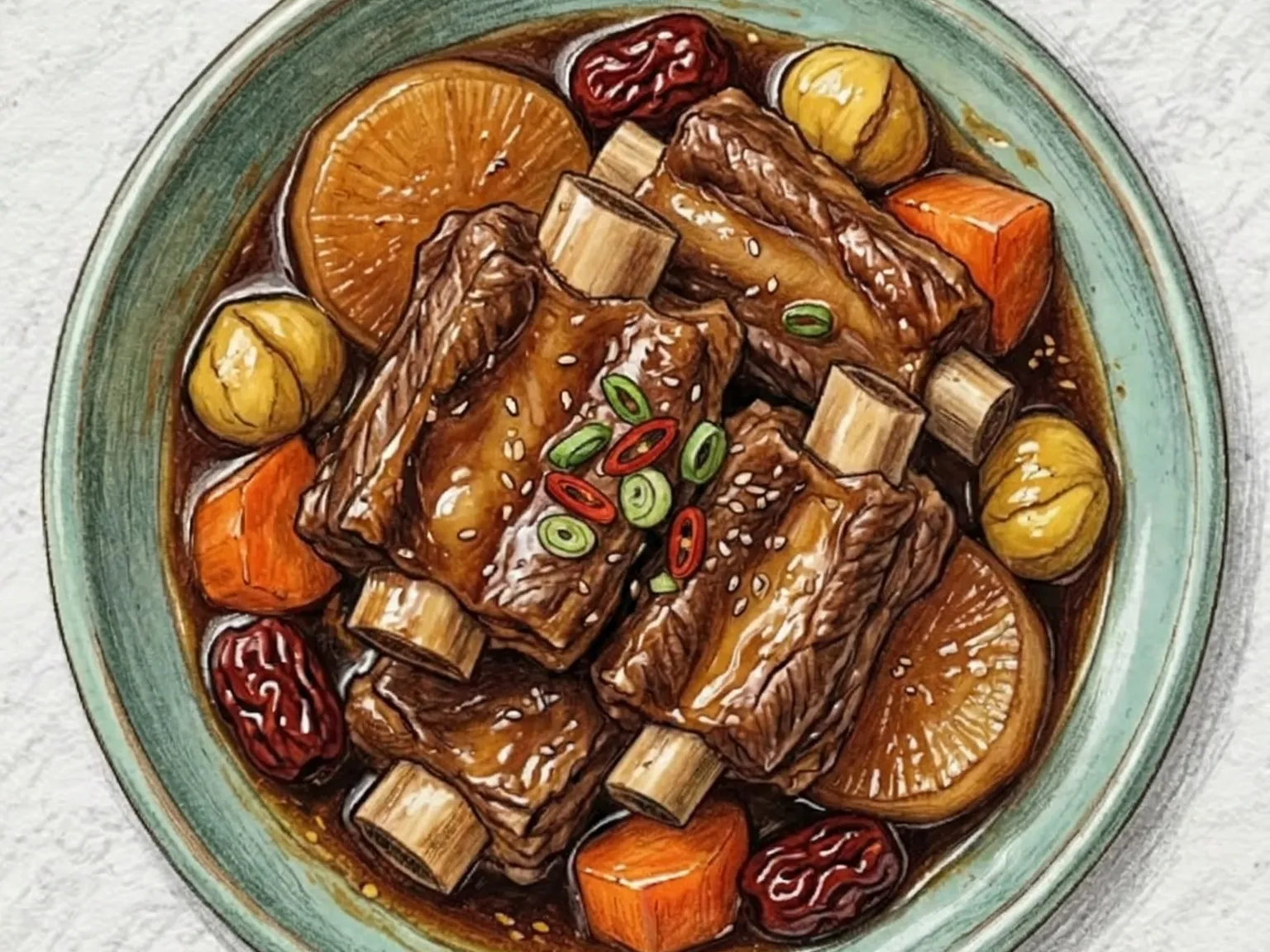
Galbi-jjim is one of Korea's most celebrated braised dishes, built on thick-cut beef short ribs that simmer for over an hour in a glaze of soy sauce, Asian pear juice, sugar, garlic, and sesame oil. The long cooking breaks down the collagen in the ribs until the meat practically slides off the bone, while the sauce reduces into a dark, glossy coating that is simultaneously sweet, salty, and deeply savory. Radish and carrot chunks absorb the braising liquid and soften into something almost buttery, while chestnuts and jujubes, often added for holidays, contribute subtle sweetness and a festive look. The finished dish glistens on the plate, and a single spoonful of sauce over steamed rice is enough to make the grain disappear. Galbi-jjim appears on Chuseok and Lunar New Year tables but is equally welcome on an ordinary weekend when the house deserves to smell extraordinary.
Adjust Servings
Instructions
- 1
Soak 1.2kg beef short ribs in cold water for 1 hour, changing the water twice to remove blood.
- 2
Parboil the ribs for 5 minutes, then rinse to remove impurities.
- 3
Add ribs, 1.5L water, green onion, onion, garlic, and ginger to a pot; simmer for 40 minutes.
- 4
Mix 8 tbsp soy sauce, 6 tbsp pear juice, 2 tbsp sugar, 3 tbsp cooking wine, and pepper for the braising sauce.
- 5
Remove aromatics, add the sauce with radish and carrot, and braise for another 30 minutes.
- 6
Add chestnuts, shiitake mushrooms, and jujubes; cook 15–20 minutes until the sauce reduces.
- 7
Finish with sesame oil and sesame seeds, rest for 5 minutes, then serve.
As an Amazon Associate, we may earn from qualifying purchases.
Tips
Nutrition (per serving)
More Recipes

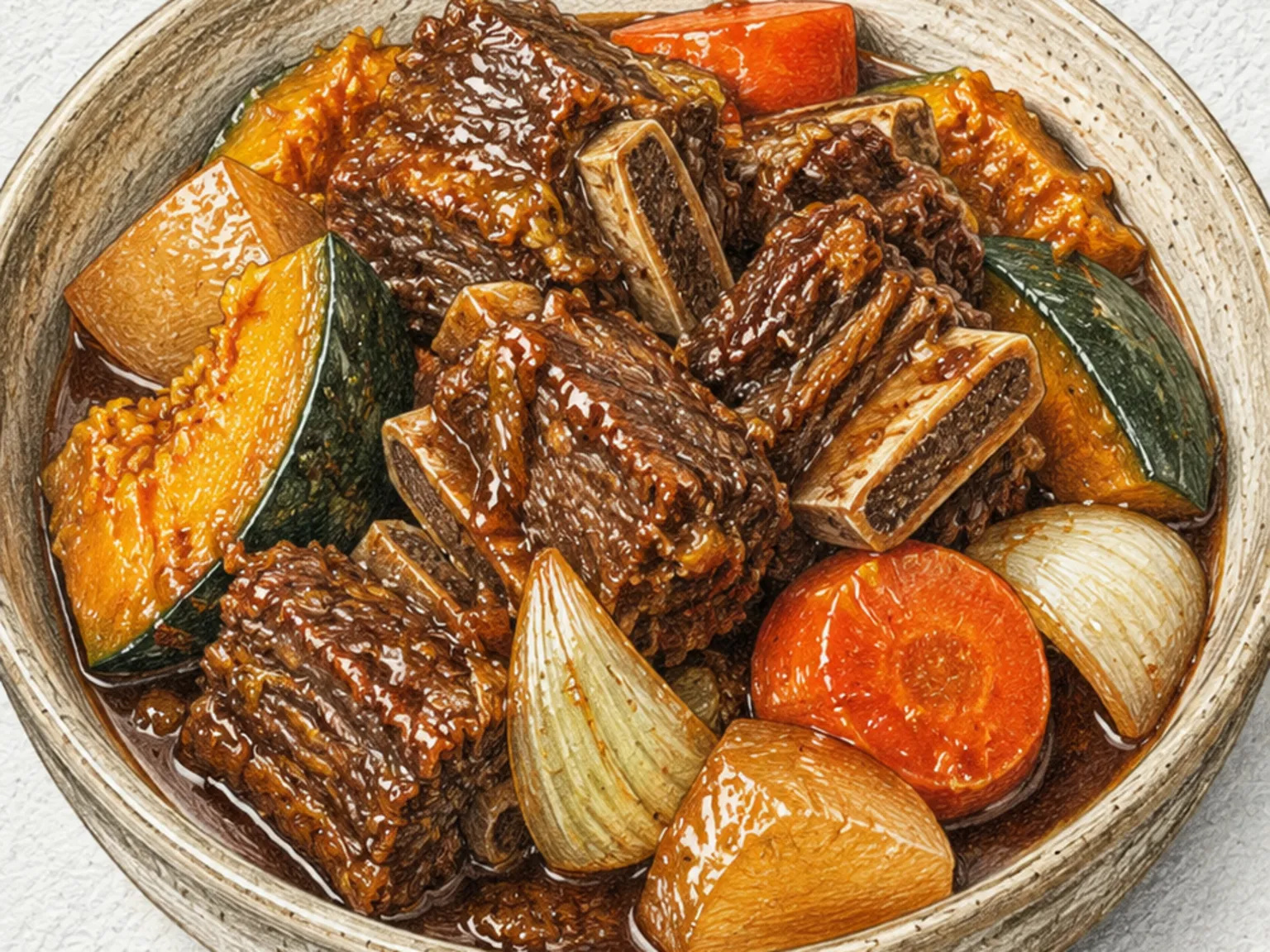
Korean Braised Beef Short Ribs with Kabocha
Danhobak sogalbi-jjim is beef short ribs marinated in Korean pear juice, then braised with kabocha squash, radish, carrot, and onion in a soy-based sauce. The pear juice tenderizes the meat and lends a subtle fruit sweetness that deepens as it cooks. Kabocha softens at the edges during braising, releasing its starchy flesh into the sauce and thickening it naturally. A drizzle of sesame oil at the end lifts a nutty fragrance from the pot. This is a celebratory dish in Korean cooking, commonly served during holidays and family gatherings.

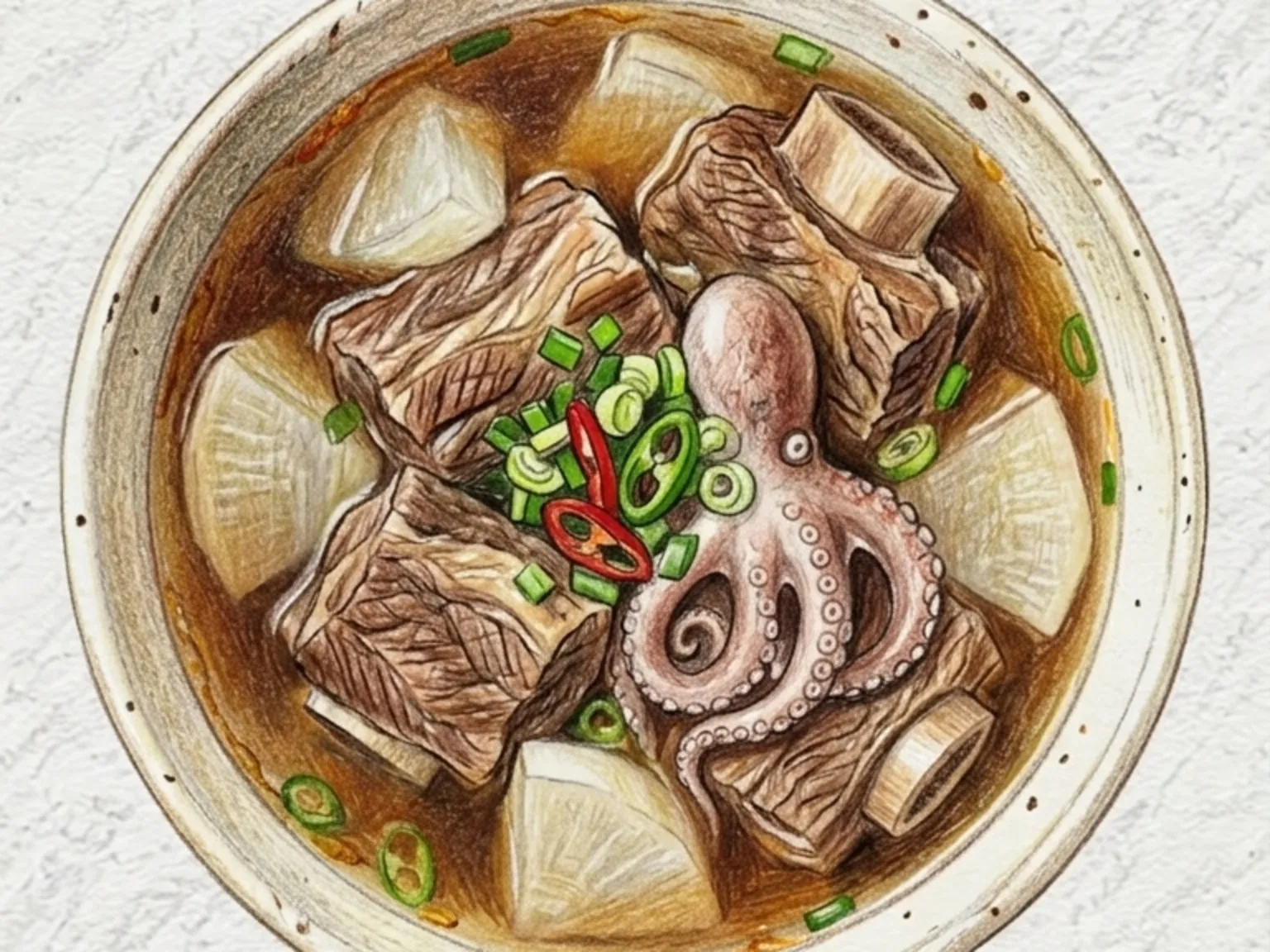
Galbitang (Clear Korean Beef Short Rib Soup)
Galbitang is a clear Korean soup made by simmering beef short ribs in water with radish, garlic, and green onion until the broth develops a deep, beefy depth without becoming cloudy. Unlike the milky-white seolleongtang, galbitang keeps its broth relatively translucent, letting the natural fat from the ribs contribute a subtle richness rather than heavy opacity. The radish cooks down and sweetens the liquid, and the rib meat turns so soft it falls away from the bone with gentle pressure from chopsticks. Seasoning is traditionally minimal - salt and black pepper at the table - so the honest flavor of the beef stands front and center. A garnish of egg strip and sliced green onion adds color and freshness. Galbitang is comfort food for cold evenings and a staple in Korean restaurants year-round, served steaming hot with a bowl of rice on the side.

Korean Marinated Beef Short Ribs
One kilogram of beef short ribs is soaked in cold water for thirty minutes, then marinated for at least an hour in grated Korean pear, onion juice, soy sauce, sugar, honey, minced garlic, sesame oil, cooking wine, and black pepper. The enzymes in pear and onion tenderize the meat, while soy sauce and honey caramelize on the grill into a dark, lacquered glaze. The ribs are seared on a preheated grill, then cooked at medium heat for three to four minutes per side with a final thin brush of marinade. This is a centerpiece dish for Korean holidays and dinner parties, with portions generous enough for a family of four.

Korean Braised Pork Ribs
Dwaeji galbi-jjim is a Korean braised pork rib dish simmered in a soy sauce base with Korean radish, carrots, and onion. The ribs cook low and slow until the meat practically falls off the bone, absorbing the ginger- and garlic-infused braising liquid along the way. The radish chunks turn translucent and soak up the seasoning, becoming as flavorful as the meat itself. Served with steamed rice, this dish is a hearty main course suited to cooler weather.

Korean Braised Short Rib Rice Bowl
Galbi deopbap is a Korean rice bowl topped with beef short ribs slow-braised in a soy, sugar, and grated Asian pear marinade until the meat slides off the bone. The pear serves a dual purpose: its enzymes break down tough connective tissue while its juice contributes a subtle fruit sweetness that distinguishes galbi from heavier braises. Grated onion dissolves into the sauce during the hour-long simmer, deepening the flavor without leaving visible pieces. As the braising liquid reduces, it concentrates into a glossy, dark sauce that clings to the ribs and drips down onto the rice below. The ribs are placed over steamed rice with the sauce spooned generously on top, so the grains absorb the soy-sweet glaze from the bottom up. Despite the long cooking time, the dish requires minimal active attention - the braise does the work inside the pot. Sliced green onion scattered over the finished bowl adds a crisp, fresh note against the rich meat.

Korean Beef and Octopus Hot Pot
Bulnak jeongol is a hot pot that pairs sliced beef with fresh octopus in an anchovy-kelp broth. The beef enriches the stock with a meaty depth, while the octopus adds a firm, bouncy chew that holds up through simmering. Napa cabbage and water dropwort lighten the pot with their fresh, vegetal notes, making the whole dish feel balanced despite its generous protein portions.