Korean Galbi Tteokbokki (Soy-Braised Pork Rib Rice Cake Stir-Fry)
Quick answer
Galbi tteokbokki marinates boneless pork ribs in soy sauce, sugar, mirin, garlic, and sesame oil for fifteen minutes before the dish comes together in a single pan.
What makes this special
- Savory soy-braised pork ribs are stir-fried with chewy rice cakes in this spice-free tteokbokki.
- No gochujang: soy-sugar base makes this tteokbokki spice-free
- Galbi seared first over high heat, then braised with rice cakes
Key ingredients
Core cooking flow
- 1 Separate 300 g rice cake sticks, and if they feel firm, soak them in water until pliable, then drain well.
- 2 Mix 3 tbsp soy sauce, 1.5 tbsp sugar, 1 tbsp mirin, 1 tbsp minced garlic, an...
- 3 Heat a pan well over high heat, then spread the marinated pork in one layer.
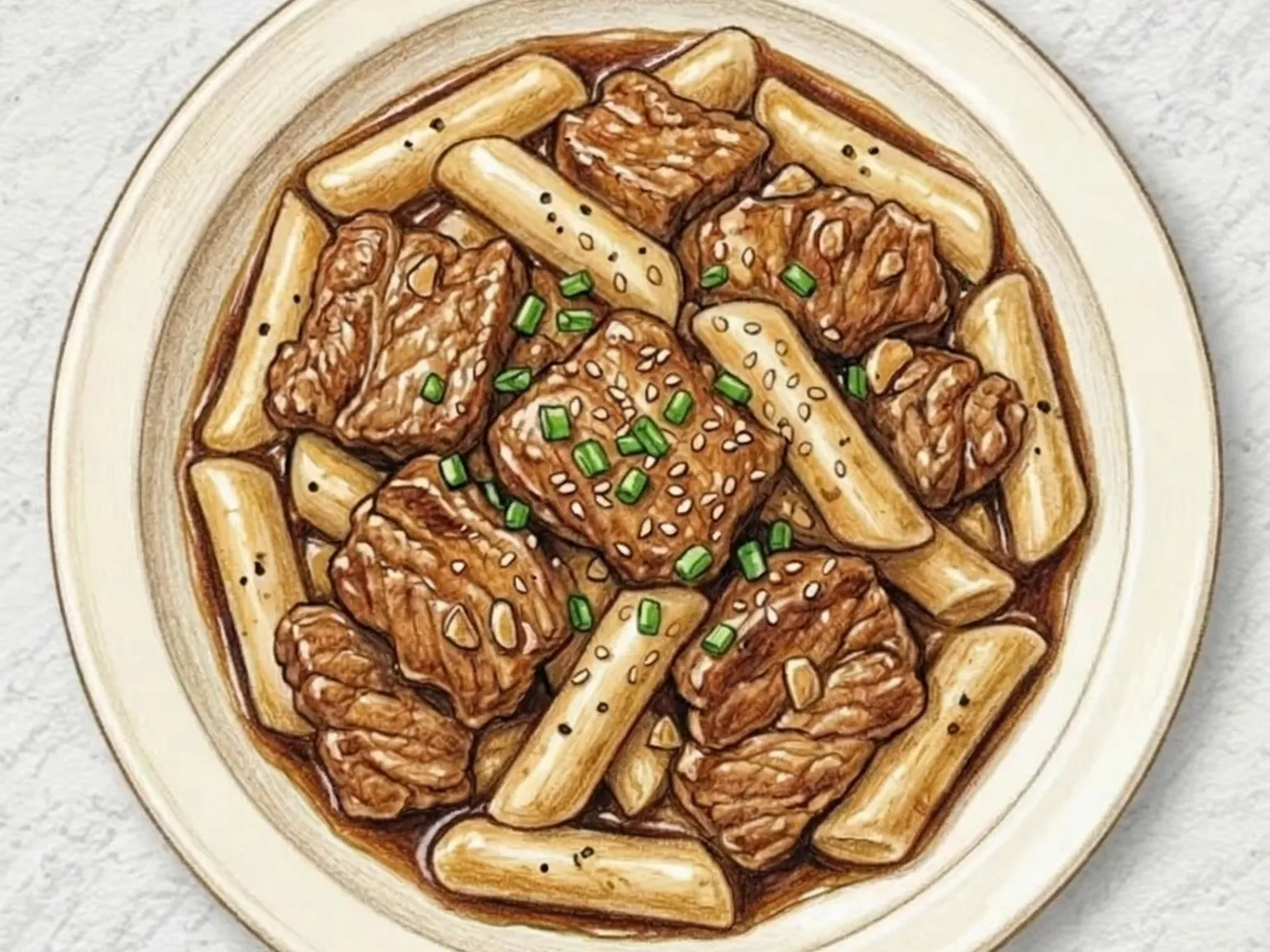
Galbi tteokbokki marinates boneless pork ribs in soy sauce, sugar, mirin, garlic, and sesame oil for fifteen minutes before the dish comes together in a single pan. The ribs go in first over high heat, searing until the surface caramelizes and the rendered fat begins to collect in the pan. Water and rice cakes are added next, and the mixture simmers on medium until the sauce reduces into a concentrated glaze that coats each tteok thoroughly. No gochujang enters the recipe at any point - the flavor profile is entirely soy-and-sugar sweet-salty, made deeper by the pork's own fat and juices as they cook down. The finished dish shows a visible sheen on both the rice cakes and the meat, with green onion and sesame seeds scattered over the top.
Instructions
Read the steps as a cooking flow: prep, heat, seasoning, doneness control, and finish.
- 1Heat
Separate 300 g rice cake sticks, and if they feel firm, soak them in water until pliable, then drain well.
Cut 200 g boneless pork ribs into bite-size pieces so they cook evenly and mix cleanly with the rice cakes.
- 2Season
Mix 3 tbsp soy sauce, 1.5 tbsp sugar, 1 tbsp mirin, 1 tbsp minced garlic, and 1 tbsp sesame oil until the sugar starts dissolving.
Add the pork and marinate for 15 minutes, turning the pieces so every surface is coated.
- 3Control
Heat a pan well over high heat, then spread the marinated pork in one layer.
Sear for 1-2 minutes per side until browned, letting the surface set before moving it so the juices stay in the meat.
- 4Control
Pour in 300 ml water and scrape the browned marinade from the bottom of the pan into the liquid.
When it comes to a boil, add the rice cakes, lower to medium heat, and press them into the sauce.
- 5Control
Simmer over medium heat for 12-15 minutes, stirring every 2-3 minutes so the rice cakes do not stick to the pan.
The sauce should reduce by about half, and the rice cakes should turn soft and chewy.
- 6Finish
When the sauce thickens and clings glossily to the rice cakes and pork, turn off the heat and add 30 g diagonally sliced green onion. Sprinkle with 1 tsp sesame seeds and serve right away while the glaze is still shiny.
After the steps
Pick a recipe that fits this dish.
Continue with shared ingredients, meal pairings, or a similar method.
Recipes That Go Well With This
More Street food →Based on shared ingredients and meal pairing
Korean Jjajang Tteokbokki
Jjajang tteokbokki simmers chewy rice cake sticks in a sauce of black bean paste (chunjang) stir-fried with ground pork, onion, and cabbage. The critical first step is pre-frying the chunjang in a generous amount of oil before adding any other ingredients: raw black bean paste carries a flat, slightly bitter taste, but several minutes of stirring in hot oil transforms it, removing the harsh edge and developing the characteristic deep, roasted sweetness that defines the dish. As the sauce reduces and thickens, it clings heavily to each rice cake, delivering an intense hit of savory black bean flavor with every bite. Unlike gochujang-based tteokbokki, there is no chili heat present at all, making this a version accessible to those who find standard tteokbokki too spicy. The ground pork renders fat into the sauce as it cooks, adding richness and making the sauce glossier and heavier in body. Julienned cucumber scattered on top at serving provides a fresh, crunchy contrast that cuts through the richness of the black bean sauce and brightens the overall flavor of the bowl.
Korean Mala Cup Tteokbokki
This cup-style tteokbokki blends gochujang with mala sauce to combine Korean chili heat and the numbing tingle of Sichuan peppercorn in a single dish. Rice cakes and fish cake go into the pot with the sauce, then cook over medium heat for six to seven minutes with constant stirring as the liquid reduces into a thick, clinging glaze that coats each piece heavily. Stopping to stir is not optional: the rice cakes stick and scorch on the bottom without continuous movement. Sliced green onion goes in at the end for fragrance. Because mala sauce saltiness varies considerably between brands, beginning with one tablespoon and tasting as you add more prevents overseasoning. Additional gochugaru raises the chili heat independently of the numbing sensation, while increasing the mala sauce proportion amplifies the tingle. The format mirrors the convenience-store cup tteokbokki experience and requires minimal equipment, making it a fast option when few tools are available.
Korean Dalgona Milk (Caramel Puffed Sugar Candy Milk)
Dalgona milk starts with melting sugar in a small pan over low heat until it reaches a deep amber color, then adding baking soda, which causes the hot caramel to foam and aerate instantly into a honeycomb-like structure. Once cooled, the puffed candy is crushed and dissolved into cold milk. The baking soda reaction is what gives dalgona its distinctive lightness: instead of a dense, hard caramel, the aerated structure makes it brittle and easy to break while also helping it dissolve quickly in the milk. The caramelized sugar delivers a deep, toasty sweetness with a slight bitterness at the edges, similar to butterscotch, that spreads through the milk as the pieces melt. A small amount of vanilla extract sharpens the flavor and a pinch of salt rounds it out. Keeping some crushed dalgona pieces separate and dropping them on top of the finished drink as a garnish adds a crunchy contrast to the creamy liquid beneath.
Korean Spicy Rice Cakes (Gochujang Braised Chewy Tteok with Fish Cake)
Simmering cylindrical rice cakes and thin fish cake sheets in a spicy base of gochujang, red chili flakes, sugar, and soy sauce creates a sticky, glossy coating. The starch released from the rice cakes as the liquid reduces acts as a natural thickener, ensuring the sauce clings tightly to each ingredient. While the fish cakes soak up the heat from the surrounding liquid, they release a subtle seafood essence into the pan, and the addition of green onions at the final stage provides a crisp contrast to the underlying sweetness. Preparing a stock from dried anchovies and kelp rather than using plain water establishes a solid savory foundation for the entire dish. It helps to start with only half the seasoning paste, adding the remainder gradually to manage the final intensity and texture as the volume decreases. If the liquid evaporates too quickly, adding small amounts of water prevents the sugars in the sauce from scorching before the rice cakes reach the desired softness. For rice cakes that have been chilled or feel exceptionally firm, a short soak in cool water or a quick blanch in boiling water helps them cook through evenly. Serving the finished dish with boiled eggs, blood sausage, or assorted fried items replicates the setup found at traditional street stalls. This recipe scales easily into different versions by incorporating heavy cream or tomato-based sauces, resulting in the rose and cream variations often found in modern snack shops.
Serve with this
Glutinous Rice Cake with Soybean Powder
Injeolmi is a Korean glutinous rice cake made by kneading rice flour dough with hot water, steaming it for fifteen minutes, then pounding or beating it vigorously for at least five minutes to develop the characteristic elasticity. The pounding step determines the final texture: insufficient working produces a weak dough that cracks apart, while thorough pounding yields the signature stretchy, chewy pull that injeolmi is known for. The finished dough is stretched out, cut into bite-sized pieces, and rolled in a mixture of roasted soybean powder and sugar, which coats each piece in a fragrant, toasted-grain aroma. Applying a thin layer of sesame oil to both hands and knife before cutting prevents the dough from sticking, and the soybean powder coating is best applied immediately before serving to keep the surface dry and powdery rather than absorbing moisture. Injeolmi appears regularly at ancestral rites, first birthday celebrations, and traditional ceremonies across Korea.
Korean Ojingeo Ssamjang Bibim Myeon (Squid Ssamjang Mixed Noodles)
Ojingeo ssamjang bibim myeon is a Korean mixed noodle dish combining blanched squid rings with medium wheat noodles in a ssamjang-based sauce spiked with chili flakes, vinegar, and syrup. The squid is blanched for only forty seconds to keep it springy rather than chewy, and the noodles are rinsed under cold water while gently rubbing to remove surface starch. The dressing merges the fermented depth of ssamjang with the heat of gochugaru and the brightness of vinegar, creating a layered flavor that is salty, spicy, and tangy at once. Resting the sauce for about ten minutes before tossing softens the heavy note of ssamjang. Julienned perilla leaves on top add an herbal fragrance, and sesame seeds finish the dish with nuttiness. The recipe yields four generous servings.
Korean Stir-Fried Sweet Potato Stems
Goguma julgi - sweet potato stems - are the above-ground vines of the sweet potato plant, a byproduct that Korean cooks transform into a summer namul rather than discarding. The most labor-intensive step is peeling each stem by hand, pinching the outer skin with a fingernail and pulling it away to reveal the tender core beneath. After blanching for two minutes and rinsing in cold water, the stems are stir-fried in perilla oil with garlic and seasoned with soup soy sauce. Perilla powder stirred in at the end thickens the remaining liquid into a nutty glaze. In season during summer, the stems are harvested from sweet potato fields before the tubers themselves are dug up.
Similar recipes
Korean Bulgogi Sandwich (Soy-Marinated Beef Toast with Mayo Lettuce)
The preparation of a bulgogi sandwich begins with beef marinated in a mixture of soy sauce, sugar, minced garlic, and sesame oil before meeting a scorching pan. A surface heated to its limit is essential because only extreme heat can evaporate moisture instantly, allowing the sugars in the marinade to caramelize into a savory-sweet exterior. If the temperature is insufficient, the meat stews in its own liquid rather than searing. A generous layer of mayonnaise on the toasted bread acts as a structural barrier, preventing the beef juices from making the sandwich soggy while softening the intensity of the seasoning. Fresh, crisp lettuce provides a textural contrast to the warm meat. Folding ssamjang into the mayonnaise introduces fermented and spicy elements that emphasize the Korean origin of the dish. A slice of cheese adds a smooth layer between the bread and the beef, and increasing the vegetable portion creates a lighter meal. With the meat prepped ahead of time, the entire assembly takes under ten minutes, offering a practical solution for a busy morning or a simple lunch.
Korean Braised Pork Ribs
Dwaeji galbi-jjim is a Korean braised pork rib dish simmered in a soy sauce base with Korean radish, carrots, and onion. The ribs cook low and slow until the meat practically falls off the bone, absorbing the ginger- and garlic-infused braising liquid along the way. Soy sauce, sugar, and fermented depth from the ganjang build a savory-sweet profile without tipping into sweetness. The radish chunks turn translucent and soak up the seasoning, becoming as flavorful as the meat itself. Served with steamed rice, this is a hearty main course suited to cooler weather.
Galbitang (Clear Korean Beef Short Rib Soup)
Galbitang is a clear Korean soup built from long-simmered beef short ribs, extracting a deep, clean beef flavor without the milky opacity of seolleongtang or gomtang. Before cooking, the ribs are soaked in cold water for one to two hours to draw out blood, which is what allows the finished broth to stay clear and free of off-flavors. The radish goes in from the beginning, slowly releasing a gentle sweetness as it absorbs the surrounding broth and becomes fully saturated with beef flavor. The ribs need time - the measure of doneness is the meat sliding cleanly off the bone with minimal pressure from chopsticks. Unlike bone-based broths that turn white from emulsified collagen and fat, galbitang remains translucent because the fat from the rib meat dissolves more gently, leaving a subtle richness rather than heaviness. Seasoning is deliberately restrained, using only salt and white pepper at the table so nothing interferes with the honest taste of the beef. Garnishes of sliced egg crepe and green onion add color and a fresh note. The soup is served year-round in Korean restaurants, always arriving steaming hot alongside a bowl of plain rice.