Korean Braised Beltfish with Potatoes
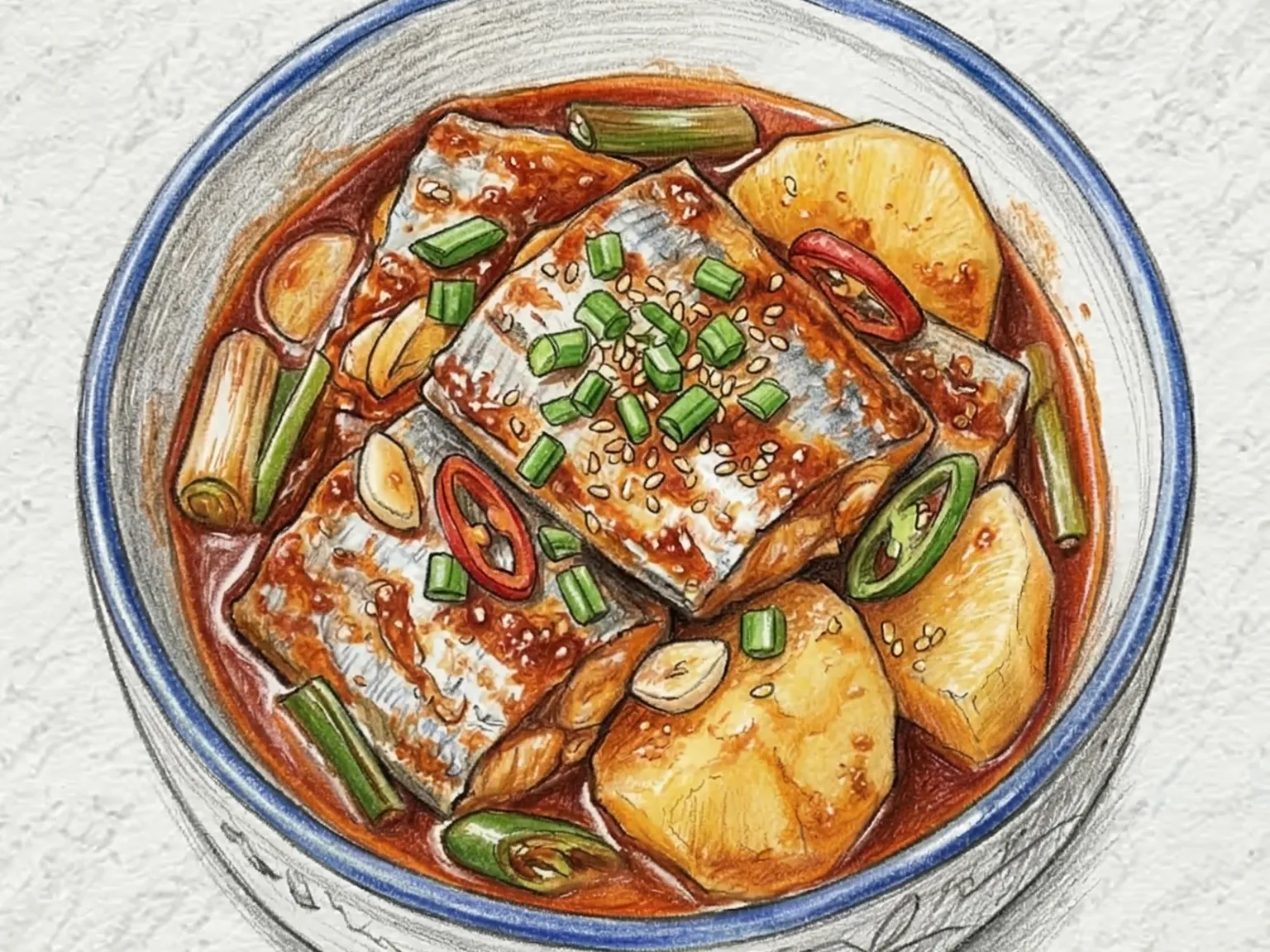
Galchi-gamja-jorim is a Korean braise of beltfish chunks and potatoes in a soy-based sauce. The beltfish has naturally oily, flaky flesh that enriches the braising liquid with deep seafood umami. The potatoes soak up this concentrated liquid, becoming fluffy and well-seasoned throughout. Onions dissolve into the sauce as it reduces, adding background sweetness. It is best served when the sauce has thickened to a glossy consistency alongside steamed rice.
Adjust Servings
Instructions
- 1
Clean beltfish, cut into segments, and rinse lightly under running water.
- 2
Slice potatoes thick and prep onion, green onion, and chili.
- 3
Add potatoes and water to a pot and boil for 5 minutes as a base layer.
- 4
Add mixed sauce of soy sauce, chili flakes, garlic, and sugar, then place beltfish on top.
- 5
Braise over medium heat for 10 minutes, spooning sauce over fish.
- 6
Add onion and chili, braise 5 more minutes, then finish with green onion.
As an Amazon Associate, we may earn from qualifying purchases.
Tips
Nutrition (per serving)
More Recipes

Korean Braised Mackerel with Potatoes
Godeungeo gamja jorim is a quintessential Korean home-cooked dish of mackerel and potato braised in a soy sauce and gochugaru seasoning. The oily mackerel fillets release their rich flavor into the sauce, while the potato chunks soak up the spicy, savory liquid as they cook to a fluffy consistency. Onion and green onion contribute natural sweetness and aroma that balance the bold seasoning. This is one of Korea's most beloved fish dishes, often served family-style with the braising sauce spooned generously over rice.

Korean Spicy Braised Hairtail
Galchi-yangnyeom-jorim is a Korean braised hairtail in a spicy-sweet sauce made from chili flakes, soy sauce, and garlic. The seasoning soaks into the tender hairtail flesh during simmering, suppressing any fishiness while building layered umami. Radish pieces braise alongside the fish, softening completely and offering a textural contrast to the flaky meat. Reducing the sauce uncovered at the end concentrates the flavors into a thick, glossy glaze.

Korean Spicy Braised Cod with Radish
Tender cod fillets braised in a spicy gochujang-soy sauce with daikon radish that soaks up every drop of flavor. Cod is a lean fish with a clean, neutral flavor, and the bold seasoning soaks into the flesh to add depth. Daikon radish cooks alongside the fish and absorbs the braising liquid, becoming just as flavorful. Onion melts down during cooking, contributing natural sweetness to the sauce. The flesh is soft and separates easily from the bone, making it approachable for all ages.

Korean Soy-Braised Rockfish
Ureok-jorim is a Korean soy-braised rockfish simmered with Korean radish, gochugaru, garlic, and rice wine. The radish goes in first and softens in the braising liquid before the cleaned whole fish is placed on top and basted with sauce over medium heat for ten minutes. Rice wine neutralizes any fishiness, while the radish absorbs the salty braising liquid and releases its own sweetness to balance the seasoning naturally. The rockfish flesh stays mild and flakes in soft layers, with gochugaru lending a gentle warmth to the overall dish.

Korean Hairtail Braised with Dried Greens
Siraegi galchi jorim is a Korean braised hairtail fish dish layered with boiled dried radish greens and radish, then simmered in a sauce of gochugaru, soy sauce, and gochujang. The dried greens absorb the braising liquid like a sponge, releasing concentrated seasoning with every bite, while the radish soaks up the stock and adds a clean sweetness. The hairtail is never flipped during cooking; instead the sauce is spooned over it repeatedly to preserve the delicate flesh. A teaspoon of doenjang rubbed into the greens before cooking deepens the earthy backbone of the dish, producing a robust side that demands a full bowl of rice.

Korean Braised Hairtail Fish
Galchi-jjim is a Korean braised hairtail fish dish simmered with Korean radish in a spicy soy sauce and gochugaru broth. The hairtail's white, flaky flesh absorbs the bold seasoning while remaining tender throughout. Ginger juice is key to keeping the dish clean-tasting by cutting through any fishiness. The radish softens in the braising liquid and the remaining sauce is meant to be spooned over rice, making this a staple fish dish on Korean dinner tables.