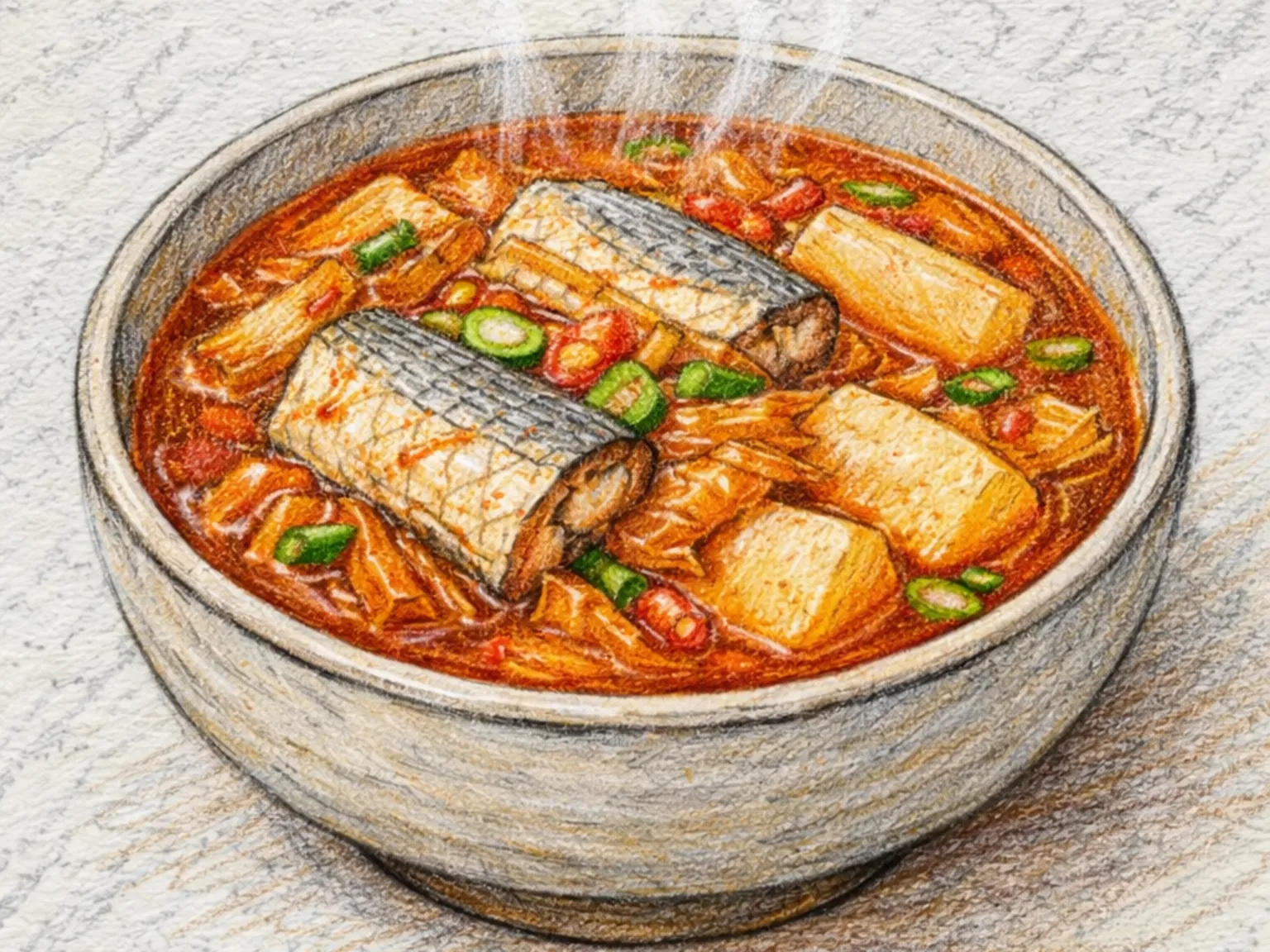
Korean Hairtail & Fernbrake Stew
Quick answer
Galchi gosari jjigae pairs hairtail fish with boiled fernbrake in a deeply spiced Korean stew.
What makes this special
- Hairtail fish and fernbrake draw deep seafood umami into galchi gosari jjigae.
- Hairtail's oily white flesh slowly dissolves into the broth building deep fishy umami
- Chewy boiled fernbrake contrasts the tender flaking flesh of hairtail in every bite
Key ingredients
Core cooking flow
- 1 Cut 500 g hairtail into 5-6 cm pieces, sprinkle lightly with salt, and let stand for 10 minutes.
- 2 Rinse 200 g boiled fernbrake once more and drain well to soften bitterness.
- 3 Put 900 ml anchovy-kelp stock and 250 g radish in a pot, then bring to a boil over medium heat.
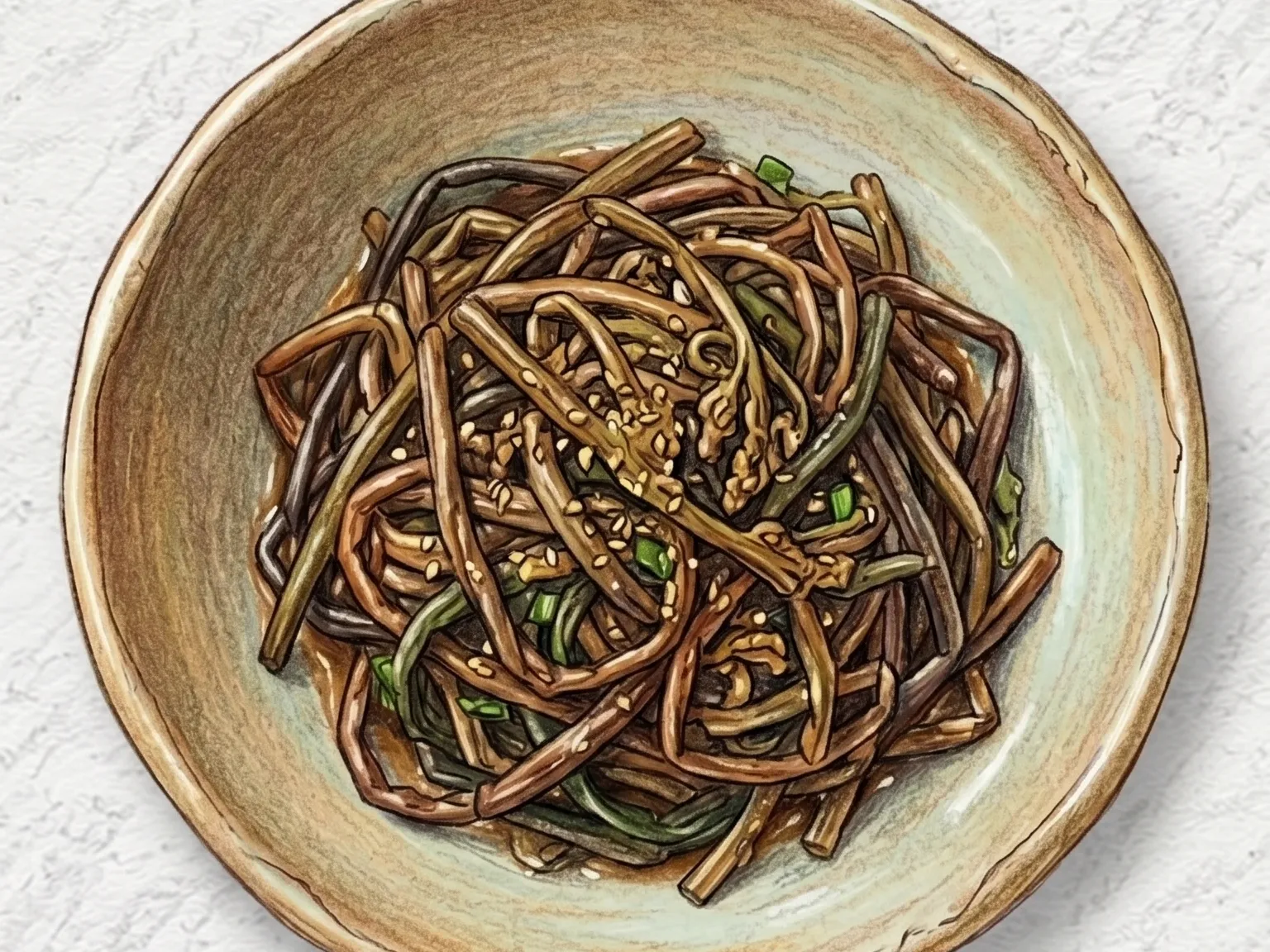
Galchi gosari jjigae pairs hairtail fish with boiled fernbrake in a deeply spiced Korean stew. The broth begins with anchovy-kelp stock seasoned with gochugaru and soup soy sauce, building a clean, peppery heat without heaviness. Korean radish and onion go in early to dissolve their natural sugars into the broth, adding a cool sweetness that tempers the chili. As the hairtail simmers, its flesh breaks into tender pieces and releases the fish's inherent oils into the liquid, enriching every spoonful with a maritime depth. The fernbrake brings a resilient, slightly meaty chew that stands up well to the long simmer. Rooted in the fish stew traditions of Jeju Island and the southern coastal regions of Korea, this dish is a regional staple that pairs seamlessly with plain rice.
Instructions
Read the steps as a cooking flow: prep, heat, seasoning, doneness control, and finish.
- 1Season
Cut 500 g hairtail into 5-6 cm pieces, sprinkle lightly with salt, and let stand for 10 minutes.
Pat the surface dry with paper towels so excess moisture and fishy odors do not cloud the stew.
- 2Heat
Rinse 200 g boiled fernbrake once more and drain well to soften bitterness.
Slice the radish about 0.5 cm thick, then cut the onion and green onion into pieces that will cook evenly in the broth.
- 3Control
Put 900 ml anchovy-kelp stock and 250 g radish in a pot, then bring to a boil over medium heat.
Simmer about 8 minutes, until the radish edges turn translucent and the broth tastes lightly sweet.
- 4Control
Add the fernbrake and 120 g onion, then stir in 2 tablespoons chili flakes, 1.5 tablespoons soup soy sauce, and 1 tablespoon minced garlic. Simmer 5 minutes so the seasoning blooms and loses its raw edge.
- 5Control
Lay the hairtail over the fernbrake without stacking the pieces, then reduce to low heat and simmer for 10 minutes.
Do not flip the fish. Spoon hot broth over it to cook gently without breaking it.
- 6Control
Add 50 g green onion and simmer 2 more minutes to release its aroma.
When the broth is slightly reduced and the hairtail is moist and opaque, taste and adjust with salt if needed before serving.
After the steps
Pick a recipe that fits this dish.
Continue with shared ingredients, meal pairings, or a similar method.
Recipes That Go Well With This
More Stews →Based on shared ingredients and meal pairing
Korean Galchi Kimchi Jjigae (Hairtail Kimchi Stew)
Galchi kimchi jjigae is a Korean stew that pairs hairtail fish with deeply fermented aged kimchi, simmered together in a base of anchovy and dried kelp stock. The richness of hairtail - an oily, full-flavored white fish - works in counterpoint to the sharp, acidic punch of well-aged kimchi, and as the two cook together their flavors blur into something more complex than either ingredient alone. Korean radish and onion go into the pot first, their natural sweetness dissolving into the broth to form a mild, rounded base before the fish is added. The hairtail is laid in gently and cooked covered to preserve the flesh, which would fall apart if stirred. Gochugaru and soup soy sauce season the broth with spice and salt, while the fish releases its own deep umami gradually, enriching every spoonful of liquid. Pouring the stew over a bowl of rice is one of the most common ways to eat it - the broth soaks into the grains and pulls every element of the dish together. It is particularly well-suited to cold-weather cooking, when a hot, assertive broth is exactly what is needed.
Korean Braised Hairtail Fish
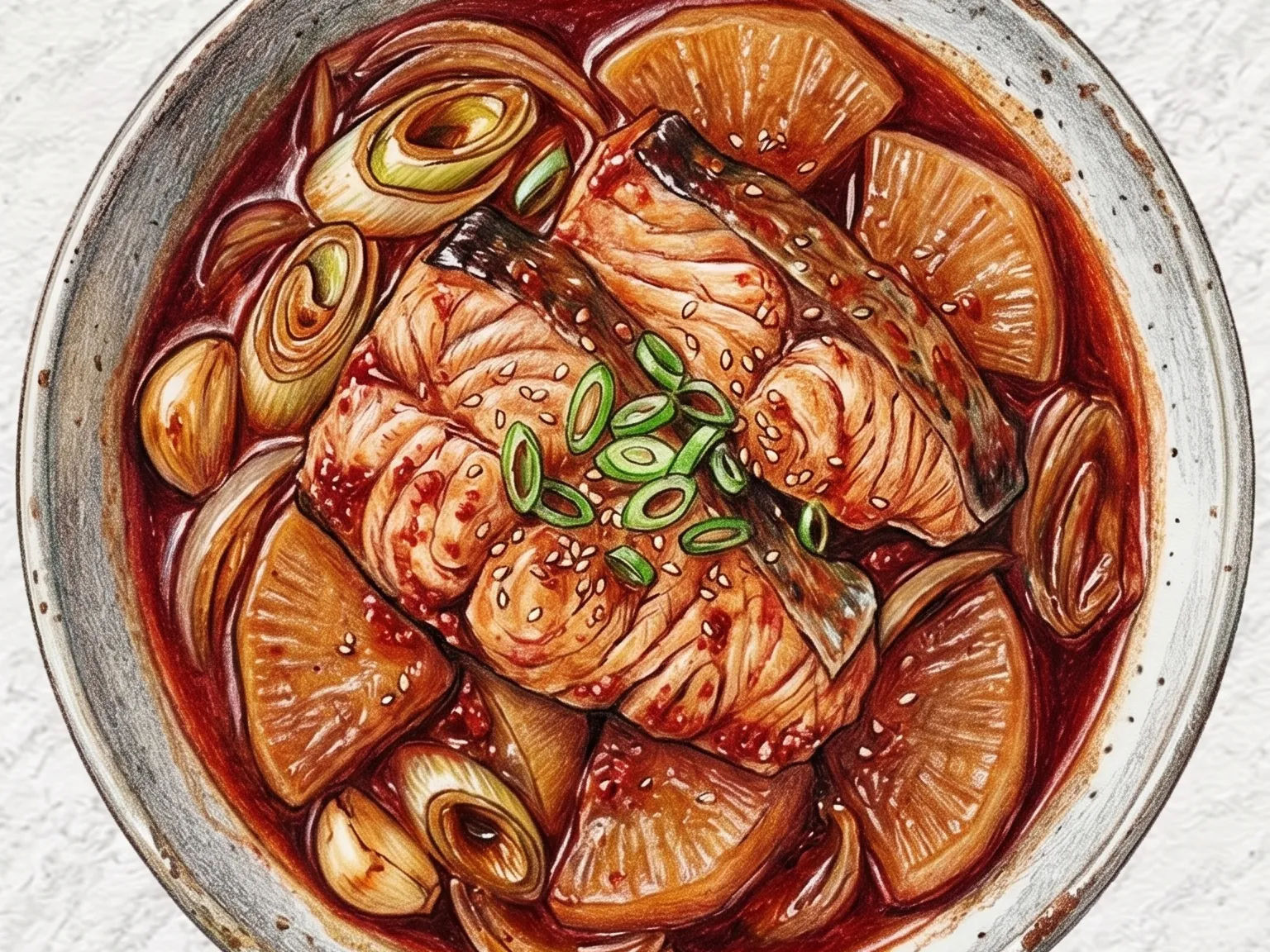
Galchi-jjim is a Korean braised hairtail fish dish where sliced hairtail and Korean radish are simmered together in a seasoned broth of gochugaru, soy sauce, garlic, and ginger until the liquid reduces to a concentrated glaze. The fish has a rich, oily white flesh that drinks in the bold seasoning while staying tender and intact. Ginger juice is added specifically to neutralize the oceanic smell that hairtail can carry, keeping the finished dish clean and approachable. The radish cooks down in the braising liquid, becoming deeply seasoned throughout as it absorbs the spiced sauce. The remaining sauce is intentionally left in small quantity so it can be spooned directly over steamed rice, which is considered the most satisfying way to eat this dish. It is a staple Korean fish preparation that appears on home dinner tables across the year.
Korean Hot Stone Pot Rice
Dolsot bap consists of rice prepared within a heavy, pre-heated stone pot, a method that relies on slow heat to cook the grains thoroughly. The primary base involves rice that has been soaked in water beforehand, combined with specific additions including dried jujubes, whole chestnuts, and small ginkgo nuts. Because the stone pot has thick walls, the heat spreads in a uniform manner during the entire cooking process. This results in rice grains that appear glossy and have a texture that is both plump and somewhat sticky from top to bottom. Each added ingredient provides a distinct element to the final profile. Jujubes offer a light sweetness, chestnuts provide a dense and nutty quality, and ginkgo nuts introduce a subtle bitter quality that balances the other flavors to prevent the dish from becoming cloying. To prepare the pot, the interior surface is coated with a layer of sesame oil prior to adding the rice and other components. This step is essential for developing a golden and crispy layer of scorched rice, known as nurungji, which forms at the very bottom of the vessel. After the heat is turned off, the rice must remain covered to steam for a duration of ten minutes. This resting period allows the moisture to move through every layer of the pot before the lid is removed. When it is time to serve, the lid should be lifted at a slow pace so the steam does not leave the pot immediately, as a sudden release of vapor can cause the top layer of rice to become dry. Dolsot bap is typically served with a dipping sauce made of soy sauce and sesame oil. Diners mix the rice and ingredients at the table, allowing for a meal where each bite features a contrast between the soft, aromatic grains and the firm, crunchy crust found at the base.
Korean Jeju-style Braised Hairtail
Galchi-jorim-jeju is a regional specialty of Jeju Island in which thick-cut hairtail is braised with radish and potato in a bold, deeply seasoned chili sauce. Unlike mainland versions, the Jeju style uses considerably more sauce and cooking liquid, producing a result that sits closer to a jjigae than to a dry braise, and it is common to eat the leftover sauce mixed into plain rice. Radish provides a cooling, clean sweetness that tempers the intensity of the chili and brings balance to the overall flavor, while potato absorbs the sauce and thickens the liquid naturally as it cooks. Jeju silver hairtail is prized for its thick, fatty flesh, which holds together without falling apart during the long braise and absorbs the pungent, layered sauce deeply into each piece. The result is a dish that is simultaneously fiery, savory, and faintly sweet.
Serve with this
Korean Crumbled Tofu Stir-fry
Dubu seoboro - crumbled tofu stir-fry - is a Korean banchan that transforms a block of tofu into something resembling a dry, granular scramble. The tofu is crumbled by hand into rough, irregular pieces rather than diced, creating a range of textures from large curds to fine crumbs that hold seasoning differently. Squeezed thoroughly in a cloth to remove as much moisture as possible, it then goes into a hot pan with diced carrot, onion, and zucchini. The key technique is cooking on high heat without stirring too often, allowing the tofu crumbles to develop lightly golden edges before soy sauce and sesame oil go in at the end. The result is a fluffy, granulated side dish that soaks into rice like a savory topping - satisfying without being rich. Popular in Korean daycare and school lunches because it delivers plant protein in a form that children eat willingly, and it travels cleanly in lunchboxes without leaking. The ingredient cost is low and the cooking time short, which makes it one of the first recipes to reach for when the refrigerator is running low on banchan.
Korean Soy Pickled Radish Cubes
Mu jangajji is a fundamental Korean soy-pickled radish made by cutting radish into 1.5 cm cubes, packing them in a sterilized jar with dried chili, and pouring over a boiled brine of soy sauce, vinegar, and sugar. The radish's firm flesh absorbs the sweet-salty brine gradually while maintaining its crisp bite, and the dried chili adds a gentle warmth and aroma to the liquid. Pouring the brine while still hot is important because the heat briefly opens the cell walls of the radish, allowing the seasoning to penetrate more evenly throughout. Vinegar balances the soy's saltiness with a clean tang, and using dense winter radish yields the best texture. This is one of the most versatile Korean pickles, appearing alongside gimbap, bibimbap, and gukbap as a reliable everyday table companion.
Korean Radish & Shrimp Pancake
Julienned Korean radish and small peeled shrimp are combined in a pancake batter fortified with a measured amount of potato starch for added crispiness. Egg is mixed into the batter to improve binding and keep the pancake intact when flipped. Scallions are distributed throughout for a mild, grassy fragrance. Radish releases notable moisture as it cooks, so frying over high heat is essential to drive off that liquid quickly and achieve a crisp outer surface. The sharp, slightly bitter edge of raw radish disappears with heat and gives way to a gentle natural sweetness that pairs cleanly with the mild, delicate flavor of the shrimp. Pressing the center of the pancake down with a spatula while frying encourages even browning all the way through.
Similar recipes
Korean Spicy Fish Stew (Mackerel in Chili-Radish Broth)
This spicy Korean fish stew is prepared with mackerel or beltfish pieces and simmered with daikon radish and zucchini. The base is an anchovy stock mixed with gochujang, gochugaru, soy sauce, and minced garlic to create a savory broth. Slices of daikon radish are boiled first to release their sweetness and absorb fishy odors. The fish chunks are then laid flat in the pot and cooked with the lid slightly ajar to let steam escape. Zucchini and green onions are added during the final minutes to soften and enrich the soup. Cooking the fish for under fifteen minutes keeps the flesh firm and prevents it from breaking apart in the boiling liquid. Once the fish separates easily from the bone, the stew is adjusted with salt if needed and served hot with steamed rice. It offers a balanced combination of chili heat and tender, flaky fish.
Korean Spicy Braised Hairtail
Galchi-yangnyeom-jorim is a Korean braised hairtail made by simmering sectioned cutlassfish and radish in a spicy-sweet sauce of gochugaru, soy sauce, and minced garlic. The seasoning penetrates the hairtail flesh as it cooks, suppressing any lingering fishiness while developing a layered, concentrated umami. Radish pieces are laid on the bottom of the pot first so they cook through completely and absorb the braising liquid, turning sweet and tender in a way that contrasts with the flaky fish above. Finishing with the lid off allows the sauce to reduce until it clings to the fish surface in a glossy, tight glaze. Fresh hairtail holds its shape better under heat, so the flesh can be lifted with chopsticks intact, while older fish tends to break apart during cooking. Adding Cheongyang chili increases the sharp heat, and a thin slice of fresh ginger worked into the sauce at the start removes any remaining fishiness before braising begins.
Korean Young Radish Kimchi Stew
This recipe introduces a Korean kimchi stew made with young radish kimchi, called chonggak kimchi, instead of the traditional cabbage version. Ponytail radish pieces are unique because they retain their firm, crunchy bite even after long simmering. The preparation starts by sauteing pork shoulder with a portion of the kimchi brine for three minutes to eliminate gamey odors and keep the broth clear. Next, the sliced chonggak kimchi, water, and the remaining brine are added to simmer for fifteen minutes until the radish turns translucent. Onion, gochugaru, and minced garlic are then stirred in to deepen the red color and tanginess. Thick tofu slices and green onions are placed on top in the final three minutes of cooking. This stew combines the sourness of fermented radish and the savory richness of pork for a hearty meal.