Korean Grilled Beltfish (Galchi-gui)
Quick answer
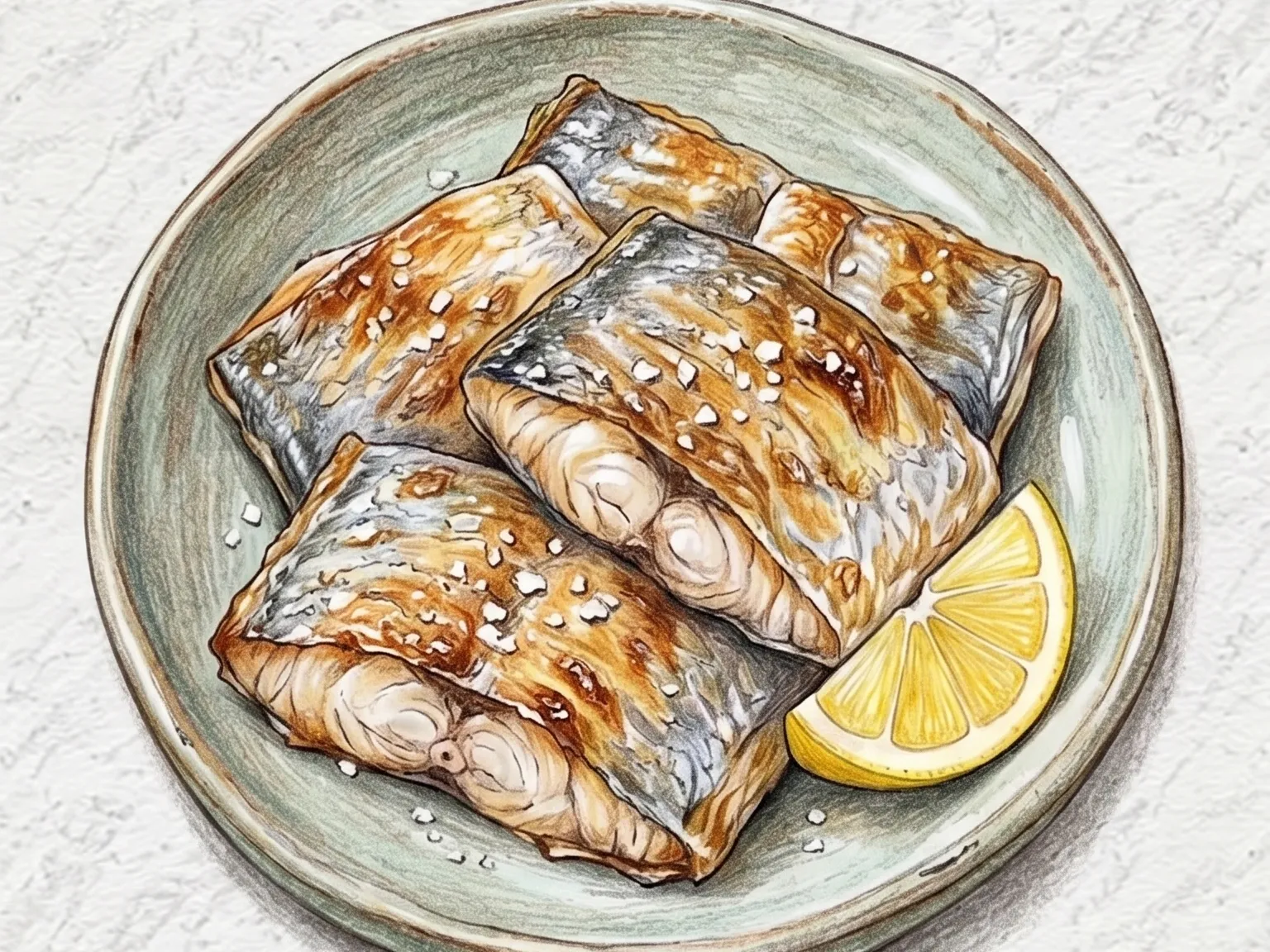
Galchi-gui is grilled beltfish, salted and pan-fried until the skin crisps and the flesh cooks through.
What makes this special
- Galchi-gui (Grilled Beltfish) uses natural fats to create a crispy skin and flaky white flesh.
- Beltfish's own fat renders out, crisping skin without added oil
- 3 cm thick cuts balance juice retention with even cooking
Key ingredients
Core cooking flow
- 1 Cut 400 g beltfish into pieces about 3 cm thick, then check for stray bones.
- 2 Sprinkle 1 tsp salt evenly over both sides and let the fish rest for 10 minutes.
- 3 Add 1 tbsp cooking oil to a pan and preheat over medium-high heat for about 1 minute.
Galchi-gui is grilled beltfish, salted and pan-fried until the skin crisps and the flesh cooks through. Beltfish has a high fat content relative to most white fish, and as the flesh heats, its own oil migrates toward the skin, crisping the exterior without the need for added cooking oil. That same fat keeps the flesh moist well after the fish leaves the heat. Each steak should be cut to around three centimeters thick. Thinner pieces lose their moisture quickly under high heat, while thicker cuts will burn on the outside before the center reaches temperature. The pan needs to be fully preheated before the fish goes in: a cold or lukewarm surface causes the skin to stick and steam rather than sear. When the pan is hot enough, the skin releases cleanly and turns golden through the Maillard reaction. Coarse salt is the only seasoning in the traditional Jeju preparation, and nothing else is added. A squeeze of lemon at the table cuts the richness of the oily fish with clean acidity, lifting the aftertaste. Beltfish caught in the waters around Jeju in spring are considered the finest, with firmer flesh and a richer flavor than fish from other seasons.
Instructions
Read the steps as a cooking flow: prep, heat, seasoning, doneness control, and finish.
- 1Prep
Cut 400 g beltfish into pieces about 3 cm thick, then check for stray bones.
Press the surface dry with paper towels so the skin sears cleanly instead of steaming or splattering in the pan.
- 2Season
Sprinkle 1 tsp salt evenly over both sides and let the fish rest for 10 minutes.
Blot away the moisture that appears on the surface so the flesh firms up and the seasoning stays balanced.
- 3Control
Add 1 tbsp cooking oil to a pan and preheat over medium-high heat for about 1 minute.
When the oil shimmers in a thin layer, place the fish skin side down without crowding the pieces.
- 4Control
Keep the pan uncovered and cook for 6-7 minutes without moving the fish.
Wait until the edges turn golden and the skin releases easily from the pan before trying to lift or turn it.
- 5Heat
Slide in a wide spatula and turn the pieces carefully, then cook for another 4-5 minutes.
The fish is done when the flesh turns opaque white and a chopstick enters the center with little resistance.
- 6Finish
Turn off the heat and move the fish to a plate, then serve with half a lemon.
Squeeze the juice on just before eating so the acidity balances the rich fat while the skin stays crisp.
After the steps
Pick a recipe that fits this dish.
Continue with shared ingredients, meal pairings, or a similar method.
Recipes That Go Well With This
More Grilled →Based on shared ingredients and meal pairing
Korean Braised Beltfish with Potatoes
Galchi-gamja-jorim is a Korean braise of ribbonfish and potatoes cooked together in a soy-based sauce seasoned with gochugaru, garlic, and onion. Ribbonfish has naturally oily, tender flesh that holds together well during braising, and as the fat renders into the liquid it builds a deep seafood umami that defines the dish. The potatoes absorb this concentrated broth as they cook, becoming floury and well-seasoned all the way through rather than just on the surface. Onion breaks down and dissolves into the sauce as it reduces, contributing sweetness that balances the salt and spice. The heat level is adjustable: standard gochugaru gives color and mild warmth, while adding cheongyang chili peppers sharpens the spice. The dish is best served when the sauce has reduced to a thick, glossy consistency that clings to each piece. A spoonful of that sauce over plain rice rounds out the meal. Sliced Korean radish added to the pot introduces a clean, slightly peppery sweetness to the broth.
Korean Spicy Braised Hairtail
Galchi-yangnyeom-jorim is a Korean braised hairtail made by simmering sectioned cutlassfish and radish in a spicy-sweet sauce of gochugaru, soy sauce, and minced garlic. The seasoning penetrates the hairtail flesh as it cooks, suppressing any lingering fishiness while developing a layered, concentrated umami. Radish pieces are laid on the bottom of the pot first so they cook through completely and absorb the braising liquid, turning sweet and tender in a way that contrasts with the flaky fish above. Finishing with the lid off allows the sauce to reduce until it clings to the fish surface in a glossy, tight glaze. Fresh hairtail holds its shape better under heat, so the flesh can be lifted with chopsticks intact, while older fish tends to break apart during cooking. Adding Cheongyang chili increases the sharp heat, and a thin slice of fresh ginger worked into the sauce at the start removes any remaining fishiness before braising begins.
Korean Spicy Stir-Fried Anchovies
Spicy stir-fried anchovies (maeun myeolchi-bokkeum) toss medium-sized dried anchovies in a gochujang-gochugaru glaze, occupying the opposite end of the flavor spectrum from the sweet jiri-myeolchi version and targeting adult palates. Medium anchovies are larger and thicker than the tiny variety, requiring individual head-and-gut removal to eliminate bitterness - a tedious prep step that nonetheless determines the dish's clean finish. After dry-toasting to drive off moisture, the anchovies simmer in a sauce of gochujang, gochugaru, soy sauce, oligosaccharide, and minced garlic until each piece is coated in a rust-colored glaze. The gochujang's fermented heat combines with gochugaru's vivid red to create both flavor depth and visual appeal. The larger anchovy size delivers a satisfying crunch that lingers alongside a lasting savory umami. Heat intensity is adjustable via gochugaru quantity - adding chopped cheongyang chili ratchets it up another notch. This banchan doubles as a soju drinking snack, appearing as frequently on bar tables as on dinner tables.
Korean Grilled Gizzard Shad
Jeoneo-gui is a grilled gizzard shad dish that captures the best of autumn, when this small fish is at peak fat content and flavor. The fish is scored on both sides with close, shallow cuts, rubbed with coarse salt, and left to rest for ten minutes before grilling. The resting time allows surface moisture to draw out, which reduces fishiness and creates the conditions for a properly crisp skin over a hot pan or grill. Gizzard shad has numerous fine, small bones that make the raw fish awkward to eat, but scoring densely and cooking over high heat softens the bones through heat, allowing the entire fish to be eaten without picking. A ginger soy dipping sauce - minced ginger, soy sauce, rice vinegar, and sliced cheongyang chili - accompanies the fish to cut through its notable oiliness, with the sharp ginger note neutralizing the fishy aroma. Autumn gizzard shad is so prized in Korea that the proverb says its grilling smell is enough to bring a daughter-in-law back home.
Serve with this
Korean Egg Fried Rice (Quick Wok-Tossed Grain Bowl)
Gyeran-bokkeumbap is the most fundamental Korean fried rice, built from two beaten eggs and one bowl of cooked rice and finished in under ten minutes. The eggs go into a smoking-hot oiled pan, and the rice is added the moment they are half-set, then tossed rapidly so every grain picks up an individual egg coating that makes the rice fluffy and lightly glossy rather than clumped. Cold leftover rice performs best because its lower moisture lets the grains separate cleanly during stir-frying, but freshly cooked rice spread out and briefly cooled reduces sticking enough to be workable. A thin line of soy sauce poured along the rim of the pan caramelizes on contact and carries a trace of smokiness through the rice. A finishing drizzle of sesame oil and a scattering of sliced green onion add a toasty fragrance that completes this simple but satisfying base. The ratio of egg to rice is sturdy enough that a handful of kimchi, diced ham, or refrigerator scraps can be stirred in without changing the essential character of the dish.
Chicken Mu (Korean Fried Chicken Radish Pickle)
The crunchy, sweet-sour radish pickle served with every order of Korean fried chicken - now easy to make at home in under 15 minutes. Cubed radish is submerged in a cooled brine of vinegar, sugar, salt, and whole black peppercorns. Using fully cooled brine rather than hot is critical for maintaining the radish's firm, snapping crunch. Ready to eat after one day of refrigeration, its bright acidity cleanses the palate between bites of crispy chicken. Stored in a glass jar, this pickle keeps for over a week.
Ojingeo-muguk (Korean Squid Radish Soup)
Ojingeo-muguk is a clear Korean soup that pairs squid and radish in a gently sweet, clean-tasting broth built without any chili or strong seasoning. Radish is added to cold water from the start and simmered for at least eight minutes, during which the vegetable slowly releases a natural sweetness that forms the flavor foundation of the soup. Squid is cleaned, sliced into rings, and added only after the radish has softened, and the timing here is critical: five minutes in the hot broth is enough for the flesh to turn fully opaque and pleasantly firm, but even a minute or two beyond that causes the proteins to tighten and the rings to turn rubbery and tough. Soup soy sauce seasons the broth without darkening it, and minced garlic provides depth without heat. Sliced green onion stirred in at the end neutralizes any residual seafood aroma and leaves the broth tasting bright and clean. The simplicity of the combination is the point: the radish's sweetness and the squid's umami reinforce each other in a broth that is light in body but surprisingly satisfying.
Similar recipes
Korean Grilled Yellowtail
Bangeo-gui is a Korean salt-grilled yellowtail that relies on the fish's own winter fat for flavor rather than elaborate seasoning. Yellowtail caught in the cold months develops a thick fat layer under the skin, making coarse salt alone sufficient to bring out the natural richness. Patting the surface completely dry before grilling is essential because any moisture prevents the skin from crisping. The skin side goes down on a medium-heat pan, pressed for six to seven minutes until it turns brittle and golden as the fat renders. Flipping too often breaks the flesh apart, so the rule is to wait until one side is fully done before turning once. Grated fresh daikon and a wedge of lemon served on the side cut through the oiliness with sharp, clean acidity.
Korean Euneo Sogeum-gui (Salt-Grilled Sweetfish)
Euneo-sogeum-gui is a salt-grilled freshwater sweetfish dish where whole fish, intestines left intact, are seasoned only with coarse salt and cooked slowly over charcoal or a wire grill until the skin crisps and chars lightly at the edges. Sweetfish carries a distinctive fresh fragrance comparable to cucumber or watermelon rind, a quality that earned it the name 'fragrant fish' in Japanese, and that delicate aroma would be overwhelmed by any marinade or heavy seasoning, making salt the only appropriate choice. The intestines contain a concentrated bitterness balanced by deep umami, and eating the fish whole, organs included, is the traditional approach rather than an afterthought. Grilling slowly over medium heat while turning the fish at intervals prevents the lean flesh from drying out while allowing the skin to develop an even, crackled crispness. Skewering the fish in a wave-like curve before cooking is the classic presentation that allows fat to render and drip naturally during grilling, basting the skin from the inside. A squeeze of lemon at the table brings acidity that tempers the slight bitterness from the organs and brightens the overall finish. Fish caught and grilled the same day is considered ideal, and smaller individuals tend to carry a purer aroma and a milder bitterness.
Korean Grilled Mackerel (Crispy Skin Salt-Grilled Blue Fish)
Godeungeo-gui is Korea's classic grilled mackerel, prepared by salting the fish for ten minutes to draw out moisture and reduce fishiness, patting the surface completely dry, then pan-frying or grilling over direct heat. Cooking skin-side down first for five to six minutes renders the abundant subcutaneous fat and crisps the skin, while flipping and cooking the flesh side for four to five more minutes keeps the interior moist and flaky. Mackerel's high omega-3 fat content transforms under heat into a deeply savory, naturally rich flavor that requires no marinade beyond salt. A side of freshly grated daikon mixed with soy sauce provides a sharp, peppery counterpoint that clears the palate between bites. Autumn mackerel is considered peak eating, when fat content reaches its highest, and grilled mackerel has long been a centerpiece banchan on everyday Korean tables.