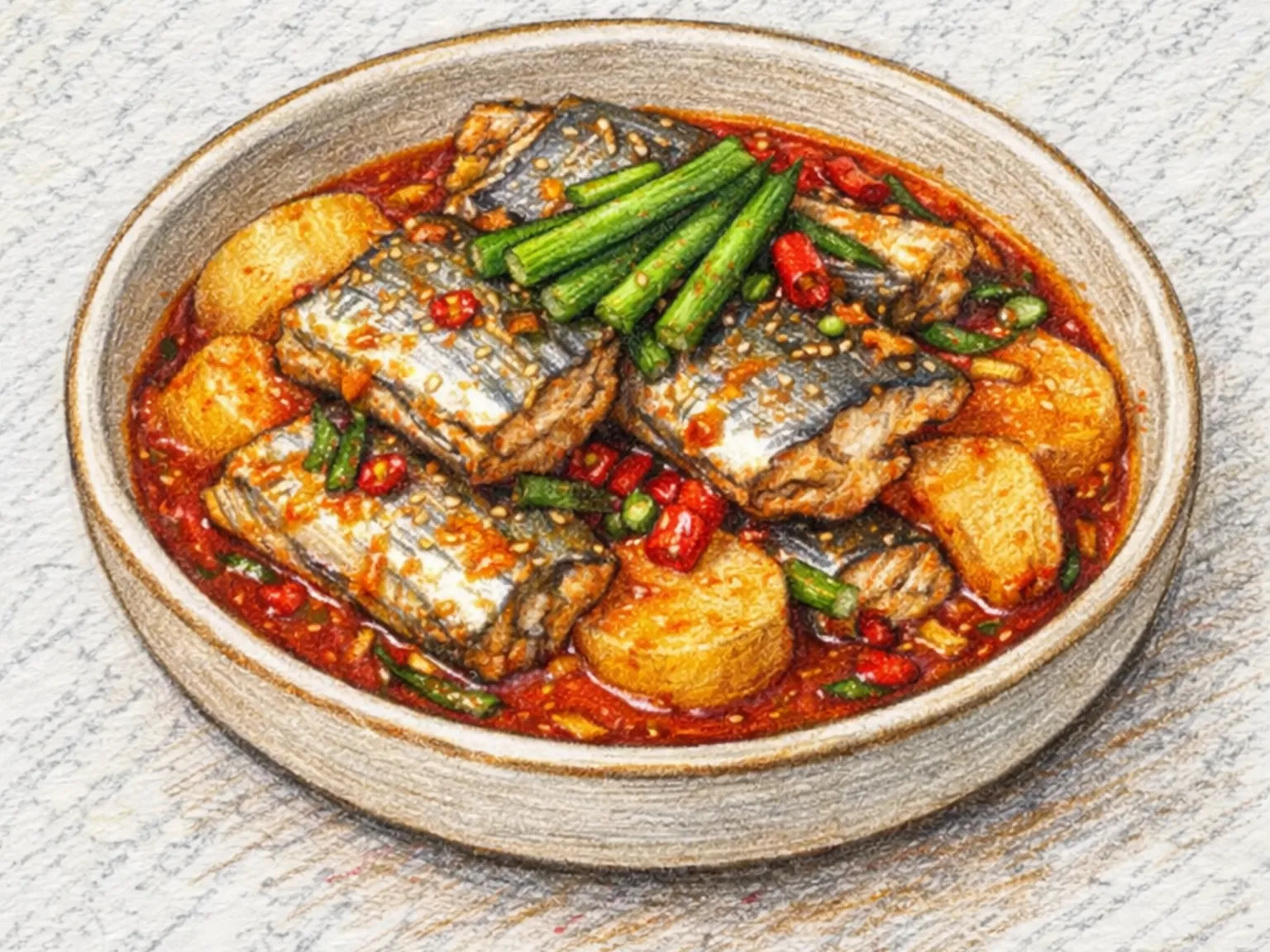
Korean Braised Hairtail Fish
Line the pot with 250 g Korean radish cut into 1.5 cm slices, then the onion, and lay 500 g hairtail on top without stacking, which keeps the fish from scorching. Mix the Korean chili flakes, soy sauce, garlic, and ginger juice with 300 ml water and pour it around the edges, cover, bring to a steady boil over medium heat, and braise over medium-low heat for 18 to 20 minutes. Uncover and reduce for 7 to 8 more minutes, spooning the liquid over the fish 2 to 3 times, until only a shallow sauce remains.
Quick answer
- Total time
- 48 min
- Level
- Medium
- Servings
- 2 servings
- Ingredients
- 8
About this dish
Hairtail is so soft and oily that stirring it with a ladle breaks it apart.
Read more
Here the pot itself gets a shake now and then to move the sauce around underneath, and broth is spooned over the fish only in the last few minutes with the lid off.
Ingredients
Instructions
- 1
Clean 500 g hairtail, remove the innards, and cut it into 3-4 sections.
Rinse briefly in salted water, then pat it very dry so the seasoning clings and the fishy smell stays controlled.
- 2
Slice 250 g Korean radish into 1.5 cm pieces and cut half an onion into thick strips.
Spread the radish first across the bottom of the pot, then add the onion so the fish does not scorch.
- 3
Lay the hairtail over the radish without stacking the pieces.
Mix the gochugaru, soy sauce, garlic, ginger juice, and 300 ml water, then pour it around the edges so the fish surface stays intact.
- 4
Cover the pot and heat over medium heat until the liquid comes to a steady boil.
Once boiling, lower to medium-low and braise for 18-20 minutes, keeping the simmer gentle so the fish does not break.
- 5
During cooking, gently shake the pot instead of stirring with a spoon so the seasoning moves underneath.
The fish is nearly done when the flesh loosens from the bone and the radish accepts a chopstick.
- 6
Uncover and spoon the braising liquid over the hairtail 2-3 times.
Reduce for 7-8 more minutes until only a shallow sauce remains and the fish looks glossy, then serve with the remaining sauce over rice.
Use-up ingredient planner
Turn these ingredients into two more meals
The overlap excludes basic seasonings. Open the next recipe and your selected dishes will stay with you.
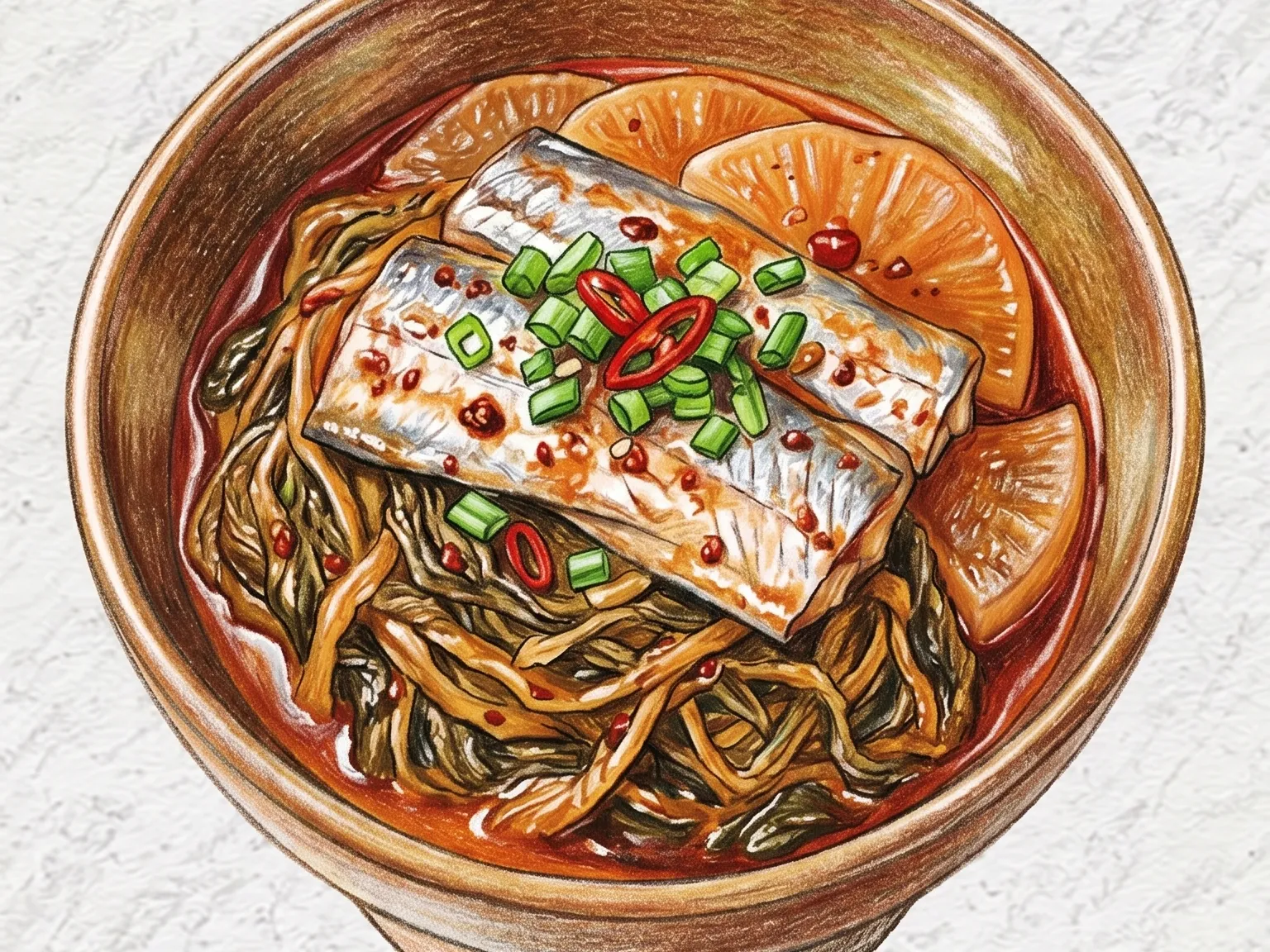
Korean Hairtail Braised with Dried Greens
hairtail fish, Korean radish

Korean Hairtail & Fernbrake Stew
hairtail fish, Korean radish
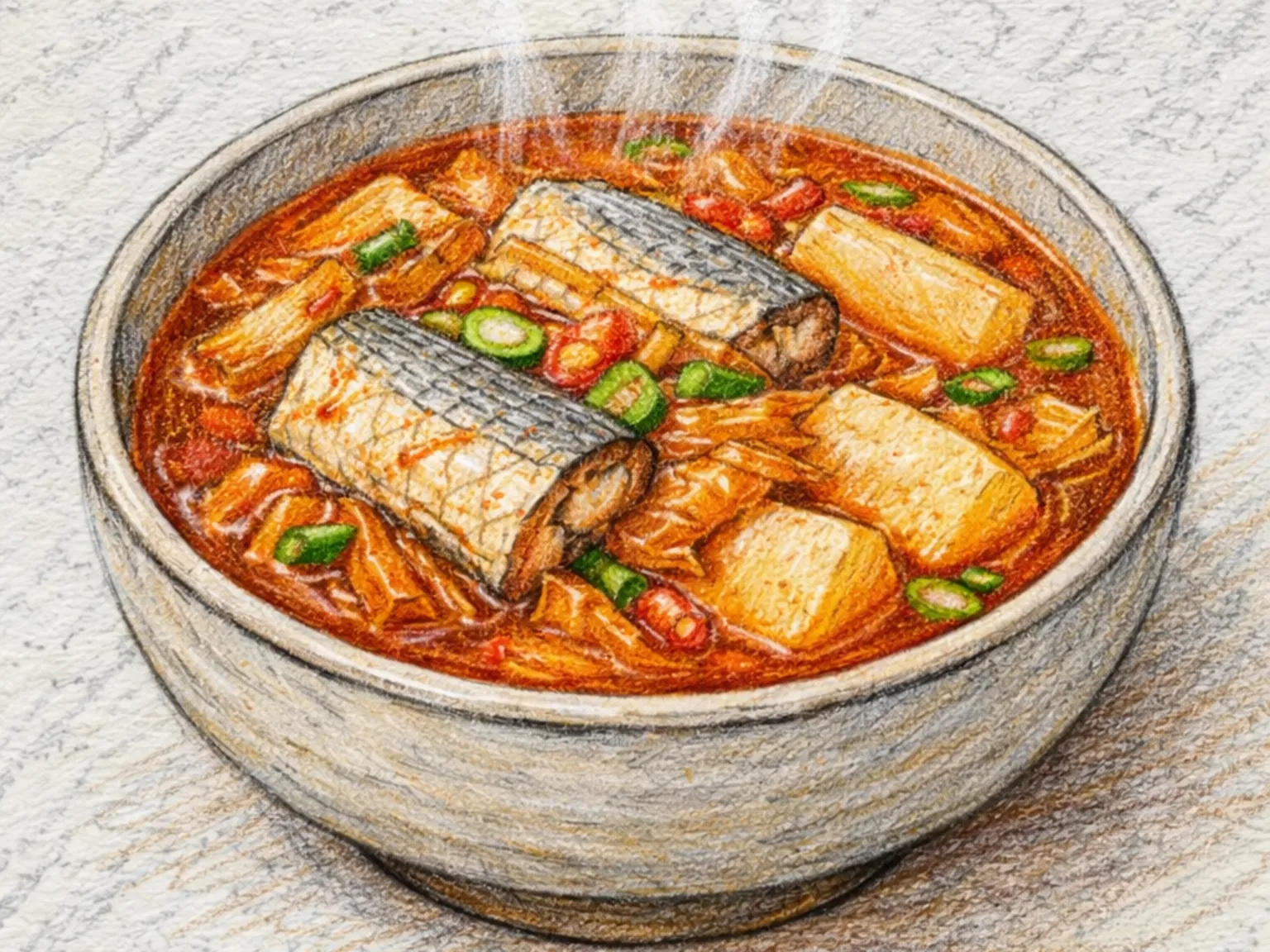
Korean Galchi Kimchi Jjigae (Hairtail Kimchi Stew)
hairtail fish, Korean radish