Korean Jeju-style Braised Hairtail
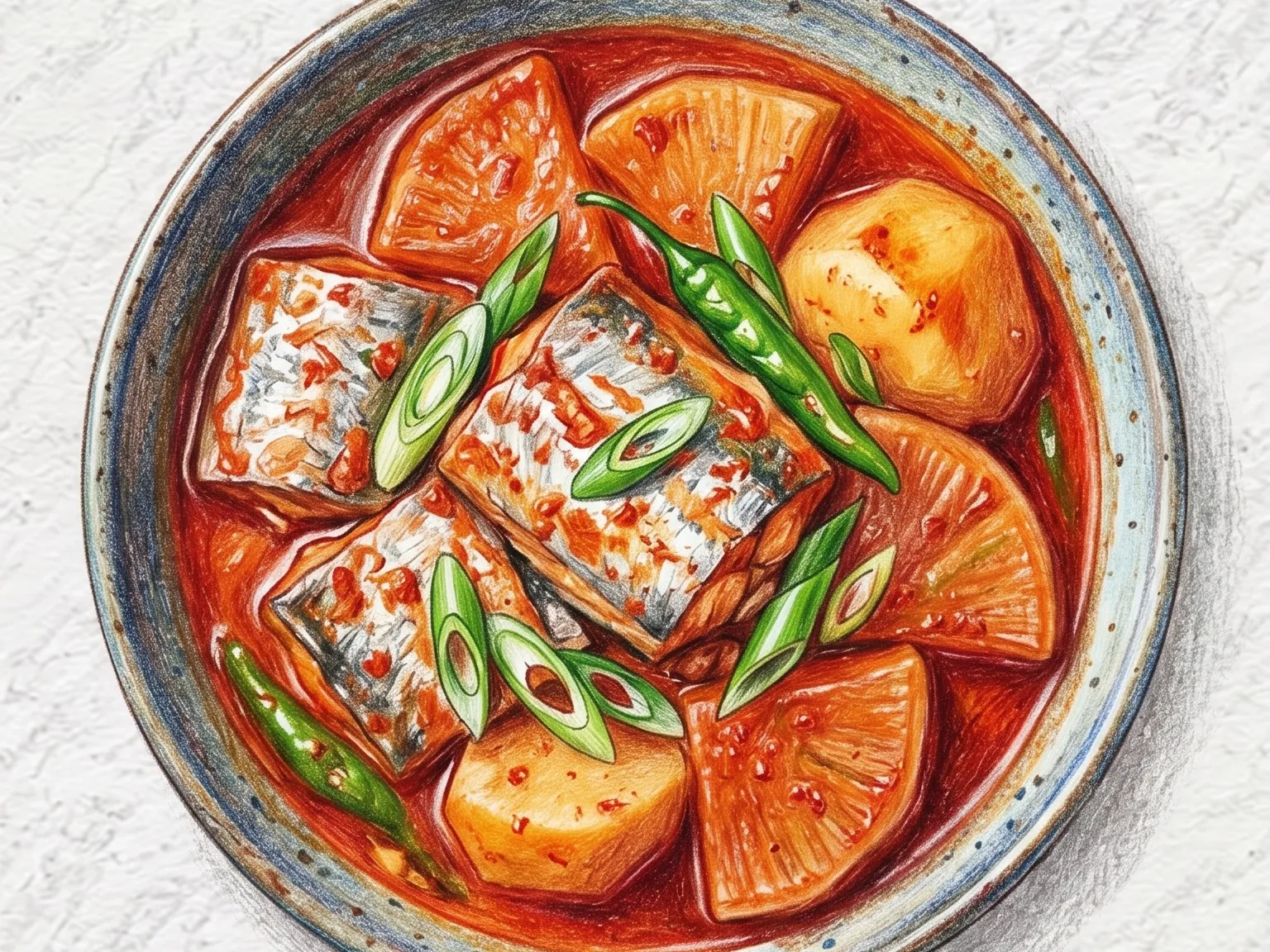
Galchi-jorim-jeju is a Jeju Island regional specialty where thick hairtail chunks are braised with radish and potato in a bold, spicy sauce. Compared to mainland versions, Jeju-style uses a more generous amount of seasoning and liquid, producing a stew-like consistency. The radish provides a cooling, clean sweetness that counterbalances the intense chili heat. Using Jeju silver hairtail, known for its thick, fatty flesh, further enriches the dish and absorbs the pungent sauce deeply.
Adjust Servings
Instructions
- 1
Rinse hairtail briefly in salted water, pat dry, and sprinkle cooking wine.
- 2
Cut radish and potato thick; slice onion and chili diagonally.
- 3
Layer radish and potato, add water, and boil for 10 minutes first.
- 4
Mix soy sauce, gochugaru, and garlic; add to the pot.
- 5
Place hairtail on top and simmer 12 minutes, basting repeatedly.
- 6
Add onion and chili, then braise 8 more minutes until flavors meld.
As an Amazon Associate, we may earn from qualifying purchases.
Tips
Nutrition (per serving)
Variations
Spicy Braised Hairtail
Spicy seasoned hairtail is gently braised until moist and flavorful. The sauce seeps into the fish, making it excellent with rice.
More Recipes

Korean Spicy Braised Hairtail
Galchi-yangnyeom-jorim is a Korean braised hairtail in a spicy-sweet sauce made from chili flakes, soy sauce, and garlic. The seasoning soaks into the tender hairtail flesh during simmering, suppressing any fishiness while building layered umami. Radish pieces braise alongside the fish, softening completely and offering a textural contrast to the flaky meat. Reducing the sauce uncovered at the end concentrates the flavors into a thick, glossy glaze.

Korean Braised Hairtail Fish
Galchi-jjim is a Korean braised hairtail fish dish simmered with Korean radish in a spicy soy sauce and gochugaru broth. The hairtail's white, flaky flesh absorbs the bold seasoning while remaining tender throughout. Ginger juice is key to keeping the dish clean-tasting by cutting through any fishiness. The radish softens in the braising liquid and the remaining sauce is meant to be spooned over rice, making this a staple fish dish on Korean dinner tables.

Korean Hairtail & Fernbrake Stew
Hairtail fish and boiled fernbrake (gosari) are the defining pair in this spicy Korean jjigae. The hairtail breaks into tender flakes as it simmers in anchovy-kelp stock seasoned with gochugaru and soup soy sauce, enriching the broth with its oils. Korean radish and onion add a clean sweetness that balances the heat. The fernbrake brings a chewy, almost meaty texture that holds up well in the broth, making this a regional favorite from Korea's southern coastal areas.

Korean Hairtail Braised with Dried Greens
Siraegi galchi jorim is a Korean braised hairtail fish dish layered with boiled dried radish greens and radish, then simmered in a sauce of gochugaru, soy sauce, and gochujang. The dried greens absorb the braising liquid like a sponge, releasing concentrated seasoning with every bite, while the radish soaks up the stock and adds a clean sweetness. The hairtail is never flipped during cooking; instead the sauce is spooned over it repeatedly to preserve the delicate flesh. A teaspoon of doenjang rubbed into the greens before cooking deepens the earthy backbone of the dish, producing a robust side that demands a full bowl of rice.

Korean Braised Flounder with Radish
Gajami-jorim is a Korean braised flounder dish where the fish is gently simmered with Korean radish in a soy sauce and chili flake broth. The delicate flounder flesh absorbs the seasoning while careful low heat keeps it from breaking apart. The radish serves a dual purpose, neutralizing any fishiness while contributing a clean, refreshing sweetness to the braising liquid. Spooning the reduced sauce over rice makes it a complete, standalone meal.

Korean Braised Yellow Croaker
Jogi-jorim is a Korean braised yellow croaker simmered with radish and onion in a soy sauce and gochugaru seasoning. Yellow croaker has delicate flesh and mild flavor, making it well-suited for braising as the sauce penetrates the fish thoroughly. The radish absorbs the braising liquid and turns sweet-savory, while cheongyang chili adds a low, steady heat. It is a quintessential Korean rice-side dish - the sauce is so flavorful that diners inevitably mix it into their rice.