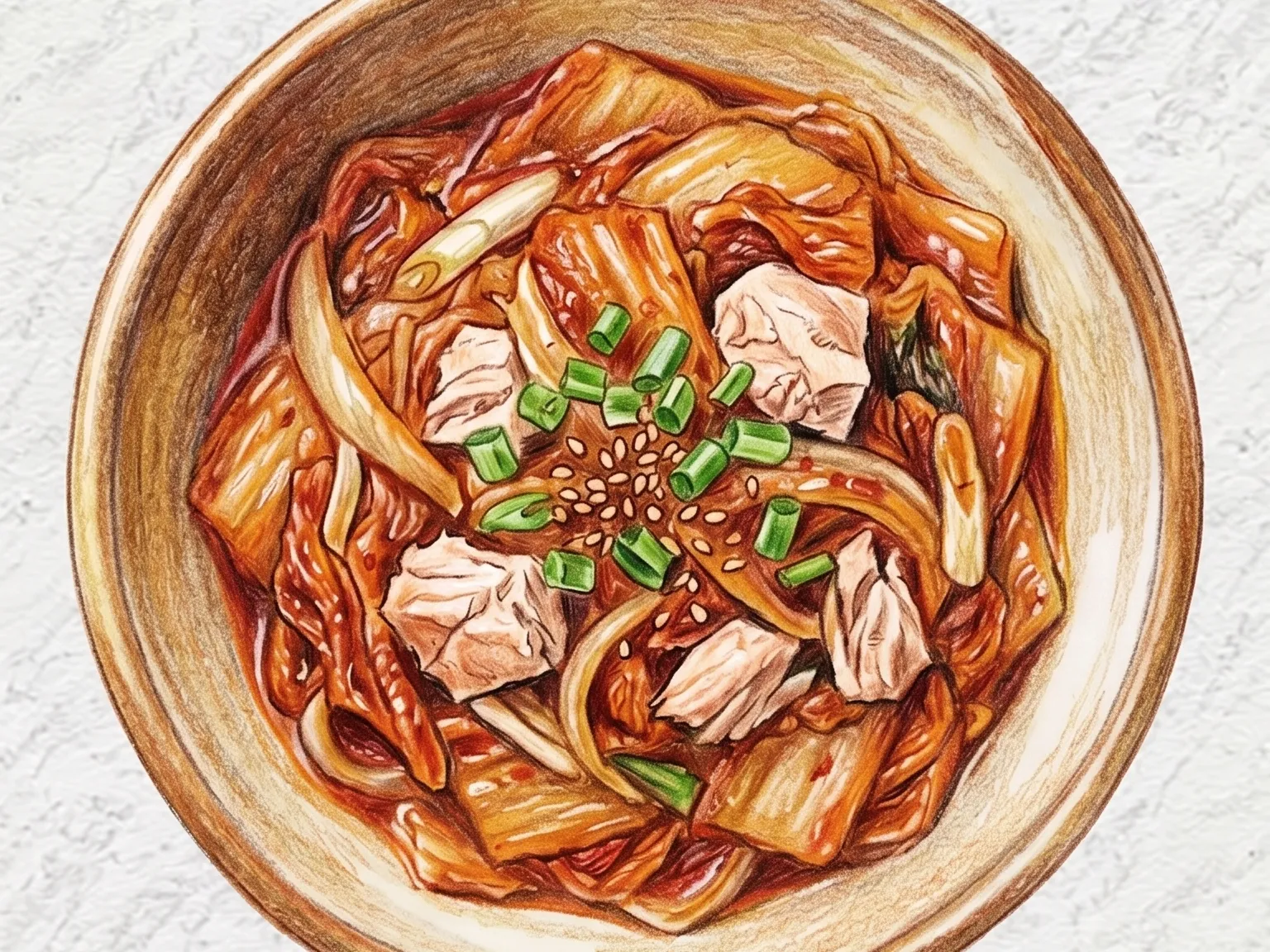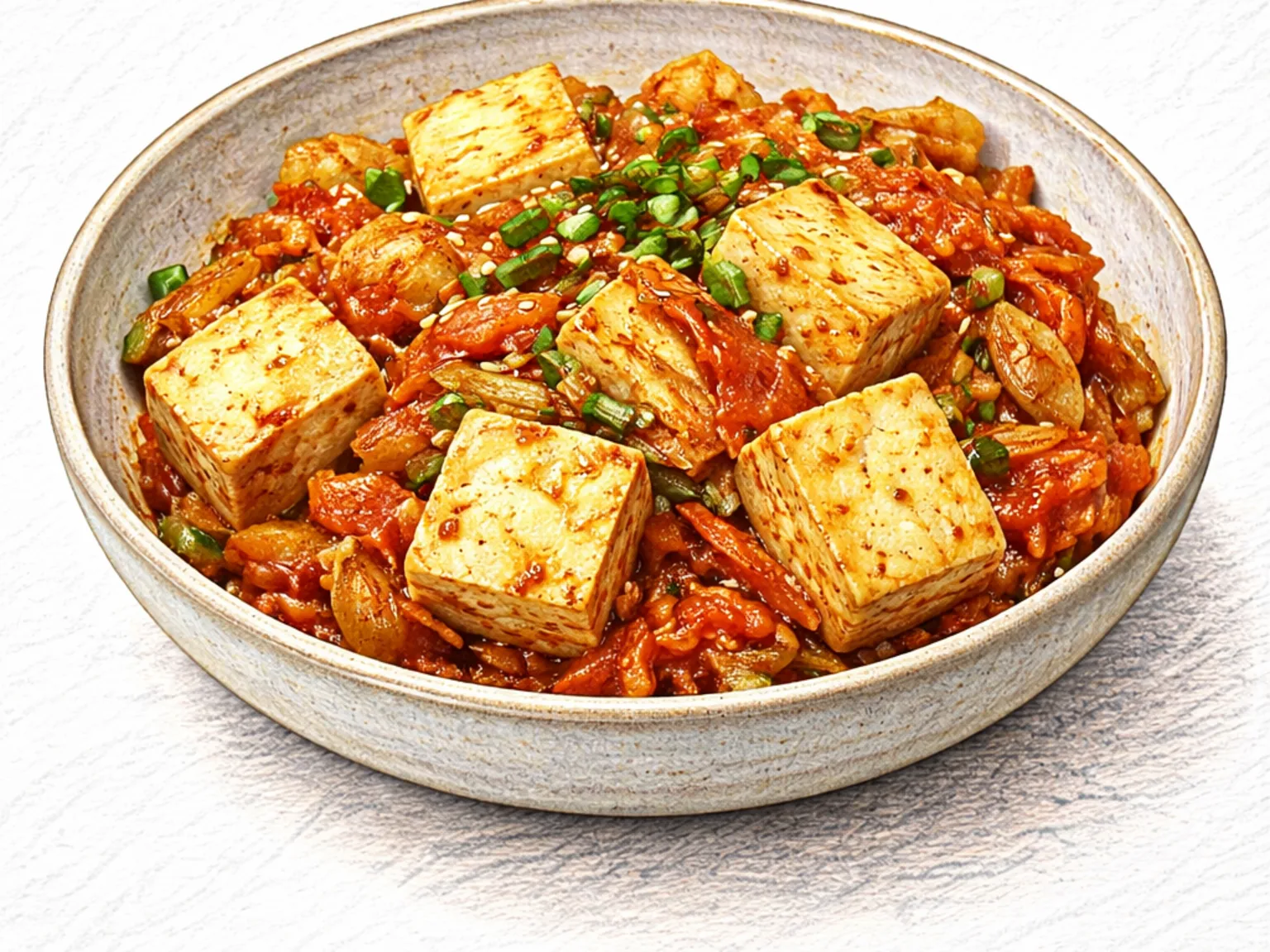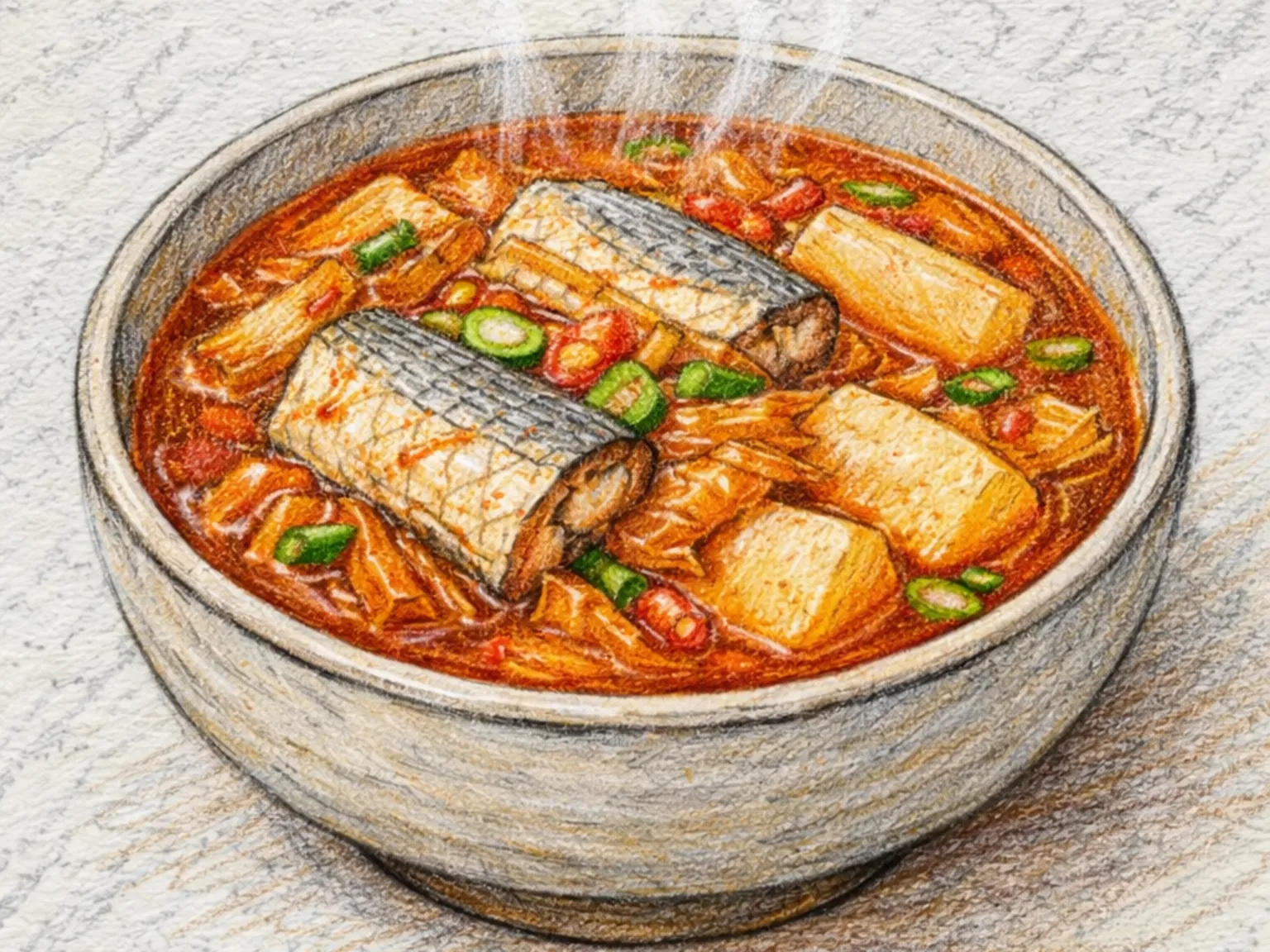
Korean Galchi Kimchi Jjigae (Hairtail Kimchi Stew)
This stew brings together hairtail fish and aged kimchi in an anchovy-kelp stock, creating a layered broth where the oily richness of the fish meets the deep tanginess of well-fermented kimchi. Korean radish and onion add body to the soup, while gochugaru and soup soy sauce round out the seasoning. The hairtail flesh breaks down gently during cooking, releasing its natural umami into every spoonful.
Adjust Servings
Instructions
- 1
Cut the hairtail into serving pieces, soak in light salted water for 5 minutes, then rinse to reduce fishy odor.
- 2
Layer aged kimchi and radish in a pot, add half the stock, and simmer over medium-low heat for 10 minutes first.
- 3
Add gochugaru, minced garlic, and soup soy sauce, then pour in the remaining stock to season the broth.
- 4
Place hairtail on top, add onion, cover, and cook over medium heat for 12 minutes.
- 5
Uncover, skim foam, taste the broth, and finish seasoning with only a little salt if needed.
- 6
Add green onion, simmer 2-3 more minutes, then rest for 5 minutes before serving.
As an Amazon Associate, we may earn from qualifying purchases.
Tips
Nutrition (per serving)
More Recipes

Korean Pork Kimchi Stew (Fermented Kimchi & Pork Shoulder)
Pork kimchi jjigae is one of the most beloved home-cooked Korean stews, built on aged kimchi and pork shoulder. The marbled fat from the pork shoulder melts into the broth, balancing the kimchi's sharp acidity with richness. Tofu and onion bulk up the pot, while soup soy sauce and chili flakes season the liquid. The riper and more sour the kimchi, the better this stew tastes - it is the ideal use for old kimchi.

Korean Hairtail & Fernbrake Stew
Hairtail fish and boiled fernbrake (gosari) are the defining pair in this spicy Korean jjigae. The hairtail breaks into tender flakes as it simmers in anchovy-kelp stock seasoned with gochugaru and soup soy sauce, enriching the broth with its oils. Korean radish and onion add a clean sweetness that balances the heat. The fernbrake brings a chewy, almost meaty texture that holds up well in the broth, making this a regional favorite from Korea's southern coastal areas.

Korean Spicy Fish Stew (Mackerel in Chili-Radish Broth)
Saengseon jjigae is a spicy Korean fish stew made with mackerel or beltfish cut into chunks, simmered alongside daikon radish and zucchini. Gochujang, gochugaru, soy sauce, and garlic build a bold, peppery broth in an anchovy stock base. The radish neutralizes any fishiness while adding natural sweetness to the soup. Picking the flaky fish off the bone and eating it with spoonfuls of the fiery broth over rice is the traditional way to enjoy it.

Korean Braised Hairtail Fish
Galchi-jjim is a Korean braised hairtail fish dish simmered with Korean radish in a spicy soy sauce and gochugaru broth. The hairtail's white, flaky flesh absorbs the bold seasoning while remaining tender throughout. Ginger juice is key to keeping the dish clean-tasting by cutting through any fishiness. The radish softens in the braising liquid and the remaining sauce is meant to be spooned over rice, making this a staple fish dish on Korean dinner tables.

Korean Tuna Kimchi Stew
Aged kimchi and canned tuna replace the more traditional pork in this streamlined kimchi jjigae. The tuna's oil enriches the broth quickly without a long simmer, while the well-fermented kimchi provides a deep sourness that anchors the stew's flavor. Firm tofu, onion, and green onion fill out the pot, and a spoonful of chili flakes keeps the heat level assertive.

Korean Spicy Braised Hairtail
Galchi-yangnyeom-jorim is a Korean braised hairtail in a spicy-sweet sauce made from chili flakes, soy sauce, and garlic. The seasoning soaks into the tender hairtail flesh during simmering, suppressing any fishiness while building layered umami. Radish pieces braise alongside the fish, softening completely and offering a textural contrast to the flaky meat. Reducing the sauce uncovered at the end concentrates the flavors into a thick, glossy glaze.