Galette des Rois (Puff Pastry Almond Frangipane Pie)
Baking Medium

Galette des Rois (Puff Pastry Almond Frangipane Pie)

Quick answer

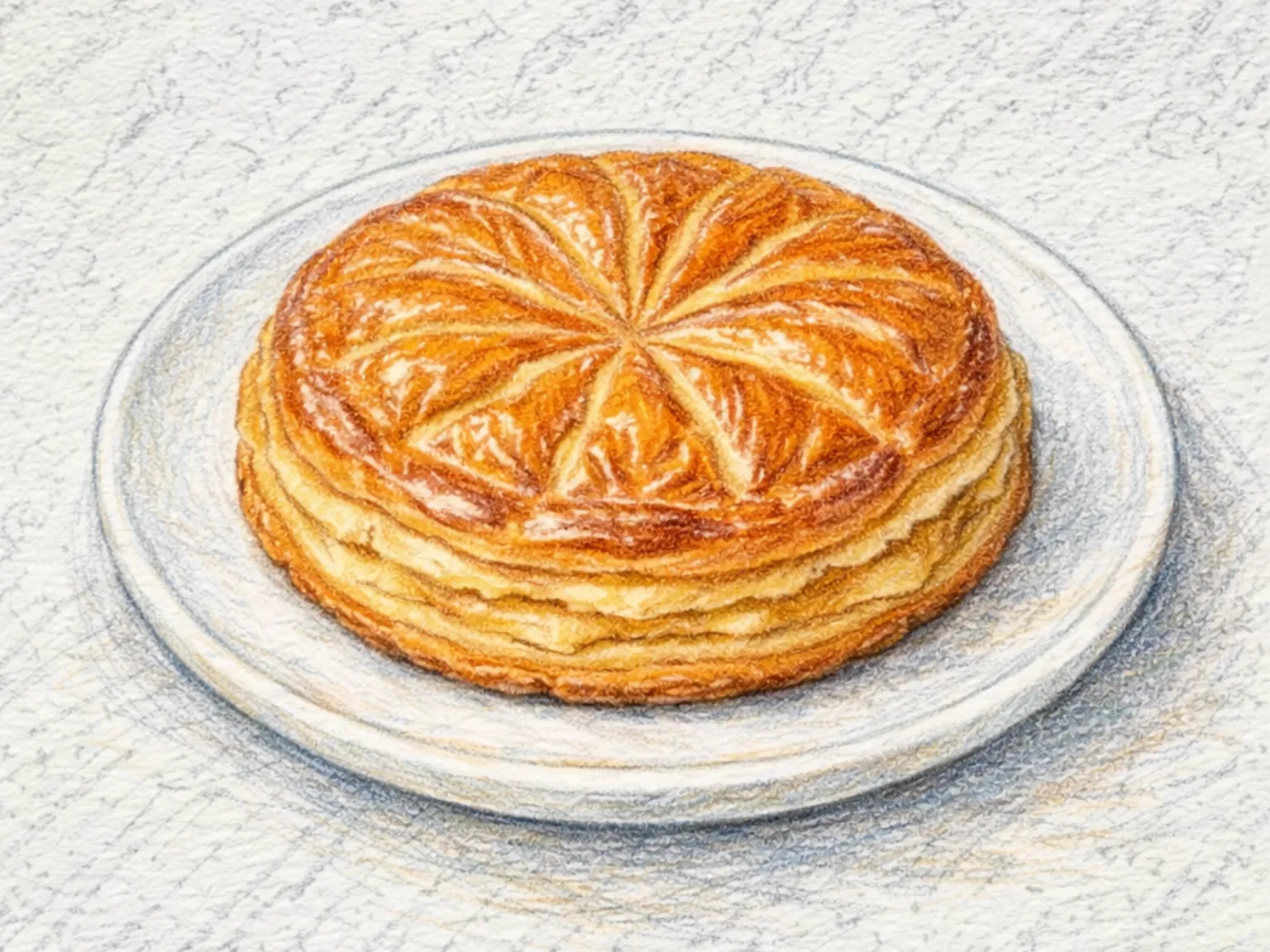
Galette des rois is the traditional French pie eaten during Epiphany in January, made from two rounds of puff pastry enclosing a filling of almond frangipane cream.

What makes this special

  • Galette des rois filled with almond frangipane between flaky puff pastry layers.
  • Hundreds of puff pastry layers shatter into golden flakes driven by steam
  • Almond frangipane condenses as it bakes, concentrating its nutty richness
Total time
60 min
Level
Medium
Servings
4 servings
Ingredients
7
Calories
560 kcal
Protein
9 g

Key ingredients

puff pastrybutteralmond floursugaregg

Core cooking flow

  1. 1 Soften 80 g butter, then mix it with 80 g sugar and 1/4 tsp salt until the mixture looks slightly lighter.
  2. 2 Add 100 g almond flour, then beat in 1 egg in small additions so the cream does not split.
  3. 3 Prepare the 300 g puff pastry as two rounds or sheets, keeping it cold while you work.

Galette des rois is the traditional French pie eaten during Epiphany in January, made from two rounds of puff pastry enclosing a filling of almond frangipane cream. Puff pastry is built from hundreds of alternating layers of dough and butter that have been folded and rolled repeatedly. In the oven, the moisture inside the butter converts to steam and forces the layers apart, causing the dough to expand dramatically and set into a structure of thin, translucent sheets stacked one on top of the other. When the baked galette is cut, those layers are visible in cross-section, and the pastry shatters into golden flakes with any pressure - the defining textural characteristic of well-made puff pastry. The frangipane filling is made from butter, eggs, sugar, and ground almonds whisked together into a smooth cream. It bakes into something dense and moist, with the almond flavor concentrated and deepened by the heat in a way that raw almond paste cannot replicate. Before baking, a small porcelain figurine called a feve is pressed into the frangipane and sealed inside. Whoever receives the slice containing the feve is crowned king or queen for the day with a paper crown that typically comes with the galette from the bakery. The top of the pastry is scored with a sharp knife in decorative patterns of leaves, spirals, or geometric designs, and brushed with an egg wash that caramelizes in the oven to produce a lacquered golden surface with the scored lines standing out in relief. In France, bakeries sell galette des rois throughout January, and sharing one with family or colleagues is a significant social ritual at the start of the new year.

Prep 25min Cook 35min 4 servings
Recipes by ingredient → butter egg

Instructions

Read the steps as a cooking flow: prep, heat, seasoning, doneness control, and finish.

6 steps
  1. 1
    Season

    Soften 80 g butter, then mix it with 80 g sugar and 1/4 tsp salt until the mixture looks slightly lighter.

    Do not overwork it, since the filling only needs to become smooth enough to combine evenly.

  2. 2
    Step

    Add 100 g almond flour, then beat in 1 egg in small additions so the cream does not split.

    Stir in 1 tbsp rum and stop when the frangipane is thick, smooth, and spreadable.

  3. 3
    Prep

    Prepare the 300 g puff pastry as two rounds or sheets, keeping it cold while you work.

    Spread the frangipane over one piece and leave about 2 cm of clean edge so the pastry can seal tightly.

  4. 4
    Control

    Brush the clean edge lightly with water, then cover with the second pastry piece.

    Press from the center outward to remove trapped air, then seal the edge firmly with your fingertips to prevent leaks.

  5. 5
    Prep

    Score shallow decorative lines on the top and brush with the remaining beaten egg.

    Keep the cuts light so they do not pierce the pastry, then chill the assembled galette for 10 minutes before baking.

  6. 6
    Heat

    Bake at 190C for 30-35 minutes until the top is deeply golden and the puffed layers look set.

    Rest for 10 minutes before slicing so the frangipane firms up and does not run out.

After the steps

Pick a recipe that fits this dish.

Continue with shared ingredients, meal pairings, or a similar method.

Recipes That Go Well With This

More Baking →

Based on shared ingredients and meal pairing

Tarte Bourdaloue (French Pear Almond Frangipane Tart)
Shared ingredient: butter Baking

Tarte Bourdaloue (French Pear Almond Frangipane Tart)

A crisp tart shell is lined with frangipane - a mixture of almond flour, butter, egg, and sugar - then topped with halved or sliced pears and baked until the almond cream rises around the fruit and turns golden. The frangipane puffs gently in the oven, enveloping the pear in a dense, moist almond layer, while juice from the fruit seeps into the cream and lightens its richness. Poached pears produce the most tender result and cook evenly, but raw pears work if sliced thin enough to soften during baking. Overmixing the frangipane compacts the crumb and eliminates the delicate rise, so the batter should be combined only until the ingredients are incorporated. Scattered sliced almonds on top before baking add visual appeal and an extra layer of nutty crunch. This tart originated on Rue Bourdaloue in Paris and remains one of the essential recipes in French patisserie.

Mille-Feuille (Layered Puff Pastry with Vanilla Cream)
Shared ingredient: puff pastry Baking

Mille-Feuille (Layered Puff Pastry with Vanilla Cream)

Mille-feuille stacks three sheets of puff pastry with layers of vanilla pastry cream between them, creating a dessert defined by the tension between crisp and soft. The pastry itself is built through repeated folding with cold butter, generating hundreds of paper-thin layers that puff apart in the oven into shatteringly flaky sheets. Pastry cream - egg yolks, sugar, milk, and a touch of flour cooked to a thick custard - fills the gaps with a smooth richness that yields immediately to the fork. The top is typically dusted with powdered sugar or glazed with fondant, sometimes decorated with a feathered chocolate pattern. Timing matters: once assembled, moisture from the cream migrates into the pastry, so the window for peak crispness is roughly one to two hours. When eaten fresh, each bite collapses with an audible crunch before the cream takes over.

Chocolate Lava Cake
Serve together Western

Chocolate Lava Cake

Chocolate lava cake bakes a batter of melted dark chocolate, butter, whole eggs, egg yolks, sugar, and a small measure of flour in buttered ramekins at 220 degrees Celsius for ten to twelve minutes, producing a set crust and molten center from a single brief baking window. The high oven temperature firms the outside and top of the batter into cake while the core stays liquid, so breaking the surface with a spoon releases a slow pour of concentrated warm chocolate. High-cacao dark chocolate provides a complex, bittersweet depth that pairs with the richness of butter fat, and vanilla extract softens and rounds the overall aroma. Timing controls everything in this recipe: overbaking by even two minutes sets the center solid and destroys the signature flow. The edges of each ramekin should feel just firm when pressed lightly through a towel at the ten-minute mark. Ramekins can be filled ahead and refrigerated, but the baking time then needs an extra one to two minutes to account for the colder starting temperature. Serving with a scoop of vanilla ice cream or a spoonful of cold heavy cream creates a striking contrast between the hot, dense chocolate interior and the chilled, lighter dairy.

Canelé (Bordeaux Caramelized Rum Vanilla Custard Cake)
Similar recipe Baking

Canelé (Bordeaux Caramelized Rum Vanilla Custard Cake)

Canele is a small French pastry from Bordeaux with a caramelized, deeply browned exterior and a soft, custardy interior perfumed with vanilla and rum. The batter combines milk, eggs, flour, sugar, vanilla bean, and dark rum into a simple mixture, but the technique demands patience. The batter must rest overnight in the refrigerator to relax the gluten and allow the flavors to integrate fully. Traditional copper molds are coated with beeswax before each bake, and this coating is what produces the distinctive lacquered, almost brittle crust during high-temperature baking. When you bite through the shell, it splinters and crackles to reveal the yielding, moist custard beneath, and this dramatic contrast in texture is what makes the pastry remarkable. The vanilla and rum deepen as the surface caramelizes over the long bake, producing a complexity of flavor that far exceeds the simplicity of the ingredient list. Caneles are best eaten within one to two hours of leaving the oven, after which moisture migrating outward from the center gradually softens the crust.

Serve with this

Beet and Goat Cheese Salad
Salads Medium

Beet and Goat Cheese Salad

Beet and goat cheese salad begins with whole beets wrapped in foil and roasted at 200°C for forty-five to sixty minutes, long enough for their raw, earthy undertone to convert almost entirely into a concentrated, caramel-adjacent sweetness. Peeling the skins while the beets are still warm requires only the pressure of a paper towel - they slip off cleanly - and slicing them before they cool preserves the vivid crimson-purple cross-section that makes the dish visually striking. Crumbled goat cheese placed on the warm slices softens slightly, and its tangy acidity cuts through the dense sweetness of the roasted root rather than competing with it. Walnuts toasted briefly in a dry pan lose much of their raw bitterness, developing a nuttiness that bridges the mineral quality of the beet and the dairy sharpness of the cheese. Balsamic reduction does more than dress the plate: its concentrated sweet-tart intensity ties the separate components into a coherent whole. Arugula underneath the beet slices provides a peppery bitterness that sharpens the contrast against the sweetness, giving the salad a complexity well beyond what its short ingredient list suggests. A simple dressing of extra-virgin olive oil and lemon juice over the greens keeps the balance light and clear.

🥗 Light & Healthy 🎉 Special Occasion
Prep 15min Cook 35min 2 servings
Steamed White Rice Cake (Soft Crumbly Korean Traditional Rice Dessert)
Desserts Easy

Steamed White Rice Cake (Soft Crumbly Korean Traditional Rice Dessert)

Baekseolgi is a white steamed rice cake made entirely from non-glutinous rice flour, with modest sugar and salt added. The ingredient list is short, which means technique determines the result. Sifting the flour two to three times builds air into the fine particles; that incorporated air produces the characteristic crumbly, soft texture after steaming. Skip the sifting and the cake steams dense and coarse. Moisture level is checked by hand: the flour should clump when squeezed but fall apart with a light touch. Too dry and the inside comes out powdery even after steaming; too wet and the surface turns sticky. The steamer must be fully boiling before the flour goes in, and strong steam maintained continuously for twenty to twenty-five minutes without lifting the lid. A cotton cloth laid under the lid catches condensation before it can drip onto the surface - those drops create wet patches that spoil the even white finish. Sugar is kept low, letting the clean, neutral sweetness of the rice come through. The cake firms up as it cools, so it is best eaten warm. Dried jujube slices or pumpkin seeds pressed into the surface before steaming add color to the otherwise plain white top.

🧒 Kid-Friendly 🎉 Special Occasion
Prep 20min Cook 25min 4 servings
Thai Iced Tea
Drinks Easy

Thai Iced Tea

Thai iced tea is a boldly flavored, sweet milk tea made by steeping black tea leaves with cardamom over low heat for five minutes to produce a deeply concentrated brew. The intentionally strong extraction is necessary because the ice slowly dilutes the drink as it sits, and a weak brew would taste watery long before the last sip. Sugar is dissolved while the tea is still hot, then the liquid is cooled fully before being poured over a glass packed with ice. Milk and condensed milk are poured gently on top without stirring to create a visual gradient of white layered over amber, and the drink is mixed at the table before drinking. Once combined, the cardamom's floral spice and gentle bitterness weave through the sweetened black tea base to produce a complex flavor that goes beyond simple sweetness. Adjusting the amount of condensed milk is the easiest way to control how sweet the finished drink turns out.

🍺 Bar Snacks 🧒 Kid-Friendly
Prep 8min Cook 12min 3 servings

Similar recipes

Cream Horn Pastry (Spiral Puff Pastry Cone with Cream Filling)
Baking Medium

Cream Horn Pastry (Spiral Puff Pastry Cone with Cream Filling)

Cream horns are made by wrapping thin strips of puff pastry around conical metal molds in a tight spiral and baking until the laminated layers separate into a crisp, golden shell. The hundreds of butter-and-dough layers in the pastry open and puff apart in the oven's heat, producing a horn that is structurally firm yet delicate enough to shatter on first bite. Once the horns cool, the metal cone is removed to reveal a hollow pastry ready for filling. A mixture of cream cheese and whipped cream is piped generously inside, delivering smooth, lightly tangy sweetness that plays against the brittle exterior. A final dusting of powdered sugar completes the presentation. The critical rule is timing - filling the horns only just before serving preserves the crispness, as the cream introduces moisture that softens the pastry rapidly.

🎉 Special Occasion 🧒 Kid-Friendly
Prep 30min Cook 20min 4 servings
Salmon in Puff Pastry
Western Hard

Salmon in Puff Pastry

Salmon en croute wraps a salmon fillet spread with a mixture of cream cheese, wilted spinach, dill, and lemon zest inside puff pastry and bakes it until golden. Patting the salmon completely dry with paper towels is crucial - any surface moisture will make the pastry soggy. The spinach must also be squeezed thoroughly to prevent a wet filling. Cream cheese and Dijon mustard form a barrier between the fish and the dough, blocking the salmon's moisture from softening the pastry. Baking at 200 degrees Celsius for twenty-five to thirty minutes puffs the pastry into flaky, crisp layers while the salmon inside stays tender and moist, delivering both textures in every slice. Chilling the assembled package for ten minutes before baking re-firms the butter in the pastry, producing sharper layers after baking.

🎉 Special Occasion
Prep 25min Cook 30min 4 servings

Tips

Seal edges tightly to prevent filling leaks.
Chill 10 minutes before baking for better puff layers.

Nutrition (per serving)

Calories
560
kcal
Protein
9
g
Carbs
43
g
Fat
39
g