Korean Grilled Pork Skirt Meat
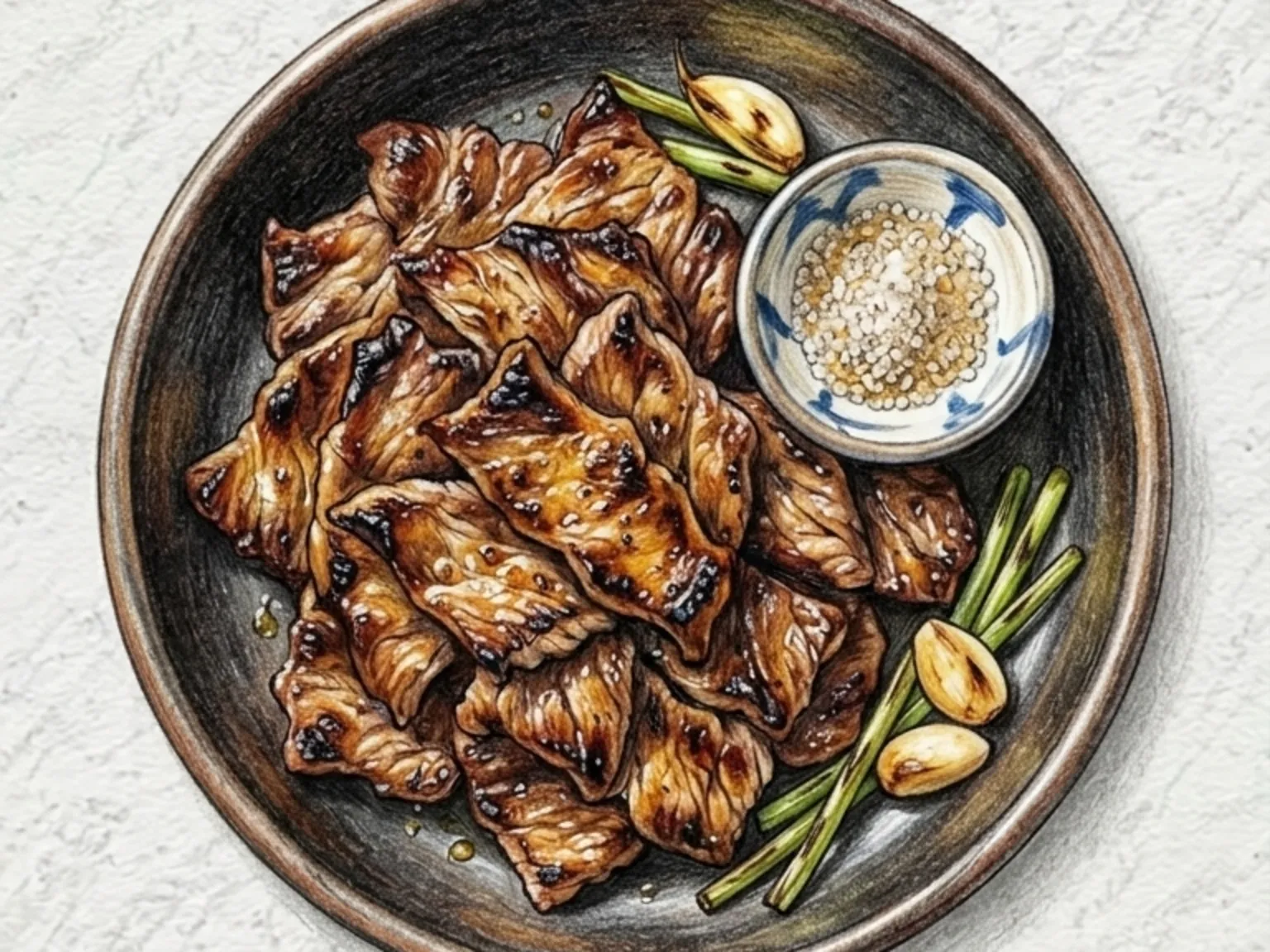
Galmaegisal-gui is grilled pork skirt meat from the diaphragm, lightly seasoned with soy sauce, garlic, and black pepper, then seared fast over charcoal or a screaming-hot pan. Each pig yields only 200 to 300 grams of this cut, making it a rare find that Korean barbecue enthusiasts seek out for its coarse grain, strong chew, and distinctive porky richness similar to beef skirt steak. The meat is thin enough that each side needs less than a minute over maximum heat-just long enough for the surface to caramelize while the center stays slightly pink, since overcooking toughens the fibers and destroys the springy texture. Dipping each piece immediately into a dish of sesame oil mixed with salt layers the smoky char with a warm, nutty richness.
Adjust Servings
Instructions
- 1
Pat dry the pork skirt meat and cut into bite-sized pieces.
- 2
Mix soy sauce, cooking wine, garlic, sugar, sesame oil, and pepper.
- 3
Marinate the meat for 15 minutes.
- 4
Preheat a grill pan or grill over high heat.
- 5
Spread the meat and sear quickly until browned.
- 6
Add sliced green onion, cook 30 seconds more, and serve immediately.
As an Amazon Associate, we may earn from qualifying purchases.
Tips
Nutrition (per serving)
More Recipes

Korean Grilled Pork Neck (Salt-Seasoned Fatty Neck Cut BBQ)
Dwaeji-moksal-gui is Korean salt-grilled pork neck sliced one centimeter thick and seasoned with nothing more than coarse salt and black pepper before searing on a blazing grill. The neck cut is threaded with fine intramuscular fat that renders during cooking, producing a self-basting effect and a rich, porky flavor that needs no marinade-the best pieces have roughly a seven-to-three fat-to-lean ratio. Each side should cook for under two minutes over maximum heat to develop a dark sear while keeping the interior moist; flipping too often drops the surface temperature and produces a steamed, gray result instead of charred grill marks. The standard Korean barbecue way to eat it is in a lettuce wrap with a roasted garlic clove and a dab of ssamjang.

Korean Soy Scallion Grilled Pork Jowl
Hangjeongsal ganjang-pa-gui is a Korean soy-scallion grilled pork jowl where one-centimeter-thick slices are marinated for fifteen minutes in a blend of soy sauce, cooking wine, garlic, sugar, sesame oil, and pepper, then grilled alongside thick-cut scallion segments over medium-high heat for three to four minutes per side. The technique of reserving a third of the marinade for basting during the final minute is what gives the dish its signature lacquered sheen-the fresh sauce hits the hot surface and caramelizes instantly into a sweet-salty glaze. The scallions are charred at high heat only at the very end, which bursts their internal moisture into steam and concentrates their natural sugar into an almost caramel-like sweetness, with the blackened edges adding a smoky depth to the soy glaze. Keeping the marinating time under twenty minutes is important-any longer and the soy sauce penetrates too deeply, oversalting the meat and masking the jowl's own rich, fatty flavor.

Korean Grilled Pork Makchang
Makchang-gui is a Korean grilled pork large intestine dish where the offal is thoroughly cleaned, blanched for seven minutes to remove impurities and excess fat, then coated in a spicy marinade of gochujang, soy sauce, sugar, minced garlic, gochugaru, sesame oil, and black pepper. The blanching step is non-negotiable-it eliminates off-flavors and firms the intestine's texture so it holds up on the grill. After fifteen minutes of marinating, the wrinkled surface absorbs the sweet-spicy sauce, which caramelizes into a dark, sticky glaze over medium heat as the interior moisture slowly evaporates. The result is a chewy exterior with a rich, fatty interior that releases its flavor gradually with each bite, and patience with medium heat prevents the sugar-heavy sauce from burning.

Korean Grilled Squid and Pork
Osam-gui is a Korean mixed grill of squid and pork belly marinated together in a spicy sauce of gochujang, soy sauce, sugar, minced garlic, and sesame oil, then cooked on a pan or grill. As the pork belly renders its fat, it merges with the marinade to form a rich, savory-spicy sauce in the pan that the squid absorbs during cooking, producing a deeper flavor than either ingredient would achieve alone. The two proteins cook at very different rates, so the pork belly goes in first for five to six minutes to render its fat and partially cook through before the squid is added-squid toughens past three to four minutes of heat exposure. The gochujang paste scorches easily at high temperatures, so maintaining medium heat and turning the pieces frequently is necessary to build a glossy glaze without any burnt bitterness.

Korean Meat Mandu (Pork and Beef Dumplings with Tofu Filling)
Gogi-mandu is a Korean meat dumpling filled with a mixture of ground pork, ground beef, squeezed tofu, onion, scallion, and garlic, seasoned with soy sauce and sesame oil. Kneading the filling in one direction develops protein bonds that create a sticky mass, which locks in moisture during steaming or pan-frying. The pork contributes fat and richness while the beef adds depth of flavor, and the tofu absorbs liquid to keep the filling soft rather than dense. These dumplings can be steamed for a clean taste or pan-fried with a splash of water and a lid for a crispy-bottomed finish.

Korean Garlic-Grilled Octopus
Muneo-garlic-gui is a Korean seafood snack made by searing pre-boiled octopus with minced garlic in olive oil over high heat. The octopus is cut into bite-size pieces, seasoned with salt, pepper, and red chili flakes, then rested briefly before hitting a smoking-hot pan. The garlic blooms in the oil first at low heat, and when the octopus goes in, the temperature is cranked up so the surface chars quickly while the interior stays springy and resilient. A squeeze of lemon juice at the end cuts through the richness and sharpens the natural brininess of the octopus.