Korean Short Rib and Octopus Soup
Soups Hard

Korean Short Rib and Octopus Soup

Quick answer

Galnak-tang is a Korean restorative soup that combines beef short ribs and fresh octopus in the same pot, producing a broth that carries two distinct umami registers simultaneously.

What makes this special

  • Beef and octopus stocks combine in one pot to create a deep, complex flavor.
  • Beef rib broth and octopus stock merge in one pot for layered umami
  • Octopus added last and cooked only 2 to 3 minutes keeps it springy
Total time
110 min
Level
Hard
Servings
4 servings
Ingredients
7
Calories
395 kcal
Protein
36 g

Key ingredients

beef short ribssmall octopuskorean radishgreen oniongarlic

Core cooking flow

  1. 1 Soak 700 g beef short ribs in cold water for 1 hour.
  2. 2 Put the ribs into boiling water and blanch over high heat for 5 minutes.
  3. 3 Add 2.2 L water, the ribs, 220 g Korean radish, 8 garlic cloves, and the green onion to a pot.

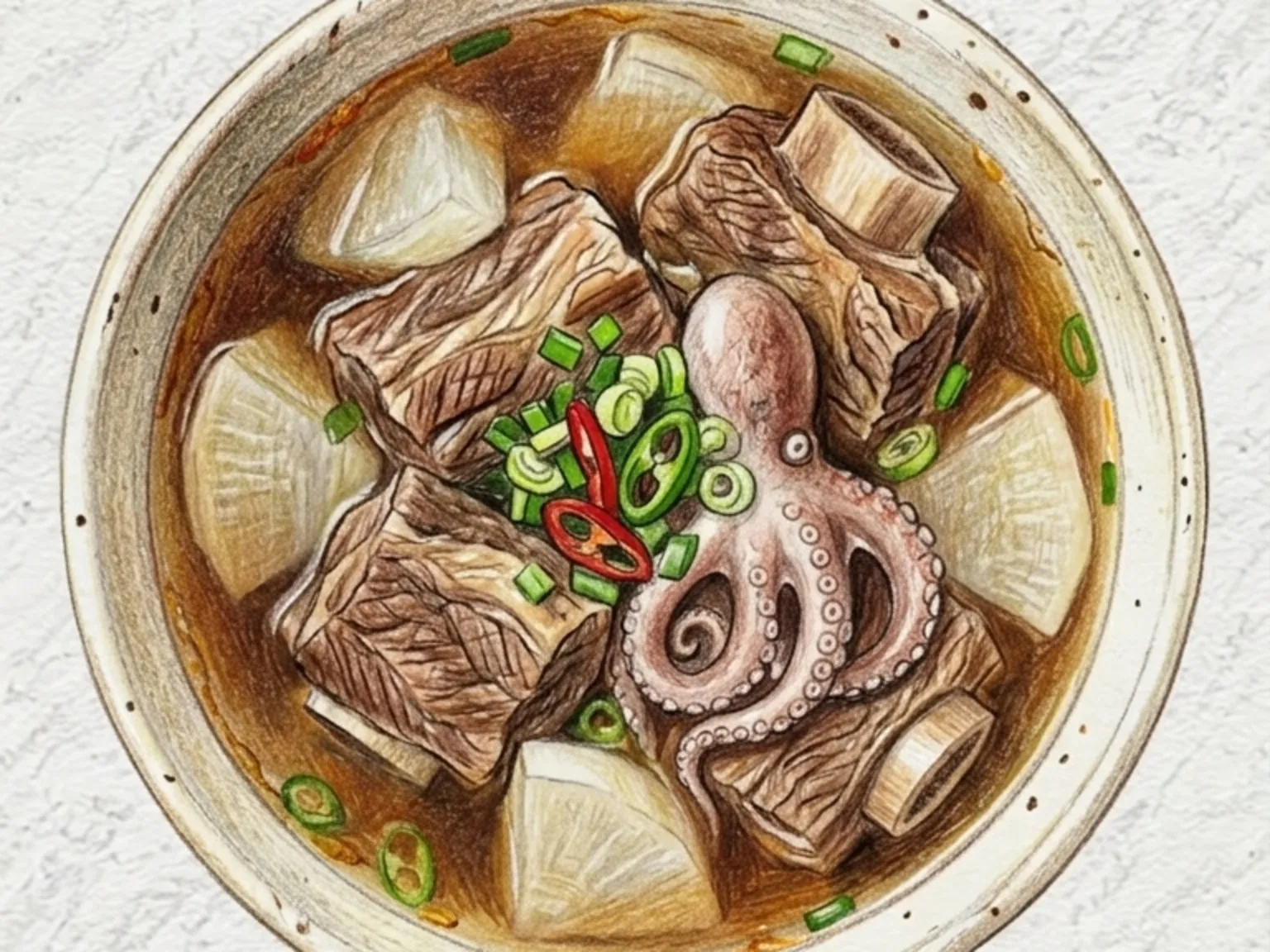
Galnak-tang is a Korean restorative soup that combines beef short ribs and fresh octopus in the same pot, producing a broth that carries two distinct umami registers simultaneously. The ribs are simmered first until tender and the initial cooking water is discarded along with the rendered fat, leaving a cleaner base for the second round of simmering. Radish goes in early alongside the ribs, gently sweetening the broth while absorbing some of the beefy richness so that the seafood flavor added later can come through more clearly. Octopus is added only at the end and needs no more than two to three minutes in the hot broth. Any longer and the texture turns rubbery, losing the springy bite that makes octopus worth eating. As the octopus cooks, its juices release into the soup and merge with the beef stock, blending the fatty depth of braised meat with the clean, mineral brightness of the sea. A small amount of gochugaru added near the end gives the broth a mild heat that cuts through the richness without overwhelming either protein. In Korean food culture, this soup belongs to the category of stamina dishes called boyangsik, traditionally sought out during the three hottest days of summer, after illness, or the morning following a night of drinking.

Prep 30min Cook 80min 4 servings

Instructions

Read the steps as a cooking flow: prep, heat, seasoning, doneness control, and finish.

6 steps
  1. 1
    Finish

    Soak 700 g beef short ribs in cold water for 1 hour.

    Change the water twice during soaking, and continue until the water looks much paler so the finished broth tastes cleaner.

  2. 2
    Control

    Put the ribs into boiling water and blanch over high heat for 5 minutes.

    Drain them, rinse under cold water, and rub away scum from the bone edges and surface.

  3. 3
    Control

    Add 2.2 L water, the ribs, 220 g Korean radish, 8 garlic cloves, and the green onion to a pot.

    Bring to a boil over high heat, then skim off foam as it rises.

  4. 4
    Control

    When the broth looks clearer, reduce to medium-low heat and simmer for 60 minutes.

    The ribs should yield easily to chopsticks, and the radish should look slightly translucent.

  5. 5
    Control

    Clean 2 small octopuses, remove the innards, and cut into bite-size pieces.

    Add them to the broth over medium heat and cook only 2 to 3 minutes to prevent a rubbery texture.

  6. 6
    Season

    When the octopus turns opaque and curls with a springy feel, season with 1 tablespoon soup soy sauce.

    Bring the soup to one brief boil, then turn off the heat when the green onion aroma comes through.

After the steps

Pick a recipe that fits this dish.

Continue with shared ingredients, meal pairings, or a similar method.

Recipes That Go Well With This

More Soups →

Based on shared ingredients and meal pairing

Korean Octopus Clear Soup
Shared ingredient: octopus Soups

Korean Octopus Clear Soup

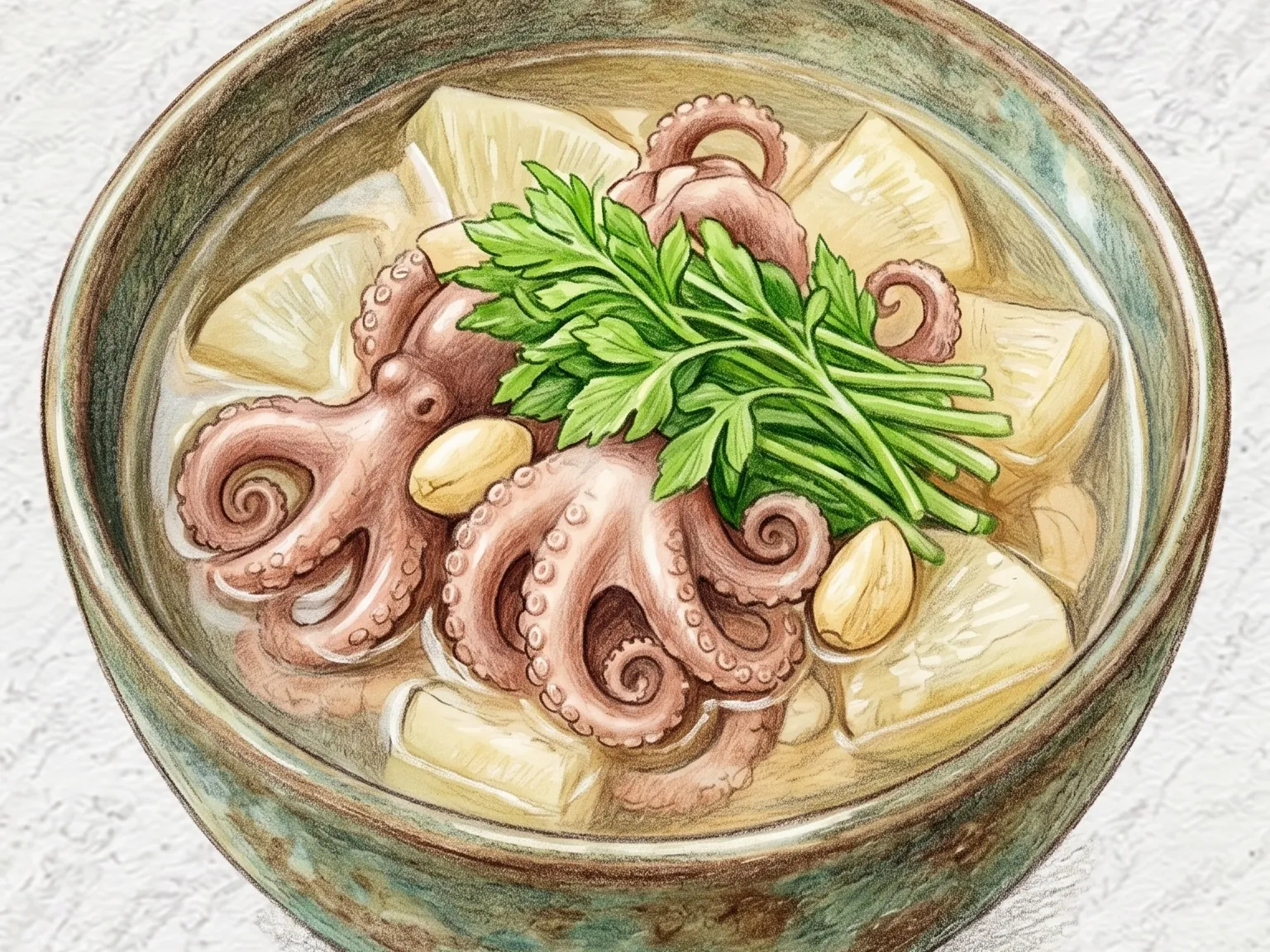
Yeonpo-tang is a Korean clear octopus soup cooked with minimal seasonings to highlight the natural qualities of its ingredients. The cooking process starts by simmering sliced Korean radish in anchovy stock for ten minutes to establish a clear and sweet vegetable base. Cleaned octopus pieces and minced garlic are then added to the boiling broth and cooked for only three minutes to prevent the seafood from turning rubbery. After adding green onions and skimming off any foam to keep the broth clear, the soup is seasoned with salt. Right before turning off the heat, water dropwort is added for twenty seconds to wilt. This introduces a fresh herbal aroma that complements the ocean flavor of the tender octopus.

Galbitang (Clear Korean Beef Short Rib Soup)
Shared ingredient: korean radish Soups

Galbitang (Clear Korean Beef Short Rib Soup)

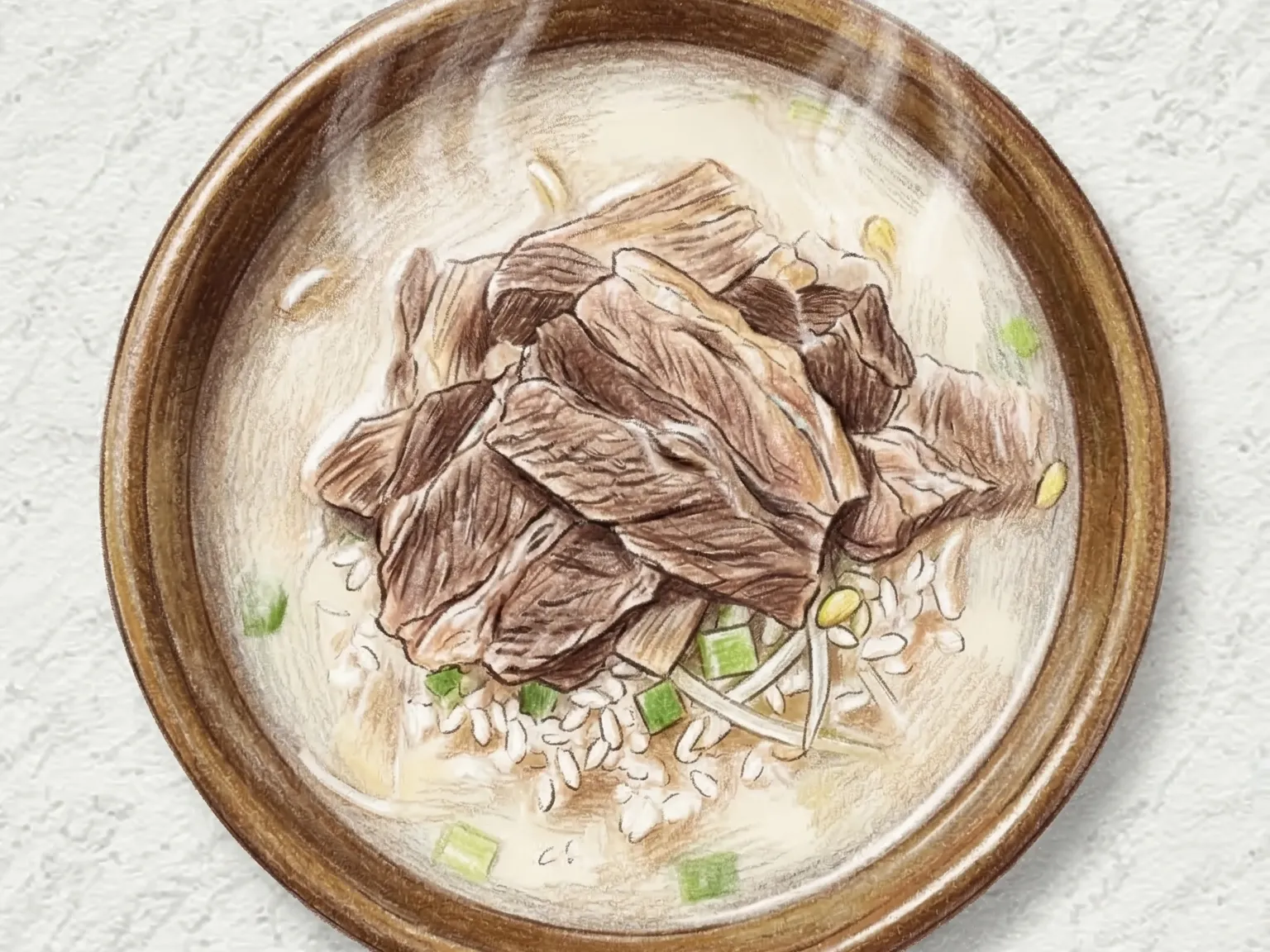
Galbitang is a clear Korean soup built from long-simmered beef short ribs, extracting a deep, clean beef flavor without the milky opacity of seolleongtang or gomtang. Before cooking, the ribs are soaked in cold water for one to two hours to draw out blood, which is what allows the finished broth to stay clear and free of off-flavors. The radish goes in from the beginning, slowly releasing a gentle sweetness as it absorbs the surrounding broth and becomes fully saturated with beef flavor. The ribs need time - the measure of doneness is the meat sliding cleanly off the bone with minimal pressure from chopsticks. Unlike bone-based broths that turn white from emulsified collagen and fat, galbitang remains translucent because the fat from the rib meat dissolves more gently, leaving a subtle richness rather than heaviness. Seasoning is deliberately restrained, using only salt and white pepper at the table so nothing interferes with the honest taste of the beef. Garnishes of sliced egg crepe and green onion add color and a fresh note. The soup is served year-round in Korean restaurants, always arriving steaming hot alongside a bowl of plain rice.

Korean Octopus Pot Rice (Chewy Octopus Ocean-Scented Grain Pot)
Serve together Rice

Korean Octopus Pot Rice (Chewy Octopus Ocean-Scented Grain Pot)

Muneo sotbap is a seafood pot rice dish in which chewy octopus tentacles are placed on top of uncooked rice and steamed together in a heavy pot so that the briny, oceanic aroma penetrates every grain as it cooks. Thin radish slices lining the bottom of the pot serve two purposes: they prevent the rice from sticking and transfer their natural sweetness into the grains during cooking. Simmering the octopus alongside radish also helps tenderize the meat. The pot starts over high heat to bring it to a boil, then the flame drops to low for a slow, gentle cook that keeps the octopus from turning rubbery. Resting the pot undisturbed after cooking allows the heat to distribute evenly throughout the rice. A dipping sauce of soy sauce, sesame oil, cheongyang chili, and sliced green onion is mixed in at the table, adding a spicy, clean finish. Scraping the crisp nurungji crust from the bottom of the pot is one of the distinct pleasures of this dish.

Korean Cod and Radish Soup
Similar recipe Soups

Korean Cod and Radish Soup

Daegu mu-tang is a Korean cod and radish soup in which the radish simmers first in anchovy broth for eight minutes to release its natural sweetness before the fish goes in. Cod fillets are briefly marinated in rice wine to neutralize any fishiness, then cooked gently - stirring must be kept to a minimum to keep the flesh in large, intact pieces. The finished broth is remarkably clear and light because cod carries very little fat, and the sweetness of the radish merges with the fish's mild umami to create a clean, layered depth. Crown daisy added in the final thirty seconds of cooking releases a sharp herbal fragrance that lifts the entire bowl. Many Koreans reach for this soup as a hangover remedy, prizing the cool, clean aftertaste it leaves.

Serve with this

Korean Seasoned Bracken Fern
Side dishes Easy

Korean Seasoned Bracken Fern

Gosari, the Korean name for bracken fern, is one of the oldest foraged vegetables in Korean cooking, with consumption records tracing back to the Three Kingdoms period. It is a mandatory component of bibimbap and a required dish on jesa, the ancestral rite table set for ceremonies honoring the dead. Dried gosari must soak overnight in cold water and then boil until the tough, wiry fibers relax into a distinctively springy, almost elastic chew that no fresh vegetable can replicate. The rehydrated fern is stir-fried in perilla oil with minced garlic until fragrant, then a small amount of soup soy sauce and water goes in and the pan is covered to let the liquid absorb and the fern braise briefly. This short braising step is what rounds the flavor and ensures the seasoning penetrates the fibrous strands rather than sitting only on the surface. Perilla oil is the traditional fat of choice rather than sesame oil because its green, herbal quality pairs more naturally with the woodsy, forest-floor flavor of gosari, amplifying rather than competing with it. Large batches are typically made during Chuseok or Seollal and eaten over several days, as the flavor improves and deepens as the dish sits.

🏠 Everyday 🎉 Special Occasion
Prep 15min Cook 15min 4 servings
Korean Stuffed Perilla Leaf Pancakes
Pancakes Medium

Korean Stuffed Perilla Leaf Pancakes

Kkae-ip-jeon are pan-fried perilla leaf parcels stuffed with a filling of ground pork and firm tofu, coated in flour and egg. The tofu must be squeezed dry in a cloth before mixing; excess moisture causes the filling to spread and stick to the pan. Garlic chives and onion add crunch and fragrance to the mix, and the filling seasoned with soy sauce and black pepper pairs cleanly with the perilla's strong herbal character. Dusting with flour first, then dipping in egg, produces an even coating, and frying covered over medium-low heat for two minutes per side ensures the filling is cooked through to the center. The bite-sized pieces work well as a packed lunch side or as bar food.

🍺 Bar Snacks 🎉 Special Occasion
Prep 22min Cook 12min 2 servings
Korean Cheonggak Kimchi (Seaweed Kimchi)
Kimchi Medium

Korean Cheonggak Kimchi (Seaweed Kimchi)

Cheonggak kimchi uses cheonggak, a branching green seaweed, mixed with julienned radish and scallions in a paste of gochugaru, anchovy fish sauce, and sweet rice starch. The seaweed brings a firm, almost crunchy chew and a concentrated marine aroma absent from land-vegetable kimchi. Seasoning the radish first lets it absorb the brine, then the seaweed is tossed in briefly - prolonged handling toughens the strands. After one day of refrigeration, the seaweed's salinity merges with the fermented seasoning paste to produce a briny, sharp kimchi that sits naturally alongside seafood dishes and mild rice soups. Coastal households traditionally make this in autumn when fresh cheonggak comes into season.

🍱 Lunchbox 🏠 Everyday
Prep 35min 4 servings

Similar recipes

Korean Seafood & Chicken Herbal Soup
Soups Hard

Korean Seafood & Chicken Herbal Soup

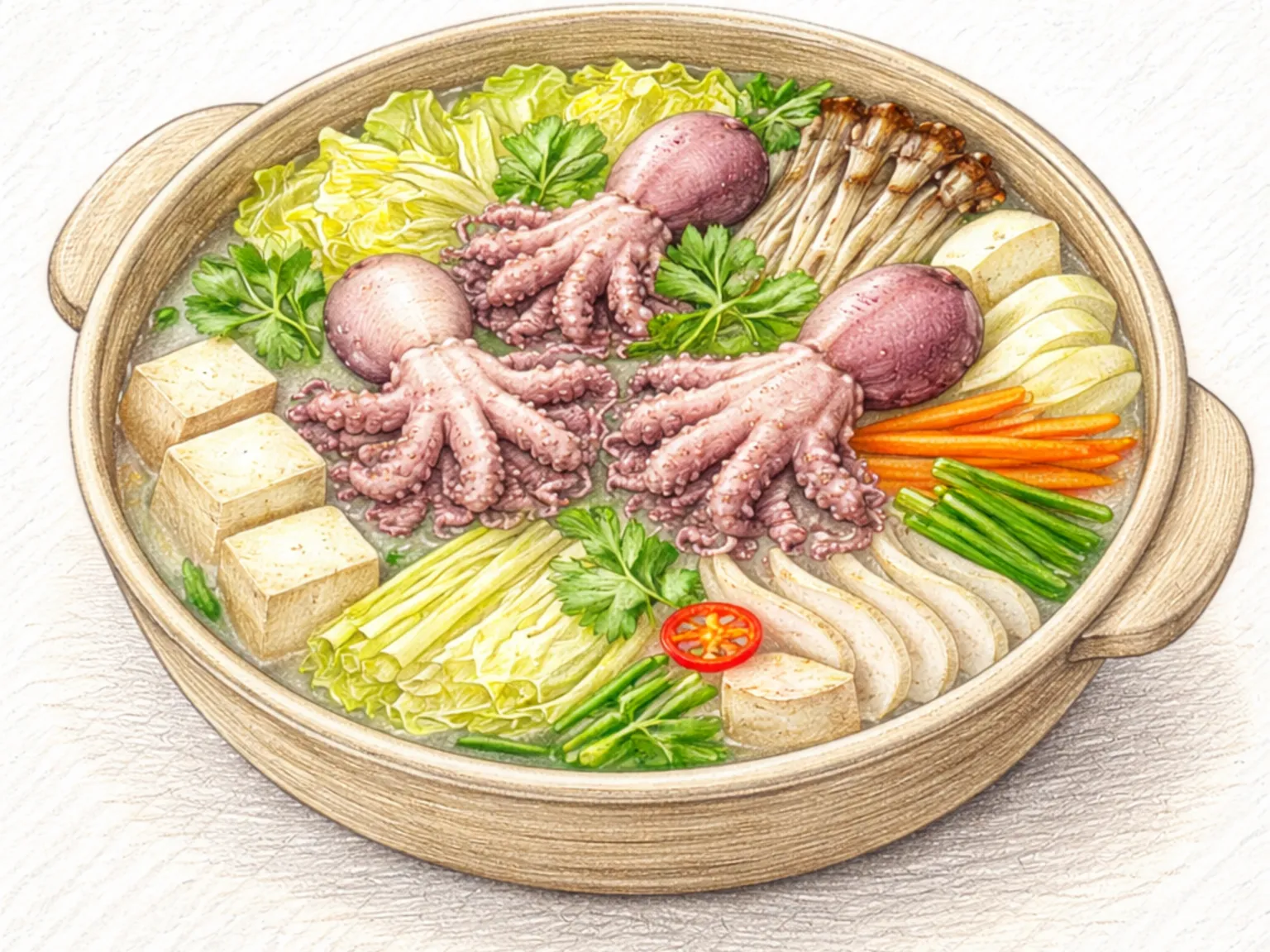
Haesintang is a premium Korean restorative soup that combines a whole chicken with abalone, octopus, and shrimp, simmered together in a single large pot for an extended period. The chicken goes in first and cooks for well over an hour, building a cloudy, collagen-rich stock with a naturally silky body. The seafood is added later in the process to avoid overcooking: abalone stays chewy, octopus retains its characteristic bounce, and shrimp turn just pink and stop there. The interaction between the poultry fat and the marine umami produces a broth with a depth that neither chicken alone nor seafood alone could achieve. Seasoning is deliberately restrained, typically garlic, green onion, and salt, so the flavors of the ingredients themselves define the soup rather than any added sauce or spice. In Korea, haesintang is categorized as a stamina food, most commonly eaten on the hottest days of summer in the traditional belief that rich nourishment combats heat fatigue. Its combination of two high-end protein sources places it firmly in the celebratory register of Korean home and restaurant cooking.

🏠 Everyday 🎉 Special Occasion
Prep 35min Cook 70min 4 servings
Korean Marinated Beef Short Rib Grill
Grilled Medium

Korean Marinated Beef Short Rib Grill

Beef ribs or bulgogi-cut slices are marinated for at least an hour in a sauce of soy sauce, Korean pear juice, sugar, minced garlic, sesame oil, and black pepper. The pear's natural enzymes break down connective tissue while the soy-sugar combination penetrates deep into the meat. On a high-heat grill, the sugars in the marinade caramelize rapidly, forming a glossy, dark-brown glaze with visible char marks. Thin-cut pieces cook through in under four minutes total, and the interplay of charcoal smoke with the sweet-salty marinade defines the signature taste of Korean yangnyeom-gui.

🍺 Bar Snacks 🎉 Special Occasion
Prep 60min Cook 15min 2 servings
Korean Tomato Beef Rib Stew
Stews Medium

Korean Tomato Beef Rib Stew

Tomato galbi jjigae is a fusion Korean stew that combines beef short ribs with ripe tomatoes in a spicy broth seasoned with gochujang and gochugaru. The preparation requires soaking the ribs to remove blood, followed by a ten-minute blanching step to eliminate impurities. The ribs are then simmered with onions and minced garlic for twenty-five minutes to extract a golden beef stock. Ripe tomatoes and large potato chunks are added to the pot along with soy sauce, chili paste, and chili powder. As the mixture simmers for twelve minutes, the natural acidity of the tomatoes balances the rich fat from the ribs, creating a thick, savory broth. The potatoes cook until soft and floury, adding substance to the stew. The dish is finished by letting it rest off the heat for three minutes, ensuring the beef ribs become tender throughout.

🏠 Everyday 🎉 Special Occasion
Prep 25min Cook 45min 4 servings

Tips

Add octopus near the end to keep it tender.
Strain the rib broth for a cleaner soup.

Nutrition (per serving)

Calories
395
kcal
Protein
36
g
Carbs
6
g
Fat
24
g