Gambas al Ajillo (Garlic Shrimp)
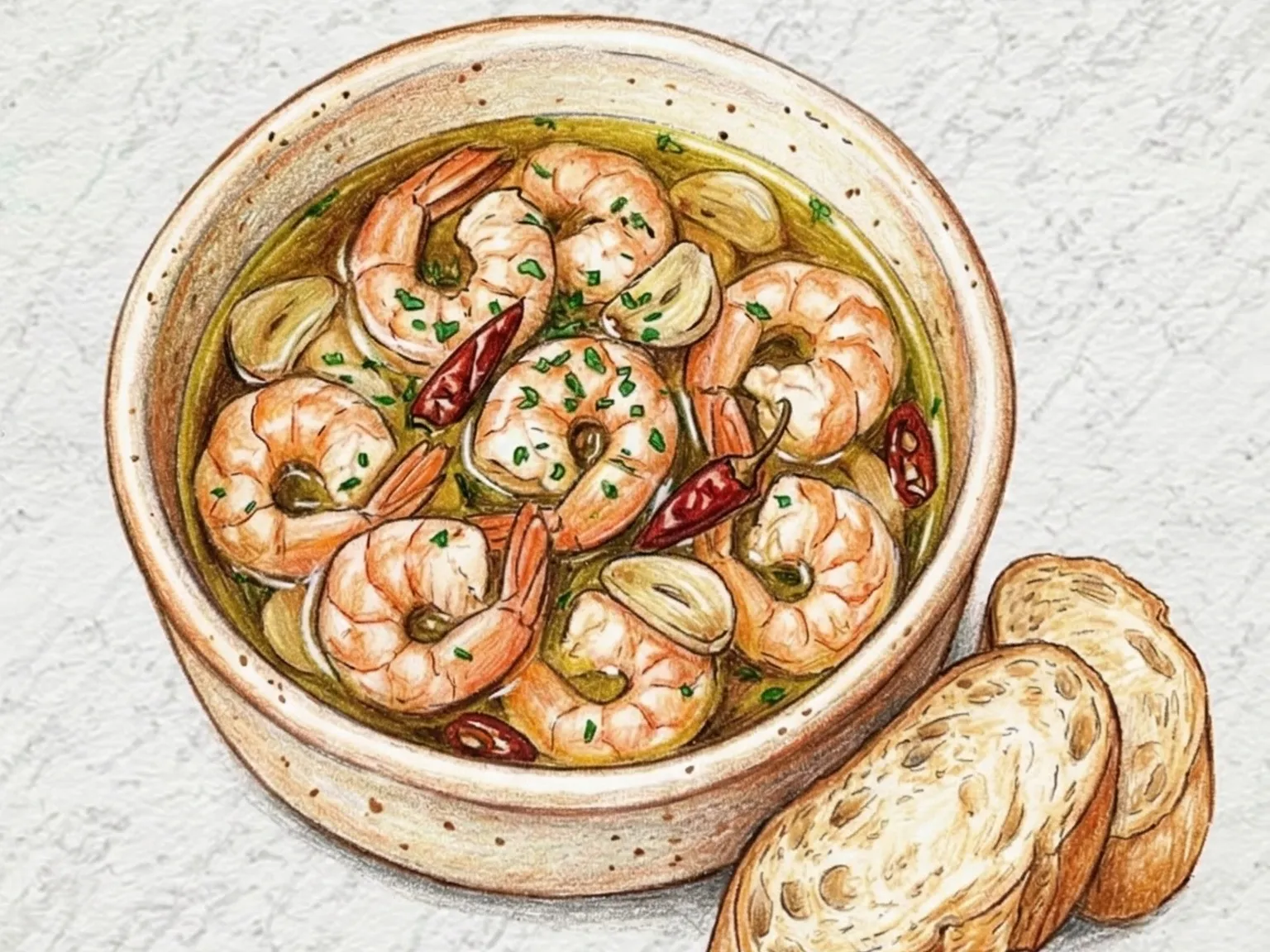
Gambas al ajillo cooks peeled shrimp in a generous pool of olive oil infused with thinly sliced garlic and dried red chili over low heat. The garlic must be cooked slowly to release its flavor into the oil without burning - the moment it turns golden, the shrimp go in and cook for two to three minutes until pink. A seasoning of salt, black pepper, and chopped parsley finishes the dish. The dried chili adds a gentle warmth that sharpens the garlic-scented oil and the natural sweetness of the shrimp. Sliced baguette served alongside is essential for soaking up the deeply flavored oil, and mopping the pan clean is the traditional way to enjoy every last drop.
Adjust Servings
Instructions
- 1
Thinly slice the garlic.
- 2
Pour olive oil in a small pan and cook garlic and dried chili on low heat.
- 3
When garlic turns golden, add shrimp.
- 4
Cook for 2-3 minutes until shrimp turn pink.
- 5
Season with salt and pepper, sprinkle parsley.
- 6
Serve hot with sliced baguette.
As an Amazon Associate, we may earn from qualifying purchases.
Tips
Nutrition (per serving)
More Recipes

Sopa de Ajo (Spanish Roasted Garlic and Bread Soup)
Sopa de ajo is a rustic Spanish garlic soup built by gently sauteing thinly sliced garlic in olive oil over low heat until fragrant and pale gold - burning the garlic introduces bitterness that ruins the broth. Torn pieces of day-old baguette and smoked paprika are toasted briefly in the garlic oil, absorbing the fat and developing a light crust before chicken stock is poured in. The soup simmers for about ten minutes, during which the bread softens and partially dissolves, thickening the broth while retaining some texture. Beaten eggs are streamed into the hot soup in a thin ribbon, setting into delicate strands that add protein and body. The smoked paprika gives the broth a warm reddish hue and a subtle charred note that pairs with the mellow sweetness of the slow-cooked garlic.

Patatas Bravas (Spanish Crispy Potatoes with Spicy Tomato Sauce)
Patatas Bravas is one of Spain's most iconic tapas, served in nearly every bar alongside beer or wine. Potatoes are cut into rough chunks, parboiled in salted water to activate surface starch, then fried twice at high temperature to achieve a crispy shell encasing a fluffy interior. The bravas sauce is built by blooming garlic and smoked paprika in olive oil before adding tomato puree and simmering until reduced - the smokiness of the paprika and the direct heat of chili flakes create a layered spiciness. Some regions serve a garlic aioli alongside the bravas sauce, allowing diners to alternate between the sharp tomato heat and the cooling richness of the emulsified garlic cream.

Croquetas de Jamon (Crispy Ham Béchamel Bites)
Croquetas de jamón begin with a roux of butter and flour cooked for two minutes, followed by milk added gradually while whisking to form a thick béchamel. Finely chopped jamón serrano is folded into the sauce along with a pinch of salt, and the mixture is refrigerated until firm enough to shape. Chilling thoroughly is critical because soft filling will not hold its oval form during breading. Each croqueta is dipped in beaten egg and rolled in breadcrumbs - double-coating helps prevent splitting in the hot oil. Fried at medium heat until deep golden, the exterior shatters into the creamy, ham-laced center with every bite.

Albondigas en Salsa (Spanish Meatballs in Tomato Sauce)
Tender, bread-softened meatballs simmered in a smoky paprika-tomato sauce until every bite soaks up the rich, glossy gravy -- Spain's ultimate weeknight comfort food. Ground pork and beef are mixed with soaked bread, egg, and garlic, then rolled small and browned in olive oil before simmering in a tomato-based sauce seasoned with smoked paprika and bay leaf. The bread in the mixture keeps the meatballs from turning dense, giving them a soft, almost spongy center that absorbs the sauce as they braise. The tomato sauce mellows over twenty minutes of gentle heat, losing its raw acidity and developing a concentrated sweetness that clings to each ball. Served with crusty bread to mop up the sauce, or spooned over plain rice, this is the kind of dish Spanish grandmothers make on weekday evenings without measuring anything.

Caramel Flan
Caramel flan is a baked custard dessert built on the interplay between smooth egg custard and bittersweet caramel. Sugar is cooked in a dry pan until it reaches a deep amber, then poured into the bottom of a mold where it hardens into a glassy layer. The custard - eggs, milk, sugar, and vanilla - is poured on top and the whole assembly bakes in a water bath at gentle heat to prevent curdling. The slow, even cooking produces a texture that is perfectly smooth, without bubbles or grainy patches. Once chilled and unmolded, the caramel reliquefies into a flowing sauce that coats the pale custard in amber streaks. The flavor is a study in contrasts: the custard is milky and gently sweet, while the caramel adds a roasted, slightly bitter edge that prevents the dish from becoming cloying. It is served cold, and the clean wobble of a well-set flan is a point of pride.

Spanish Orange Cod Salad (Spanish Salt Cod Salad)
Salt cod is soaked overnight to remove excess brine, then shredded along the grain into chewy, flaky strands. Thick-cut orange segments provide juicy sweetness that contrasts sharply with the fish's residual saltiness. Red onion and black olives broaden the flavor with pungent bite and deep brininess, while olive oil connects every ingredient smoothly. A splash of white wine vinegar sharpens the profile, and parsley finishes with a fresh green note - originally a spring festival dish from Andalusia, ideal as part of a tapas spread.