Korean Licorice Pear Tea (Sweet Root and Fruit Brew)
Quick answer
Gamcho-bae-cha is a Korean herbal tea that simmers licorice root and Korean pear together so the root's natural sweetness and the fruit's light juice meld into a single...
What makes this special
- Simmering licorice root with Asian pear creates a naturally sweet, unified herbal infusion.
- Keeping licorice under 3g per serving prevents sweetness from drowning pear
- Adding pear in the final 8-10 min lets the flesh soften and infuse the tea
Key ingredients
Core cooking flow
- 1 Wash 1 Korean pear, then peel it and remove the core.
- 2 Soak 6 g dried licorice root in cold water for 5 minutes, then rinse lightly and drain.
- 3 Put 900 ml water, the drained licorice, 20 g jujube, and 12 g ginger in a pot.
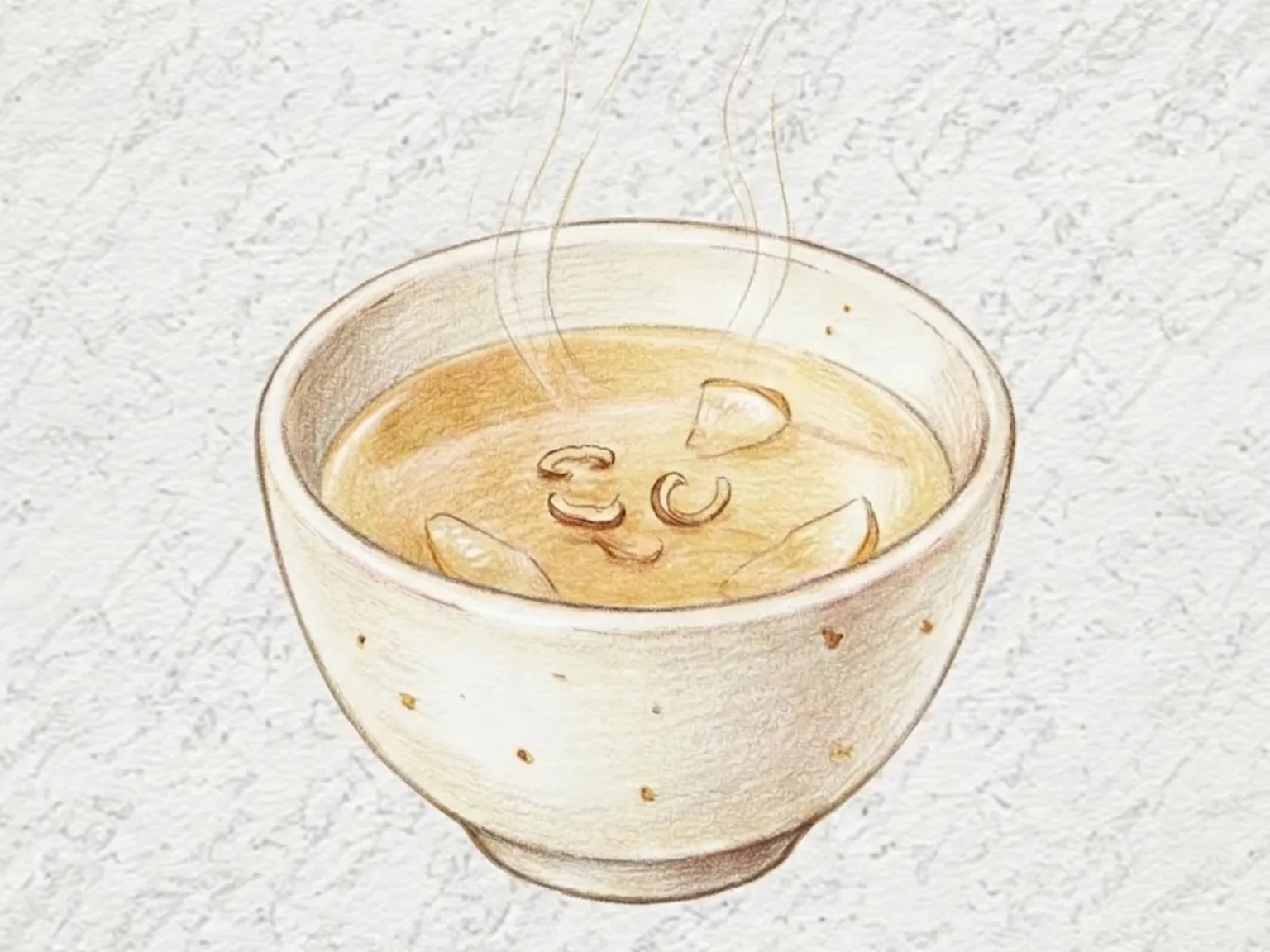
Gamcho-bae-cha is a Korean herbal tea that simmers licorice root and Korean pear together so the root's natural sweetness and the fruit's light juice meld into a single, unified infusion. The licorice is rinsed in cold water for five minutes to temper any harsh edge, and keeping it to about three grams per serving prevents the sweetness from becoming cloying. Jujube and ginger join the pot for fifteen minutes to deepen the base, then the pear goes in for a final eight to ten minutes until its flesh softens and its juice infuses the broth. The tea is strained clear and served with honey and a few pine nuts whose mild, fatty richness floats on top of the sweetness. In traditional Korean medicine, licorice root is used to soothe coughs and throat irritation, and the pairing with pear traces back to remedies historically recommended for dry or sore throats during seasonal transitions. Chilled and refrigerated, it works equally well as a cooling summer drink, while served hot it is associated with supporting throat health in changing weather.
Instructions
Read the steps as a cooking flow: prep, heat, seasoning, doneness control, and finish.
- 1Control
Wash 1 Korean pear, then peel it and remove the core.
Slice the flesh about 5 mm thick so the pieces soften evenly and release juice within the short final simmer.
- 2Control
Soak 6 g dried licorice root in cold water for 5 minutes, then rinse lightly and drain.
Do not soak it much longer, since the goal is only to reduce dust and harsh bitterness.
- 3Control
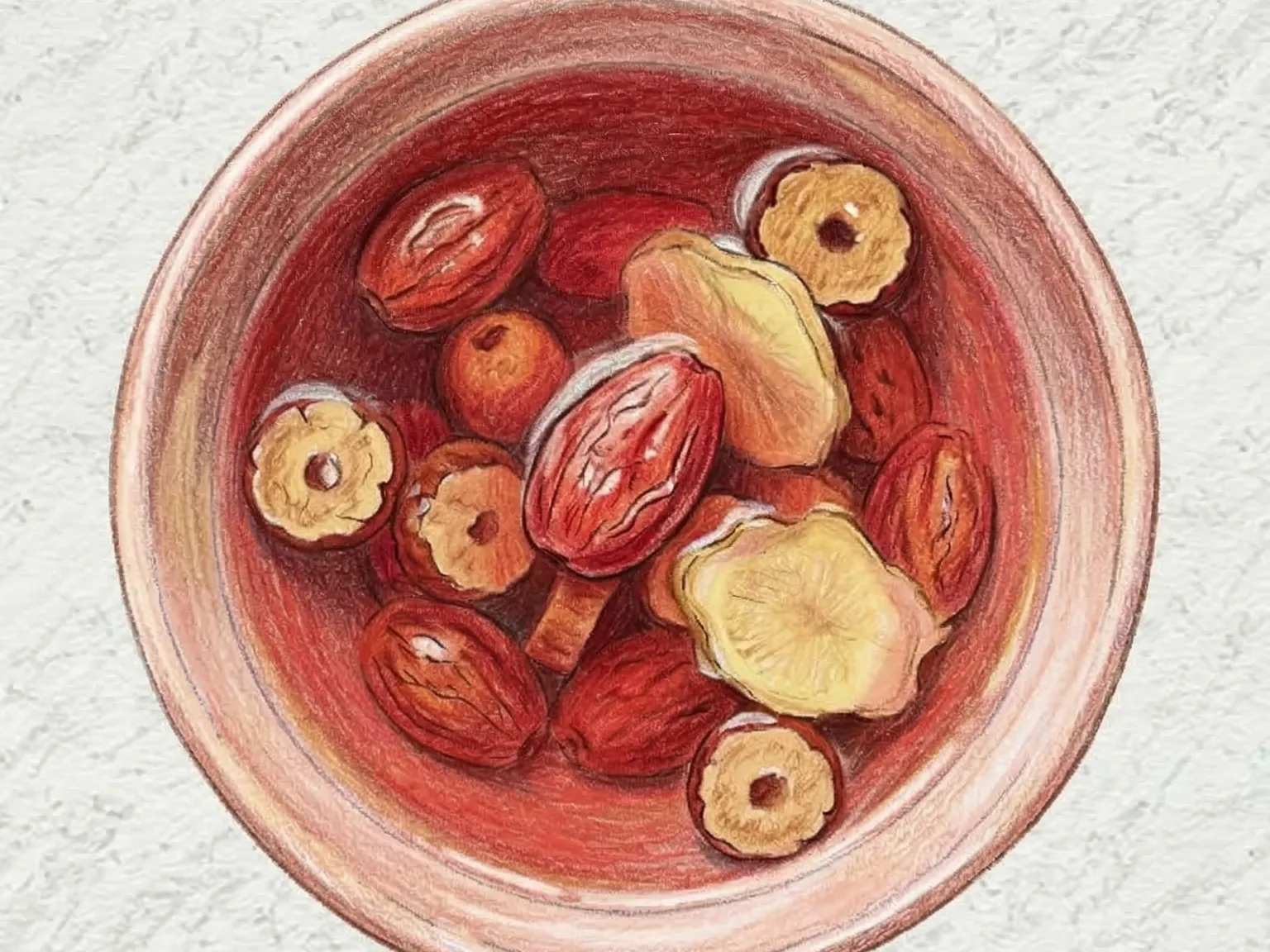
Put 900 ml water, the drained licorice, 20 g jujube, and 12 g ginger in a pot.
Simmer over medium low heat for 15 minutes, until the liquid turns a deeper light brown.
- 4Control
Add the sliced pear and lower the heat to low.
Simmer 8 to 10 minutes more, until the pear looks slightly translucent and presses softly with tongs or a spoon.
- 5Step
Turn off the heat and pour the infusion through a fine sieve, collecting only the clear tea.
Avoid pressing the pear pulp hard, because too much pressure can make the drink cloudy.
- 6Finish
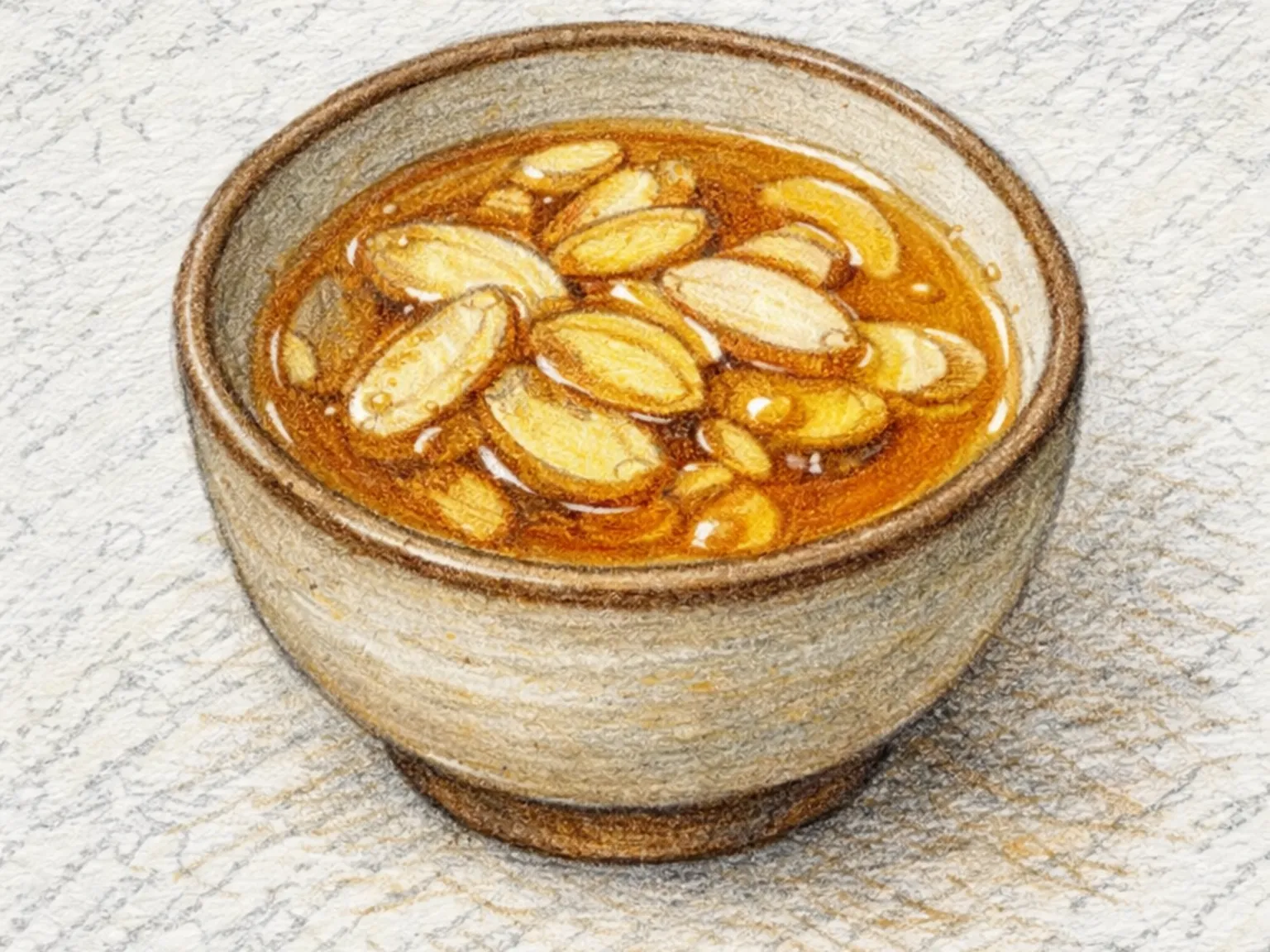
While the tea is warm, stir in 20 g honey and adjust the sweetness before topping with 6 g pine nuts.
Serve it hot, or chill it and refrigerate for a cold drink.
After the steps
Pick a recipe that fits this dish.
Continue with shared ingredients, meal pairings, or a similar method.
Recipes That Go Well With This
More Drinks →Based on shared ingredients and meal pairing
Baesuk (Korean Poached Pear Punch)
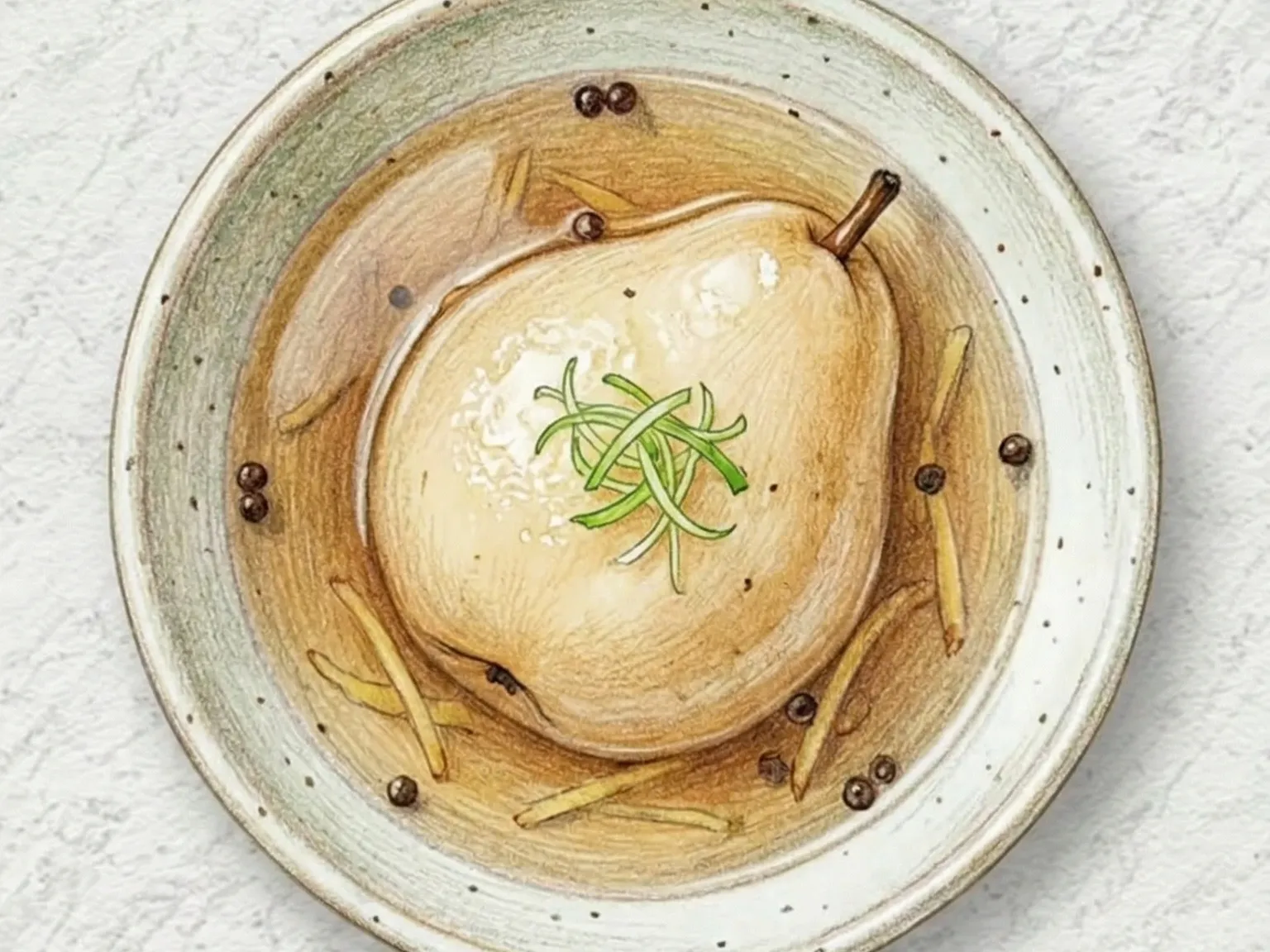
Baesuk is a traditional Korean punch made by slowly simmering whole or large-cut Korean pear with ginger, whole black peppercorns, and dried jujubes. As the pear cooks over low heat, its juice gradually dissolves into the liquid, building a natural sweetness that forms the drink's backbone. Ginger contributes a warm, peppery sharpness that interlocks with the pear's sweetness, producing a flavor that is comforting yet clean. Whole peppercorns are added sparingly and function as an aromatic element rather than a source of actual heat. Jujubes add a faint reddish tint and a mild fruity undertone to the liquid. Honey is stirred in after the heat is turned off and the temperature has dropped slightly to preserve its fragrance; because the pear already provides significant sweetness, the honey amount should start small and be adjusted by taste. Overnight refrigeration allows the ginger and pear flavors to penetrate more fully, rounding out the drink. Pine nuts floated on the surface before serving add a subtle oily richness to the finish of each sip. Historical records indicate that baesuk appeared on royal banquet tables during the Joseon dynasty and at aristocratic tea spreads, and Korean traditional medicine has long recommended it as a remedy for cold prevention and digestive support. Even today it remains a seasonal drink associated with holidays and ancestral rite preparations.
Korean Ginger Tea (Spiced Jujube Honey Ginger Brew)
Saenggangcha is a Korean ginger tea made by simmering thinly sliced fresh ginger and halved, pitted jujubes in water for 15 minutes on medium heat followed by 5 more minutes on low. The two-stage simmering extracts both the sharp warmth of ginger and the quiet, honeyed fruitiness of jujubes without letting either dominate. Peeling the ginger before slicing removes any earthy or bitter notes from the skin and produces a cleaner cup. Slicing it thin rather than thick maximizes the surface area, allowing gingerol, the compound responsible for the tea's peppery bite, to dissolve into the water more rapidly within the same simmering time. Splitting and pitting the jujubes exposes the flesh, which gives up its fruit aroma far more readily than whole dried fruit. After straining, the pot should be removed from the heat and allowed to cool slightly before the honey goes in, because dissolving honey into near-boiling liquid destroys the delicate floral compounds that distinguish quality honey from plain sugar. A small pinch of ground cinnamon deepens the spice profile by adding warmth that complements rather than competes with the ginger. Floating lemon slices on the surface adds a citrus brightness that lifts the body of the tea. The drink is especially associated with the transitional seasons in Korea, when the weather shifts and sore throats become more common.
Crispy Seaweed Chips
Basak gim-bugak is a traditional Korean snack made of seaweed sheets coated with glutinous rice paste and fried until crispy. The process begins by cooking a thick mixture of water, glutinous rice flour, and salt. After cooling the paste, it is spread thinly onto half of a seaweed sheet. The sheet is folded in half and coated with another thin layer of paste to build a double-layer structure. Sesame seeds are scattered on top before drying. The sheets are dried in a dehydrator or an air fryer at 80 degrees Celsius until stiff and hard. Ensuring the seaweed is completely dry, especially at the edges, is crucial for a crisp outcome. The dried pieces are flash-fried in hot oil at 180 degrees Celsius for just two to three seconds. They puff up instantly and must be removed quickly to prevent burning.
Korean Tangerine Peel Ginger Tea
Gyulpi-saenggang-cha is a traditional Korean tea made by simmering dried tangerine peel and thin-sliced fresh ginger together for about eighteen minutes. Properly dried peel concentrates its aromatic essential oils while shedding much of the bitterness that fresh peel carries, and the extended simmering draws those oils fully into the water. The result is a cup where the citrus's bright, faintly bitter edge meets the warming heat of ginger in each sip. Jujubes round off the sharper notes with their gentle background sweetness, and using both honey and rice syrup adds two distinct registers of sweetness -- one clean and floral, the other thick and malty. A very small pinch of salt at the end sharpens the overall flavor and leaves a clean finish. It is a natural choice on cold days when the body needs warming from the inside.
Serve with this
Gotgam Cream Cheese Roll (Dried Persimmon Rolls)
Gotgam cream cheese roll is a no-cook Korean dessert that requires nothing more than a knife, a bowl, and a refrigerator. Dried persimmons are slit open and flattened into thin sheets, each one acting as the outer wrapper. The filling is cream cheese mixed with honey and fresh lemon juice to balance its natural richness with acidity, and finely chopped walnuts are folded in throughout to add a crunchy, nutty element to every bite. The filling is spread across the opened persimmon, which is then rolled tightly and wrapped in plastic wrap. Twenty minutes in the refrigerator firms the roll enough to slice cleanly. Dipping the knife in warm water and wiping it dry before each cut produces the smoothest cross-sections. The finished slices reveal clearly defined layers: the chewy, caramel-sweet dried persimmon on the outside, the tangy cream cheese in the middle, and flecks of walnut distributed throughout. The combination makes it a natural pairing with wine or a polished addition to a traditional holiday table.
Korean Galbi Tteokbokki (Soy-Braised Pork Rib Rice Cake Stir-Fry)
Galbi tteokbokki marinates boneless pork ribs in soy sauce, sugar, mirin, garlic, and sesame oil for fifteen minutes before the dish comes together in a single pan. The ribs go in first over high heat, searing until the surface caramelizes and the rendered fat begins to collect in the pan. Water and rice cakes are added next, and the mixture simmers on medium until the sauce reduces into a concentrated glaze that coats each tteok thoroughly. No gochujang enters the recipe at any point - the flavor profile is entirely soy-and-sugar sweet-salty, made deeper by the pork's own fat and juices as they cook down. The finished dish shows a visible sheen on both the rice cakes and the meat, with green onion and sesame seeds scattered over the top.
Gyeongdan (Chewy Rice Balls with Sweet Coating)
Gyeongdan are Korean glutinous rice balls, each one shaped by hand into a small sphere, boiled until it floats, then rolled in a dry coating while still warm. The dough is made by kneading glutinous rice flour with hot water rather than cold, a technique that partially gelatinizes the starch and gives the finished rice ball its characteristic chewy spring. Rinsing the cooked balls immediately in cold water stops them from sticking together and firms the surface enough for the coating to cling evenly. Traditional coatings include roasted soybean powder, which is mild and nutty, ground black sesame, which adds deep toasted bitterness, and sweetened red bean crumbles. Some versions are filled with sweet red bean paste before shaping, so the filling bursts as you bite through. Gyeongdan appear on ceremonial tables at seasonal holidays and as everyday snacks, often presented as a trio of colors arranged side by side on a single plate.
Similar recipes
Korean Heotgae Tea (Oriental Raisin Tree Hangover Herbal Brew)
Heotgae-cha is a traditional Korean herbal tea made by simmering dried oriental raisin tree fruit with jujubes, ginger, and cinnamon over low heat for thirty-five minutes. The dried heotgae fruit, small and knobby in appearance, is astringent and muted in raw form, but prolonged simmering draws out a deep, earthy sweetness that gradually fills the water. Jujubes add natural sweetness and a faint fruity note, ginger contributes a sharp warmth that lingers at the tip of the tongue, and cinnamon layers in a gentle, aromatic sweetness, building a multi-layered flavor that develops slowly over the long cooking time. Honey is stirred in at the end to adjust sweetness to taste. In Korean traditional medicine, the oriental raisin tree has long been associated with supporting liver function and alleviating hangover symptoms, which is why the tea has been consumed as a morning-after drink for generations. Among Korean office workers accustomed to frequent after-work drinking gatherings, heotgae-cha remains one of the most commonly reached-for hangover remedies.
Korean Pear Bellflower Root Tea
Baedoraji-cha is a traditional Korean herbal tea that is prepared through the slow simmering of Asian pears and bellflower roots. The processing of the bellflower root, referred to as doraji in Korean, represents an essential stage of the recipe. Because raw bellflower roots contain a sharp bitterness that can give the tea a harsh medicinal quality, the roots must be peeled and treated with salt. This involves kneading the roots firmly by hand with salt and then rinsing them with water. Repeating this sequence of kneading and rinsing two or three times is necessary to draw out the bitter compounds from the plant. The pear is prepared by removing the core and cutting the fruit into uniform chunks. The skin can either be retained or removed according to individual preference before the pieces are placed into the pot. As the pear pieces simmer, their juice integrates into the water to provide a natural sweetness without the requirement of added sugar. To complement these main components, a few slices of fresh ginger and a handful of dried jujubes are added to the mixture. The ginger introduces a subtle warmth and a slightly peppery flavor that helps to soften the herbal intensity of the bellflower root. At the same time, the dried jujubes provide a light fruity depth and give the tea its distinctive color. The ingredients are left to infuse over low heat for approximately thirty to forty minutes to ensure that the flavors from the various components are fully extracted into the water. After the simmering process is finished, the sweetness of the beverage can be adjusted with jocheong, which is a traditional grain syrup. This syrup is utilized because it blends into the liquid more smoothly than honey or granulated sugar. This beverage is traditionally served warm during seasons characterized by cold or dry air. It is often consumed when the throat feels dry or irritated, as the saponins present in the bellflower root are recognized for their soothing properties.
Yuja Saenggang Scone (Yuja Ginger Scone)
Cold butter is rubbed into flour to form coarse crumbs, then yuja marmalade and ginger juice are mixed in to create a dough that bakes into scones with a crumbly, flaky exterior and a moist, tender center. The yuja contributes a bright citrus fragrance that is more aromatic and floral than lemon, pairing naturally with the buttery richness of the scone. Ginger adds a subtle warmth that tempers the sweetness and leaves a clean finish. Minimal handling of the dough preserves the cold butter pockets that generate flaky layers during baking - if the dough warms, it should be returned to the refrigerator immediately. Shaping into rounds and brushing the tops with egg wash produces a golden, glossy crust. These scones are at their best served warm with clotted cream or yuja curd, where the citrus notes in the spread echo those baked into the scone itself. The combination of Korean citrus and British baking tradition makes this a distinctive cross-cultural pastry.