Korean Stir-fried Potato Strips
Quick answer
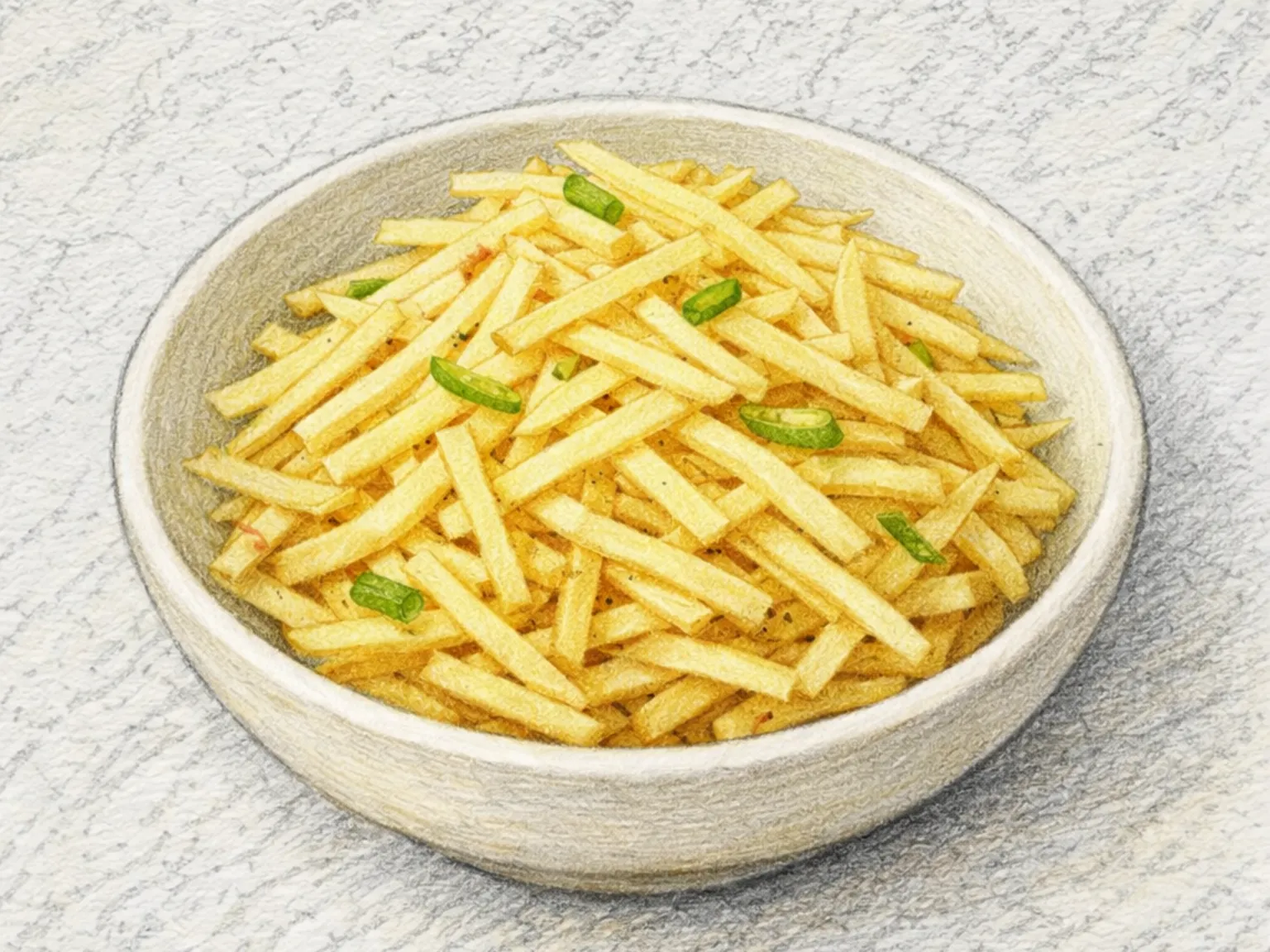
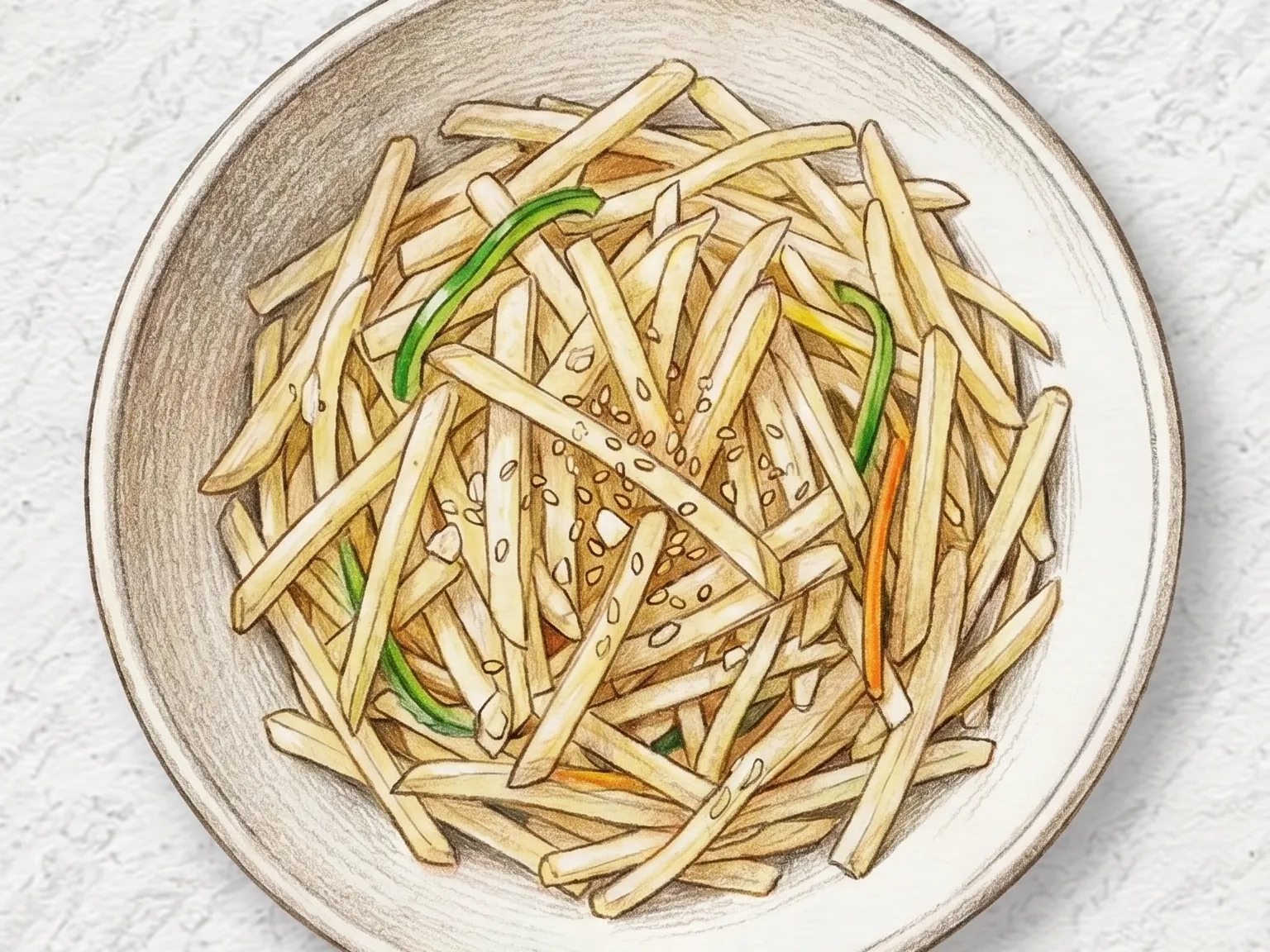
Gamja-bokkeum is a fundamental Korean side dish made by stir-frying julienned potatoes until they are just tender with a remaining crunch, and it belongs on almost any Ko...
What makes this special
- Starch-free potato strips are stir-fried until tender with a characteristic slight crunch.
- Soaking julienned potato in cold water 5-10 minutes removes starch so strands cook separately
- Starch-rinsed potato lets its natural sweetness come through with just salt
Key ingredients
Core cooking flow
- 1 Cut 350 g potato into 3 mm strips, then soak in cold water for 5 to 10 minutes to remove surface starch.
- 2 Drain the potato well, then spread the strips on a kitchen towel and pat them dry thoroughly.
- 3 Heat a pan over medium heat, add 1.5 tablespoons cooking oil, then add 1 tea...
Gamja-bokkeum is a fundamental Korean side dish made by stir-frying julienned potatoes until they are just tender with a remaining crunch, and it belongs on almost any Korean table regardless of what else is being served. Soaking the julienned potatoes in cold water for five to ten minutes removes the surface starch that would otherwise cause the pieces to stick together in the pan and clump into a mass. The drained potatoes go into an oiled pan over medium heat with garlic, which provides a gentle aromatic backdrop without competing with the potato's mild natural flavor, and salt is the only seasoning needed to let that flavor come through. The key to the right texture is restraint: the potatoes are ready when they have turned translucent and the edges have picked up a faint golden color, and cooking past that point makes them soft rather than crisp. A finishing drizzle of sesame oil and a scattering of sesame seeds add a warm nuttiness that elevates the simple seasoning into a complete flavor. Thinly sliced cheongyang chili added during cooking produces a spicier variation, and a small amount of bell pepper or carrot adds color without changing the character of the dish. It is the kind of banchan that disappears from the table quickly despite its simplicity.
Instructions
Read the steps as a cooking flow: prep, heat, seasoning, doneness control, and finish.
- 1Heat
Cut 350 g potato into 3 mm strips, then soak in cold water for 5 to 10 minutes to remove surface starch.
Slice 40 g carrot and 60 g onion to a similar thickness so everything cooks evenly.
- 2Step
Drain the potato well, then spread the strips on a kitchen towel and pat them dry thoroughly.
Leaving water on the surface makes the oil splatter and encourages the potato to stick to the pan.
- 3Control
Heat a pan over medium heat, add 1.5 tablespoons cooking oil, then add 1 teaspoon minced garlic and the onion.
Stir for about 1 minute, just until fragrant, keeping the garlic pale so it does not turn bitter.
- 4Control
Add the potato and carrot, then stir-fry over medium heat for 4 to 5 minutes.
Spread the strips out and turn them often so they do not clump, cooking until the potato edges look slightly translucent.
- 5Season
Sprinkle 0.5 teaspoon salt evenly and stir-fry for 1 more minute to season the vegetables.
Turn off the heat when the potato bends without breaking and the edges are faintly golden.
- 6Step
With the heat off, add 1 teaspoon sesame oil and 1 teaspoon sesame seeds, then toss gently.
Use the residual heat to coat the strips with aroma, then transfer right away to keep the texture crisp.
After the steps
Pick a recipe that fits this dish.
Continue with shared ingredients, meal pairings, or a similar method.
Recipes That Go Well With This
More Stir-fry →Based on shared ingredients and meal pairing
Korean Stir-fried Julienne Potatoes
Gamja-chae-bokkeum is a stir-fried julienned potato banchan where the cutting technique determines the outcome more than any seasoning. Potatoes are julienned into matchstick-thin strips, then soaked in cold water for at least ten minutes to rinse away surface starch - a step that is not optional. Skipping it means the strips clump together in the pan, glueing themselves into a starchy mass that cannot be salvaged. After draining and drying thoroughly, the strips hit a hot, lightly oiled pan and cook for just three to four minutes, stirred and tossed frequently to prevent browning. The target is a strip that is fully cooked through but retains an audible crunch when bitten, a narrow window between underdone rawness and mushy softness that takes practice to hit consistently. The seasoning is deliberately minimal - salt and a small splash of vinegar, occasionally a little sesame oil - to let the potato's clean, starchy sweetness remain the central flavor. Sliced cheongyang chili stirred in at the end adds a sharp heat without muddying the clean taste profile. This banchan has been a fixture of Korean school lunches and company cafeterias for decades precisely because it is vegetarian, inexpensive, and universally acceptable to even the most selective eaters.
Korean Kkaennip Gamja Bokkeum (Perilla Potato Stir-fry)
High heat and a well-preheated pan are the keys to achieving the distinct texture of these stir-fried potato matchsticks. Before cooking, soaking the cut potatoes in cold water is a critical step to remove surface starch, ensuring the pieces stay separate and do not stick to the pan. Once thoroughly dried to prevent oil splattering, the potatoes are tossed quickly until the edges become translucent while the centers retain a subtle firmness. Overcooking results in a mushy consistency that lacks the intended character of the dish. Pouring the soy sauce around the perimeter of the pan allows it to caramelize against the hot surface before it is incorporated into the vegetables, adding a layer of savory complexity. Fresh perilla leaves should be tossed in just before the heat is turned off to preserve their bright green color and herbal fragrance. A final drizzle of perilla oil complements the leaves with its toasted scent, and a sprinkle of sesame seeds provides a light crunch. Sliced Cheongyang chilies can be included during the initial sautéing for a gentle heat. This combination pairs the carbohydrates of potatoes with the vitamin K and calcium found in perilla leaves, creating a nutritionally rounded side dish that tastes even better the next day after the flavors have settled.
Korean Beef Fried Rice (Soy-Marinated Ground Beef Stir-fried Rice)
Sogogi bokkeumbap stir-fries soy-marinated ground beef with diced vegetables and day-old rice over high heat for a deeply savory fried rice. The beef goes in first, rendering its fat and leaving behind a flavorful fond that coats the pan. Onion, carrot, and zucchini follow, cooking just until their edges soften and their natural sugars begin to caramelize. Cold rice is added and tossed vigorously to break up clumps, picking up the soy seasoning and meat juices as it fries. A final drizzle of sesame oil right before plating adds a fragrant, nutty finish. The beef infuses the rice with a meaty depth while the vegetables keep the dish from feeling heavy, making it a quick, satisfying meal from everyday pantry ingredients.
Korean Stir-Fried Kimchi (Caramelized Aged Kimchi Banchan)
Kimchi-bokkeum is the default way Korean households use kimchi that has fermented past its fresh prime and developed a sharp lactic acidity that makes it too sour to eat on its own. Stir-frying over heat fundamentally transforms that sourness, cooking it down into something mellower, sweeter, and more rounded. Onion goes in first and cooks until translucent, building a sweet foundation before the kimchi and garlic join the pan. Maintaining medium heat is the key to driving off moisture gradually and building the thick, concentrated sauce that distinguishes well-made kimchi-bokkeum from a watery stir-fry. A small addition of gochugaru deepens the color and reinforces the chili heat, while a pinch of sugar balances the fermented sourness without making the dish sweet. A tablespoon of kimchi brine stirred in near the end amplifies the umami contributed by the lactobacillus cultures in the kimchi itself. Adding sliced pork belly or canned tuna to the pan along with the kimchi increases the protein and gives the dish more substance. The finished banchan is versatile enough to serve straight alongside rice, fold into fried rice, or pile on top of ramyeon.
Serve with this
Manduguk (Korean Dumpling Clear Broth Soup)
Manduguk is a Korean dumpling soup in which hand-folded dumplings stuffed with ground pork, tofu, scallion, and garlic are dropped into a clear, simmering broth, typically anchovy-kelp stock or beef broth, and cooked until they float. As the dumplings cook, their thin wheat-flour wrappers release a subtle starch that gives the broth a barely perceptible body, while the filling leaks savory juices that enrich the liquid gradually. A thin drizzle of beaten egg stirred in near the finish creates silken wisps on the surface of the broth and gives the bowl a more finished appearance. Shredded egg strips and crumbled dried seaweed scattered on top add a pleasant contrast in color and a faint oceanic note to the flavor. Many Korean households serve manduguk on Lunar New Year as an alternative to tteokguk, and some combine the two by adding sliced rice cakes alongside the dumplings. Dumplings can be made in large batches and frozen raw, which means this soup can be pulled together quickly on weeknights without sacrificing any of the flavor that comes from homemade filling. A small dish of soy-vinegar dipping sauce served alongside lets each person adjust the seasoning at the table, and the light acidity of the sauce cuts through the mild broth in a way that makes the contrast between the two worth trying.
Korean Seasoned Coastal Hogfennel Greens
Bangpung namul muchim is a spring side dish made from coastal hogfennel, a wild herb that grows on seaside cliffs and sandy shores along Korea's coastline. The plant has a pungent, celery-like aroma that defines the dish. Blanching in salted boiling water for exactly one minute tames the raw bitterness while preserving the herbal fragrance - overcooking diminishes both the aroma and the texture. After squeezing out moisture thoroughly, the greens are seasoned simply with doenjang, minced garlic, and sesame oil. Keeping the seasoning minimal is intentional: the dressing supports the herb's character without masking it. The fermented depth of doenjang meets the slightly bitter, woodsy flavor of the greens in a combination that tastes distinctly of early spring. Harvested in coastal regions of Gangwon-do, Gyeonggi coast, and Jeju from March through May, bangpung is a seasonal ingredient with a short window and a reputation as a spring tonic in Korean traditional food culture.
Korean Mushroom Dumpling Hot Pot
Mandu jeongol is a generous hot pot of twelve large dumplings simmered with napa cabbage, shiitake mushrooms, oyster mushrooms, and bok choy in anchovy-kelp stock. The two varieties of mushroom add layers of umami to the clear broth, while the cabbage and bok choy soften and release their natural sweetness as they cook. The dumplings cook directly in the simmering stock, their wrappers gradually turning chewy as the filling flavors seep into the surrounding liquid. Soup soy sauce and garlic provide a clean, understated seasoning that keeps the broth from overshadowing any single ingredient. The right moment to eat is when the vegetables have wilted and the dumplings float to the surface, signaling they are cooked through. The absence of any spice or strong seasoning makes this one of the more universally approachable hot pots, suited for all ages. Leftover broth absorbs cooked rice or soaked glass noodles easily, turning what remains into a satisfying finish to the meal.
Similar recipes
Korean Stir-fried Potato and Shrimp
Gamja-saeu-bokkeum pairs julienned potatoes with shell-on medium shrimp in a clean, garlic-forward stir-fry. The potatoes are soaked in cold water first to remove surface starch, as skipping this step leads to clumping in the pan and a starchy, heavy texture. Garlic sizzles in oil to build an aromatic base before the shrimp go in, cooking until half-done so their natural sweetness transfers to the potato strips when the two are combined. Seasoned with nothing more than salt, pepper, and a finish of sesame oil, this banchan lets the contrast between the potato's floury bite and the shrimp's springy snap carry the dish. Thin slices of Cheongyang chili pepper can be added for a clean, sharp heat that makes the stir-fry even more compatible as a rice side dish. The combination of orange shrimp, pale yellow potato, and green chili also gives the finished plate a natural visual balance.
Korean Stir-fried Dried Pollock Strips
Hwangtae-chae-bokkeum is a Korean side dish of shredded dried pollock strips soaked until fully soft, then stir-fried in a gochujang, oligosaccharide syrup, and soy sauce glaze. Hwangtae is a specific type of dried pollock produced by repeated freeze-thaw cycles in cold mountain air over winter, which gives it a lighter, spongier texture than ordinary dried pollock -- that porosity is what allows it to absorb the seasoning so completely during cooking. Soaking the dried strips in cold water for at least twenty minutes is necessary to rehydrate the flesh fully; squeezing out the excess moisture before adding them to the pan helps the glaze cling evenly rather than diluting in the pan. As the pollock fries, it drinks in the seasoning and turns chewy and moist, with the gochujang's heat and the syrup's sweetness working together to neutralize any residual fishiness. A finishing drizzle of sesame oil and a scatter of sesame seeds rounds out the flavor. The dish keeps well in the refrigerator for four to five days, making it a practical banchan to prepare in advance for lunchboxes or as a casual snack alongside drinks.
Korean Stir-Fried Bamboo Shoots
Juksun-bokkeum is a soy-seasoned stir-fry of bamboo shoots, a banchan closely tied to spring, when fresh juksun appears briefly in Korean markets from April through May, primarily from Damyang in Jeollanam-do. Fresh shoots carry oxalic acid, which must be neutralized by boiling them in rice-rinsing water for at least thirty minutes; skipping this step leaves a harsh, bitter aftertaste. Canned or vacuum-packed shoots, available year-round, need a thorough rinse under running water to remove the metallic tinned flavor before cooking. Julienned bamboo shoots are stir-fried with carrot and onion over high heat for a short, controlled burst. Prolonged cooking draws out moisture and turns the shoots rubbery, so timing is crucial. The seasoning is deliberately understated: soy sauce, a pinch of sugar, minced garlic, and a finishing drizzle of sesame oil produce a subtly sweet, nutty dish that lets the natural crunch of the shoots come through. Bamboo shoots are rich in dietary fiber and notably low in calories, making this banchan a filling choice for those watching their intake.