Korean Potato Perilla Seed Soup
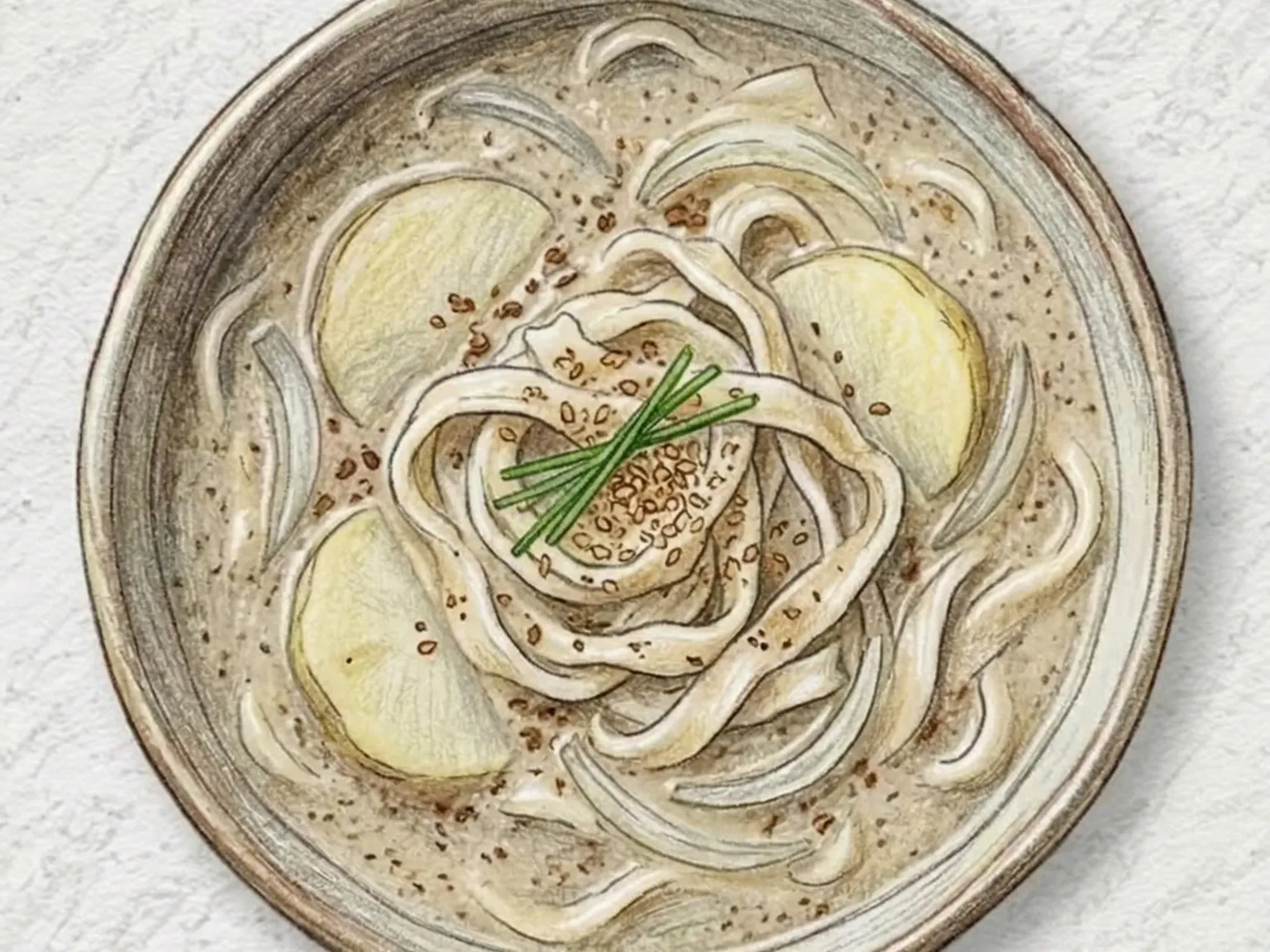
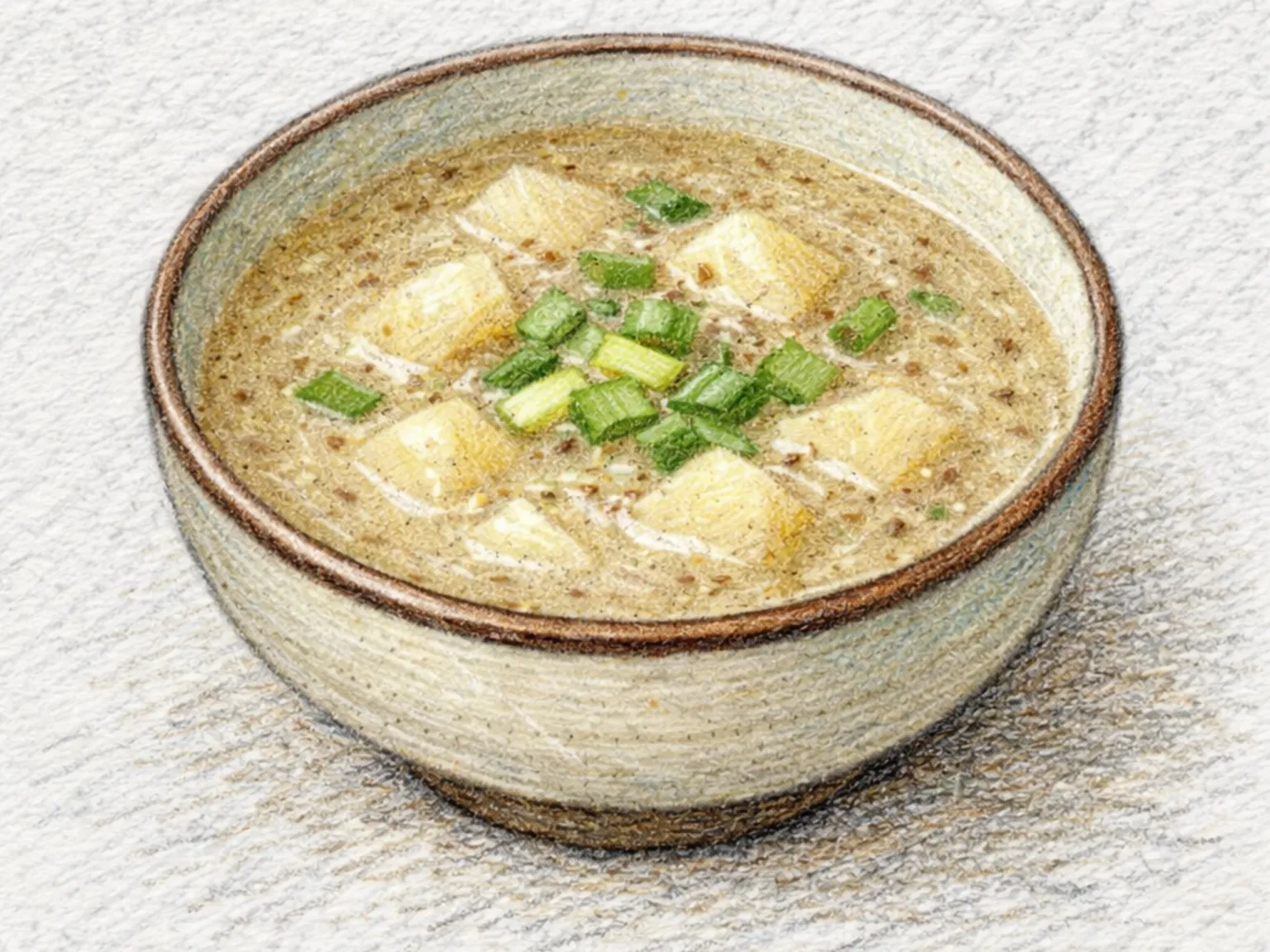
Nutty, creamy, and dairy-free - this Korean potato perilla seed soup is the kind of bowl that warms you from the inside out on a cold day. Potatoes are simmered in anchovy-kelp stock until they start to break apart and thicken the liquid naturally. Ground perilla seed is then stirred in, transforming the broth from clear to opaque and layering on a distinctive toasted, earthy fragrance. The flavor sits in a unique space - neither as pungent as doenjang soup nor as neutral as plain potato broth - with a lingering nuttiness that builds with each spoonful. Onion and green onion provide background sweetness, and a touch of soup soy sauce ties the seasoning together. This is everyday home cooking in Korea, the kind of soup that rarely appears on restaurant menus but shows up on family dinner tables whenever the weather turns cold.
Adjust Servings
Instructions
- 1
Slice potato into half-moons and onion into thin strips.
- 2
Boil potato and onion in stock for 10 minutes until tender.
- 3
Season with soup soy sauce and minced garlic.
- 4
Mix perilla powder with a little broth first, then add and simmer 5 minutes.
- 5
Finish seasoning with salt, add green onion, and boil 1 minute.
As an Amazon Associate, we may earn from qualifying purchases.
Tips
Nutrition (per serving)
More Recipes

Korean Perilla Radish Soup
Deulkkae mu-guk is a Korean radish soup enriched with perilla seed powder, giving it a distinctly nutty, creamy quality that sets it apart from plain radish broth. Thinly sliced daikon radish simmers in anchovy stock for ten minutes first, releasing a clean sweetness into the liquid. When perilla powder is stirred in, it transforms the thin broth into something noticeably thicker and more substantial - unlike sesame, perilla carries a heavier, earthier fat that coats the palate. Adding the powder just before turning off the heat preserves its toasted fragrance, which fades if it simmers too long.

Korean Perilla Seed and Potato Stew
A comforting potato jjigae enriched with ground perilla seeds, which give the broth a nutty thickness reminiscent of a light porridge. Potatoes and zucchini simmer in anchovy stock until the potatoes begin to break down, naturally thickening the stew. Three tablespoons of perilla seed powder are stirred in to create the signature creamy, toasty flavor that defines this dish. Seasoned simply with soup soy sauce and garlic, it showcases how a few humble ingredients can produce a deeply satisfying meal.

Siraegi Guk (Korean Perilla Radish Greens Soup)
Creamy, nutty, and deeply warming - this siraegi guk (dried radish greens soup) gets its velvety texture from perilla powder stirred into an anchovy-doenjang broth. The greens, which are dried and then rehydrated before use, carry a concentrated, earthy flavor and a fibrous chew that fresh vegetables cannot replicate. Massaging the greens with doenjang, garlic, and soup soy sauce before simmering allows the fermented seasoning to penetrate deep into the fibers over twenty minutes of cooking. Perilla powder added in two separate batches dissolves evenly without clumping, turning the broth an opaque, milky white with a thick, creamy consistency that clings to each spoonful.

Korean Taro Soup (Autumn Taro in Nutty Perilla Seed Broth)
Toran-guk is an autumn soup centered on taro root, which is first parboiled to remove its slippery mucilage, then simmered in a broth thickened with ground perilla seeds. The taro pieces cook to a texture that falls somewhere between potato and chestnut - they crumble softly on the tongue yet retain a subtle stickiness that gives each bite a gentle cling. Ground perilla dissolves into the liquid and turns it opaque and creamy, layering a nutty richness over the taro's mild, earthy flavor. Beef is often added for depth, its rendered fat and juices rounding out the broth, while an anchovy-kelp base underneath sharpens the umami. The soup is closely associated with Chuseok, the Korean harvest festival, when taro is freshly dug and at its peak sweetness. Cooking the taro just long enough to soften without disintegrating is the key challenge - underdone pieces are chalky and irritate the throat, while overcooked ones dissolve into the broth and lose their identity. Served hot with steamed rice, toran-guk is one of those seasonal dishes that Koreans anticipate all year and miss the moment autumn ends.

Korean Perilla Chicken Soup
Deulkkae samgye-guk is a Korean perilla-enriched chicken soup that delivers the nourishing depth of samgyetang with a simpler preparation - no glutinous rice or ginseng, just chicken and perilla seed powder. The chicken is cut into large pieces and started in cold water, simmered for forty minutes until the broth turns milky and rich. Perilla powder must be pre-dissolved in a small amount of water before adding to prevent lumps, and ten more minutes of gentle simmering allows its oils to emulsify fully into the chicken stock. The result is a broth with a thick, nutty coating on each sip, seasoned with nothing more than soup soy sauce and salt.

Korean Perilla Radish Greens Shrimp Stew
Radish greens and medium shrimp come together in this stew with a rich, nutty broth thickened by four tablespoons of perilla seed powder. The radish greens provide a hearty, slightly fibrous chew that absorbs the savory broth well. Doenjang and soup soy sauce season the anchovy-kelp stock base, while the shrimp release their own briny sweetness as they cook. The result is a deeply flavored, rustic stew that balances the earthiness of perilla with the ocean freshness of shrimp.