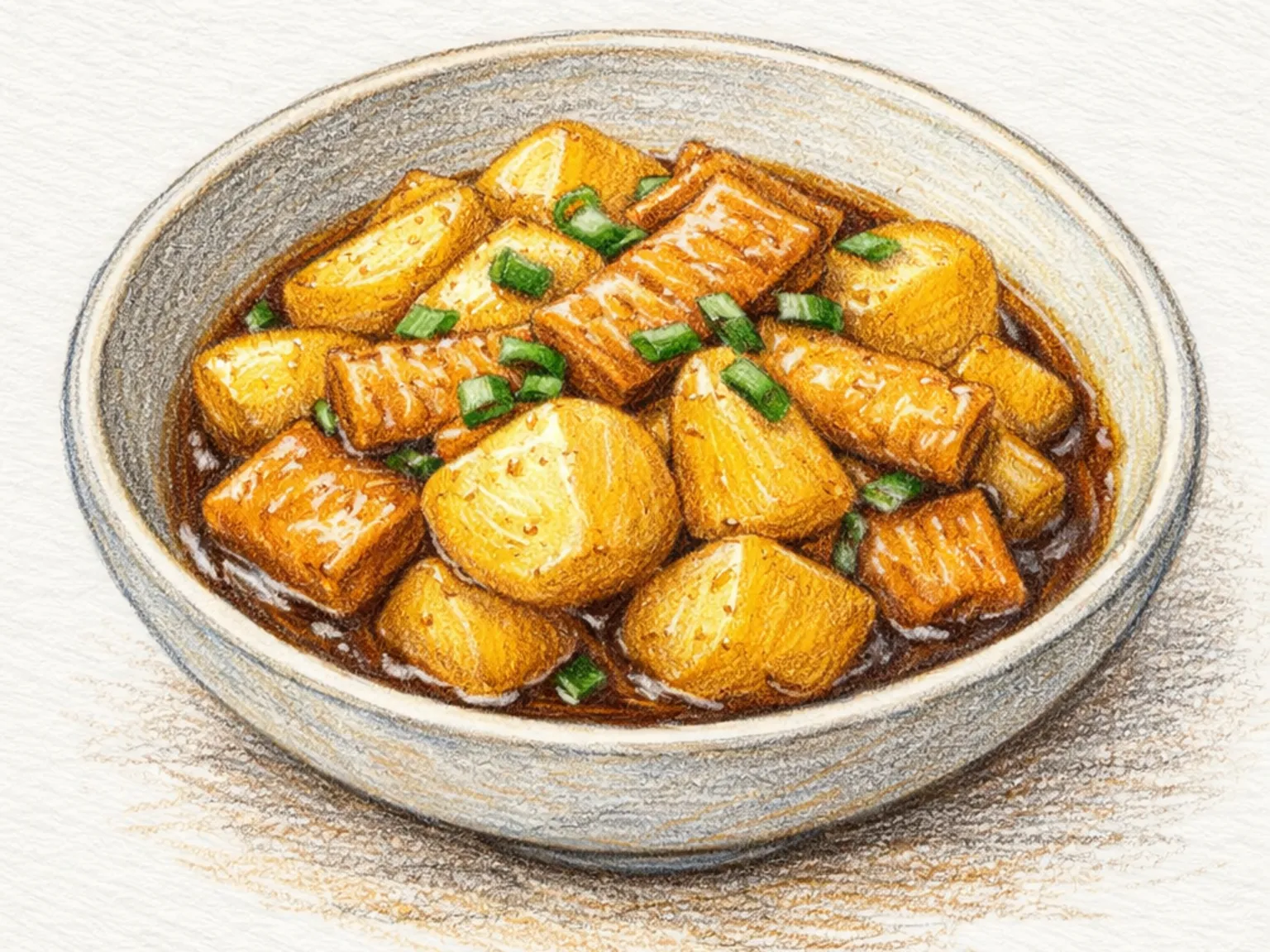
Korean Braised Potato and Fish Cake
Gamja eomuk jorim is a Korean home-style side dish of potatoes and fish cake sheets braised in soy sauce with a touch of oligosaccharide syrup for mild sweetness. The potato chunks turn starchy and absorb the seasoning as they cook, while the fish cake pieces add a chewy contrast. Garlic and a finishing drizzle of sesame oil give the dish its characteristic savory aroma. This is one of the most common Korean lunchbox and daily banchan items, simple to prepare and universally enjoyed.
Adjust Servings
Instructions
- 1
Cut potatoes into bite-size chunks and fish cakes into triangles.
- 2
Add potato, onion, water, soy sauce, and garlic to a pot and boil for 10 minutes.
- 3
When potatoes are half-cooked, add fish cake and syrup; braise on medium heat.
- 4
Cook 10 more minutes until sauce thickens, stirring to prevent sticking.
- 5
Turn off heat, drizzle sesame oil, toss lightly, and serve.
As an Amazon Associate, we may earn from qualifying purchases.
Tips
Nutrition (per serving)
More Recipes

Korean Soy-Braised Fish Cake
Eomuk-jorim - soy-braised fish cake - is among the most reliable banchan in the Korean refrigerator, keeping for up to a week while improving in flavor each day as the soy glaze penetrates deeper. Korean eomuk is a pressed fish paste distinct from Japanese kamaboko, with a chewier, denser bite. The fish cake is cut into triangles or rectangles and simmered in a mixture of soy sauce, rice syrup, garlic, and water. As the liquid reduces by half over ten minutes, the remaining sauce thickens into a sticky, sweet-salty glaze clinging to each piece. Adding a sliced cheongyang chili near the end introduces a subtle heat that lifts the otherwise one-dimensional sweetness. This banchan has been a fixture of Korean school cafeterias, packed lunches, and corner-store side dishes for decades - a workhorse side dish that costs almost nothing to prepare.

Korean Braised Potatoes with Shishito Peppers
Kkwari-gamja-jorim is a Korean side dish of potatoes and shishito peppers braised in soy sauce with oligosaccharide syrup and minced garlic. The potato pieces absorb the sweet-salty glaze and turn fluffy inside with a lightly sticky exterior, while the shishito peppers wrinkle slightly but keep their snap. A drizzle of sesame oil at the end brings a nutty aroma, and scattered sesame seeds add visual contrast. The heat level stays mild enough for children, and this banchan holds up well at room temperature, making it a practical addition to packed lunches.

Korean Soy-Braised Deodeok Root
Deodeok-jorim is mountain root braised in soy sauce, rice syrup, garlic, and sesame oil. The root's distinctive bitter-herbal aroma softens as the sweet-salty glaze coats it during simmering, while the interior stays dense and slightly chewy. A single green chili adds a quiet heat at the finish, and sesame seeds scattered on top bring a toasted nuttiness. It is a banchan that preserves the wild, earthy character of foraged deodeok and pairs naturally with other vegetable side dishes on a Korean table.

Korean Braised Mackerel with Potatoes
Godeungeo gamja jorim is a quintessential Korean home-cooked dish of mackerel and potato braised in a soy sauce and gochugaru seasoning. The oily mackerel fillets release their rich flavor into the sauce, while the potato chunks soak up the spicy, savory liquid as they cook to a fluffy consistency. Onion and green onion contribute natural sweetness and aroma that balance the bold seasoning. This is one of Korea's most beloved fish dishes, often served family-style with the braising sauce spooned generously over rice.

Korean Braised Dried Pollock and Potatoes
Hwangtae gamja jorim is a Korean braised dish of dried pollock strips and potato in a soy sauce seasoning with gochugaru and oligosaccharide syrup. The potatoes are cooked first until partially tender, then the briefly soaked pollock strips and onion are added to braise together. The pollock absorbs the seasoned broth and turns pleasantly chewy, while the potatoes become starchy and fluffy. Sesame oil added at the end ties the flavors together with a nutty fragrance. Keeping the pollock soak time very short is the key to maintaining its signature texture.

Korean Braised Potatoes (Soy-Glazed Braised Potato Banchan)
Gamja-jorim - soy-braised potatoes - is among the top five most frequently made banchan in Korean households, alongside kimchi, kongnamul, and gyeran-mari. Small potatoes are parboiled whole until just fork-tender, then transferred to a mixture of soy sauce, sugar, rice syrup, garlic, and water. The braising happens over medium-low heat for fifteen minutes with the lid off, allowing the sauce to reduce gradually into a thick, syrupy glaze. Constant gentle stirring prevents the soft potatoes from sticking or breaking apart. As the liquid evaporates, each potato develops a dark amber, lacquered surface while the interior remains starchy and yielding. The taste is straightforwardly sweet-salty with a garlic undertone - comfort food in its most elemental form. Korean mothers often make a large batch on weekends, refrigerating it to serve cold throughout the week. The dish improves overnight as the glaze continues to penetrate the potato's interior.