Korean Braised Potatoes (Soy-Glazed Braised Potato Banchan)

Korean Braised Potatoes (Soy-Glazed Braised Potato Banchan)

Quick answer

Gamja-jorim - soy-braised potatoes - is among the top five most frequently made banchan in Korean households, alongside kimchi, kongnamul, and gyeran-mari.

What makes this special

  • Small potatoes simmered until soy and rice syrup reduce to an amber glaze, deepened by a day in the fridge.
  • Uncovered simmering 15 minutes lets broth reduce to an amber glaze
  • Reducing heat the moment syrup bubbles locks in glaze consistency
Total time
30 min
Level
Easy
Servings
4 servings
Ingredients
8
Calories
130 kcal
Protein
2 g

Key ingredients

PotatoSoy sauceSugarCorn syrupGarlic cloves

Core cooking flow

  1. 1 Peel 3 potatoes and cut them into 3 cm pieces so they cook at the same rate.
  2. 2 Put the drained potatoes in a pot with 200 ml water, 3 tablespoons soy sauce...
  3. 3 When it boils, reduce the heat to medium-low and cook for about 10 minutes.

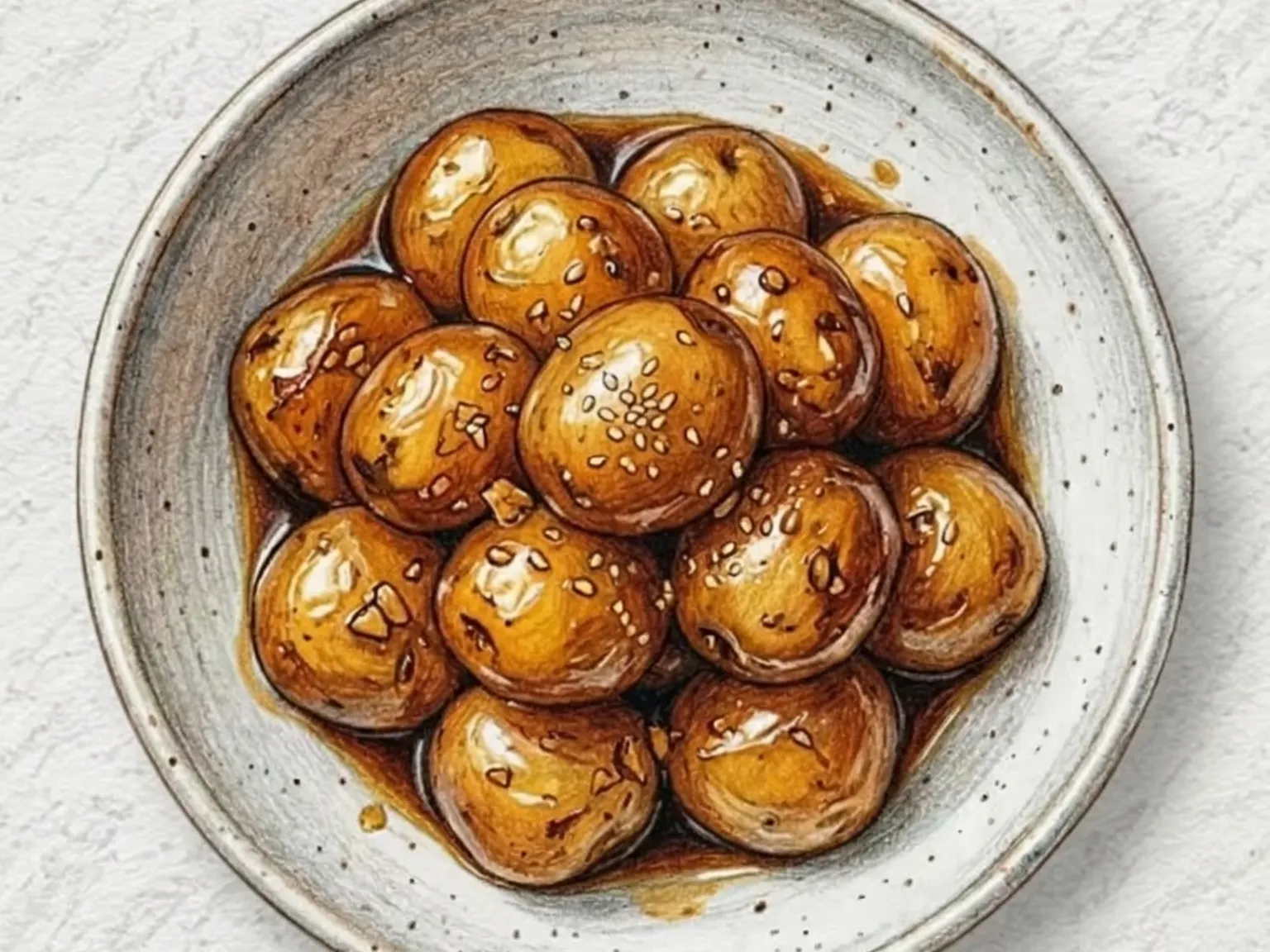
Gamja-jorim - soy-braised potatoes - is among the top five most frequently made banchan in Korean households, alongside kimchi, kongnamul, and gyeran-mari. Small potatoes are parboiled whole until just fork-tender, then transferred to a mixture of soy sauce, sugar, rice syrup, garlic, and water. The braising happens over medium-low heat for fifteen minutes with the lid off, allowing the sauce to reduce gradually into a thick, syrupy glaze. Constant gentle stirring prevents the soft potatoes from sticking or breaking apart. As the liquid evaporates, each potato develops a dark amber, lacquered surface while the interior remains starchy and yielding. The taste is straightforwardly sweet-salty with a garlic undertone - comfort food in its most elemental form. Korean mothers often make a large batch on weekends, refrigerating it to serve cold throughout the week. The dish improves overnight as the glaze continues to penetrate the potato's interior.

Prep 10min Cook 20min 4 servings

Instructions

Read the steps as a cooking flow: prep, heat, seasoning, doneness control, and finish.

6 steps
  1. 1
    Heat

    Peel 3 potatoes and cut them into 3 cm pieces so they cook at the same rate.

    Soak them in cold water for 5 minutes to remove surface starch, then drain thoroughly in a sieve.

  2. 2
    Control

    Put the drained potatoes in a pot with 200 ml water, 3 tablespoons soy sauce, 1 tablespoon sugar, and 2 minced garlic cloves.

    Start over high heat and bring the liquid to a lively boil.

  3. 3
    Control

    When it boils, reduce the heat to medium-low and cook for about 10 minutes.

    The potatoes are ready for glazing when a fork goes in with slight resistance, not when the pieces are collapsing.

  4. 4
    Control

    Remove the lid and stir in 1 tablespoon corn syrup.

    Simmer over medium heat for about 5 minutes, gently rolling the potatoes through the sauce so the glaze coats them evenly without breaking the edges.

  5. 5
    Season

    Keep reducing until only a thin layer of sauce remains on the bottom and the potatoes look glossy and dark amber.

    If the glaze thickens too fast or starts catching, lower the heat immediately.

  6. 6
    Finish

    Turn off the heat, drizzle with 1 teaspoon sesame oil, and sprinkle with 1 teaspoon sesame seeds.

    Serve warm with rice, or cool completely before packing as a side dish so the glaze sets cleanly.

After the steps

Pick a recipe that fits this dish.

Continue with shared ingredients, meal pairings, or a similar method.

Recipes That Go Well With This

More Side dishes →

Based on shared ingredients and meal pairing

Korean Braised Potatoes with Shishito Peppers
Shared ingredient: potatoes Steamed

Korean Braised Potatoes with Shishito Peppers

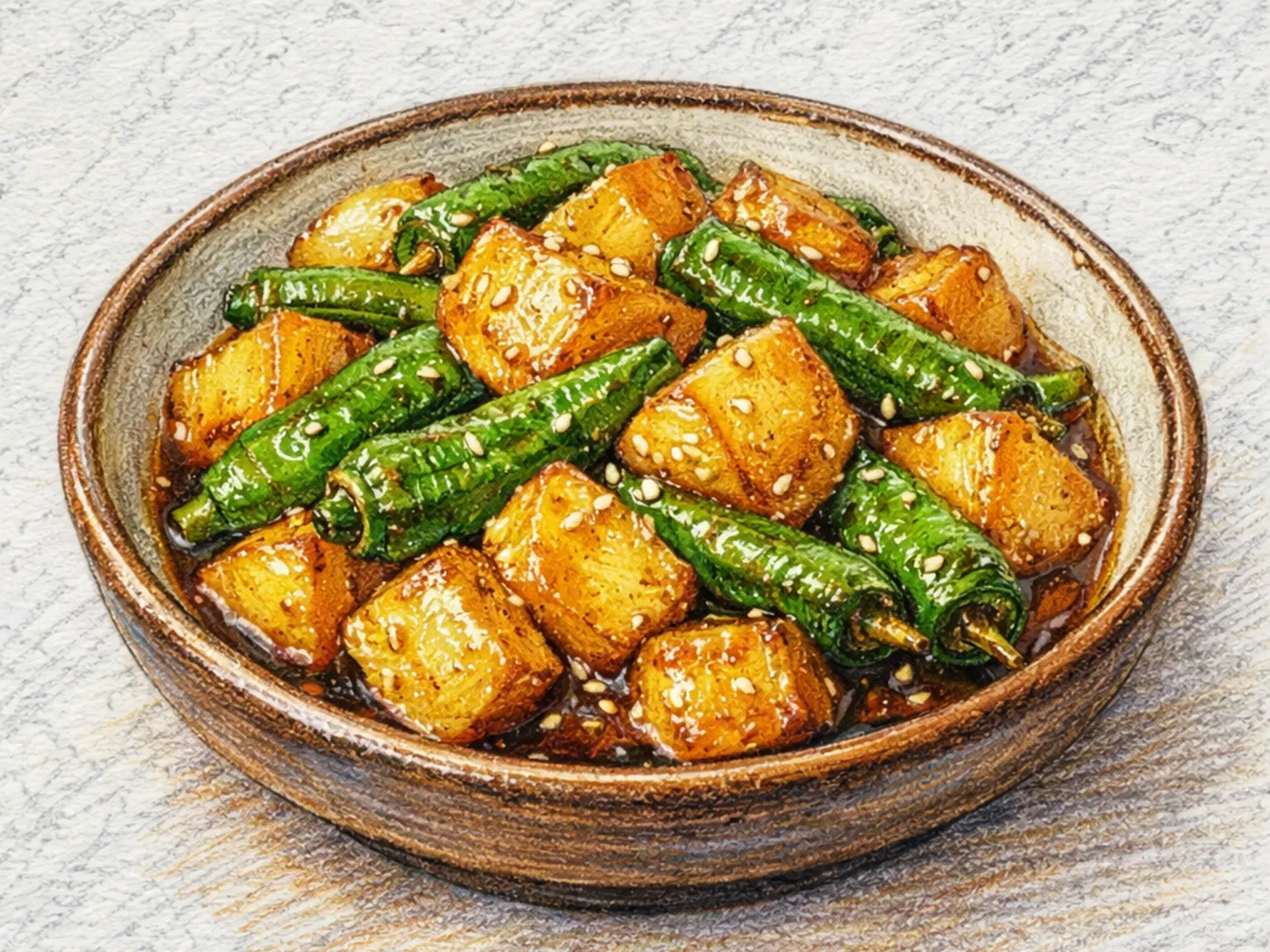
Kkwari-gamja-jorim is a Korean braised side dish of cubed potatoes and shishito peppers cooked down in soy sauce, oligosaccharide syrup, and minced garlic. The potatoes start in a sauce with enough moisture to cook through, and as the liquid reduces, the seasoning thickens into a glossy coating. By the time the pan is nearly dry, the outside of each potato piece has taken on a sweet-salty glaze while the inside stays floury and soft. Shishito peppers, with their wrinkled skins, hold the sauce well and require only brief cooking to stay crisp. A final drizzle of sesame oil and a scatter of sesame seeds add a nutty aroma and a visual finish that signals the dish is done. The heat level stays mild, suitable for children, and the glaze sets firmly enough that the dish travels well in a packed lunch without losing flavor at room temperature.

Korean Soy Steamed Potatoes
Shared ingredient: potatoes Steamed

Korean Soy Steamed Potatoes

Gamja-jjim is a Korean braised potato banchan made by simmering potato pieces in a sauce of soy sauce, sugar, and minced garlic until the liquid reduces to a thick, glossy glaze. As the sauce concentrates, it coats every cut surface of the potato with a lacquered sheen while the seasoning penetrates through to the center, so the flavor is consistent from the outside in. The sugar caramelizes slightly during the final minutes of reduction, adding a faint toffee-like sweetness to the soy's deeper, saltier notes. Minced garlic breaks down in the heat and melds into the sauce, providing an umami backbone that rounds out the simpler flavors. Finishing with sesame oil and a generous scatter of sliced chives introduces a toasted, nutty aroma and a fresh herbal brightness. The potato itself holds its shape but is cooked through to a fluffy, yielding interior beneath the sticky exterior. Simple to make and requiring few ingredients, it is the kind of side dish that disappears from the table without much fanfare, pairing effortlessly with a bowl of rice.

Korean Grilled Shishito with Doenjang
Serve together Grilled

Korean Grilled Shishito with Doenjang

Kkwarigochu-doenjang-gui is a Korean grilled shishito pepper dish where the peppers are first dry-blistered in a hot pan until their skins wrinkle and char, then quickly tossed with a sauce of doenjang, gochujang, oligosaccharide syrup, and minced garlic. Blistering the peppers without oil first drives off moisture, removes the raw grassy taste, and concentrates their natural sweetness before any sauce is introduced. Pricking each pepper with a fork before cooking lets the seasoning penetrate the interior and prevents them from ballooning and bursting from steam. The sauce goes in only for the final two minutes so the fermented soybean paste keeps its full aroma, and a drizzle of sesame oil with toasted seeds at the end adds a roasted nuttiness.

Korean Soy-Braised Baby Potatoes
Similar recipe Steamed

Korean Soy-Braised Baby Potatoes

Algamja ganjang-jorim is a Korean banchan of baby potatoes braised in a soy-sugar glaze, a dish so simple in its ingredients - soy sauce, sugar, corn syrup, garlic, and a handful of small potatoes - that it has persisted in home cooking across generations. The potatoes are parboiled whole first to partially cook the starchy exterior, then transferred into the seasoning liquid and simmered over low heat as the sauce reduces. As the liquid evaporates, a dark amber lacquer forms around each potato while the interior stays dense and floury. Keeping the lid off and gently shaking the pan rather than stirring with a utensil allows the coating to build evenly without breaking the potatoes apart. Sesame oil and sesame seeds go in at the end when the sauce has thickened to a glaze, adding a roasted fragrance to the finish. Refrigerating overnight deepens the penetration of the soy seasoning into the center, and the dish keeps for close to a week - practical enough to make in a single batch for the whole week.

Serve with this

Korean Steamed Soybean Sprouts
Steamed Easy

Korean Steamed Soybean Sprouts

Kongnamul-jjim is a traditional Korean side dish centered on steamed soy bean sprouts. The preparation involves layering fresh bean sprouts with a mixture of red chili flakes, soy sauce, and finely minced garlic before placing them in a pot. A critical aspect of the cooking process is keeping the lid tightly closed from the beginning until the sprouts are fully cooked. This sealed environment creates a build-up of steam that is essential for maintaining the natural crispness of the sprouts while ensuring that the savory and spicy seasoning permeates each individual strand. The resulting flavor profile features a sharp heat from the red pepper that complements the clean and refreshing qualities of the bean sprouts, resulting in a light and clear finish. To finish the dish, a generous drizzle of sesame oil and a handful of sliced scallions are added to provide a fragrant, toasted aroma and a layer of savory depth. Because the primary ingredients are inexpensive and the entire process from preparation to plating takes less than fifteen minutes, this dish serves as a dependable addition to any meal when the table requires an extra side dish on short notice. For a different aromatic profile, perilla oil can be substituted for sesame oil to introduce an earthy and more herbaceous scent. Individuals seeking a more intense level of spice can add sliced Cheongyang chilies during the cooking stage to elevate the heat.

🥗 Light & Healthy 🏠 Everyday
Prep 10min Cook 10min 2 servings
Korean Oi Dubu Bokkeum (Cucumber Tofu Stir-fry)
Stir-fry Easy

Korean Oi Dubu Bokkeum (Cucumber Tofu Stir-fry)

Oi-dubu-bokkeum stir-fries half-moon cucumber slices and cubed firm tofu with soup soy sauce, garlic, and a light touch of Korean chili flakes. The tofu is pan-fried to golden first to prevent crumbling, then set aside while garlic and onion build flavor in the same pan. Cucumber goes in for just 90 seconds - long enough to warm through but short enough to stay crisp and juicy. The tofu returns for a final toss with sesame oil, creating a dish defined by the contrast between cool, crunchy cucumber and warm, soft tofu under a clean soy-based seasoning.

🥗 Light & Healthy 🏠 Everyday
Prep 10min Cook 8min 2 servings
Refreshing Spicy Mulhoe Broth
Soups Easy

Refreshing Spicy Mulhoe Broth

Refreshing Spicy Mulhoe Broth is a Korean cold soup base for raw fish dishes. This recipe combines red pepper paste, red pepper powder, vinegar, sugar, plum syrup, and minced garlic. The mixture of six tablespoons of vinegar and two of plum syrup provides a double acidity that blocks fishy notes from seafood. Adding one hundred milliliters of lemon-lime soda introduces carbonation that lifts a bright, airy note in the broth. Alternatively, using pear juice instead of soda offers a sophisticated sweetness. To prepare, mix the paste first to remove dry pockets, stir in water, and add the soda last to preserve carbonation. Chill the broth for at least two hours or ferment it for a day to deepen the flavor. Serving it semi-frozen as a slushy lets the ice dilute the seasoning gradually as sashimi thaws.

🔥 Trending Now ⚡ Quick
Prep 15min Cook 5min 2 servings

Similar recipes

Korean Braised Anchovy Side Dish
Side dishes Easy

Korean Braised Anchovy Side Dish

Myeolchi-jorim simmers tiny dried anchovies in soy sauce, rice syrup, and garlic into a moist, glazed banchan that contrasts fundamentally with stir-fried anchovy preparations. Where bokkeum chases crispness by cooking over high heat with minimal liquid, jorim pursues the opposite - anchovies braise in a seasoned liquid on low heat until they absorb it from the inside out, becoming pliant and saturated with sweet-salty flavor all the way through their flesh. A one-minute dry toast in a bare pan removes any residual fishiness before soy sauce, syrup, minced garlic, and water go in together, simmering uncovered for ten minutes while the liquid steadily reduces. As the sauce thickens, a sticky dark glaze wraps around each anchovy; biting one releases a rush of seasoned juice from within rather than the crunch of a dehydrated fish. Sesame seeds and sesame oil stirred in off heat add a final layer of warmth and nuttiness. Once fully cooled, the reduced sauce thickens further into an almost jelly-like coating that holds the anchovies together in a satisfying cluster. Stored in an airtight container in the refrigerator, myeolchi-jorim keeps well for over a week and the flavor continues to deepen as the anchovies sit in the congealed glaze.

🏠 Everyday 🍱 Lunchbox
Prep 8min Cook 15min 4 servings
Korean Soy-Braised Soybeans
Side dishes Easy

Korean Soy-Braised Soybeans

Kong-jorim, also called kongjaban, is soy-braised soybeans simmered slowly in soy sauce and sugar until each bean turns deeply glossy, a pantry staple rooted in the era when rice and beans were the twin pillars of Korean sustenance. Soaking the beans for a minimum of eight hours is not a step that can be skipped: it shortens cooking time and allows the seasoning to penetrate all the way to the center of each bean. Omitting the soak produces beans that are salty on the exterior and chalky and hard inside. After boiling until fully tender, the beans simmer on low heat for fifteen minutes in the soy and sugar mixture, then corn syrup is stirred in at the end to create a transparent, lacquer-like glaze that gives each bean its characteristic high shine. Using black soybeans, known as soritae, instead of yellow soybeans yields a dramatic deep purple-black luster as the anthocyanin pigments in the skin dissolve slowly into the braising liquid. Stored in a sealed container in the refrigerator, kong-jorim keeps well for more than two weeks, making it one of the most practical weekend meal-prep banchan a home cook can prepare. Its small, individual beans make it easy to portion onto rice or tuck into a corner of a packed lunch.

🏠 Everyday 🍱 Lunchbox
Prep 480min Cook 40min 6 servings
Korean Soy-Braised Whole Garlic
Side dishes Easy

Korean Soy-Braised Whole Garlic

Peeled whole garlic cloves are simmered in a mixture of soy sauce and corn syrup until they turn glossy and deeply seasoned throughout. Raw garlic's sharp, pungent bite mellows completely during the slow braising, transforming into a gentle sweetness that merges with the soy sauce's salinity. The corn syrup reduces alongside the soy sauce, forming a lacquer-like glaze that clings to each clove and catches the light. Low heat is essential: cooking too fast browns the exterior while leaving the core hard and under-seasoned. With patience, the garlic softens to a texture resembling a roasted potato, yielding easily when pressed with chopsticks yet holding its shape on the plate. A final drizzle of sesame oil seals the surface with a warm, nutty aroma that completes the balance of salty, sweet, and rich. The finished jorim keeps well under refrigeration for over a week, making it a practical banchan to prepare in advance.

🏠 Everyday 🍱 Lunchbox
Prep 10min Cook 25min 4 servings

Tips

Soaking potatoes in water for 5 minutes removes starch for a cleaner braise.
Oligosaccharide syrup can substitute for corn syrup.

Nutrition (per serving)

Calories
130
kcal
Protein
2
g
Carbs
28
g
Fat
2
g

Variations

Soy-Braised Potatoes

Soy-Braised Potatoes highlights potato and onion. It is simmered until the sauce turns glossy and deeply savory with a mild sweetness.

Braised Potatoes with Shishito Peppers

Braised Potatoes with Shishito Peppers highlights potatoes and shishito peppers. It is simmered until the sauce turns glossy and deeply savory with a mild sweetness.