Korean Stir-fried Potato and Shrimp
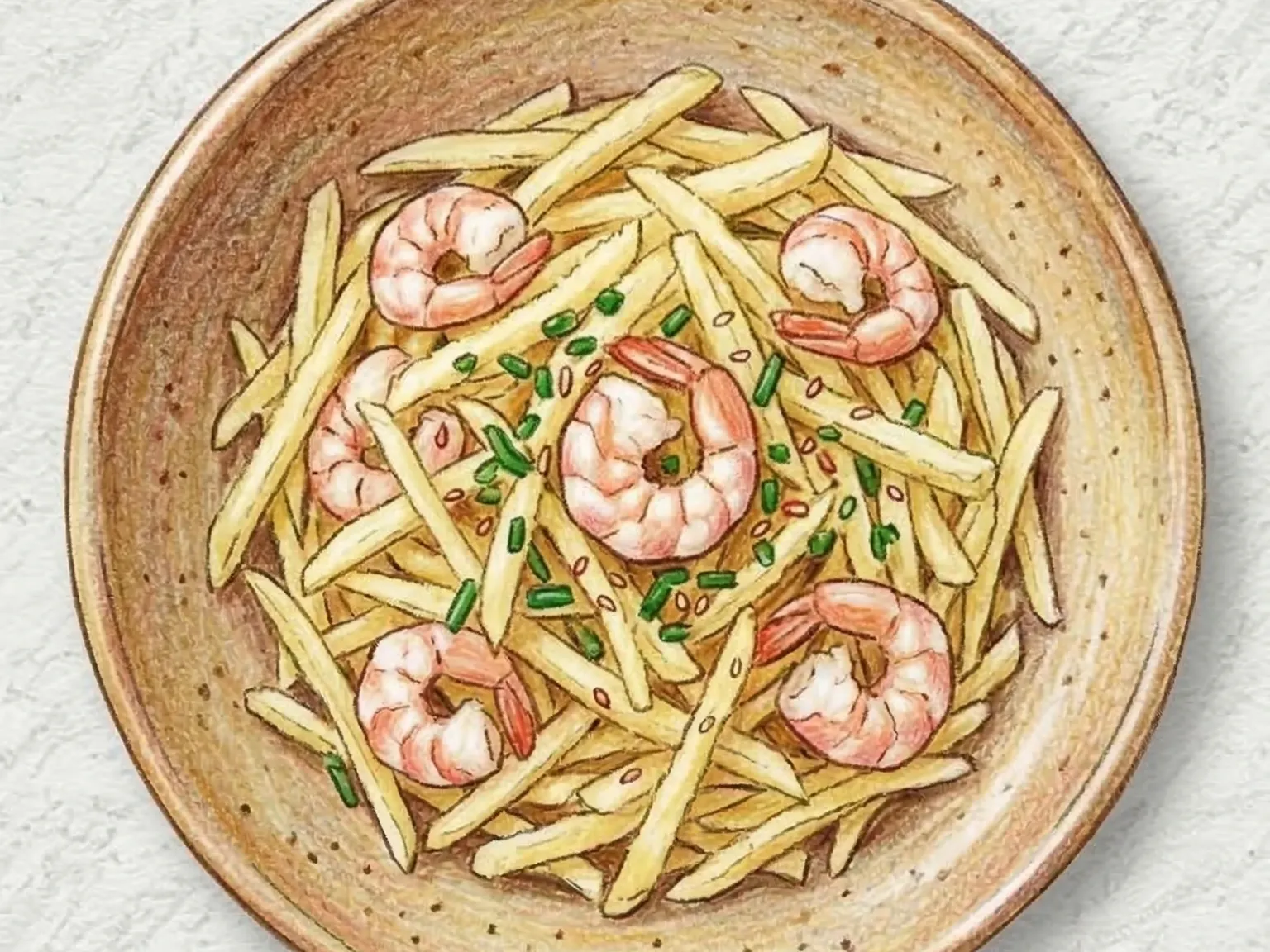
Gamja-saeu-bokkeum pairs julienned potatoes with shell-on medium shrimp in a clean, garlic-forward stir-fry. The potatoes are soaked in cold water first to remove surface starch - skipping this step leads to clumping in the pan. Garlic sizzles in oil to build an aromatic base before the shrimp go in, cooking until half-done so their natural sweetness transfers to the potato strips when combined. Seasoned with nothing more than salt, pepper, and a finish of sesame oil, this banchan lets the contrast between the potato's floury bite and the shrimp's springy snap carry the dish.
Adjust Servings
Instructions
- 1
Julienne potatoes and soak in cold water for 10 minutes to remove starch.
- 2
Peel shrimp, pat dry, and season with salt and pepper.
- 3
Heat oil and stir-fry garlic and onion first.
- 4
Add potatoes and stir-fry 3-4 minutes until slightly translucent.
- 5
Add shrimp and stir-fry quickly until just cooked.
- 6
Finish with sesame oil and toss once more.
As an Amazon Associate, we may earn from qualifying purchases.
Tips
Nutrition (per serving)
More Recipes

Korean Stir-fried Julienne Potatoes
Gamja-chae-bokkeum - stir-fried julienned potatoes - is a deceptively simple banchan where the cutting technique determines the outcome. Potatoes are julienned into matchstick-thin strips, then soaked in cold water to wash away surface starch - this is the critical step that prevents the strips from clumping into a sticky mass in the pan. After draining completely, they hit a hot, lightly oiled pan and cook for just three to four minutes, tossed frequently. The goal is a strip that is cooked through but still has an audible crunch when bitten - not soft, not raw. Salt and a splash of vinegar are the only seasonings, keeping the focus on the potato's clean, starchy sweetness. This banchan has been a staple of Korean school lunches and company cafeterias for decades, valued for being vegetarian, cheap, and universally inoffensive.

Korean Stir-fried Potato Strips
Gamja-bokkeum is a staple Korean side dish made by stir-frying julienned potatoes until they reach a satisfying tender-crisp texture. Soaking the potatoes beforehand removes excess starch, preventing them from clumping in the pan. A light seasoning of garlic and salt draws out the potato's natural mild flavor, while a finishing touch of sesame oil and seeds adds a warm nuttiness. It is a humble yet addictive banchan that pairs effortlessly with steamed rice.

Korean Stir-fried Dried Shrimp
Geon-saeu-bokkeum transforms a handful of dried shrimp - a Korean pantry staple - into a quick, crunchy banchan. The shrimp are dry-toasted in a pan first to drive off residual moisture, intensifying their briny aroma and setting up the crisp texture. Soy sauce, rice syrup or oligosaccharide, and garlic are added and reduced over low heat until the shrimp are coated in a thin, glossy sweet-salty glaze. The timing is critical: the moment the syrup bubbles once, the heat must drop, or the coating hardens into a tooth-breaking shell. A finish of sesame oil and sesame seeds rounds out this compact side dish that works equally well in lunchboxes and as a drinking snack.

Korean Stir-Fried Kimchi (Caramelized Aged Kimchi Banchan)
Kimchi-bokkeum is the default way Korean households use up kimchi that has fermented past its fresh prime. Stir-frying tempers the sharp lactic acidity that over-ripe kimchi develops - the heat transforms the sourness into something mellower, sweeter, and more rounded. Onion goes in first and cooks until translucent, laying a sweet foundation before the kimchi and garlic join. Medium heat is essential: it drives off moisture gradually, yielding a thick, concentrated sauce rather than a watery stew. A small addition of gochugaru brightens the color, and a pinch of sugar balances the fermented tang. One tablespoon of kimchi brine amplifies the umami from the lactobacillus culture itself. The finished banchan is versatile enough to eat straight over rice, fold into fried rice, or pile on top of ramyeon.

Korean Stir-fried Pumpkin Leaves and Shrimp
Hobakip-saeu-bokkeum is a Korean stir-fry of blanched pumpkin leaves and shrimp cooked in perilla oil with light soy sauce. Blanching softens the leaves' rough texture while preserving their mild, grassy aroma, and the shrimp bring a savory ocean note. A touch of cheongyang chili pepper adds gentle heat that ties the flavors together. This seasonal dish is best enjoyed in summer when pumpkin leaves are at their freshest, and it pairs especially well mixed into a bowl of hot rice.

Korean Stir-fried Dried Whitebait Sheet
Dried whitebait sheets - paper-thin and lightly fishy - are a Korean pantry staple for quick banchan. The sheets are torn and dry-toasted to drive off moisture, giving the final dish a brittle, chip-like crunch. A glaze of gochujang, soy sauce, and oligosaccharide syrup coats both sides in the pan. The taste is salty-sweet with a fermented chili kick, and the texture stiffens as it cools - one of the rare banchan that improves at room temperature.