Charim

2686 Korean & World Recipes

2686+ Korean recipes, clean and organized. Ingredients to instructions, all at a glance.

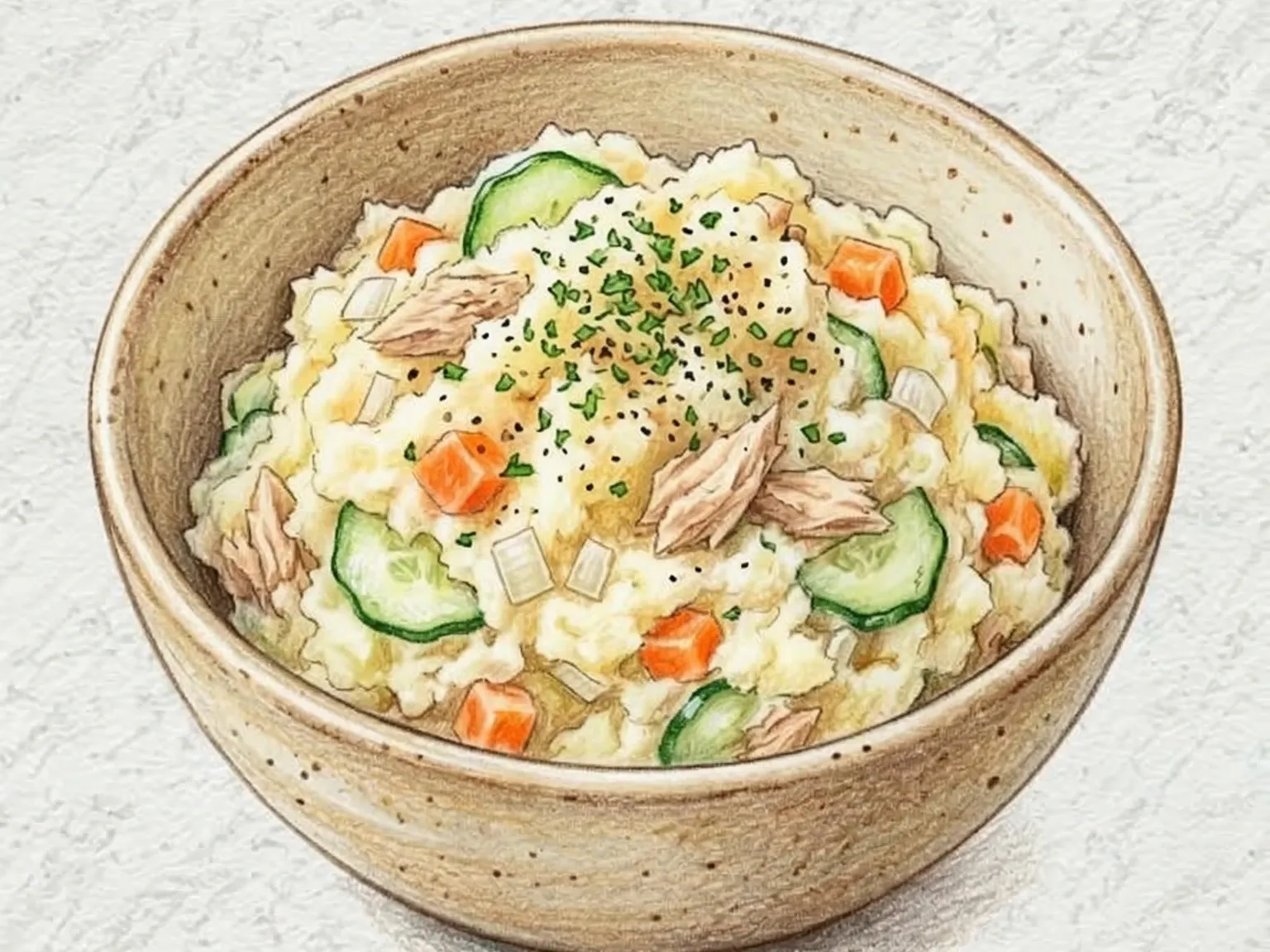
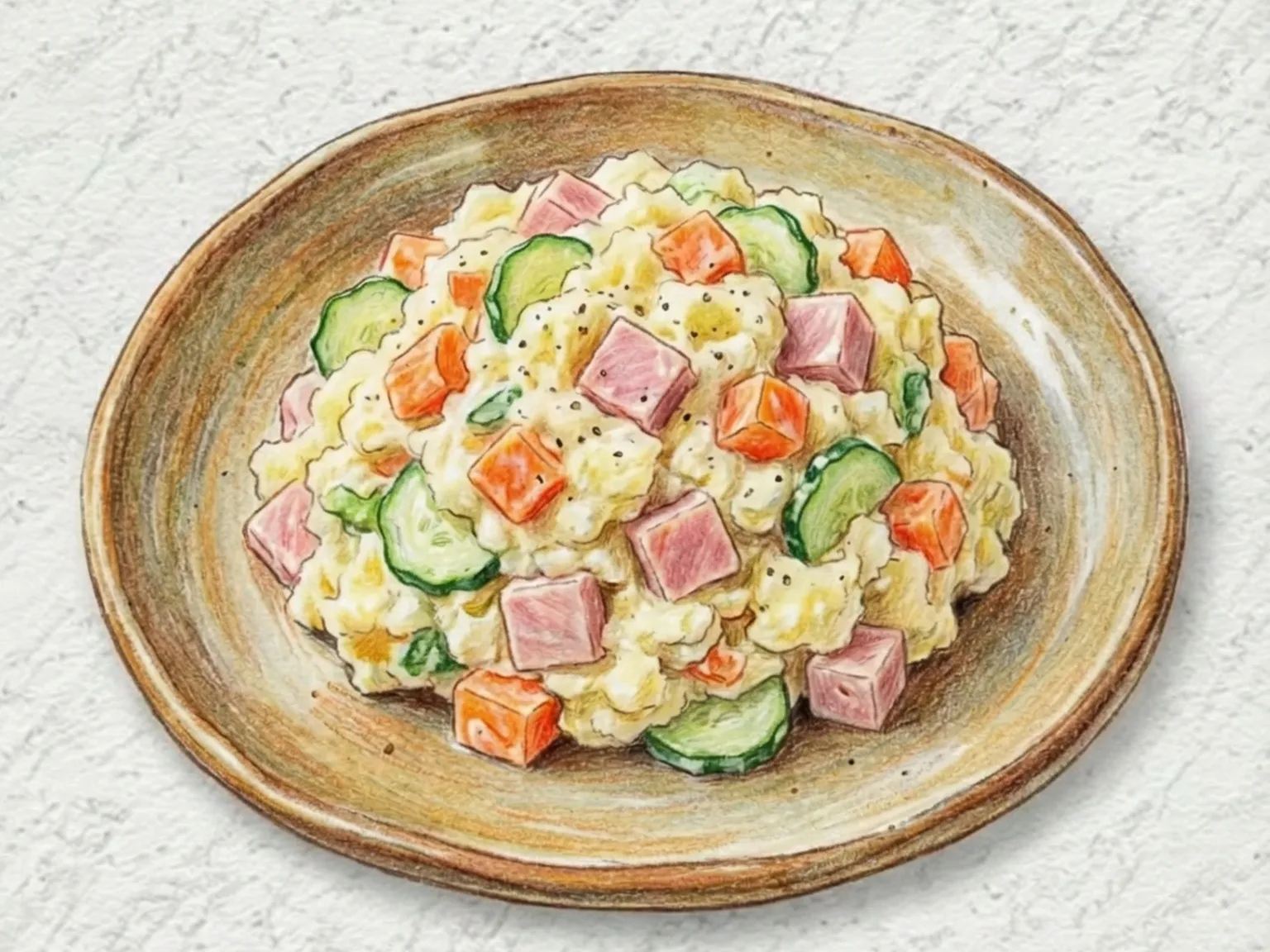
Korean Potato Salad (Creamy Mashed Potato Ham Cucumber)

Korean Potato Salad (Creamy Mashed Potato Ham Cucumber)

Korean potato salad (gamja salad) arrived via Japan's yoshoku tradition but evolved its own identity in Korean home kitchens. Potatoes are boiled and mashed while hot, leaving some lumps for textural contrast - uniformly smooth is not the goal. Diced ham is pan-seared to render excess fat, then mixed with salt-drained cucumber and boiled carrot. The dressing is simply mayonnaise adjusted with sugar and salt, producing the distinctly sweet-creamy profile that separates Korean potato salad from Western versions. Chilling for at least an hour before serving lets the seasoning equalize throughout the mixture.

Prep 20minCook 15min4 servings

Adjust Servings

2servings
servings

Instructions

  1. 1

    Boil and mash potatoes; boil and chop egg.

  2. 2

    Dice carrot and blanch briefly.

  3. 3

    Dice cucumber and ham.

  4. 4

    Mix all ingredients with mayonnaise, salt, and sugar.

  5. 5

    Refrigerate at least 30 minutes before serving.

🛒Shop Ingredients on Amazon

As an Amazon Associate, we may earn from qualifying purchases.

Tips

Mix in mayonnaise while potatoes are still warm for easier blending.

Nutrition (per serving)

Calories
200
kcal
Protein
6
g
Carbs
22
g
Fat
10
g

More Recipes

Korean Scallion Salad (Spicy Green Onion Grilled Meat Side)
Side dishesEasy

Korean Scallion Salad (Spicy Green Onion Grilled Meat Side)

Pa-muchim is a julienned green onion salad that serves as a classic accompaniment to Korean grilled meat. The onions are soaked in cold water for 10 minutes to draw out harsh sulfur compounds, leaving only a clean crispness behind. A dressing of soy sauce, red pepper flakes, sugar, vinegar, and sesame oil coats the thin strands, delivering a balance of salty, sweet, sour, and spicy notes in each bite. Toasted sesame seeds scattered on top contribute a lingering nuttiness. The salad should be eaten promptly after tossing, as the onions begin to wilt within minutes; placed on top of grilled pork belly or bulgogi, the sharp freshness cuts through the richness of the meat.

🏠 Everyday🍱 Lunchbox
Prep 10min4 servings
Korean Spicy Squid Salad (Gochujang Blanched Squid)
Side dishesEasy

Korean Spicy Squid Salad (Gochujang Blanched Squid)

Ojingeo-muchim tosses blanched squid in a gochujang-vinegar dressing for a tangy, spicy seafood banchan that works equally well as a rice side dish or as anju with drinks. Squid, unlike vegetables, has an extremely narrow blanching window that determines the entire outcome: one minute to ninety seconds in boiling water is the limit. Beyond that, the proteins contract and the texture turns rubbery; under that, the interior stays translucent and fishy. Plunging into ice water immediately after blanching halts carryover cooking and locks in the ideal springy-bouncy texture. The dressing combines gochujang, gochugaru, vinegar, sugar, garlic, sesame oil, and sesame seeds, with vinegar playing the pivotal role - it introduces a sharp acidity over the squid's marine umami, forming a triangular balance with the chili heat. Julienned onion and cucumber mixed in add textural variety and stretch the portion. A popular variation stirs in one tablespoon of mayonnaise, whose emulsified fat wraps around the heat and produces a milder, creamier version.

🏠 Everyday🍱 Lunchbox
Prep 15minCook 5min4 servings
Korean Zucchini Namul (Sesame-Dressed Bibimbap Topping)
Side dishesEasy

Korean Zucchini Namul (Sesame-Dressed Bibimbap Topping)

Hobak namul is julienned zucchini stir-fried with sesame oil and garlic - a foundational Korean namul that appears as one of the five-color toppings in bibimbap. Though it looks similar to hobak-bokkeum, the cut makes the difference: namul uses thin julienne strips rather than half-moons, so the strands integrate seamlessly with rice grains when mixed. Salting and thoroughly squeezing out moisture is essential; leftover water makes the pan soggy and turns bibimbap rice gummy. Seasoning stays minimal - salt and sesame oil - with garlic gently sauteed first to lay down an aromatic base without burning. Three minutes over medium heat is enough, and the cooked strands hold their shape well even after cooling, which makes this a reliable lunchbox option.

🏠 Everyday🍱 Lunchbox
Prep 10minCook 10min4 servings
Korean Spicy Cucumber Salad
Side dishesEasy

Korean Spicy Cucumber Salad

Oi-muchim - Korean spicy cucumber salad - is one of the most frequently served vegetable banchan on summer Korean tables, tossing thinly sliced cucumber in gochugaru, garlic, vinegar, and sesame oil. Slicing the cucumber as thin as possible with a mandoline or knife is important - thin slices absorb the dressing rapidly and deliver a texture that is simultaneously crunchy and yielding. Salting for ten minutes and squeezing out the released water is the pivotal step; undrained cucumber turns the dressing into a diluted puddle. The seasoning mixes gochugaru, minced garlic, vinegar, sugar, sesame oil, and sesame seeds - vinegar amplifies the cucumber's natural freshness while gochugaru provides a gentle trailing heat. Assembling immediately before serving is essential, as osmotic action wilts the cucumber within thirty minutes. This banchan tops naengmyeon and bibimbap or stands alone alongside rice. When summer heat suppresses appetite, oi-muchim is often the first dish Korean diners reach for - its cool, sharp bite cuts through the lethargy.

🏠 Everyday🍱 Lunchbox
Prep 15min4 servings
Charred Daepa Gamja Doenjang Salad (Charred Leek Potato Salad)
SaladsEasy

Charred Daepa Gamja Doenjang Salad (Charred Leek Potato Salad)

Charred daepa gamja doenjang salad combines boiled potatoes with large green onion segments that have been seared until deeply caramelized and smoky. The high heat strips away the raw onion's bite and replaces it with a concentrated sweetness and char. A dressing made from doenjang, lemon juice, honey, and olive oil layers fermented depth with bright acidity and a touch of sweetness, drawing out the mild flavor of the potato. Tossing the potatoes while still warm allows the dressing to absorb into the starchy flesh rather than sitting on the surface. Red chard adds color and a faint bitterness that gives the bowl a sense of direction, while black sesame seeds contribute a final nutty accent.

🥗 Light & Healthy
Prep 15minCook 18min2 servings
Korean Potato Fritters
Street foodEasy

Korean Potato Fritters

Gamja twigim coats sliced or shredded potatoes in a batter of frying mix and cold water, then deep-fries them until golden and crisp. Soaking the cut potatoes in cold water to wash off surface starch results in a crunchier finish after frying, and keeping the batter coat thin lets the potato's own starchy sweetness come through. Thick-cut slices yield a fluffy interior beneath the crust, while shredded potatoes tangle together into a chip-like, airy cluster. A simple dusting of salt is enough to bring out the potato flavor, and Korean fritter shops typically serve these alongside chili pepper and perilla leaf tempura as part of a mixed platter.

🧒 Kid-Friendly
Prep 15minCook 10min2 servings
More Side dishes