Korean Potato and Sausage Stir-Fry
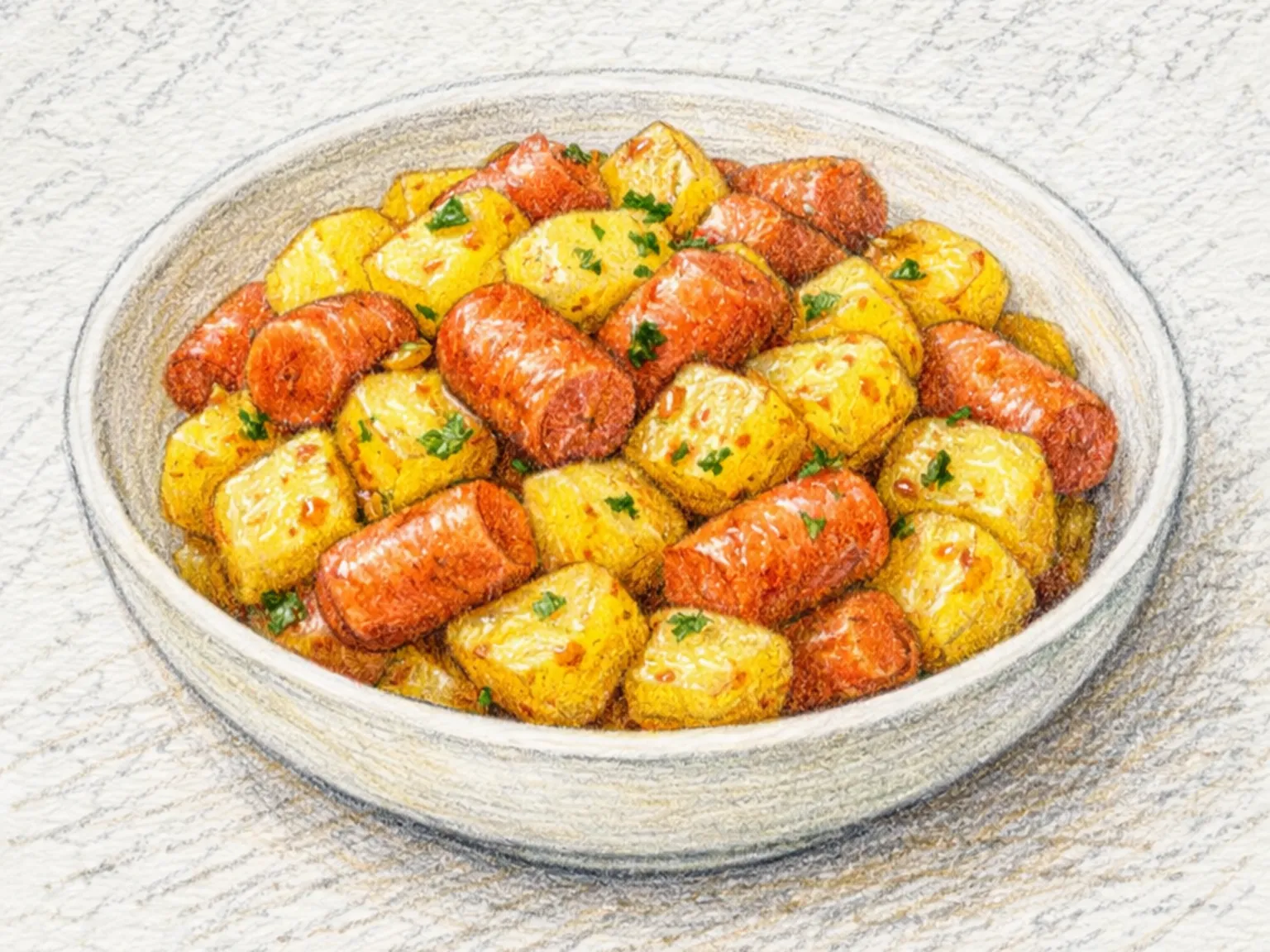
Gamja sausage bokkeum pairs thinly sliced potatoes with bite-sized sausage pieces, stir-fried in a blend of soy sauce, ketchup, and a touch of sugar. The sausage renders just enough fat to coat the potatoes in a savory glaze, while the ketchup adds a mild sweetness that children especially enjoy. It comes together in under 30 minutes and works well as a lunchbox staple or a quick weeknight side. The combination of starchy potatoes and smoky sausage makes it universally crowd-pleasing.
Adjust Servings
Instructions
- 1
Slice potato thin and cut sausage into pieces.
- 2
Stir-fry potato in oil.
- 3
Add sausage and stir-fry together.
- 4
Season with soy sauce, ketchup, and sugar; toss to coat.
As an Amazon Associate, we may earn from qualifying purchases.
Tips
Nutrition (per serving)
More Recipes

Korean Tofu and Kimchi Stir-Fry
Dubu-kimchi-bokkeum is a Korean classic that combines pan-fried tofu with well-fermented napa cabbage kimchi in a quick stir-fry. The tofu offers a mild, creamy contrast to the tangy, spicy fermented kimchi. A small amount of pork belly is often added, its rendered fat softening the kimchi's acidity and binding the flavors together. It is a versatile dish served equally well as a drinking snack or a hearty side with steamed rice.

Korean Tofu and Vegetable Stir-Fry
Dubu-yachae-bokkeum is a Korean tofu and vegetable stir-fry in a light soy-based sauce. The tofu is pan-fried first until golden and slightly crisp on the outside, then tossed with carrots, onions, and bell peppers. A brief final stir-fry keeps the vegetables crunchy while letting them pick up the seasoning. High in plant protein and fiber, it works well as either a standalone light meal or a nutritious side dish.

Korean Beef and Broccoli Stir-Fry
Sogogi broccoli-bokkeum stir-fries thinly sliced beef with broccoli florets in a glaze of oyster sauce and soy sauce. The beef is seared first over high heat to lock in its juices, then the broccoli -- blanched just enough to keep its bite -- joins the pan. Oyster sauce binds the two main ingredients with concentrated savory depth, and garlic plus a final drizzle of sesame oil layer on fragrance. The sauce coats every surface with a glossy sheen, making this a complete main dish that needs nothing beyond steamed rice.

Korean Pineapple Chicken Stir-Fry
Pineapple dak-bokkeum stir-fries bite-sized chicken pieces with fresh pineapple chunks in a sauce of soy sauce, vinegar, and sugar. The chicken is dusted in cornstarch before cooking, which helps the glaze adhere and gives each piece a lightly thickened exterior. Pineapple's sharp acidity cuts through the soy-based sweetness, creating a pronounced sweet-sour cycle with every bite. The short cook time keeps the chicken moist inside while the fruit softens just enough to release its tropical fragrance.

Gamjaguk (Potato Doenjang Anchovy Soup)
Gamjaguk is about as elemental as Korean soup gets - potatoes simmered in anchovy stock and seasoned with either doenjang or plain salt. When doenjang is used, the broth picks up a deep fermented savoriness that wraps around the mild potato flavor. When salt alone seasons the pot, the potato's own gentle sweetness becomes the star. Either way, the potatoes soften until their edges begin to dissolve, releasing starch that gives the broth a silky quality. Garlic and green onion provide the aromatic backbone, and a handful of zucchini can stretch the bowl into something more colorful. The beauty of gamjaguk lies in its accessibility - it can be assembled from a nearly empty refrigerator in fifteen minutes and still taste like home. It is one of those soups Korean families eat so often that it barely registers as a recipe, yet it remains one of the most requested comfort foods.

Korean Fried Sweet Potato
Goguma-twigim is Korean deep-fried sweet potato, sliced into 0.5 cm rounds, dipped in tempura-style batter, and fried at 170 degrees Celsius until golden. Using ice-cold water for the batter is essential - it slows gluten formation, producing a thin, delicate crust that does not mask the potato's own flavor. Once out of the oil, the concentrated natural sweetness of the sweet potato sits just beneath the crisp shell, and a pinch of salt heightens that sweetness further. It is a standard side order at tteokbokki shops and one of the most universally enjoyed Korean street snacks.