Korean Potato Fritters
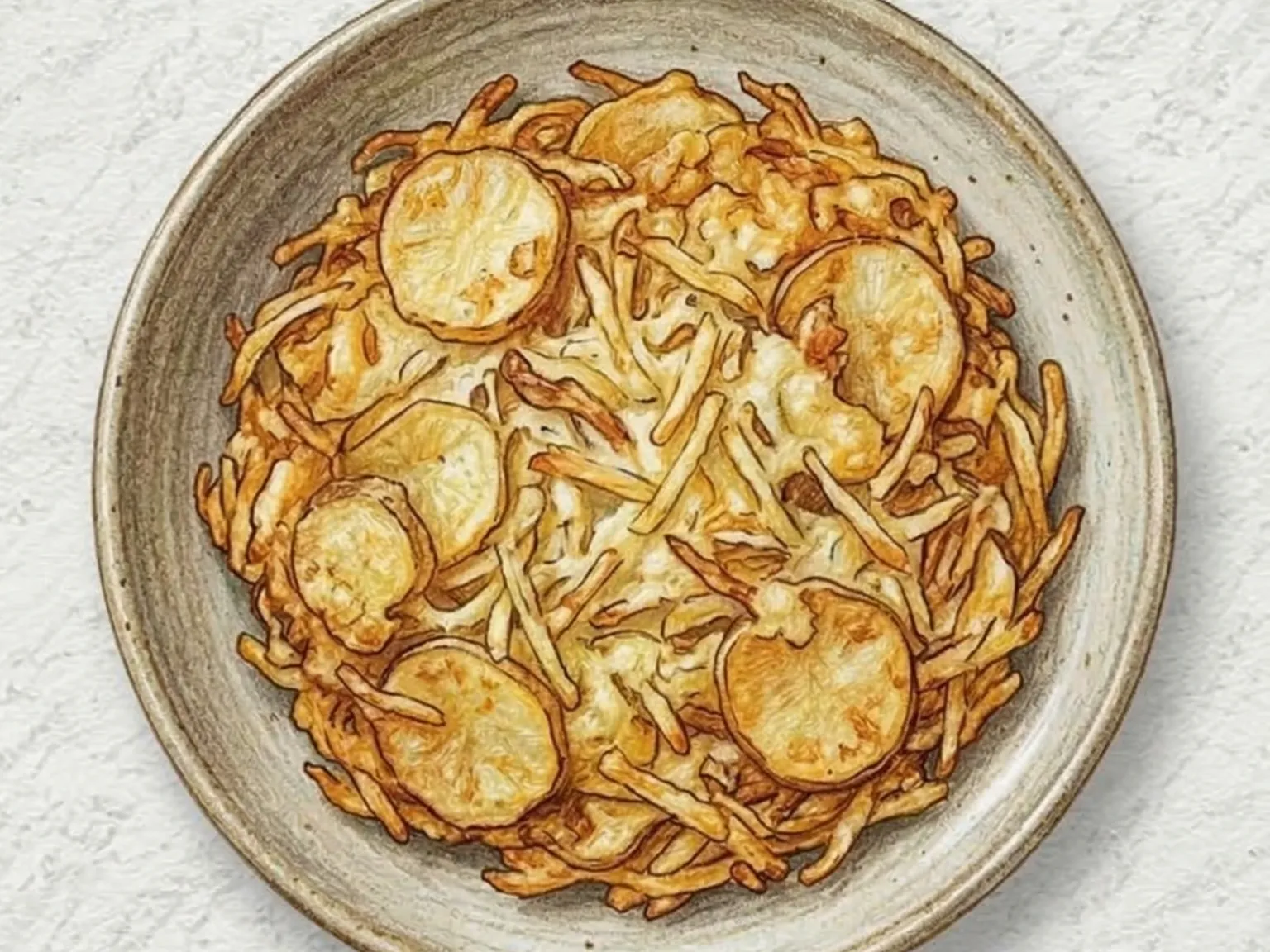
Gamja twigim coats sliced or shredded potatoes in a batter of frying mix and cold water, then deep-fries them until golden and crisp. Soaking the cut potatoes in cold water to wash off surface starch results in a crunchier finish after frying, and keeping the batter coat thin lets the potato's own starchy sweetness come through. Thick-cut slices yield a fluffy interior beneath the crust, while shredded potatoes tangle together into a chip-like, airy cluster. A simple dusting of salt is enough to bring out the potato flavor, and Korean fritter shops typically serve these alongside chili pepper and perilla leaf tempura as part of a mixed platter.
Adjust Servings
Instructions
- 1
Slice potatoes to 0.5cm thickness.
- 2
Soak in salted water 10 minutes and drain.
- 3
Make batter with frying powder and cold water.
- 4
Coat potatoes in batter and deep-fry at 170C until crispy.
- 5
Sprinkle salt and serve with ketchup.
As an Amazon Associate, we may earn from qualifying purchases.
Tips
Nutrition (per serving)
More Recipes

Korean Tornado Potato (Spiral-Cut Deep-Fried Whole Potato Skewer)
Tornado potato is a Korean street snack made by spiral-cutting a whole potato on a skewer, stretching it into a helix, and deep-frying at 170 degrees Celsius until golden. The key is to rotate the potato slowly while cutting so the spiral stays connected in one continuous ribbon, and soaking in salted water for five minutes removes surface starch for crispier frying. The thin outer edges fry up chip-like and crunchy while the thicker center retains a fluffy, starchy interior, giving two textures on a single skewer. Cheese powder, paprika, salt, or other seasonings are dusted on immediately after frying while the surface is still hot enough to hold the coating.

Korean Deep-Fried Egg (Battered Boiled Egg with Crispy Golden Shell)
Gyeran-twigim is Korean deep-fried egg - a peeled boiled egg coated in cold-water tempura batter and fried at 170 degrees Celsius until golden. Soft-boiling keeps the yolk semi-liquid inside the crisp shell, creating a dramatic contrast when bitten into, while hard-boiling gives a crumbly yolk texture instead. A thinner batter lets the egg's own flavor come forward, and plain salt is the only accompaniment needed. Dipping the fried egg into tteokbokki sauce is a popular way to eat it, as the crunchy batter soaks up the spicy-sweet broth.

Korean Deep-Fried Seaweed Rice Roll
Gimmari is a Korean street snack of glass noodles seasoned with soy sauce and sesame oil, rolled inside seaweed sheets with julienned carrot and onion, then coated in batter and deep-fried. At 160 degrees Celsius, the seaweed barely absorbs oil, crisping into a thin shell while the noodles inside stay chewy. The first bite delivers the crunch of the fried coating and the savory depth of the seaweed, followed by the springy pull of the glass noodles and a hint of soy-sesame seasoning. Dipping gimmari into tteokbokki sauce is one of the most iconic Korean snack pairings.

Korean Gochujang Honey Dakgangjeong
Gochujang honey dakgangjeong starts with bite-sized boneless chicken thigh pieces coated in potato starch and double-fried - first at 170 degrees, then at 180 degrees - before being tossed in a glaze of gochujang, honey, soy sauce, and garlic. The two-stage frying builds a rigid starch shell that stays crunchy even after saucing, while the thigh meat's natural fat keeps the interior moist. The glaze balances gochujang's fermented heat against honey's dense sweetness, with soy sauce anchoring the saltiness and sesame seeds adding a finishing nuttiness. The sauce must be reduced quickly - under one minute on high heat - to achieve a glossy coat without burning.

Korean Potato Salad (Creamy Mashed Potato Ham Cucumber)
Korean potato salad (gamja salad) arrived via Japan's yoshoku tradition but evolved its own identity in Korean home kitchens. Potatoes are boiled and mashed while hot, leaving some lumps for textural contrast - uniformly smooth is not the goal. Diced ham is pan-seared to render excess fat, then mixed with salt-drained cucumber and boiled carrot. The dressing is simply mayonnaise adjusted with sugar and salt, producing the distinctly sweet-creamy profile that separates Korean potato salad from Western versions. Chilling for at least an hour before serving lets the seasoning equalize throughout the mixture.

Korean Grilled Chicken Skewers
Dak-kkochi-gui is a Korean grilled chicken skewer inspired by street-stall cooking, made by threading bite-sized pieces of chicken breast or thigh onto bamboo sticks and brushing them with a sauce of gochujang, soy sauce, honey, and minced garlic. Thigh meat works best because its higher fat content resists drying out over direct heat, and applying the glaze in two or three separate coats builds up a thick, sticky, caramelized layer. Cutting the chicken into uniform cubes ensures every piece finishes cooking at the same time, and alternating with slices of green onion or bell pepper between the meat adds moisture and color. The interplay of gochujang's fermented heat and honey's sweetness against charcoal smoke captures the unmistakable flavor of Korean street food.