Korean Pork Bone Stew (Slow-Simmered Pork Spine & Potato)
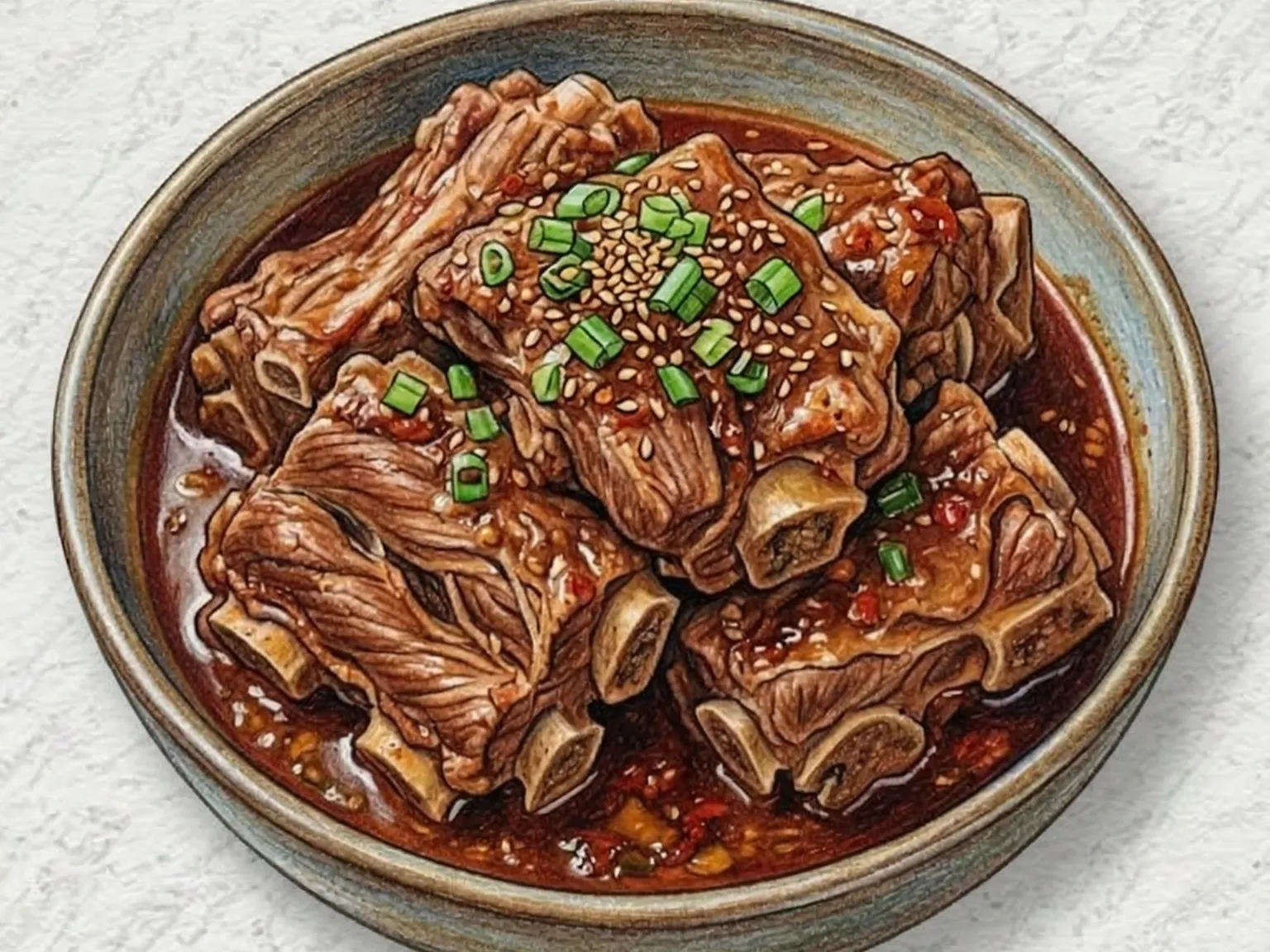
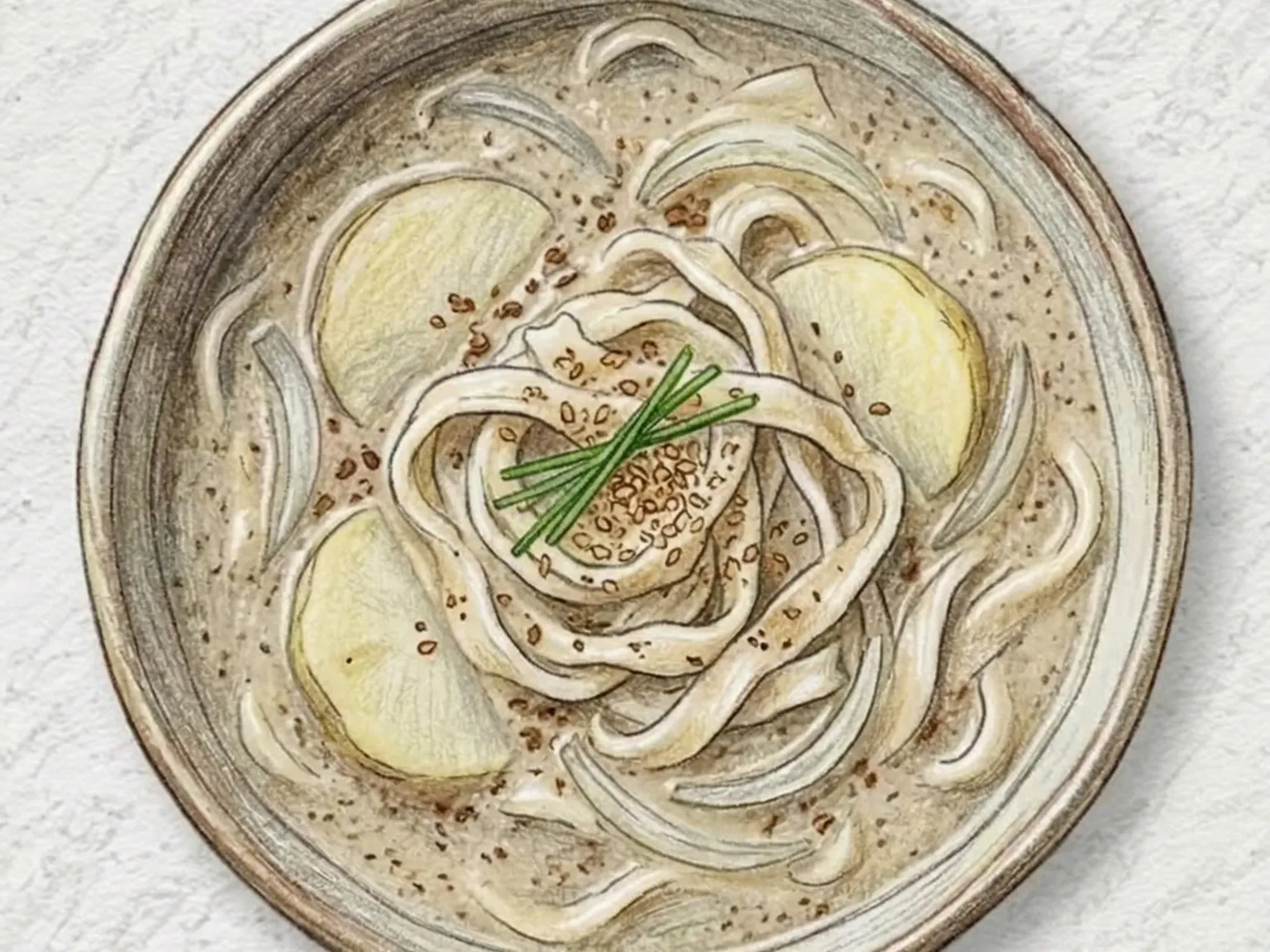
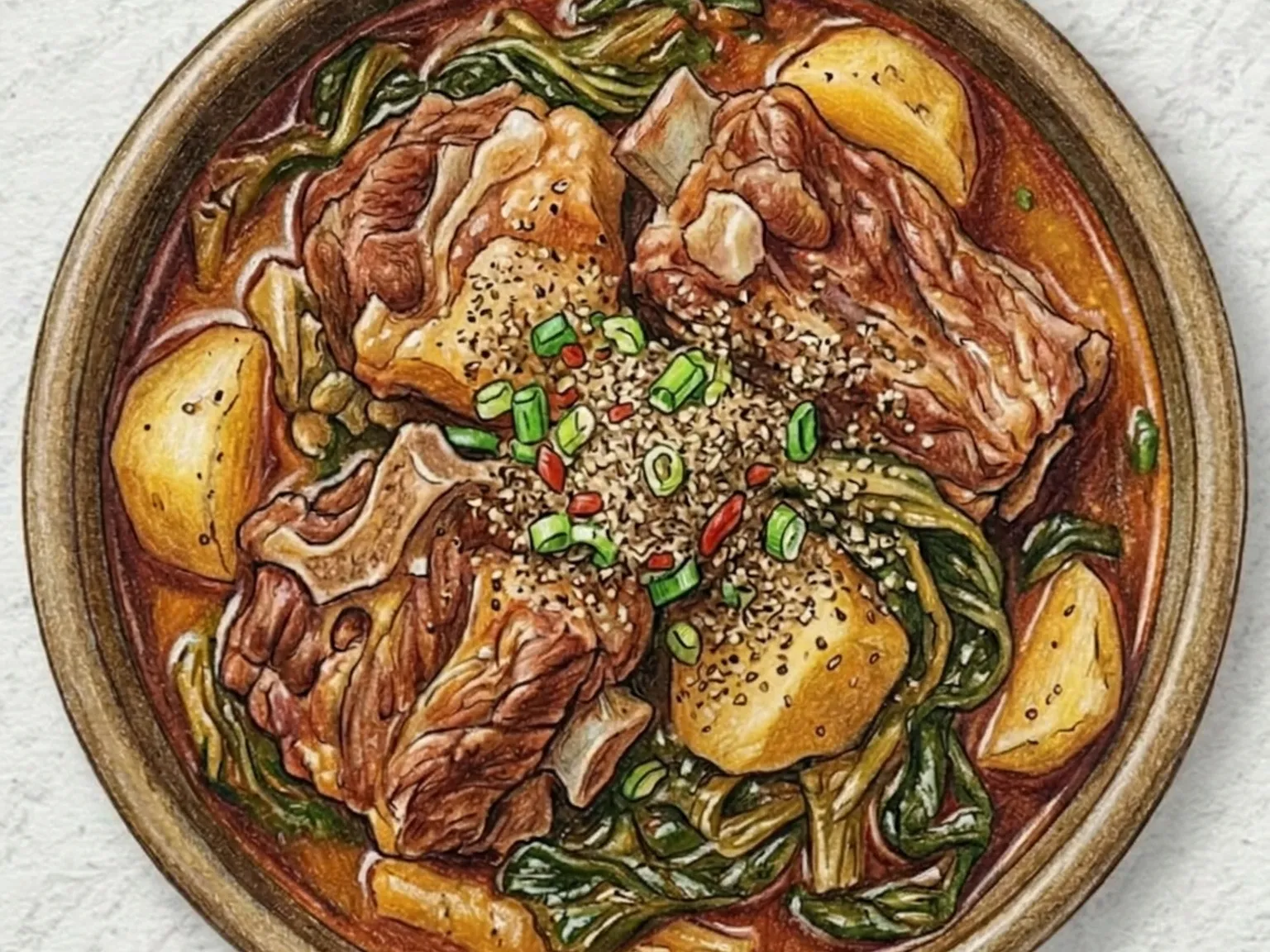
Gamjatang is a robust pork spine stew simmered until the bones release a milky, collagen-rich broth. Potatoes cook until they nearly dissolve, while dried napa cabbage leaves add a chewy, vegetal dimension. Doenjang and gochugaru form the seasoning base, but the real signature comes from perilla seed powder, which lends a nutty creaminess to the soup. Traditionally enjoyed as a late-night meal or hangover remedy, the stew rewards those who pick the tender meat off the bones.
Adjust Servings
Instructions
- 1
Soak 1kg pork bones in cold water 1 hour to remove blood, then blanch 10 minutes and rinse.
- 2
Add bones and 2L water to a large pot, boil on high, then reduce to medium and simmer 40 minutes.
- 3
Add 3 halved potatoes, then stir in 2 tbsp doenjang, 2 tbsp gochugaru, and 2 tbsp garlic.
- 4
Add dried cabbage leaves and simmer 15 more minutes until potatoes are tender.
- 5
Stir in 2 tbsp perilla seed powder for a nutty richness.
- 6
Top with green onion and perilla leaves, simmer 2 more minutes to finish.
As an Amazon Associate, we may earn from qualifying purchases.
Tips
Nutrition (per serving)
Variations
Pork Bone Gamja Tang
This gamja tang simmers pork bones and napa leaves for deep flavor. Perilla and sesame leaf notes make the spicy broth richer and aromatic.
Perilla Pork Neck Bone Stew
Perilla gamjatang has a nutty depth layered over pork neck bone broth. Spicy seasoning and rich meat flavor make it very comforting.
More Recipes

Korean Perilla Gamjatang (Nutty Perilla Pork Bone & Potato Stew)
This perilla-forward version of gamjatang uses a generous four tablespoons of perilla seed powder, coating the broth in a distinctly nutty richness. Pork backbone simmers into a heavy, collagen-laden stock, while potatoes and napa outer leaves soak up the flavors. Twelve perilla leaves add their herbal fragrance on top. A touch of doenjang deepens the umami, making this variation notably creamier and more aromatic than the standard recipe.

Korean Spicy Pollock Stew
Dongtae-tang is a Korean spicy pollock stew made with frozen pollock, radish, tofu, and green onion in a gochugaru-laced broth. Radish is simmered first for ten minutes to establish a sweet, clean base, then chili flakes, soup soy sauce, and garlic transform the liquid into a vivid red, peppery stock. The pollock must be cut into large pieces after thawing and cooked for no more than ten minutes - overcooking draws a bitter, fishy taste from the bones and causes the flesh to disintegrate. Tofu and cheongyang chili added in the final five minutes absorb the spicy broth, softening its intensity while the chili seeds add sharp bursts of heat.

Korean Pork Bone Hangover Soup
Ppyeo-haejang-guk is a Korean hangover soup built on a foundation of pork neck bones simmered for well over an hour until their collagen dissolves into a heavy, full-bodied stock. The bones are soaked and blanched beforehand to eliminate any off-flavors, and the resulting broth is clean despite its richness. Blanched napa cabbage outer leaves are pre-seasoned with doenjang, gochugaru, garlic, and soup soy sauce before being added to the pot, where they absorb the meaty broth and release their own earthy flavors in return. Perilla seed powder is stirred in at the end, thickening the liquid to a creamy consistency and adding a nutty finish. The completed soup is spicy, deeply savory, and thick enough to feel restorative after a long night. In Korea, this style of haejang-guk is a morning-after institution, served steaming in dedicated restaurants that open before dawn.

Naejang-tang (Spicy Mixed Beef Tripe Soup)
Naejang-tang is a Korean offal soup that simmers a medley of beef innards - tripe, large intestine, abomasum, and omasum - in a robust broth seasoned with gochugaru, gochujang or doenjang, garlic, and green onion. Each organ brings a different texture to the bowl: tripe is chewy and ridged, large intestine is fatty and tender, and the stomach linings offer a firm, almost crunchy bite. As the innards cook for an extended period, their rendered fat and natural gelatin melt into the broth, producing a thick, savory liquid with a distinctive richness that leaner soups cannot approach. Some versions include seonji, coagulated ox blood, which darkens the broth and adds a mineral, iron-forward depth. The soup is characteristically spicy and served at near-boiling temperature, often in a stone pot that keeps it bubbling at the table. In Korea, naejang-tang is strongly associated with early-morning hangover recovery - specialized restaurants near traditional markets and drinking districts begin serving it well before dawn. The combination of fat, heat, and protein makes it one of the most physically restorative soups in the Korean repertoire.

Korean Doenjang Kkotge Tang
Kkotge tang doenjang simmers a full 800g of blue crab in a doenjang-forward broth, yielding a stew where fermented soybean paste and crab essence are the dominant flavors. Radish, zucchini, and onion cook down in the crab-enriched liquid, adding sweetness and body. Unlike the more common spicy crab stews, this version leads with doenjang's earthy depth, backed by a moderate heat from gochugaru and Cheongyang chili. The result is a rich, umami-heavy soup best enjoyed with rice to soak up every drop.

Korean Pork Rib Perilla Leaf Stew
Pork back ribs and perilla leaves star in this robust, chili-seasoned jjigae. The ribs simmer until they render a rich, collagen-heavy broth, while potatoes and onion add body and natural sweetness. Gochugaru and soup soy sauce create the spicy base, and fresh perilla leaves are added toward the end, lending their unmistakable herbal fragrance. A touch of ginger keeps the pork flavor clean, making this a hearty cold-weather stew meant for sharing over a pot of rice.