Korean Perilla Gamjatang (Nutty Perilla Pork Bone & Potato Stew)
Quick answer
This perilla-forward version of gamjatang places nutty richness at the center of the dish by adding a generous four tablespoons of ground perilla seed to the broth.
What makes this special
- Ground perilla seeds add a thick, nutty richness to this hearty pork spine gamjatang.
- Four tablespoons of perilla powder coat the broth in nutty white
- Blanching bones before the main boil removes off-flavors
Key ingredients
Core cooking flow
- 1 Soak 1.2 kg of pork backbone in plenty of cold water for at least 30 minutes.
- 2 Add the bones to boiling water and blanch over high heat for 5 minutes.
- 3 Place the cleaned bones and 2200 ml of water in a large pot, then bring to a full boil over high heat.
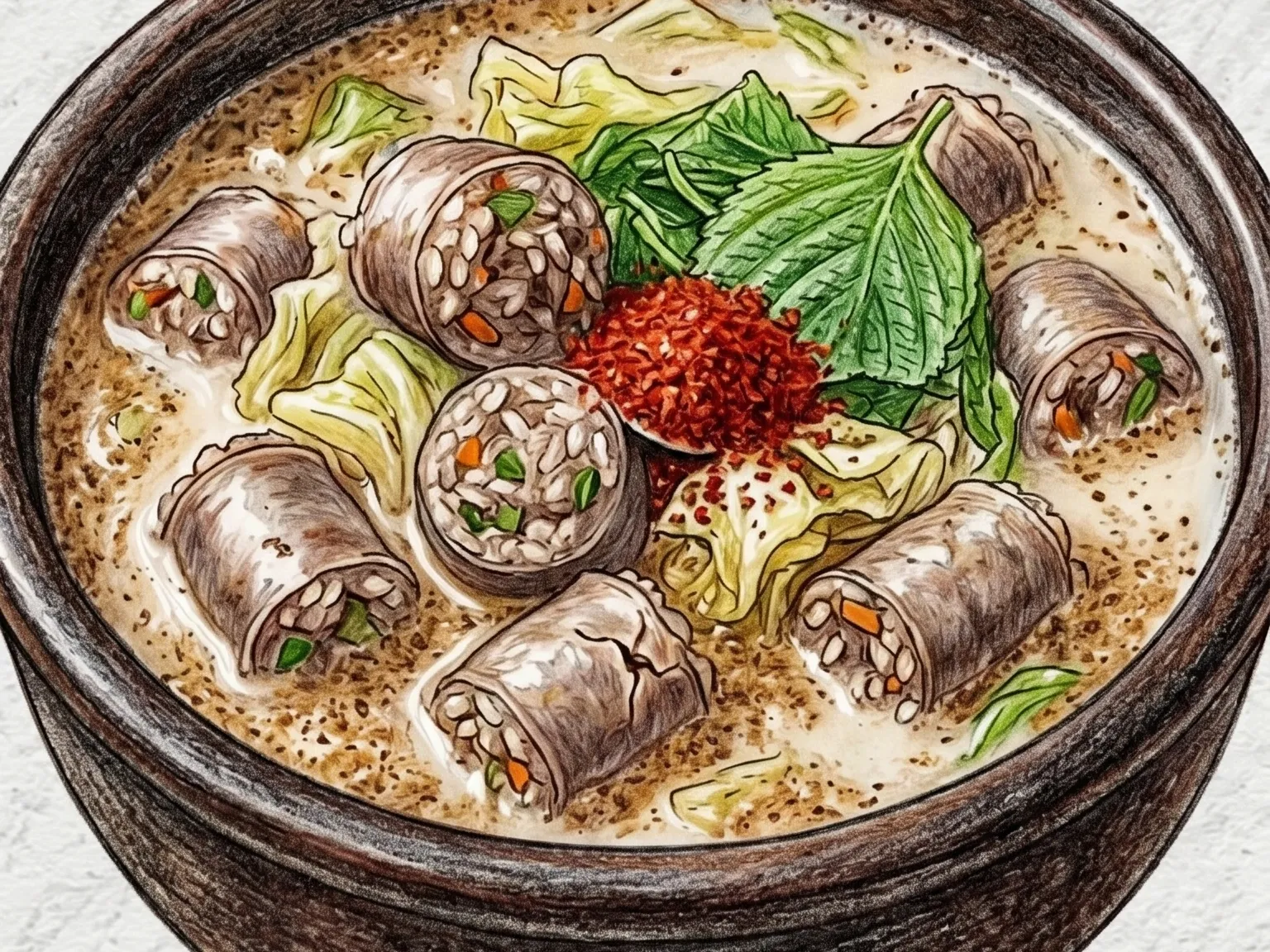
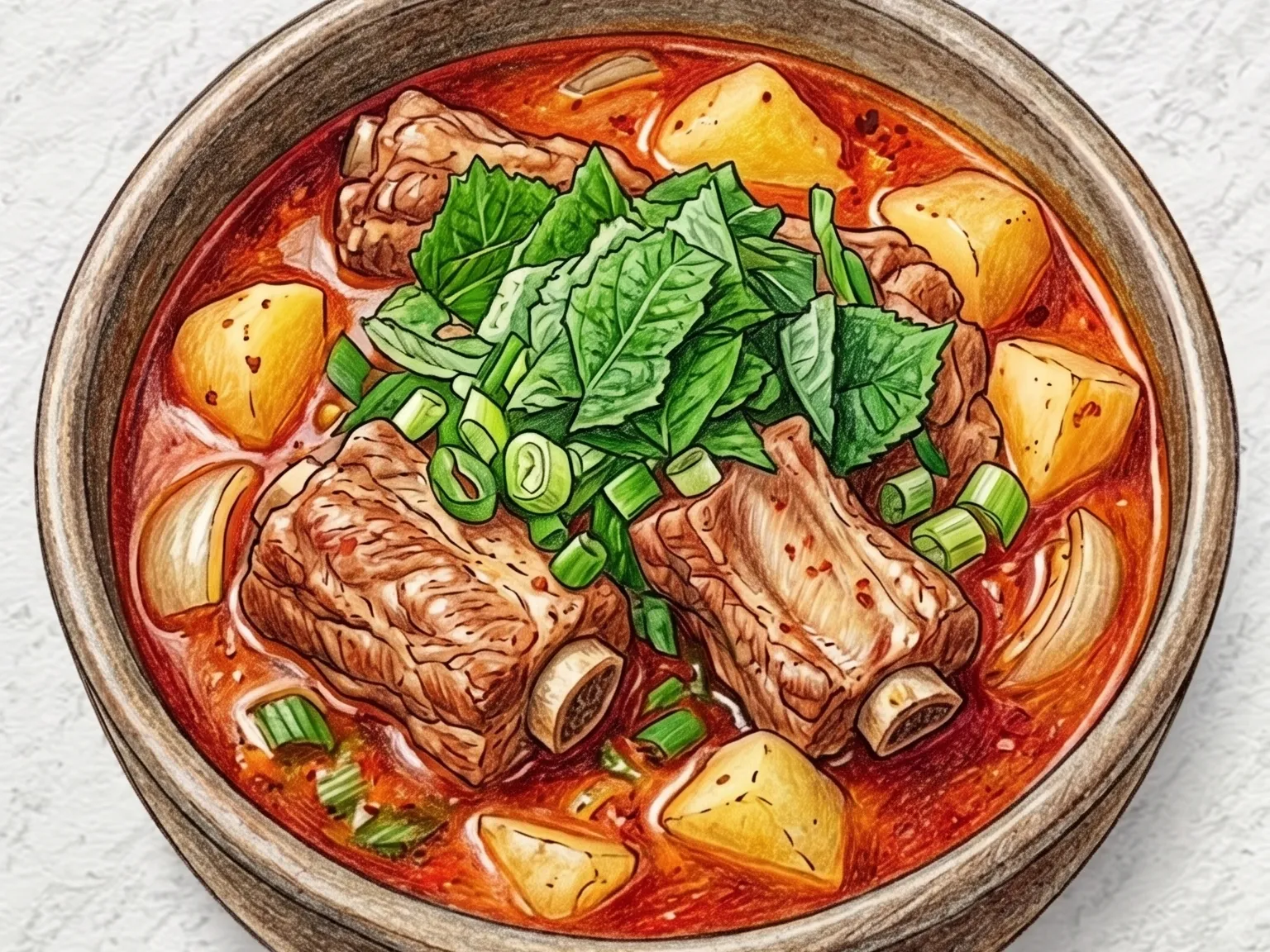
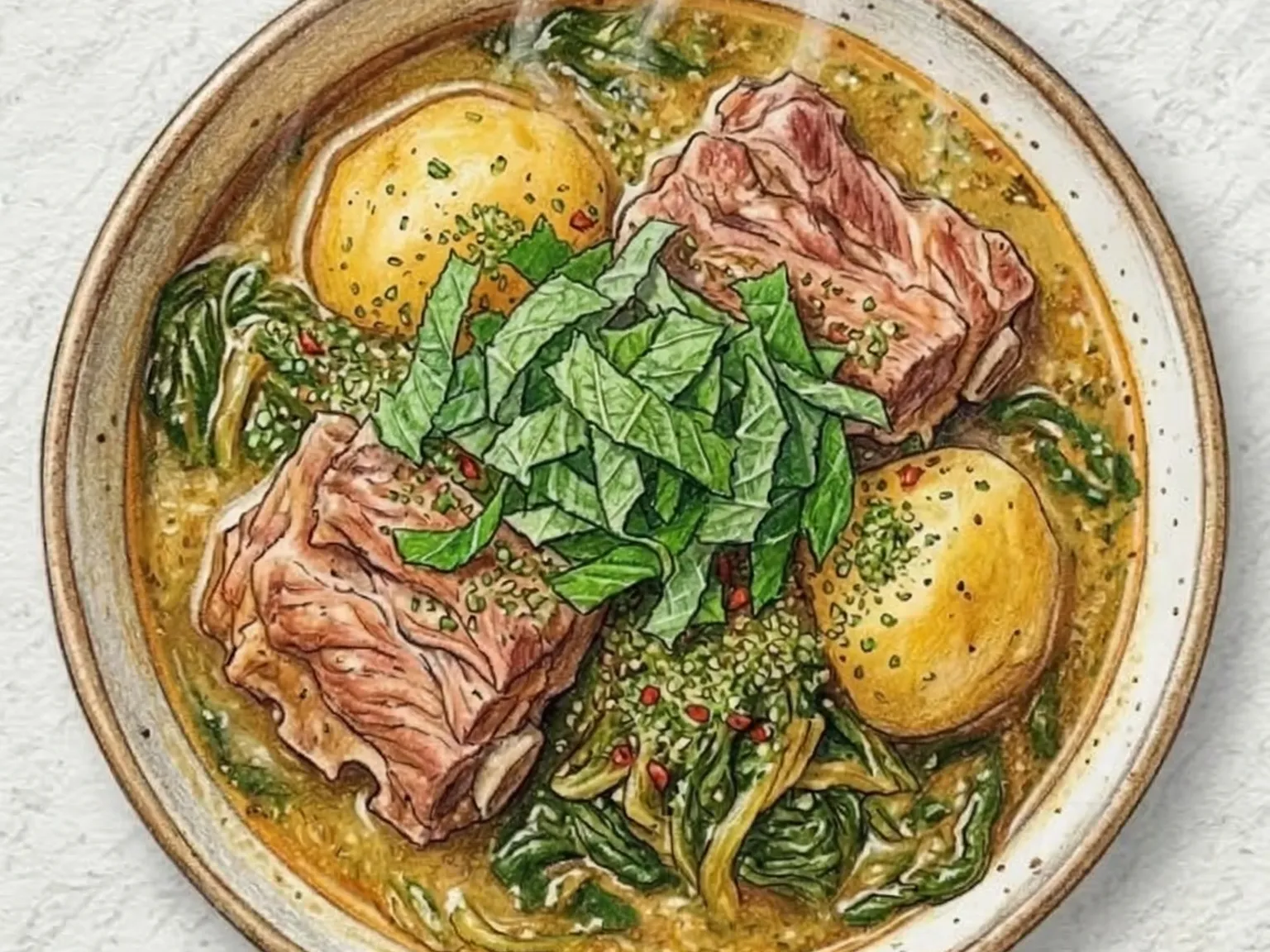
This perilla-forward version of gamjatang places nutty richness at the center of the dish by adding a generous four tablespoons of ground perilla seed to the broth. Pork backbone weighing around 1.2 kilograms is soaked in cold water to draw out the blood, blanched once to clean the surface, then simmered into a heavy, collagen-rich stock that forms the base for everything else. Potatoes and salted napa outer leaves go in partway through cooking, absorbing the deeply savory liquid as they soften. The perilla powder added toward the end turns the broth noticeably pale and creamy, coating it in a smooth, roasted nuttiness that distinguishes this variation from the sharper, more aggressively spiced standard recipe. Twelve perilla leaves are added with the lid on during the final minutes, allowing their herbal fragrance to steep gently into the pot rather than cook off. A spoonful of doenjang strengthens the underlying umami. Gochugaru and gochujang are used to build heat, but the perilla softens and rounds the spice so the overall effect is warmer and less sharp than a conventional gamjatang. Frying leftover rice in the remaining broth at the end is a natural conclusion to the meal.
Instructions
Read the steps as a cooking flow: prep, heat, seasoning, doneness control, and finish.
- 1Step
Soak 1.2 kg of pork backbone in plenty of cold water for at least 30 minutes.
If the water turns very red, replace it once so the broth tastes cleaner and smells less porky.
- 2Control
Add the bones to boiling water and blanch over high heat for 5 minutes.
Rinse under cold water, rubbing around the joints and gaps to remove clotted blood and gray scum before simmering.
- 3Control
Place the cleaned bones and 2200 ml of water in a large pot, then bring to a full boil over high heat.
Skim the foam, lower the heat, and simmer for 40 minutes until the broth turns cloudy and heavier.
- 4Season
Stir 1 tablespoon doenjang, 2 tablespoons Korean chili flakes, and 1.5 tablespoons minced garlic into the broth.
Press any lumps against the ladle so the seasoning dissolves evenly instead of sticking to one spot.
- 5Control
Add 3 potatoes and 250 g of napa outer leaves, then simmer over medium low heat for about 20 minutes.
Keep the broth gently bubbling until a chopstick slides into the potatoes without force.
- 6Control
Stir in 4 tablespoons of perilla seed powder and cook 5 minutes more, just until the broth looks pale and creamy.
Add green onion and 12 perilla leaves, cover, and rest for 3 minutes before serving.
After the steps
Pick a recipe that fits this dish.
Continue with shared ingredients, meal pairings, or a similar method.
Recipes That Go Well With This
More Stews →Based on shared ingredients and meal pairing
Korean Pork Bone Stew (Slow-Simmered Pork Spine & Potato)
Gamjatang is one of Korea's most recognized bone soups, made by simmering pork spine for a long time until the broth turns milky white and rich with collagen. Doenjang and gochugaru form the seasoning foundation, while perilla seed powder -- a signature addition -- gives the broth a nutty, slightly creamy depth that is hard to replicate with any substitute. Potatoes simmer until they absorb the broth and soften to the core, and the dried napa cabbage leaves add a chewy, vegetal contrast to the thick liquid. A handful of perilla leaves stirred in near the end brings a fresh herbal note, and the ritual of picking tender pork off the bones with chopsticks is part of what makes eating gamjatang a hands-on, satisfying experience. It is traditionally sought out as a late-night meal or a hangover cure.
Korean Pork Rib Perilla Leaf Stew
Pork back ribs and perilla leaves come together in this full-flavored, chili-seasoned jjigae. The ribs are simmered first to render a rich, collagen-heavy broth, and then potatoes and onion are added to give the liquid body and natural sweetness. Gochugaru and soup soy sauce establish the spicy base. Fresh perilla leaves are added just before the heat is turned off so their herbal fragrance stays intact, since prolonged boiling drives the aroma away. A touch of ginger keeps the pork flavor clean while the collagen-rich broth from the ribs provides substantial body. Picking the meat off the bone at the table is part of the experience, making this a natural fit for late autumn meals or as a communal drinking accompaniment.
Korean Water Parsley Clam Porridge
Minari bajirak juk is a mild seafood porridge made by sauteing onion and garlic in sesame oil until soft and fragrant, then simmering soaked rice and fresh clam meat into a smooth, comforting bowl. The clams release a clean, briny sweetness that diffuses through every spoonful, and water parsley added off the heat at the very end contributes a bright, herbaceous freshness that lifts the overall flavor. Soaked rice is first stirred in the sesame oil until each grain turns translucent, which keeps the porridge from becoming starchy and gluey as it cooks. Water is added and the pot simmers on medium-low heat, stirred steadily so the starch releases gradually and creates a silky, even consistency. Clams are added in the later stages of cooking because prolonged heat makes them rubbery; adding them late keeps them tender. Salt goes in just before the heat is turned off to calibrate the final seasoning, followed by a drizzle of sesame oil for a nutty, rounded finish. The light, easy texture of the finished porridge makes it well suited to early mornings, days when the stomach feels unsettled, or as a restorative after a night of drinking. Water parsley must be added after the heat is off, since its volatile fragrance disappears quickly when exposed to direct heat.
Korean Pork Bone Hangover Soup
Ppyeo-haejang-guk is a Korean hangover soup built on a foundation of pork neck bones simmered for well over an hour until their collagen dissolves into a heavy, full-bodied stock. The bones are soaked and blanched beforehand to eliminate any off-flavors, and the resulting broth is clean despite its richness. Blanched napa cabbage outer leaves are pre-seasoned with doenjang, gochugaru, garlic, and soup soy sauce before being added to the pot, where they absorb the meaty broth and release their own earthy flavors in return. Perilla seed powder is stirred in at the end, thickening the liquid to a creamy consistency and adding a nutty finish. The completed soup is spicy, deeply savory, and thick enough to feel restorative after a long night. In Korea, this style of haejang-guk is a morning-after institution, served steaming in dedicated restaurants that open before dawn.
Serve with this
Korean Beef & Quail Egg Soy Braise
Beef and quail egg jangjorim is a traditional Korean side dish made by simmering beef in a seasoned soy sauce liquid. The preparation starts by boiling beef eye round for twenty minutes to create a clear broth. The cooked beef is then shredded by hand along its natural grain to allow the seasoning to penetrate the fibers. After straining the broth, soy sauce, sugar, minced garlic, black peppercorns, and green onion are boiled to infuse the liquid. The shredded beef and peeled hard-boiled quail eggs are added to this mixture and simmered on low heat for fifteen minutes until the sauce reduces by half. This braising process coats the beef and eggs in a glossy glaze. Once cooled and stored in the refrigerator, this salty side dish is served cold in small portions to accompany bowls of plain rice.
Korean Pickled Bok Choy (Soy Vinegar Chili Brine)
Cheonggyeongchae jangajji is a Korean pickled bok choy made by halving the heads and submerging them in a boiled brine of soy sauce, vinegar, and sugar with Cheongyang chili, garlic, and ginger. The thick white stems retain their crunch after pickling while the tender green leaves absorb the brine softly, creating two contrasting textures within a single piece. Cheongyang chili leaves a clean, lingering heat at the finish, and ginger contributes a warm undertone to the pickling liquid. Draining the bok choy thoroughly before pickling keeps the brine clear, and after two days of refrigeration the seasoning penetrates evenly throughout for a well-balanced banchan. Pouring the brine over the bok choy only after it has cooled prevents the leaves from softening too much. The spent brine can be reboiled and reused to pickle tofu or daikon, extending its value beyond the first batch.
Korean Seaweed Oyster Pancake
Miyeok oyster jeon is a Korean seaweed and oyster pancake that offers a savory taste of the ocean. The cooking begins by rinsing fresh oysters in light salted water and draining them, while soaked seaweed is squeezed firmly to remove moisture before being cut. The pancake batter is prepared by mixing Korean pancake mix, cold water, an egg, minced garlic, and soup soy sauce. The seaweed, oysters, and minced red chili are gently folded into the batter. Ladles of the mixture are pan-fried in oil over medium-low heat for three minutes on each side, ensuring the oysters stay submerged in the batter to cook. The finished pancake features a crisp exterior with a soft, chewy seaweed interior, and juicy oysters that release their briny flavor with every bite.
Similar recipes
Korean Loach Stew (Ground Loach & Perilla Seed Pot)
Finely grinding whole loach into the broth creates the distinctive, porridge-like consistency that defines this traditional Korean stew. Long recognized as a restorative autumn dish, it achieves a heavy body without the use of fatty meats, setting it apart from thinner soybean paste soups. Perilla seed powder introduces a nutty oiliness to the liquid, while dried radish greens contribute an earthy bitterness that grounds the heavy base of fermented soybean and chili pastes. Garlic and green onions establish a savory foundation, and red chili powder supplies a dark color and a layer of sharpness. An alternative preparation involves cooking the fish whole rather than grinding it, which results in a thinner broth where the soft flesh naturally detaches from the bones during the boiling process. This method provides a contrasting texture that is absent in the ground version. Adjusting the ingredients can shift the character of the dish: adding more dried radish greens increases the fibrous texture and bitter edge, while a larger portion of perilla powder emphasizes the nutty qualities. When the stew arrives at the table boiling in a stone pot, the rising steam carries a heavy, concentrated scent that fills the immediate air.
Korean Pork Gochujang Jjigae
This pork gochujang stew simmers pork shoulder in a sauce of gochujang and doenjang, two fermented pastes that together build a more layered flavor than either would alone. Using gochujang on its own produces a heat that comes across as sharp and one-dimensional, but adding half a tablespoon of doenjang rounds out the fermented soybean depth and gives the broth a fuller, earthier backbone. A full tablespoon of gochugaru deepens the red color and adds texture to the spice rather than just boosting intensity. The 180 grams of pork shoulder render their juices into the 700 milliliters of broth as the stew cooks, gradually enriching the base. Potato, zucchini, onion, and tofu go into the same pot and contribute a range of textures that keep each spoonful varied. The combination of both fermented pastes means this version has noticeably more complexity than a standard gochujang stew, and the finished broth is the kind that makes it difficult to stop eating before the bowl is empty.
Korean Loach Soup (Blended Loach and Dried Radish Greens Tonic)
Chueo-tang is a southern Korean tonic soup made by blending blanched loach into a smooth puree, straining out bones and skin, then simmering the liquid with doenjang and gochujang for depth. The straining step is what separates a clean, richly flavored broth from a gritty one; every bit of bone and skin must be removed before the long simmer begins. Dried radish greens, siraegi, are added midway and cooked for twenty-five minutes, contributing a fibrous chew that contrasts the velvety broth. Perilla seed powder stirred in near the end thickens the soup to a creamy, pale consistency and layers in a pronounced nutty fragrance that carries through each spoonful. A final pinch of ground sansho pepper leaves a tingling numbness on the tongue that clears any lingering earthiness from the freshwater fish. Loach is high in protein and calcium, and the soup has long been eaten as a summer restorative; a broth that is thick and deeply concentrated is the standard by which a well-made chueo-tang is judged.