Korean Seasoned Gamtae Seaweed
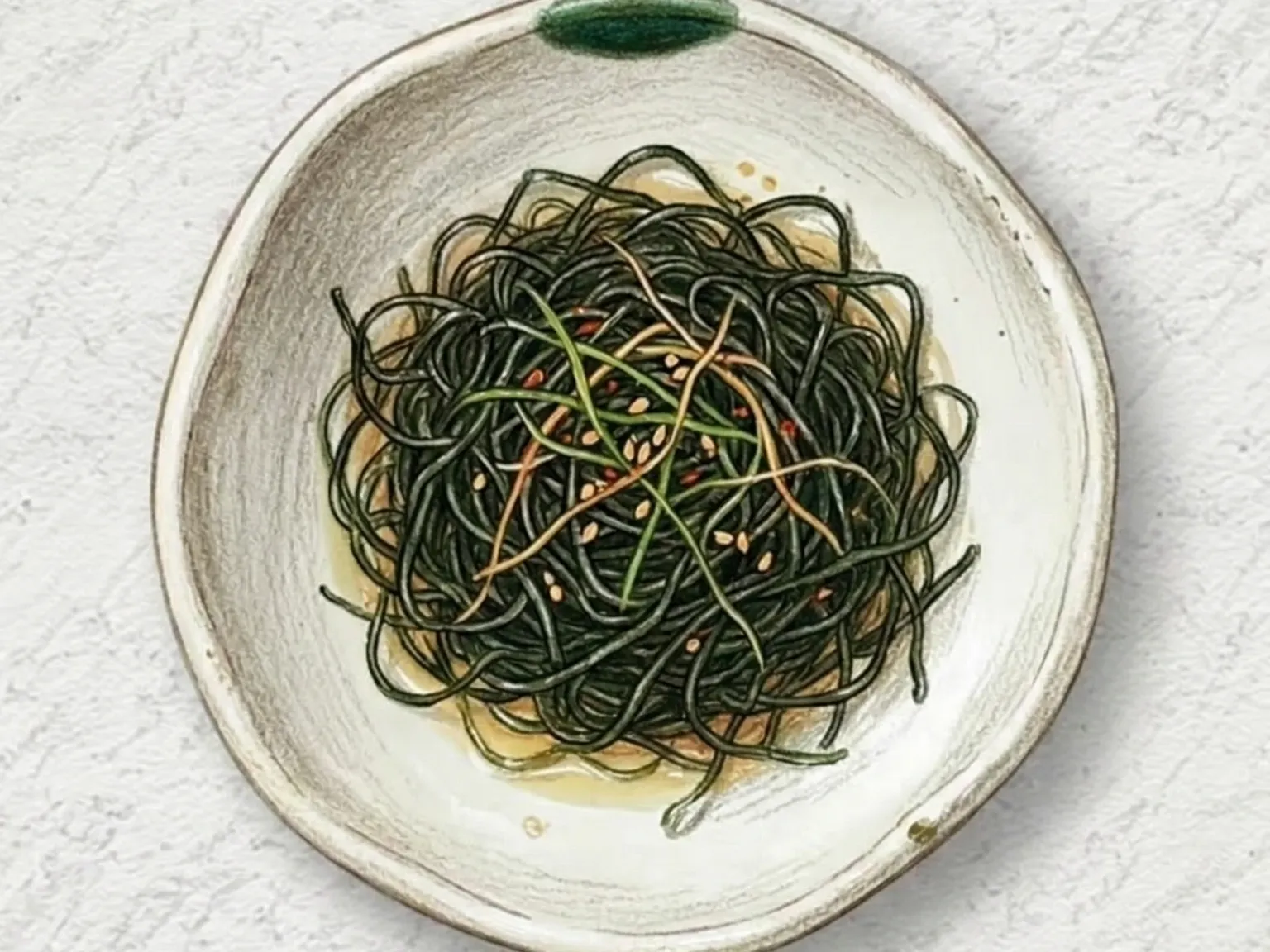
Gamtae is a green seaweed harvested from Korea's southern coast - primarily around Wando and Jangheung - during winter months. Thinner and more delicate than gim (roasted seaweed), it carries a deeper oceanic perfume. Dried gamtae sheets are torn into large pieces and tossed for no more than twenty seconds with soy sauce, vinegar, sesame oil, gochugaru, sugar, and garlic - over-handling causes the fragile fronds to disintegrate into mush. The vinegar's acidity lifts the seaweed's natural brininess into something bright and clean. Fresh gamtae appears only in winter markets, but the dried form works year-round as a quick banchan.
Adjust Servings
Instructions
- 1
Tear gamtae into bite-size pieces.
- 2
Mix soy sauce, vinegar, sugar, and garlic.
- 3
Add minced green onion and sesame oil.
- 4
Add gamtae and toss very gently.
- 5
Sprinkle sesame seeds and serve right away.
As an Amazon Associate, we may earn from qualifying purchases.
Tips
Nutrition (per serving)
More Recipes

Korean Seasoned Sea Mustard Sporophyll
Miyeokgwi-muchim is seasoned sea mustard sporophyll - the ruffled, root-adjacent part of the miyeok plant - blanched and tossed in a sweet-sour-spicy dressing. Though it comes from the same seaweed as regular miyeok-muchim, the sporophyll is a distinctly different eating experience. Its thicker, corrugated surface gives a chewy, almost bouncy texture compared to the silky softness of seaweed leaves. This particular part of the plant contains higher concentrations of alginic acid and fucoidan than the leaf portions, which has drawn attention in Korean health-food circles. After rinsing in cold water, blanching for exactly thirty seconds is ideal - going longer turns the texture rubbery. The gochugaru-soy-vinegar-sugar dressing tames the marine saltiness and builds a bright sweet-sour-spicy flavor profile that stimulates appetite alongside rice. Chilling for ten minutes before serving lets the dressing adhere to the bumpy surfaces and leaves a cool finish. At around fifty-two kilocalories per serving, it is a go-to diet banchan. Pre-trimmed miyeokgwi is widely available at Korean markets and online.

Korean Seasoned Green Seaweed
Cheonggak is a branching green seaweed from Korea's southern coast, prized for its oceanic perfume and cartilage-like crunch. A 10-second blanch brightens the color without destroying its snap. Squeezed and cut to finger lengths, it is dressed in a vinegar-forward sauce with soy, gochugaru, garlic, and sugar that cuts through the brininess. The seaweed must be served immediately - its texture collapses within hours. A specialty of Jeollanam-do coastal markets in winter and early spring.

Korean Seasoned Sea Grapes Salad
Kkosiraegi-muchim is a tangy, low-calorie banchan made from kkosiraegi, a red algae seaweed with thin, noodle-like strands and a distinctive snappy texture unlike any other seaweed. Blanching must not exceed twenty seconds - anything longer dissolves the characteristic pop - and immediate cold-water shocking is mandatory to set the texture. The dressing combines gochugaru, soup soy sauce, vinegar, maesil-cheong (green plum extract), garlic, and sesame oil; the plum extract adds a fruity acidity that lifts the dish beyond simple sour-spicy territory. Julienned cucumber threaded through the strands provides a fresh garden counterpoint to the ocean flavors. At roughly 72 kilocalories per serving with high dietary fiber, this banchan appears frequently in Korean diet meal plans. It is best served chilled, making it a natural fit for summer tables.

Korean Seasoned Green Laver
Parae-muchim dresses winter-season green laver in a vinegared gochujang sauce that balances the seaweed's natural brininess with sweet, sour, and spicy notes. The laver must be washed at least five times with fresh water to remove every grain of sand embedded in its delicate fronds. A brief 10-second blanch in boiling water tames any fishy undertone while keeping the texture soft and slippery. The dressing - gochujang, vinegar, sugar, minced garlic, and sesame oil - clings to the damp strands, coating them in a glossy, reddish glaze. Each bite delivers a wave of ocean flavor followed by the slow warmth of the chili paste.

Korean Pickled Broccoli (Blanched Soy Vinegar Brine)
Broccoli jangajji is a Korean pickled broccoli dish prepared by briefly blanching florets and stems, then submerging them in a cooled brine of soy sauce, vinegar, and sugar. The short blanch preserves two distinct textures: crunchy stems and tender floret heads. The tangy vinegar and savory soy in the brine add depth to the broccoli's mild, clean flavor, while bell pepper and onion contribute natural sweetness and visual contrast. Simple to prepare and easy to store refrigerated, this is a practical everyday banchan.

Korean Napa Cabbage Pancake
Baechu jeon is a Korean pancake made by coating napa cabbage leaves in a thin flour batter and pan-frying until golden. Outer leaves of medium size work best; if the stem end is too thick, it is flattened with the back of a knife so the batter adheres evenly and the leaf does not buckle during cooking. The batter is mixed thin, roughly equal parts buchim flour and water, so it forms a light coating rather than a heavy shell that would mask the cabbage flavor. Generous oil in the pan and steady medium heat produce a crisp exterior while the cabbage inside softens and releases its gentle sweetness. Each side must brown fully before flipping to prevent the pancake from breaking apart. A dipping sauce of soy sauce with vinegar and sliced cheongyang chili adds acidity and heat that offset the mild character of the pancake.