Korean Rice Puff Confection
Quick answer
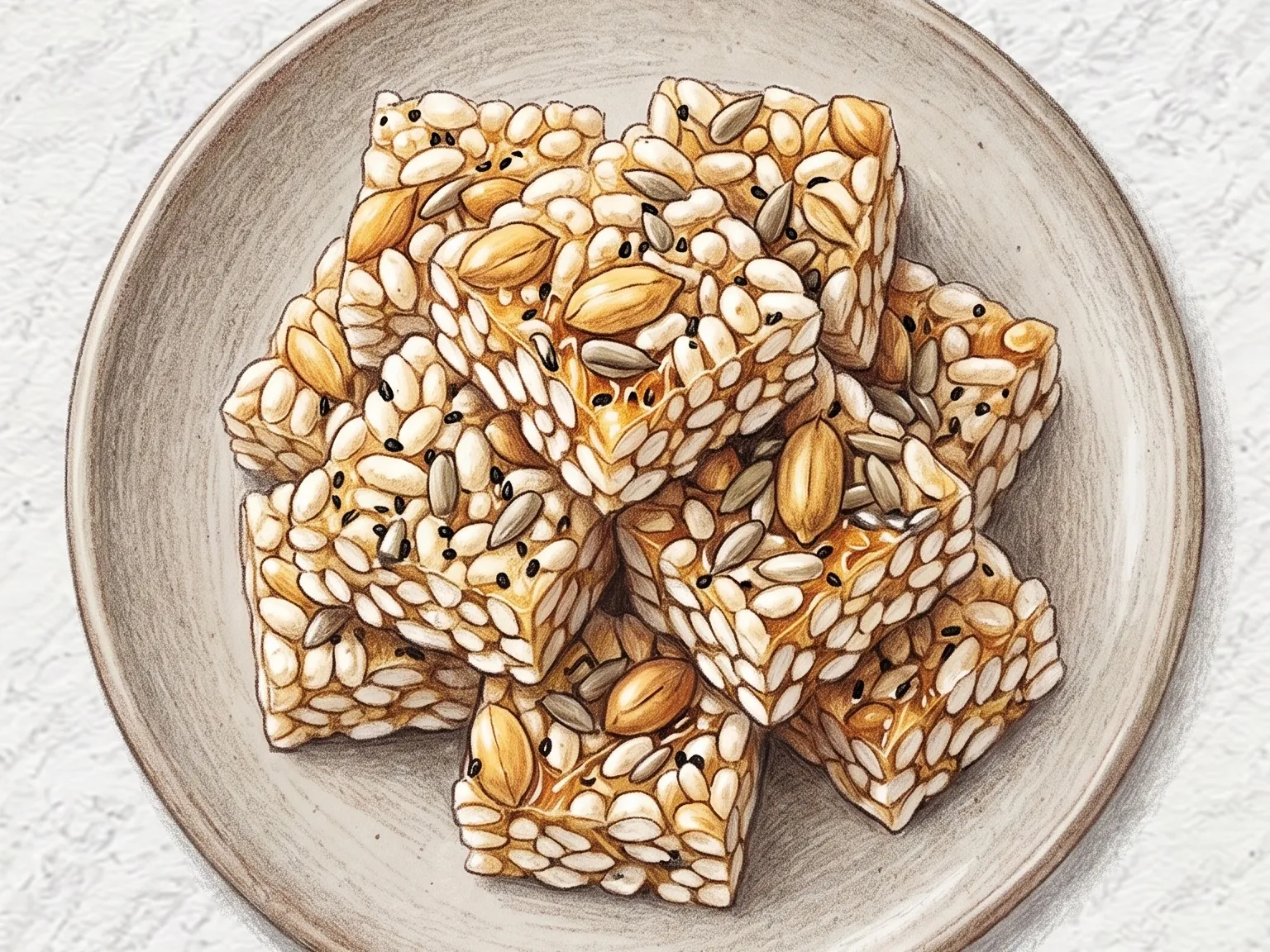
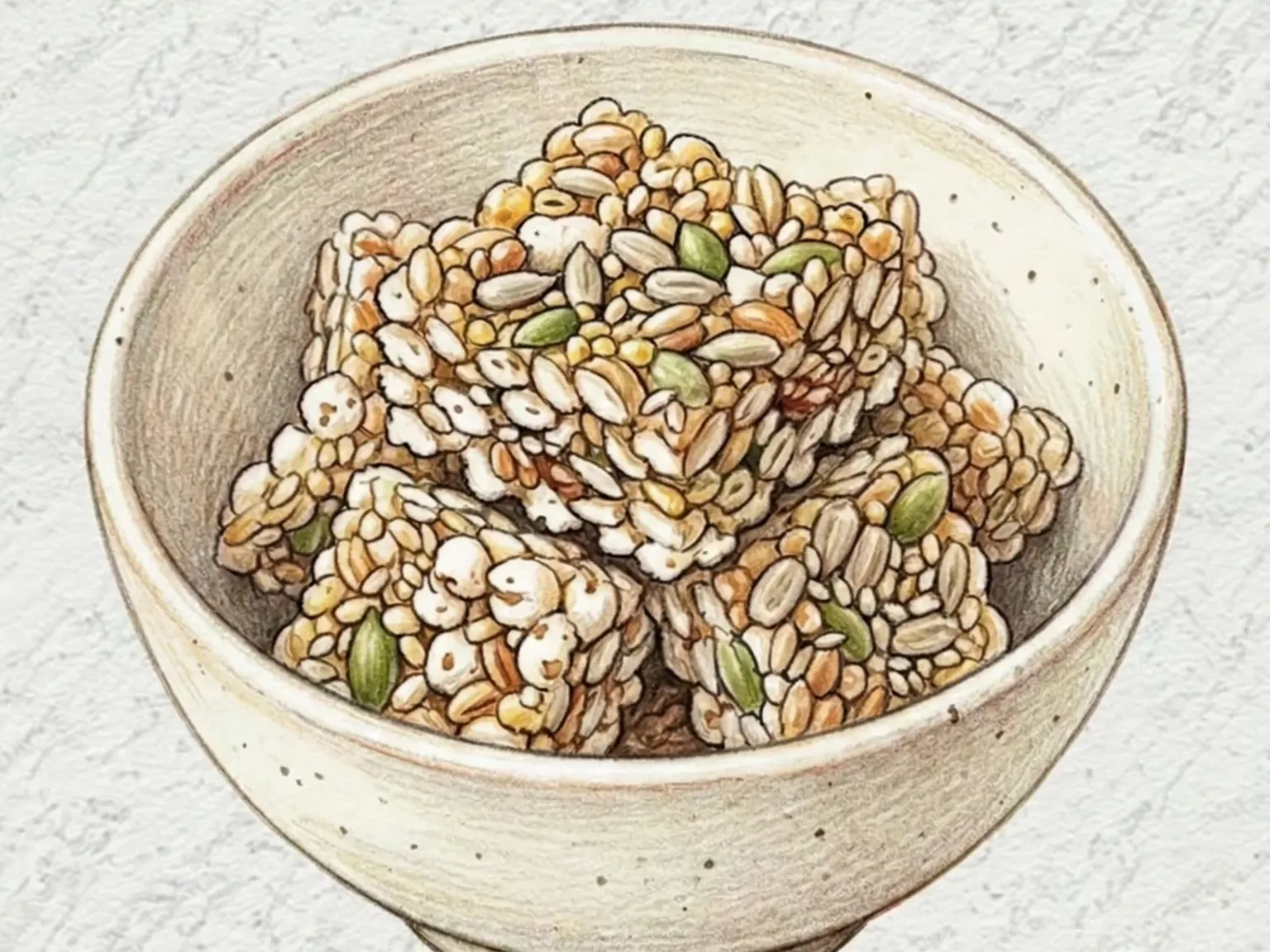
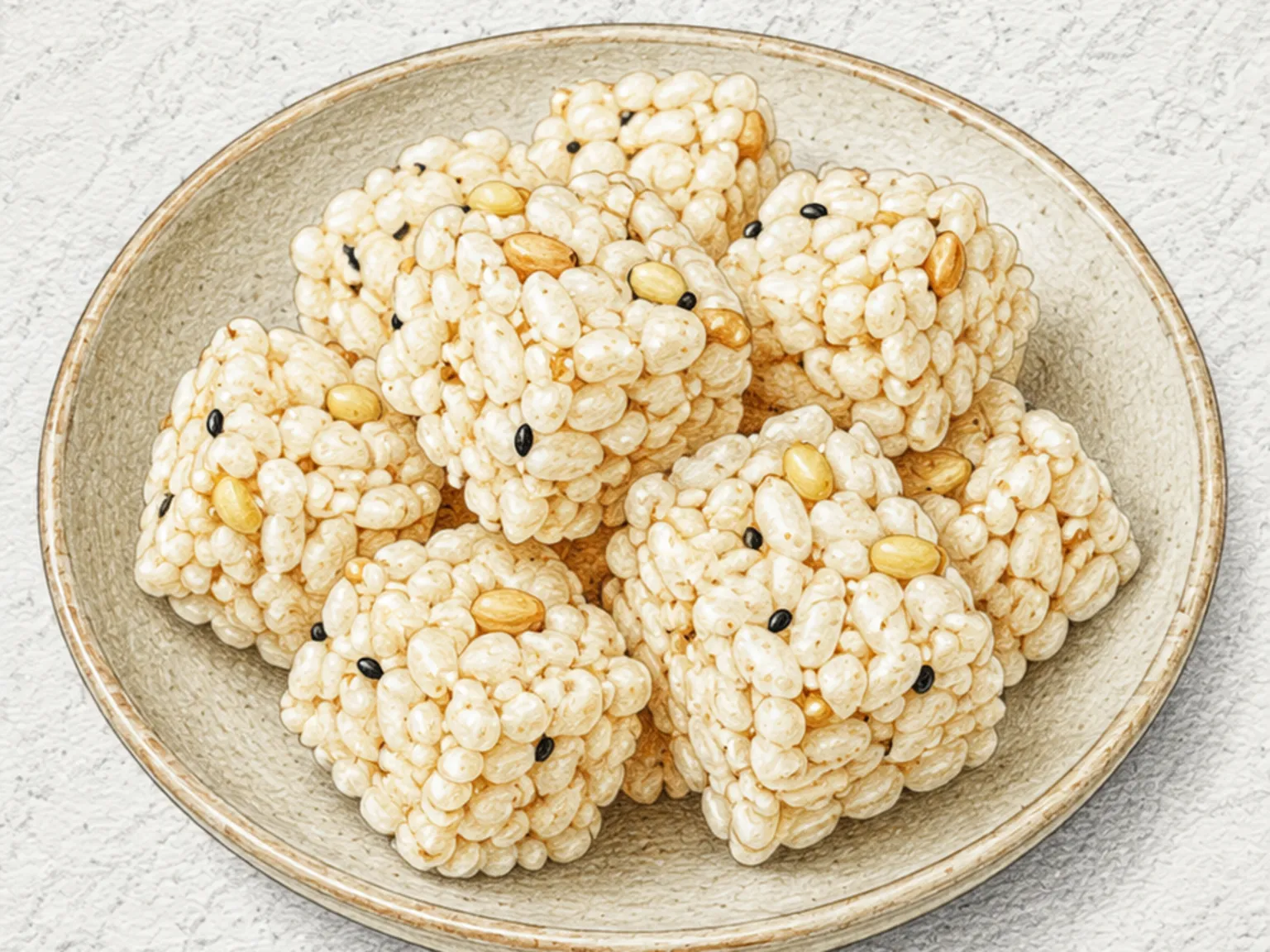
Gangjeong is a traditional Korean confection made from puffed glutinous rice bound together with warm grain syrup and pressed into molds to set.
What makes this special
- Korean rice puff confection (gangjeong) made of glutinous rice bound with grain syrup.
- Steamed, dried, then deep-fried glutinous rice puffs snow-white due to starch expansion
- Grain syrup's mild sweetness doesn't mask the nutty aroma of the ingredients
Key ingredients
Core cooking flow
- 1 Line the mold or tray with parchment first, then loosen any clumps in 180 g puffed rice.
- 2 Put 120 g rice syrup, 30 g sugar, and 30 ml water in a pot over medium-low heat.
- 3 When the syrup thickens enough to fall from a spoon in a thin thread, reduce the heat to low.
Gangjeong is a traditional Korean confection made from puffed glutinous rice bound together with warm grain syrup and pressed into molds to set. The production begins with glutinous rice that is soaked, steamed, dried thoroughly, and then deep-fried until each grain expands into a white, airy puff. The timing of the next step matters: the puffs must be turned through the hot grain syrup quickly, before the syrup cools, so that the coating bonds everything together evenly without sogginess. As the syrup cools, it hardens into a structure that feels solid when pressed but shatters cleanly under the teeth, then dissolves into a gentle sweetness on the tongue. The grain syrup is mild and naturally caramel-like, not aggressively sweet, so the toasted, nutty character of the puffed rice remains the dominant flavor. Black sesame seeds, pine nuts, or peanuts folded in before pressing add layers of nuttiness and a pleasant variation in texture. Brightly colored versions dyed with food coloring are a traditional fixture on Korean holiday tables. An oven-drying method that skips the deep frying step exists for those who want to reduce oil use, though the texture differs slightly. Stored in an airtight container away from humidity, gangjeong keeps its crunch for several days.
Instructions
Read the steps as a cooking flow: prep, heat, seasoning, doneness control, and finish.
- 1Prep
Line the mold or tray with parchment first, then loosen any clumps in 180 g puffed rice.
Keep 40 g chopped nuts and 1 tablespoon sesame seeds nearby so they can go in before the syrup cools.
- 2Control
Put 120 g rice syrup, 30 g sugar, and 30 ml water in a pot over medium-low heat.
Stir until the sugar grains disappear, then let the edges bubble gently without turning the heat high.
- 3Control
When the syrup thickens enough to fall from a spoon in a thin thread, reduce the heat to low.
Stop before it darkens deeply, because overcooked syrup sets too hard after cooling.
- 4Step
Add the puffed rice, nuts, and sesame all at once, then fold quickly from the bottom with a spatula.
Coat the outside of the grains evenly before the syrup cools, without crushing the airy texture.
- 5Prep
Transfer the hot mixture straight into the lined mold and spread it over the parchment.
Press firmly enough to remove gaps, but not so hard that the puffed rice breaks and becomes dense.
- 6Prep
Let it cool completely until the block feels firm, then lightly wet the knife and cut it into serving pieces.
Store leftover gangjeong in an airtight container in a dry place to keep it crisp.
After the steps
Pick a recipe that fits this dish.
Continue with shared ingredients, meal pairings, or a similar method.
Recipes That Go Well With This
More Baking →Based on shared ingredients and meal pairing
Korean Rice Puff Gangjeong
Ssal-gangjeong is a traditional Korean confection made by binding puffed rice, roasted peanuts, sunflower seeds, and black sesame in a syrup of rice malt and sugar, then pressing the mixture into a mold to set. Controlling syrup temperature is essential: heating too high makes the bars rock-hard once cooled, so stopping when the syrup forms soft threads keeps the final texture crisp yet breakable. The airy crunch of puffed rice contrasts with the firm bite of whole nuts, while black sesame adds a lingering toasty undertone. Scoring the slab before it fully cools produces clean cuts, and storing in an airtight container preserves the crispness for several days.
Honey Rice Puff Cookies (Korean Double-Fried Puffed Glutinous Rice)
Yugwa is a traditional Korean rice puff cookie that is prepared using a base of glutinous rice flour mixed with makgeolli, which is a type of fermented Korean rice wine. This dough is shaped into individual pieces and then left to dry for a duration of at least two hours. This drying period is a mandatory step in the process because any residual moisture within the dough will lead to dangerous oil splattering when the pieces are placed into the frying fat. The cooking process requires a specific two-stage frying technique involving both low and high oil temperatures to facilitate a dramatic expansion of the dough. Tiny air pockets are created within the mixture by the yeast present in the makgeolli during the initial preparation stages. These pockets expand rapidly during the second frying stage at a higher heat, which results in the hollow internal structure that is the defining characteristic of the cookie. Once the frying is complete, the pieces are tossed in a warm glaze consisting of honey and rice syrup. This sticky coating serves to anchor a final layer of puffed rice to the exterior of the cookie. Ground cinnamon is incorporated into the recipe to provide a subtle warm spice that complements the nutty and fermented flavors of the glutinous rice. When consumed, the finished cookie shatters into light, airy shards, offering a texture that is nearly weightless compared to other varieties of Korean confections. Traditionally, yugwa is featured on tables during ancestral rites for the Chuseok and Seollal holidays and remains a common choice for gift-giving during these festive seasons.
Chapssal Kkwabaegi (Glutinous Rice Twist Donuts)
Chapssal-kkwabaegi are Korean twisted donuts made from a yeasted dough of glutinous rice flour and bread flour, proofed until nearly doubled, shaped by twisting pairs of ropes together, and fried at 170 degrees Celsius. The high ratio of glutinous rice flour gives the interior a notably chewy pull that sets these apart from standard wheat donuts, though over-proofing turns that chew tough rather than springy. Maintaining oil temperature at 170 degrees keeps the shell golden and crisp while minimizing grease absorption, so the finished donut stays light in hand. Tossing them in cinnamon sugar immediately after draining lets the residual heat partially melt the crystals into a thin, clinging sweet crust.
Dasik (Korean Honey-Pressed Roasted Grain Confection)
Dasik is a traditional Korean pressed confection made by kneading roasted grain or nut powders with honey and pressing the mixture into carved wooden molds. Unlike baked goods, dasik holds its shape entirely through the binding power of honey, with no heat applied during preparation. This technique produces a texture that is slightly resistant at first contact, then dissolves gently at body temperature in a way that releases the full aroma of the main ingredient. Roasted soybean powder yields a nutty version, black sesame produces a deeply aromatic one, and additions of pine nut powder or cinnamon develop the flavor in different directions. The wooden molds carve decorative patterns into the surface of each piece, giving dasik a visual refinement that matches its restrained sweetness. For centuries, dasik has been a standard offering at Korean tea gatherings, and its subtle flavor remains a natural match for the gentle bitterness of green tea.
Serve with this
Korean Crispy Potato Pancake
Gamja-jeon is a Korean potato pancake made by finely grating raw potatoes, letting the starch settle out of the liquid for at least ten minutes, discarding the water, and folding the settled starch back into the pulp to improve binding. Waiting long enough for full starch separation is what gives the batter enough cohesion to hold together when the pancake hits the hot pan. Spreading the batter as thinly as possible produces glass-crisp edges while the center retains a chewy, starchy bite characteristic of potato starch. The first side must cook all the way through and the underside must firm up completely before any attempt to flip, and using two spatulas simultaneously makes the turn fast enough to keep the pancake intact. Frying both sides over medium heat until evenly golden delivers a crust that is crisp on the outside while the center stays moist. A dipping sauce of soy sauce, vinegar, and minced cheongyang green chili cuts through the oily richness with sharpness and heat.
Roasted Mushroom Perilla Potato Salad
Potatoes are boiled skin-on and roughly mashed with a fork to keep a mix of fluffy interior and chunky structure rather than a smooth puree. King oyster mushrooms are torn lengthwise into thick strips and pan-roasted in olive oil until chewy and deeply savory, developing color on the cut surfaces. Perilla seed powder and Greek yogurt create a nutty, creamy binder that unifies the two main components without masking their individual flavors. Shredded perilla leaves release their bold, anise-like fragrance across the entire plate, while lemon juice and minced garlic cut through the richness and sharpen the overall aroma. Two distinctly Korean aromatics, perilla seed and perilla leaf, give the familiar potato salad format a flavor profile that diverges significantly from its Western counterpart. The salad is best at room temperature, where the potato texture stays fluffy and the mushrooms hold their chew; if refrigerated, pulling it out 30 minutes before serving restores the right consistency.
Calzone
Calzone rolls pizza dough into a circle, fills one half with ricotta, mozzarella, diced ham, and fresh basil, then folds into a half-moon shape, seals the edges with a fork, and bakes until golden at 220 degrees Celsius. Leaving a two-centimeter border free of filling is critical -- overstuffing causes steam pressure to burst the seam during baking. Brushing a thin line of water along the edge before pressing firmly with a fork creates a tighter seal that holds through the full bake. Fifteen to twenty minutes in a well-preheated oven produces a crisp, burnished exterior while the interior heats the ricotta into a soft cream and melts the mozzarella into long, stretchy strings. Brushing olive oil on the surface before baking adds a richer color and a slight nuttiness to the crust. Tomato sauce served on the side for dipping provides an acidic counterpoint that cuts through the dense cheese filling and keeps each bite feeling balanced.
Similar recipes
Barley Puff Brittle (Korean Puffed Barley Walnut Sesame Candy)
Bori-gangjeong is a Korean barley puff brittle made by tossing puffed barley and roughly chopped walnuts with toasted sesame seeds in a syrup of rice malt, sugar, and honey cooked precisely to 118 degrees Celsius. Temperature is the deciding variable: below that threshold the brittle never fully sets and stays soft and sticky even when cool, while above it the result hardens into something that resists the teeth uncomfortably. Once the correct temperature is reached, the mixture must be worked quickly - the syrup sets fast. Sesame oil stirred in at the very end coats the barley in a layer of nutty fragrance that ties the toasty grain, the honey sweetness, and the dense crunch of walnut together. Scoring the slab while it is still pliable is essential: cuts made after the brittle fully sets tend to crack rather than slice cleanly, and the pieces lose their uniform shape. The deep sweetness of the rice malt syrup and the nuttiness of the barley combine into a straightforward but lingering flavor that keeps the hand returning to the plate.
Sweet Chestnut Confection
Yulran is a traditional Korean chestnut confection that is prepared by boiling 300 grams of chestnuts in water for a duration of 20 minutes. Once the boiling process is complete, the chestnut flesh is removed from the shells and pressed through a fine sieve. This manual pressing continues until the texture becomes perfectly smooth. The purpose of using a sieve is to eliminate any grainy bits, which results in a chestnut paste with an even and velvety consistency. This puree is then kneaded together with a combination of honey and ground cinnamon. After the ingredients are thoroughly mixed, the paste is shaped into small, bite-sized rounds. The honey used in this recipe serves as both a source of moisture and a necessary adhesive. Its sticky property provides the strength required for the confection to hold its molded shape effectively without crumbling into pieces. Ground cinnamon is included to provide a warm spice note. This flavor is chosen because it complements the starchy and earthy sweetness of the chestnut rather than competing with the natural profile of the nut. Following the shaping process, each piece is rolled in ground pine nuts. This step coats the exterior in a mild nuttiness and introduces a subtle textural contrast against the smooth paste contained within. For a final visual touch, thin slices of jujube are placed on top as a garnish to provide a stroke of red color. The finished rounds are then placed in the refrigerator to chill for 15 minutes. This cooling period firms the surface of the paste just enough so that the confections can be picked up cleanly with the fingers without sticking to the skin. Historically, Yulran was a common fixture on the ceremonial and banquet tables of the Joseon court. It was valued for its clean and understated sweetness, which allows the natural flavor of the chestnut to remain the central focus.
Gyeongdan (Chewy Rice Balls with Sweet Coating)
Gyeongdan are Korean glutinous rice balls, each one shaped by hand into a small sphere, boiled until it floats, then rolled in a dry coating while still warm. The dough is made by kneading glutinous rice flour with hot water rather than cold, a technique that partially gelatinizes the starch and gives the finished rice ball its characteristic chewy spring. Rinsing the cooked balls immediately in cold water stops them from sticking together and firms the surface enough for the coating to cling evenly. Traditional coatings include roasted soybean powder, which is mild and nutty, ground black sesame, which adds deep toasted bitterness, and sweetened red bean crumbles. Some versions are filled with sweet red bean paste before shaping, so the filling bursts as you bite through. Gyeongdan appear on ceremonial tables at seasonal holidays and as everyday snacks, often presented as a trio of colors arranged side by side on a single plate.