Korean Gangwon-Style Dried Pollock Hangover Soup
Quick answer
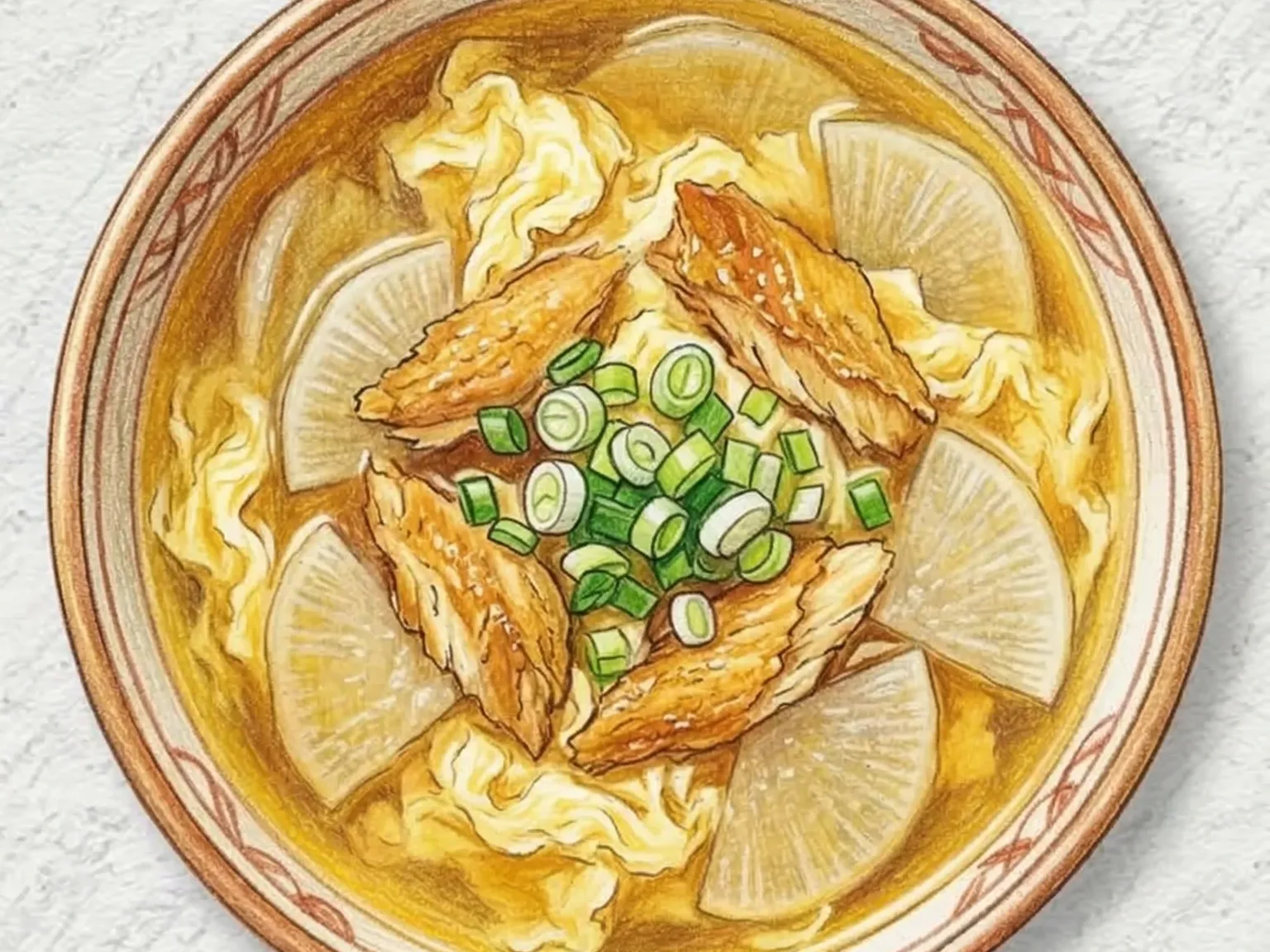
This Gangwon-province version of dried pollock hangover soup starts by stir-frying shredded dried pollock in sesame oil until it turns deeply fragrant and golden.
What makes this special
- Sautéing pollock in sesame oil until golden develops a deep toasted scent.
- Stir-frying dried pollock in sesame oil until golden maximizes the nutty aroma
- Pre-frying the pollock before adding water gives deeper flavor than plain simmering
Key ingredients
Core cooking flow
- 1 Soak 120 g dried pollack strips in cold water for 5 minutes until soft, then...
- 2 Heat 1 tbsp sesame oil in a pot over medium heat; stir-fry dried pollack for...
- 3 Add 220 g julienned radish and 1.4 L water; simmer over medium heat for 15 m...
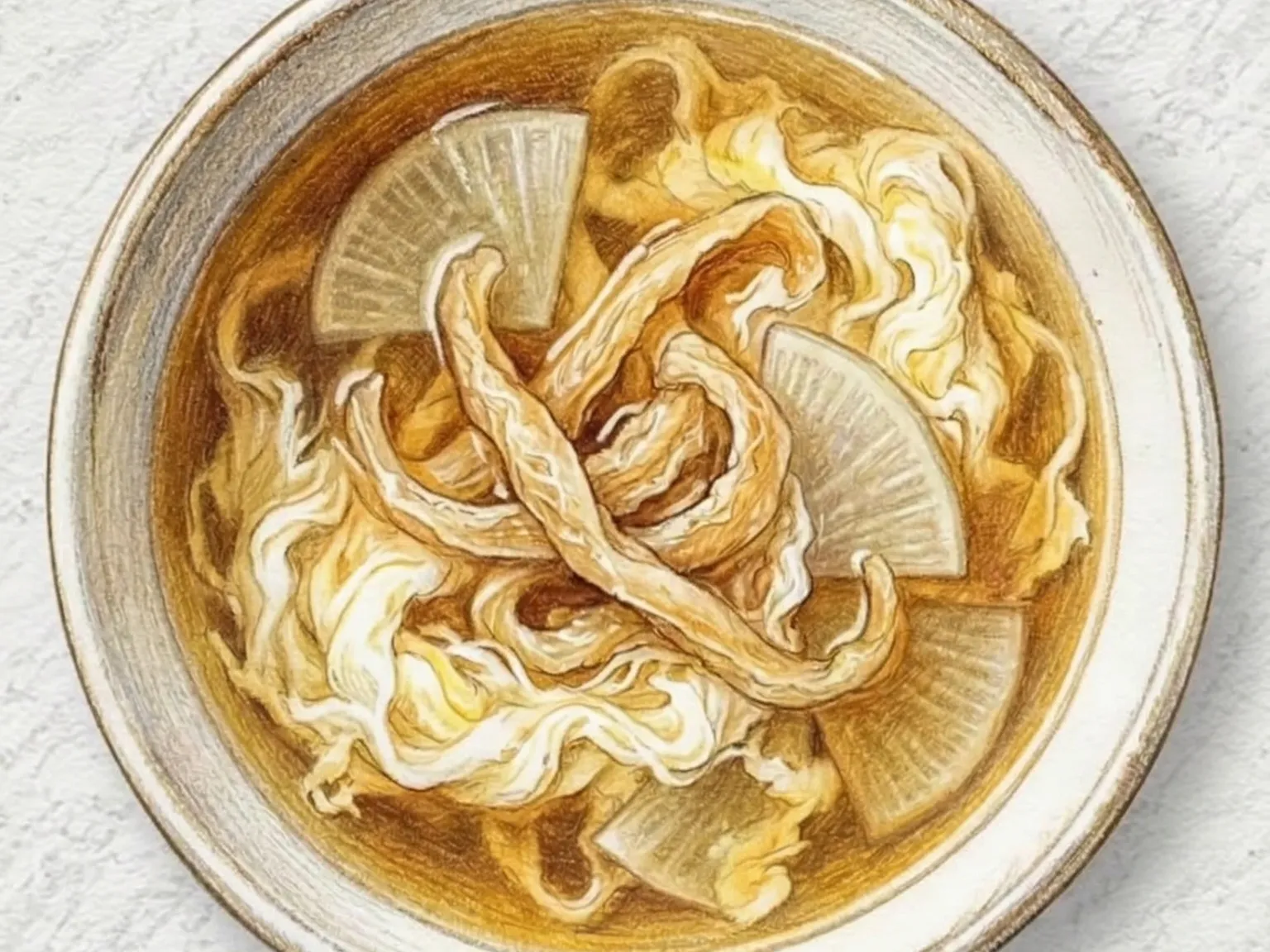
This Gangwon-province version of dried pollock hangover soup starts by stir-frying shredded dried pollock in sesame oil until it turns deeply fragrant and golden. That step is what sets it apart from other regions' pollock soups. The toasted sesame aroma permeates the entire broth and adds a richness that plain boiling cannot achieve. Radish simmers alongside, contributing a clean sweetness that tempers any fishiness. Garlic and soup soy sauce provide the savory foundation. Near the end, a beaten egg is swirled into the pot, forming soft, silky ribbons that give the clear broth a comforting body. The soup is intentionally mild and free of chili heat, designed to be gentle on an empty or troubled stomach. Koreans have relied on this kind of bugeo-guk for morning-after recovery for generations, and the Gangwon-style sesame preparation is considered one of the most satisfying versions. If the stir-frying step is rushed, the sesame oil does not coat the fish thoroughly, so cooking the pollock strands over medium heat until they are evenly golden is what draws out the full depth of flavor into the broth.
Instructions
Read the steps as a cooking flow: prep, heat, seasoning, doneness control, and finish.
- 1Step
Soak 120 g dried pollack strips in cold water for 5 minutes until soft, then drain and squeeze out excess moisture.
- 2Control
Heat 1 tbsp sesame oil in a pot over medium heat; stir-fry dried pollack for 2 minutes until fragrant and lightly golden.
- 3Control
Add 220 g julienned radish and 1.4 L water; simmer over medium heat for 15 minutes until radish is translucent and broth tastes sweet.
- 4Season
Add 1 tbsp minced garlic and soup soy sauce; cook 8 more minutes, adjusting the soy sauce by color.
- 5Step
Slowly drizzle 2 beaten eggs into the stirring broth in a circular motion so they form soft, cloud-like wisps.
- 6Finish
Add sliced green onion and adjust salt.
Once it bubbles again, immediately turn off heat and serve hot.
After the steps
Pick a recipe that fits this dish.
Continue with shared ingredients, meal pairings, or a similar method.
Recipes That Go Well With This
More Soups →Based on shared ingredients and meal pairing
Bugeoguk (Korean Dried Pollack Hangover Soup)
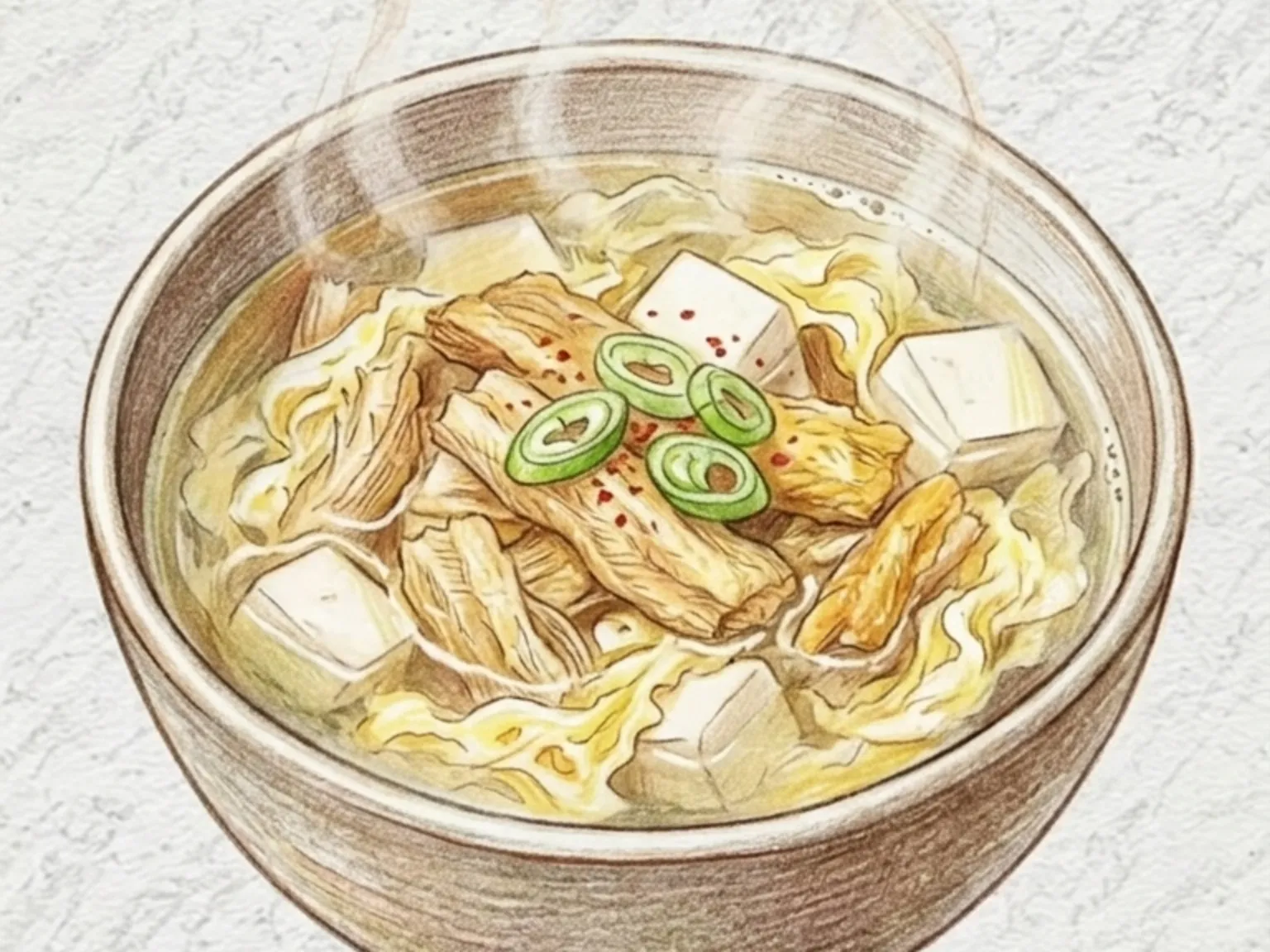
Bugeoguk is a traditional Korean dried pollack soup, widely consumed as a restorative hangover cure. The preparation starts by soaking dried pollack strips in water, removing any bones, and stir-frying them in sesame oil. This stir-frying step is essential to release a rich, nutty flavor that forms the foundation of the broth. Water is then added and brought to a boil, and the rising foam is skimmed off to ensure a clear broth. The soup is simmered with tofu, soup soy sauce, and minced garlic to build depth. Near the end of cooking, beaten eggs are poured into the pot in a circular motion to create soft ribbon-like strands, finished with sliced green onions and a pinch of salt. Substituting the freeze-dried variety, hwangtae, offers a softer texture and deeper umami. It is a light and comforting soup that is gentle on the stomach.
Korean Dried Pollock Potato Soup
Hwangtae-gamja-guk is a clear Korean soup built around dried pollock strips that have been wind-dried and then sauteed in sesame oil before any liquid is added. That initial stir-fry step is what separates this soup from simpler broth dishes: the heat releases a toasty, nutty fragrance from the pollock that permeates the entire pot and melds with the anchovy-kelp stock poured in afterward. Potato slices simmer alongside radish, and as they soften their edges gradually break down, giving the broth a mild, natural body without the use of starch or thickener. Radish contributes a clean, cooling sweetness that tempers the concentrated umami of the dried pollock. Soup soy sauce and minced garlic handle the seasoning, keeping the flavor profile clear and uncluttered. The pollock itself stays pleasantly chewy even after prolonged simmering, providing a protein-rich bite that makes the bowl genuinely filling. This soup is a fixture on Korean breakfast tables, valued for its ability to settle the stomach and restore energy.
Korean Chicken Breast Perilla Porridge
Dakgaesal deulkkae juk is a traditional style of Korean porridge that utilizes shredded chicken breast alongside finely chopped onions and carrots as its primary components. The preparation begins by stir-frying these ingredients together, after which they are simmered slowly with a combination of soaked rice and chicken stock. As the cooking process nears its conclusion, perilla seed powder is incorporated into the pot. This specific ingredient dissolves thoroughly into the liquid to produce a final texture that is notably thick and creamy. The aroma produced by the perilla seeds is deeply nutty and serves as the most prominent characteristic of the dish. While sesame seeds are known for a sharp and roasted quality, perilla seeds offer a flavor that is more round and carries an herbaceous nuttiness. This gives the porridge a unique profile that is common in Korean cuisine. The inclusion of shredded chicken breast provides a source of lean protein that does not feel heavy, ensuring the meal remains nourishing and simple for the body to digest. Because of these qualities, this porridge is often used as a recovery meal for individuals after they have finished exercising or for anyone whose energy levels feel low. It also serves as a functional choice when a gentle meal is required for a sensitive stomach. Adjusting the final result is possible by increasing the quantity of perilla powder, which results in a more intense fragrance and an even thicker consistency for people seeking a richer bowl.
Korean Dried Pollock Radish Soup
Hwangtae-muguk is an everyday Korean soup made with dried pollock strips and radish in a clean, clear broth. The pollock is first sautéed in sesame oil to coax out its characteristically nutty, savory fragrance, then water is added and the radish simmers until soft and sweet. Soup soy sauce and minced garlic provide the only additional seasoning, keeping the flavor profile transparent enough to let the pollock's concentrated umami and the radish's natural sweetness take center stage. The simplicity of the ingredient list belies the depth of the resulting broth, which tastes fuller than the sum of its parts. It is among the most frequently cooked soups in Korean homes, appearing on breakfast tables and as a reliable remedy on mornings after heavy meals. The pollock's tender, delicate flesh holds together well in the clear broth.
Serve with this
Korean Konjac Noodle Salad
Silgonyak-chae-muchim tosses 250 grams of blanched konjac noodles with julienned cucumber, carrot, and onion in a gochujang-based dressing spiked with vinegar, sugar, soy sauce, and garlic. Blanching the noodles for two minutes removes their faint alkaline smell and softens their rubbery chew to a pleasant springiness. The vegetables provide crisp contrast - cucumber adds a cool snap, carrot a mild sweetness, and onion a sharp bite. The dressing clings to the translucent noodles, turning them a vivid reddish hue. At only 95 calories per serving, this banchan relies on texture and bold seasoning rather than fat for its appeal. Chilling for 10 minutes before serving firms up the noodles and intensifies the tangy-spicy flavor profile.
Korean Chamnamul Kimchi (Pimpinella Kimchi)
Chamnamul kimchi is a spring kimchi made by salting chamnamul greens for just ten minutes to wilt them slightly, then dressing with gochugaru, anchovy fish sauce, and salted shrimp without rinsing. Skipping the rinse allows the residual salt to convert into umami during fermentation rather than being washed away, deepening the overall flavor. Pureed Korean pear and onion blended with sweet rice paste form the seasoning base, contributing a natural sweetness that rounds off the sharp edges of the chili heat. After three hours of initial fermentation at room temperature followed by refrigeration, the kimchi reaches its best balance within one to two days, when the grassy herbal aroma of chamnamul aligns with the fermented depth of the fish sauce. Because chamnamul has a high moisture content, fermentation moves quickly, and the kimchi softens past its peak if left too long. Best consumed within three to four days for optimal texture and fragrance.
Korean Seaweed Oyster Pancake
Miyeok oyster jeon is a Korean seaweed and oyster pancake that offers a savory taste of the ocean. The cooking begins by rinsing fresh oysters in light salted water and draining them, while soaked seaweed is squeezed firmly to remove moisture before being cut. The pancake batter is prepared by mixing Korean pancake mix, cold water, an egg, minced garlic, and soup soy sauce. The seaweed, oysters, and minced red chili are gently folded into the batter. Ladles of the mixture are pan-fried in oil over medium-low heat for three minutes on each side, ensuring the oysters stay submerged in the batter to cook. The finished pancake features a crisp exterior with a soft, chewy seaweed interior, and juicy oysters that release their briny flavor with every bite.
Similar recipes
Haejangguk (Korean Pork Bone Hangover Soup)
Haejangguk is Korea's iconic hangover soup, a thick and fiery bowl built to restore the body after a long night of drinking. The base is a pork spine broth simmered for several hours until it turns milky, opaque, and deeply savory, carrying a weight that sits in the stomach rather than passing through it. Outer napa cabbage leaves called ugeoji are seasoned with doenjang and garlic before being added to the broth, contributing fibrous, chewy texture alongside the soup's fermented depth. Congealed blood, known as seonji, is a traditional inclusion cut into thick blocks: iron-dense and high in protein, it provides serious nutritional restoration and a visually striking dark contrast in the stone pot. Gochugaru delivers heat strong enough to draw sweat to the forehead, and Koreans have long held that this intensity helps flush toxins from the body and clear the mind after a night of drinking. The finished soup arrives still bubbling in its dolsot, and the first few spoonfuls tend to produce an involuntary exhale of relief. Dedicated haejangguk restaurants open before dawn to serve construction workers and late-night revelers, and the dish has occupied a fixed position in Korean culinary and drinking culture for centuries.
Korean Clear Broth Tofu Stew
This clear Korean tofu stew is prepared by simmering tofu cubes, shiitake mushrooms, and zucchini in seasoned beef stock. The base relies on a rich beef broth, enhanced by the earthy umami of sliced shiitake mushrooms. Zucchini slices add a mild sweetness as they cook to a tender, translucent state. Seasoned simply with Korean soup soy sauce, salt, and minced garlic, the broth maintains a clean, savory taste without chili heat. To prevent the tofu from breaking, the cubes are gently settled into the pot and simmered over medium-low heat. Sliced green onions are added at the end of cooking to infuse a mild herbal note. Serving the stew hot after letting it rest briefly highlights the natural flavors of the ingredients. The tofu can be lightly pan-seared beforehand to add a nutty flavor and firmer texture.
Korean Braised Dried Pollack
Bugeo Jorim is a classic Korean side dish made of dried pollack braised in a savory, sweet, and spicy sauce. The pollack is dried in the mountains of Gangwon-do through winter freeze-thaw cycles. To prepare, the dried fish is soaked in cold water for exactly twenty minutes to soften while maintaining its texture, then squeezed firmly to remove excess moisture. A seasoning sauce is prepared by mixing soy sauce, gochujang, sugar, syrup, and minced garlic. The pollack is placed in a pan, coated with the sauce, and cooked over medium heat for a few minutes while turning frequently. The sponge-like flesh absorbs the braising liquid, resulting in a chewiness infused with seasoning. Once the liquid evaporates and the fish becomes glossy, the heat is turned off, and sesame oil and sesame seeds are tossed in. The dish keeps well in the refrigerator.