Korean Gangwon-Style Soy Bulgogi
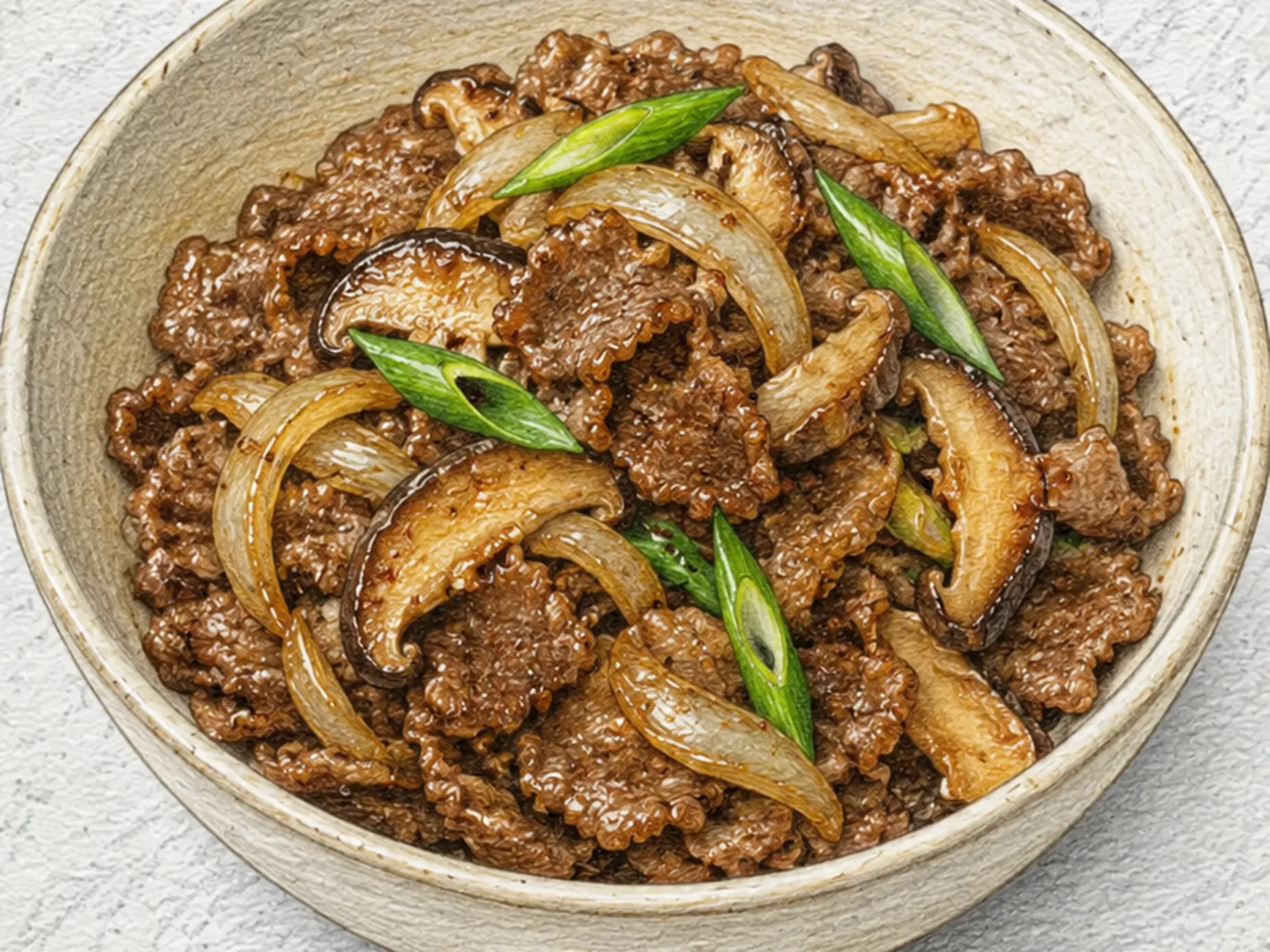
Gangwon-style soy bulgogi marinates thin-sliced beef in a blend of soy sauce, pear juice, sugar, and garlic before stir-frying over high heat. The pear juice tenderizes the meat while lending a gentle fruit sweetness that balances the salty soy base. Shiitake mushrooms and onion cook alongside the beef, absorbing the marinade and building layers of umami. A final toss of diagonally sliced green onion adds a bright, fresh note. This regional take on bulgogi is lighter and cleaner in flavor compared to many other versions.
Adjust Servings
Instructions
- 1
Blot beef with paper towel to remove excess moisture.
- 2
Mix soy sauce, pear juice, sugar, garlic, and sesame oil.
- 3
Marinate beef for 10 minutes.
- 4
Thinly slice onion and mushrooms; diagonally slice green onion.
- 5
Add beef to a hot pan and stir-fry on high for 2 minutes.
- 6
Add onion and mushrooms and cook until softened.
- 7
Finish with green onion and cook 30 seconds more.
As an Amazon Associate, we may earn from qualifying purchases.
Tips
Nutrition (per serving)
More Recipes

Korean Kimchi Bulgogi (Kimchi Stir-Fried Marinated Beef)
Kimchi bulgogi combines soy-and-pear-marinated beef slices with aged napa kimchi, stir-fried together over high heat. The pear juice tenderizes the meat and adds a subtle sweetness that the kimchi's sharp acidity and salt cut through, creating a layered seasoning. As the two cook together, kimchi liquid seeps into the beef and builds a more complex umami than standard bulgogi alone. A finishing drizzle of sesame oil rounds out the dish, which pairs best with plain steamed rice to absorb the pan juices.

Korean Andong-style Soy Bulgogi
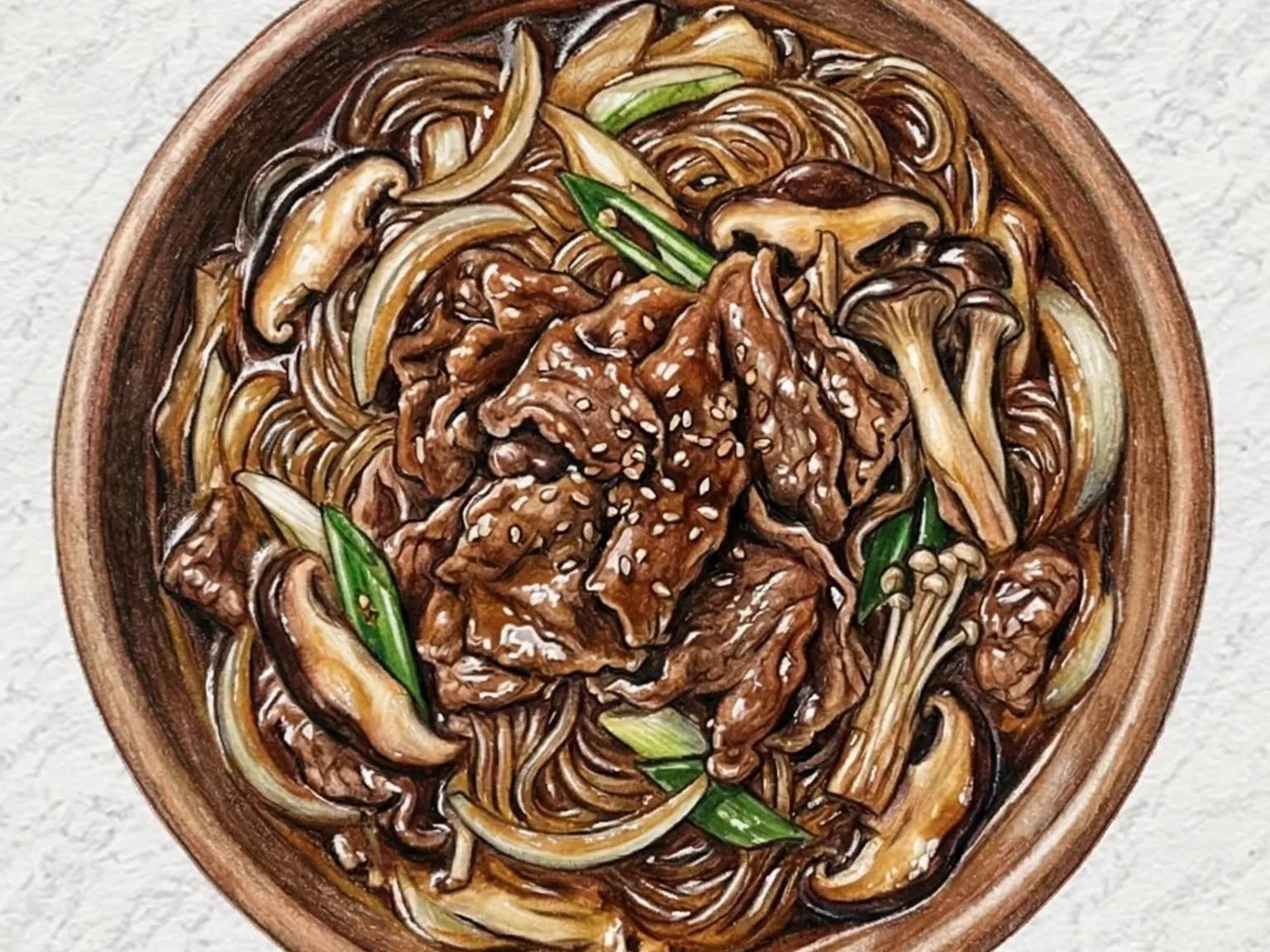
Andong-style bulgogi differs from the Seoul version in one fundamental way: it is not grilled. In Andong - a city in North Gyeongsang Province known for preserving Joseon-era culinary customs - bulgogi is braised in a shallow pan with the marinade and vegetables rather than cooked over open flame. Thinly sliced beef is marinated in soy sauce, sugar, sesame oil, garlic, and pear juice, then layered with glass noodles, onion, scallion, and mushroom in a wide, flat pan. As the liquid simmers down, the sweet soy marinade reduces into a glaze that coats every ingredient. The result is wetter and more intensely seasoned than grilled bulgogi, with the noodles soaking up the concentrated braising liquid. This style appears at Andong's ancestral rite ceremonies and family gatherings, where the dish is served communally from the pan it was cooked in.

Korean Soy-Glazed Shrimp Stir-Fry
Ganjang saeu bokkeum coats plump shrimp in a sweet-savory soy glaze built on a base of melted butter and garlic. A single cheongyang chili adds a subtle kick that lifts the buttery richness without overpowering it. The key is to add the sauce the moment the shrimp turn pink, preventing them from becoming rubbery while allowing the glaze to caramelize lightly. With only 8 minutes of cooking time, this dish works equally well as a quick banchan alongside rice or as an appetizer with drinks.

Korean Spicy Beef Stir-Fry
Sogogi gochujang-bokkeum marinates thin-sliced beef in a paste of gochujang, soy sauce, sugar, and minced garlic, then stir-fries it over high heat. The chili paste's spiciness and the sugar caramelize together on the meat's surface, building a dark, sticky glaze with layered heat. Onion cooked alongside the beef releases moisture that helps the seasoning distribute evenly across every slice. A finish of sesame oil adds a roasted nuttiness on top of the bold, spicy-sweet profile -- intensely flavored enough that a small portion carries a full bowl of rice.

Korean-Style Sirloin Steak
Deungsim steak-gui is a Korean-style sirloin steak marinated in soy sauce, sesame oil, sugar, minced garlic, and Korean pear juice, then seared on a hot pan or grill. The pear juice contains enzymes that tenderize the surface fibers of the meat, but marinating beyond thirty minutes risks making the texture mushy, so timing is key. Unlike Western steaks that rely on salt, pepper, and butter, this version builds its flavor around soy sauce and sesame oil, with sugar caramelizing at high heat to form a sweet-salty crust on the surface. Coarsely cracked black pepper finishes the steak, adding a spicy sharpness that bridges the gap between Korean bulgogi and a classic grilled steak.

Korean Marinated Beef Short Rib Grill
Beef ribs or bulgogi-cut slices are marinated for at least an hour in a blend of soy sauce, Korean pear juice, sugar, minced garlic, sesame oil, and black pepper. The pear's natural enzymes break down connective tissue while the soy-sugar combination penetrates deep into the meat. On a high-heat grill, the sugars in the marinade caramelize rapidly, forming a glossy, dark-brown glaze with visible char marks. Thin-cut pieces cook through in under four minutes total, and the interplay of charcoal smoke with the sweet-salty marinade defines the signature taste of Korean yangnyeom-gui.