Korean Soy-Glazed Chicken Stir-Fry

Korean Soy-Glazed Chicken Stir-Fry

Quick answer

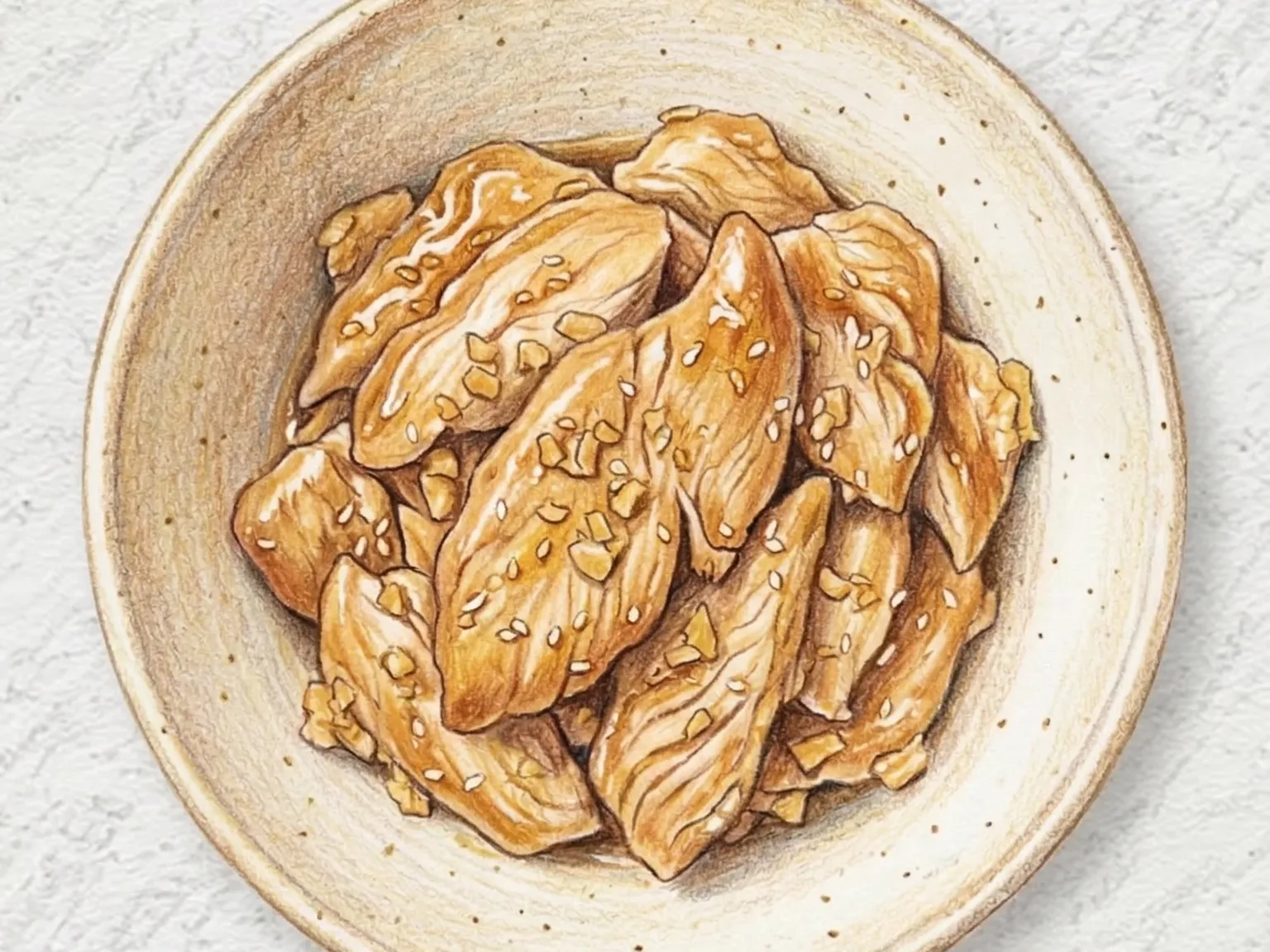
This soy-glazed chicken stir-fry marinates thinly sliced chicken breast in soy sauce, garlic, and ginger before a quick pan-fry over high heat.

What makes this special

  • Thinly sliced chicken breast stays moist through a quick sear in a ginger-infused soy glaze.
  • Slicing chicken breast thin accelerates marinade penetration and prevents dryness
  • Ginger cuts chicken's distinct odor while adding a clean aromatic layer
Total time
20 min
Level
Easy
Servings
2 servings
Ingredients
5
Calories
210 kcal
Protein
34 g

Key ingredients

Chicken breastSoy sauceGarlicGingerSesame oil

Core cooking flow

  1. 1 Slice 300g chicken breast against the grain into 0.5cm pieces.
  2. 2 Mix 2 tbsp soy sauce, 2 minced garlic cloves, and 1 tsp ginger, then add the chicken.
  3. 3 Heat a pan well over medium-high heat, then add 1 tbsp cooking oil.

This soy-glazed chicken stir-fry marinates thinly sliced chicken breast in soy sauce, garlic, and ginger before a quick pan-fry over high heat. Slicing the breast thin ensures each piece absorbs the marinade rapidly and cooks through without drying out, avoiding the rubbery texture that plagues overcooked white meat. The ginger cuts through any poultry aroma while the soy sauce provides a steady umami backbone throughout. A drizzle of sesame oil at the end ties together the flavors with a warm, nutty finish. A single cheongyang chili added during cooking gives the dish a clean heat, and it holds up well for meal prep or packed lunches. Practical for diet-conscious cooking or post-workout protein without sacrificing flavor.

Prep 10min Cook 10min 2 servings

Instructions

Read the steps as a cooking flow: prep, heat, seasoning, doneness control, and finish.

6 steps
  1. 1
    Control

    Slice 300g chicken breast against the grain into 0.5cm pieces.

    Keep the thickness as even as possible so the chicken cooks quickly over high heat without dry edges or undercooked centers.

  2. 2
    Season

    Mix 2 tbsp soy sauce, 2 minced garlic cloves, and 1 tsp ginger, then add the chicken.

    Toss lightly by hand or with tongs and marinate for 10 minutes, just long enough for the thin slices to absorb seasoning.

  3. 3
    Control

    Heat a pan well over medium-high heat, then add 1 tbsp cooking oil.

    Spread the chicken in a single layer where possible so moisture evaporates quickly instead of pooling and steaming the meat.

  4. 4
    Heat

    For the first minute, avoid stirring too often and let the surface set.

    When the edges turn white and the underside shows light browning, flip the pieces and stir-fry for another minute.

  5. 5
    Control

    When the remaining marinade reduces on the pan surface, lower the heat to medium.

    Check a thicker piece: it should be white through the center, with clear juices and no translucent raw spots.

  6. 6
    Step

    Turn off the heat and drizzle in 1 tsp sesame oil, then toss gently.

    Let the chicken rest for 1 minute before plating so the glaze settles and the sesame aroma stays clear.

After the steps

Pick a recipe that fits this dish.

Continue with shared ingredients, meal pairings, or a similar method.

Recipes That Go Well With This

More Stir-fry →

Based on shared ingredients and meal pairing

Korean Soy-Glazed Chicken Stir-Fry
Shared ingredient: ginger Stir-fry

Korean Soy-Glazed Chicken Stir-Fry

Chicken thigh meat stir-fries in soy sauce, sugar, and oligosaccharide syrup for a sweet-salty glaze. Garlic and ginger go into the oil first to infuse the fat with fragrance before the chicken is added, letting the aromatics penetrate deep into the meat as it cooks. The oligosaccharide heats into a tacky gloss that coats each piece evenly as the liquid reduces. Sesame oil and whole sesame seeds scattered over the top at the end bring a nutty, aromatic finish. The flavor profile runs close to Japanese teriyaki, but the heavier use of garlic and ginger pushes it toward the more direct, punchy spice character typical of Korean cooking. Boneless thighs cut into bite-sized pieces cook more evenly than larger pieces, and keeping the heat high through most of the cook ensures the surface caramelizes without turning rubbery.

Korean Green Onion Salad (Doenjang-Dressed Grilled Meat Side)
Serve together Side dishes

Korean Green Onion Salad (Doenjang-Dressed Grilled Meat Side)

Jjokpa-muchim dresses thin, tender Korean chives in doenjang and gochujang, functioning as a supporting banchan that almost invariably accompanies grilled samgyeopsal or pan-roasted fish. Jjokpa is milder and naturally sweeter than regular green onion, which is what makes it suitable for eating raw: the gentle sharpness cuts through the fat of grilled pork without overwhelming the palate. The fermented, earthy depth of doenjang and the spicy kick of gochujang layer over the chive's natural pungency, building complex flavor from three uncomplicated ingredients. The essential rule is to dress the chives immediately before serving, because the salt in both pastes begins drawing moisture from the jjokpa within minutes, collapsing the crisp snap that defines the dish. Cut to four-centimeter lengths and gently tumbled in the sauce, the preparation takes under five minutes. Spring jjokpa is the most tender and sweet of the year, making it the best season to make this banchan. A few drops of sesame oil folded in at the end add a toasty fragrance, and a pinch of minced garlic sharpens the overall aroma. Perilla oil can substitute for sesame oil and delivers a deeper, more distinctive nuttiness.

Korean Kimchi Rice Bowl (Stir-Fried Aged Kimchi over Steamed Rice)
Serve together Rice

Korean Kimchi Rice Bowl (Stir-Fried Aged Kimchi over Steamed Rice)

Stir-frying aged kimchi in a hot pan drives off moisture and triggers caramelization, mellowing the sharpness into a deeper, sweeter intensity that raw kimchi cannot replicate. Cooking the kimchi over medium-high heat for five to seven minutes transforms its texture from wet and tangy to slightly charred and richly savory. A splash of soy sauce and a drizzle of sesame oil finish the seasoning with a salty, nutty note. Spooned over a bowl of steamed rice and topped with a single sunny-side-up egg, the dish is deceptively simple in construction. Using well-fermented kimchi like mukeunji introduces complex layers of lactic sourness and umami depth that more than compensate for the minimal ingredient list. Adding thin slices of pork shoulder or a can of tuna to the pan alongside the kimchi turns it into a more substantial meal with added protein. The whole dish comes together in under fifteen minutes, making it the first choice Korean rice bowl when the pantry is almost bare.

Korean Soy-Glazed Mushroom Stir-Fry
Similar recipe Stir-fry

Korean Soy-Glazed Mushroom Stir-Fry

Oyster mushrooms and shiitake are sauteed in melted butter, then finished with a measured pour of soy sauce that reduces into a glossy, caramelized glaze across the surface of each piece. Sliced garlic goes into the butter first and cooks until fragrant, building an aromatic base before the mushrooms are added. Cooking over strong heat is the non-negotiable step: moderate temperatures cause the mushrooms to release moisture and stew in their own liquid rather than sear, losing the slightly crisp exterior that defines the dish. Once the mushrooms are colored and their edges firm up, soy sauce is added and tossed rapidly so it coats every surface and reduces rather than pools. The butter infuses the mushrooms during cooking with a rich, almost nutty undertone, while the soy sauce caramelizes under heat to produce a salty-sweet lacquer. A small knob of additional butter stirred in off the heat gives the sauce a final sheen. With only five ingredients, the dish depends entirely on the interplay between butter depth and soy intensity to deliver flavor well beyond its simplicity. Spooned over steamed rice, it turns a plain bowl into a complete meal.

Serve with this

Korean Crab Doenjang Stew
Stews Easy

Korean Crab Doenjang Stew

Gejang-jjigae is a Korean stew made by simmering a whole blue crab in an anchovy broth base seasoned with doenjang, the fermented soybean paste. The crab shell and meat release a concentrated seafood stock as they cook, and that liquid merges with the doenjang to create a broth that is simultaneously briny, earthy, and deeply savory. Using anchovy broth as the foundation amplifies the oceanic notes rather than diluting them, so both the doenjang umami and the crab sweetness come through at the same time. Tofu and zucchini absorb the rich cooking liquid throughout the simmering process, becoming flavorful in their own right rather than acting merely as filler. The tofu in particular pulls in the solids that settle from the fermented paste, softening into a silky texture that contrasts with the firmer crab meat. Picking the sweet crab meat out of the shell with chopsticks is one of the characteristic pleasures of eating this stew, and the contrast between the naturally sweet crab flesh and the bold, fermented broth gives each mouthful a satisfying complexity.

🏠 Everyday ⚡ Quick
Prep 10min Cook 20min 2 servings
Korean Mugwort Soup (Spring Mugwort in Savory Doenjang Broth)
Soups Easy

Korean Mugwort Soup (Spring Mugwort in Savory Doenjang Broth)

Ssuk-guk is a seasonal doenjang soup that appears on Korean tables during early spring, when young mugwort shoots are tender enough to eat. The base is an anchovy-kelp stock into which soybean paste is strained, creating a mellow, savory foundation. Fresh mugwort is added only at the very end of cooking - just long enough for the leaves to wilt - because extended heat dulls their vivid green color and drives off the fragrance that makes this soup worth making. When timed correctly, each spoonful delivers the herb's distinctive bittersweet aroma, somewhere between sage and chrysanthemum, layered over the fermented depth of the doenjang. Cubed tofu softens in the hot broth and provides a neutral, creamy texture that balances the herbal intensity. A scattering of sliced scallion on top adds a mild sharpness. The soup is deliberately simple, designed to let mugwort take center stage as a reminder that the long winter is finally over.

🏠 Everyday 🥗 Light & Healthy
Prep 10min Cook 15min 2 servings

Similar recipes

Korean Soy-Glazed Shrimp Stir-Fry
Stir-fry Easy

Korean Soy-Glazed Shrimp Stir-Fry

Ganjang saeu bokkeum coats plump shrimp in a sweet-savory soy glaze built on a base of melted butter and garlic. A single cheongyang chili adds a subtle kick that lifts the buttery richness without overpowering it. The key timing rule is to add the sauce the moment the shrimp turn pink: any longer and they become rubbery, but the glaze needs just enough heat to caramelize lightly and coat. Stir-frying the garlic in the butter before the shrimp go in lays a nutty base across the entire sauce. A final splash of soy sauce over high heat at the end creates the lacquered sheen that defines the finished dish. With only eight minutes of cooking time total, this works equally well as a quick banchan alongside rice or as an appetizer with drinks.

🏠 Everyday 🍱 Lunchbox
Prep 10min Cook 8min 2 servings
Korean Tofu and Vegetable Stir-Fry
Stir-fry Easy

Korean Tofu and Vegetable Stir-Fry

Dubu-yachae-bokkeum is a Korean stir-fry of pan-fried tofu with carrots, onions, and bell peppers in a light soy-based sauce. Before anything else, the tofu has to be pressed to expel excess moisture, then pan-fried on both sides until a firm golden crust develops, which keeps the pieces from breaking apart when they go back into the wok with the vegetables. Because the vegetables cook at different rates, they are added in sequence to preserve each one's texture. The seasoning of soy sauce, sesame oil, minced garlic, and a small amount of sugar sits on the lighter side, letting the natural sweetness and fragrance of the vegetables come through without being masked. Gochugaru or a spoonful of gochujang can be incorporated for a spicier variation. Sesame seeds and a final drizzle of sesame oil finish the dish with a nutty fragrance that ties all the elements together. The combination of plant protein from the tofu and dietary fiber from the vegetables makes it both nutritious and satisfying, and it is commonly packed into Korean lunch boxes.

🏠 Everyday 🌙 Late Night
Prep 10min Cook 15min 2 servings
Korean Spicy Chicken Soup
Soups Medium

Korean Spicy Chicken Soup

Dakgaejang is a spicy Korean chicken soup modeled directly on beef yukgaejang, using a whole chicken simmered, then shredded as the protein base with the same cooking liquid reserved as stock. The shredded meat, rehydrated bracken fern, and bean sprouts are tossed together in a seasoning of gochugaru, soy sauce, and sesame oil before being returned to the broth and simmered until the chili flakes dissolve fully into the fat. The result is a broth that is fiery and layered rather than flat-hot, with the depth that comes from cooking raw chili through an oil base. Bracken adds a chewy, almost meaty resistance to the texture, contrasting clearly with the snappy bean sprouts, and preparing a separate chili oil beforehand and stirring it into the pot deepens the heat with a roasted undertone that gochugaru alone cannot produce.

🏠 Everyday
Prep 20min Cook 60min 4 servings
Korean Hemp Seed Rice (Nutty Protein-Rich Grain Rice)
Rice Easy

Korean Hemp Seed Rice (Nutty Protein-Rich Grain Rice)

Cheongsam bap is a Korean nutritional rice cooked with toasted hemp seeds. The hemp seeds contribute a nutty, subtly grassy aroma and a gentle popping texture that transforms plain short-grain rice into something more layered. Hemp seeds are nutritionally notable for their high plant protein content and a well-balanced ratio of omega-3 to omega-6 fatty acids, which is why they have attracted attention as a functional food in Korea. The preparation requires no extra technique beyond standard rice cooking - the seeds and a small amount of salt go in with the rice before the cooker starts. Lightly toasting the seeds in a dry pan for about five minutes before adding them deepens their fragrance noticeably compared to untoasted seeds. The finished rice pairs well with virtually any Korean side dish, and the mild, toasty flavor holds up equally well when the rice is eaten on its own as a simple, wholesome bowl.

🥗 Light & Healthy 🏠 Everyday
Prep 5min Cook 30min 2 servings

Tips

Thin slicing ensures the breast cooks quickly without drying out.

Nutrition (per serving)

Calories
210
kcal
Protein
34
g
Carbs
5
g
Fat
6
g