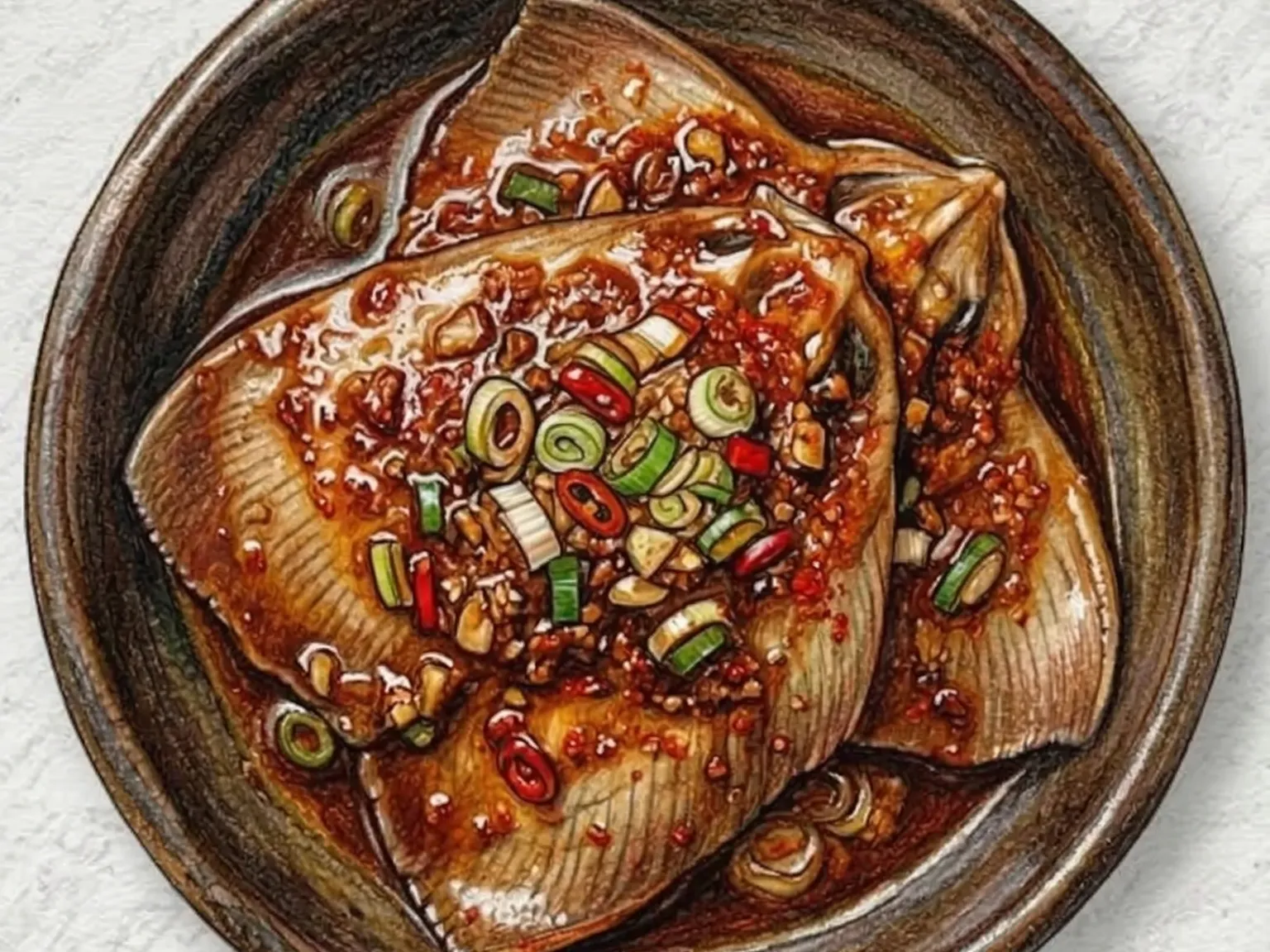
Korean Braised Skate Wing with Radish
Tender, cartilaginous skate wing braised low and slow with radish in a spicy soy-gochugaru sauce -- the bold flavors make this a perfect rice companion. Skate has a distinctive cartilaginous texture that turns pleasantly chewy when braised, and the bold seasoning of garlic, chili flakes, and cooking wine complements it well. The radish pieces soften and soak up the braising liquid, adding bulk and sweetness to each serving. Green onion garnish finishes the dish, and the remaining sauce is traditionally drizzled over rice.
Adjust Servings
Instructions
- 1
Rinse the skate thoroughly and cut into serving pieces.
- 2
Layer radish at the bottom of a pot and place the skate on top.
- 3
Combine soy sauce, chili flakes, garlic, wine, and water, then pour into the pot.
- 4
Braise on medium-low heat for 25 minutes, spooning sauce over the fish.
- 5
Add green onion and cook 3 more minutes for aroma.
As an Amazon Associate, we may earn from qualifying purchases.
Tips
Nutrition (per serving)
More Recipes

Korean Braised Pollock (Frozen Pollock with Radish in Spicy Sauce)
Dongtae-jjim is frozen pollock braised with Korean radish and bean sprouts in a sauce of gochugaru, soy sauce, garlic, and ginger. Using frozen rather than fresh pollock is traditional - the freezing-and-thawing process gives the flesh a firm, slightly spongy texture that holds up well in the spicy broth. Radish soaks up the chili-laced liquid and turns sweet against the heat, while bean sprouts contribute crunch and a clean, refreshing aftertaste. The sauce reduces to a shallow pool at the bottom, meant to be spooned over rice as a wintertime staple.

Korean Braised Hairtail Fish
Galchi-jjim is a Korean braised hairtail fish dish simmered with Korean radish in a spicy soy sauce and gochugaru broth. The hairtail's white, flaky flesh absorbs the bold seasoning while remaining tender throughout. Ginger juice is key to keeping the dish clean-tasting by cutting through any fishiness. The radish softens in the braising liquid and the remaining sauce is meant to be spooned over rice, making this a staple fish dish on Korean dinner tables.

Korean Braised Cod with Vegetables
Daegu-jjim is braised cod fillet cooked with Korean radish, onion, and green onion in a sauce of gochugaru, soy sauce, and garlic. The thick cod flesh absorbs the spiced broth while keeping its firm, flaky texture intact. Radish pieces soak up the cooking liquid and turn sweet against the chili heat, while cooking wine and garlic neutralize any fishiness. The dish finishes with just enough sauce clinging to the bottom of the pot to spoon over a bowl of rice.

Korean Spicy Braised Cod with Radish
Tender cod fillets braised in a spicy gochujang-soy sauce with daikon radish that soaks up every drop of flavor. Cod is a lean fish with a clean, neutral flavor, and the bold seasoning soaks into the flesh to add depth. Daikon radish cooks alongside the fish and absorbs the braising liquid, becoming just as flavorful. Onion melts down during cooking, contributing natural sweetness to the sauce. The flesh is soft and separates easily from the bone, making it approachable for all ages.

Korean Spicy Braised Pufferfish
Cleaned pufferfish fillets are steamed with bean sprouts and water dropwort in a spicy gochugaru and gochujang sauce. The pufferfish meat is lean with a firm, bouncy texture that holds up well under the bold chili seasoning. Bean sprouts add crunch and a refreshing counterpoint, while water dropwort contributes its distinctive herbal fragrance. Seasoned with soy sauce and garlic, this is a coastal Korean fish dish with considerable heat.

Korean Braised Mackerel in Spicy Sauce
Godeungeo-jorim is one of the most frequently cooked fish banchan in Korean homes, pairing mackerel's assertive flavor with a spicy braising sauce that demands steamed rice. Mackerel is cut into steaks and salted for ten minutes to draw out fishy odors, then arranged over thick radish slices that line the pot bottom. The radish serves dual duty: preventing the fish from sticking and releasing its natural sweetness into the braising liquid. A sauce of gochugaru, gochujang, soy sauce, garlic, ginger, and sugar is spooned over and the pot simmers covered for twenty minutes, during which the seasoning penetrates the flesh while the radish absorbs enough sauce to rival the fish itself. Green onion added in the final minutes lifts the heavy spice with a fresh sharpness.