Korean Grilled Garaetteok
Quick answer
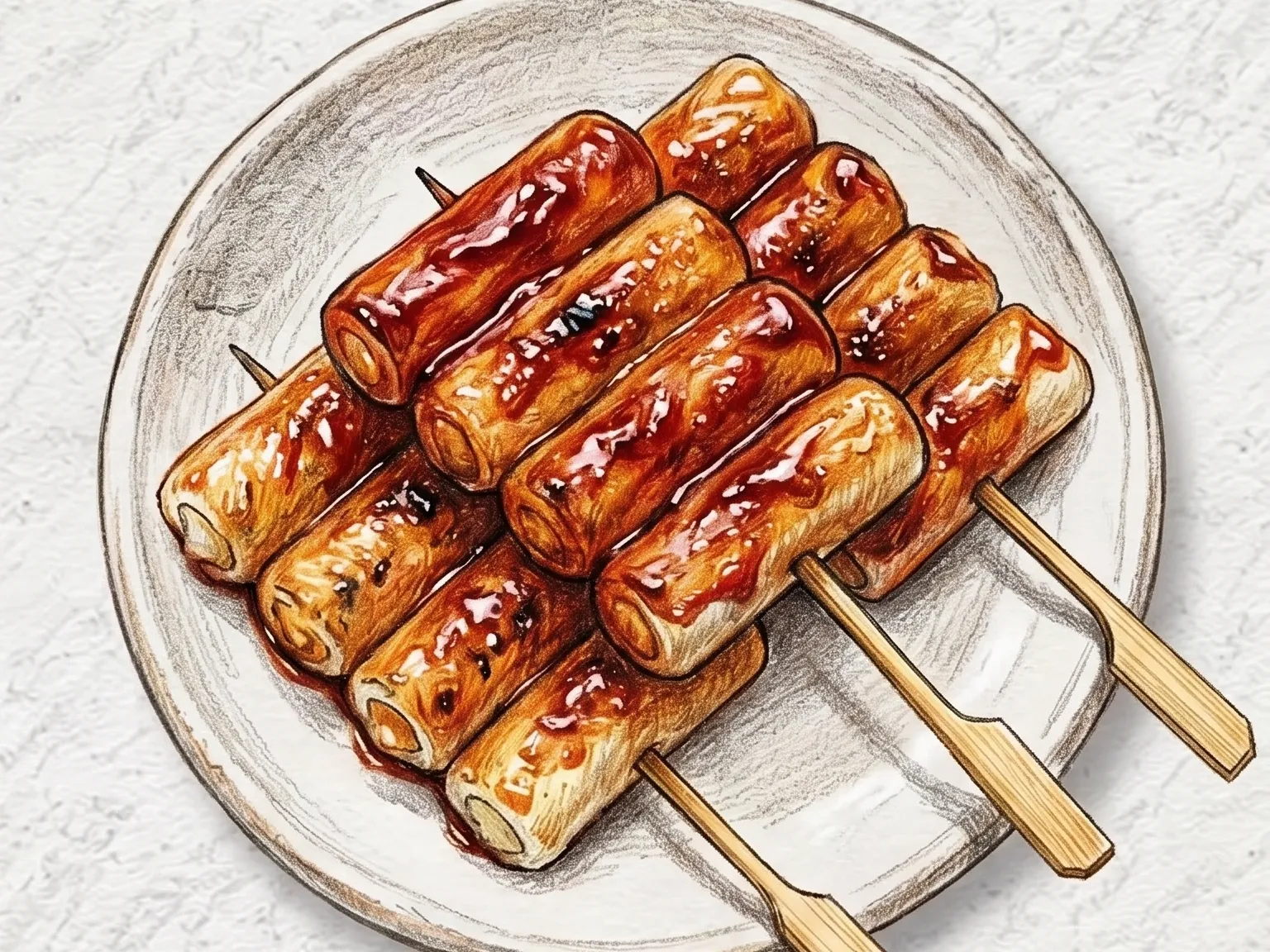
Garaetteok-gui cuts cylindrical rice cakes into eight-centimeter sticks, skewers them, and pan-grills while rotating for even browning before applying a glaze.
What makes this special
- A soy-gochujang-honey glaze sets into a thin, lacquered coat on these grilled cylindrical rice cakes.
- Soy-gochujang-honey glaze sets into a thin lacquered coat after grilling
- Outer crust firms up while inside softens more as it heats
Key ingredients
Core cooking flow
- 1 Cut 300 g garaetteok into even 8 cm pieces.
- 2 Thread the pieces onto skewers, or leave them loose if cooking directly in the pan.
- 3 Mix 1 tablespoon soy sauce, 1 tablespoon gochujang, 1 tablespoon honey, 0.5...
Garaetteok-gui cuts cylindrical rice cakes into eight-centimeter sticks, skewers them, and pan-grills while rotating for even browning before applying a glaze. The glaze combines soy sauce, gochujang, honey, minced garlic, and sesame oil, brushed on once the surface turns golden, then cooked one more minute on low heat so it sets into a thin, sticky coat rather than burning. Grilling drives moisture from the outer layer of the rice cake, forming a slightly firm shell, while the interior softens further from the retained heat -- the contrast between crisp outside and chewy inside is the defining quality of the preparation. Rice cakes that start out stiff benefit from a twenty-second microwave burst before grilling to ensure the center softens evenly throughout. Applying the glaze in two thin layers instead of one thick coat prevents it from running off the surface and gives a more even finish. Keep the heat low during the final stage to avoid scorching the sugars in the gochujang and honey.
Instructions
Read the steps as a cooking flow: prep, heat, seasoning, doneness control, and finish.
- 1Prep
Cut 300 g garaetteok into even 8 cm pieces.
If the rice cakes feel stiff, microwave them for 20 seconds first so the centers soften before they hit the pan.
- 2Heat
Thread the pieces onto skewers, or leave them loose if cooking directly in the pan.
Wipe away surface moisture so the oil does not splatter and the rice cakes brown instead of steaming.
- 3Season
Mix 1 tablespoon soy sauce, 1 tablespoon gochujang, 1 tablespoon honey, 0.5 teaspoon minced garlic, and 1 teaspoon sesame oil until smooth. Break up any thick gochujang clumps before brushing.
- 4Control
Heat 1 tablespoon cooking oil in a pan over medium heat.
Add the rice cakes and roll them often for 3 to 4 minutes, until the outside turns evenly golden and lightly firm.
- 5Season
Lower the heat to low and brush on one thin layer of sauce.
Do not overload the surface, because excess glaze runs onto the pan and burns before it can coat the rice cakes.
- 6Control
Brush on the remaining sauce in another thin layer, then roll the rice cakes over low heat for about 1 minute.
Remove them once the glaze looks glossy and set, before the honey scorches.
After the steps
Pick a recipe that fits this dish.
Continue with shared ingredients, meal pairings, or a similar method.
Recipes That Go Well With This
More Street food →Based on shared ingredients and meal pairing
Korean Grilled Rice Cake Skewers
Tteokkochi are pan-seared rice cake skewers glazed in a thick gochujang-based sauce that builds depth through a combination of ketchup, oligosaccharide syrup, soy sauce, and minced garlic simmered down until the sauce reduces and concentrates. The rice cakes are first seared in a thin layer of oil until a lightly crisp shell forms across the surface before any sauce is applied, creating a textural contrast between the outer crust and the soft, chewy interior that defines what a good tteokkochi should feel like. The ketchup introduces a mild tomato acidity that tempers and rounds the raw heat of the gochujang, while the syrup adds sweetness without the grainy texture of sugar. After the sauce is brushed on, rolling the skewers over low heat for another minute fuses the glaze to the rice cake surface so it adheres firmly and does not peel off as the skewers cool. Adjusting the ratio of ketchup to syrup shifts the balance between sweetness and acidity, making it straightforward to tailor the sauce to individual preference. Making the sauce in a larger batch and storing it separately saves time on repeat preparations.
Korean Sotteok Sotteok Skewers
Sotteok-sotteok is a Korean street snack of alternating mini sausages and cylinder rice cakes on a skewer, pan-grilled and coated in a sweet-spicy glaze of gochujang, ketchup, and oligosaccharide syrup. The rice cakes are soaked in warm water beforehand to soften them, ensuring they cook through on the pan and achieve maximum chewiness. Sausages are lightly scored to prevent splitting, and the skewers are rolled over medium heat until evenly browned. The glaze is tossed on quickly over low heat so it clings in a glossy layer, and the sauce gradually seeps into the rice cakes with each bite.
Watermelon Punch
Subak hwachae is a Korean summer punch that uses half its watermelon blended and strained into a smooth juice base, with the other half scooped into balls as garnish. Mixing the watermelon juice with milk creates a pink, creamy foundation, and lemon-lime soda is stirred in just before serving to preserve its fizz. Adding strawberries and blueberries introduces an acidic brightness and color contrast that watermelon alone lacks, and generous ice keeps the drink cold enough for the fruit aromas to stay sharp. Chilling the watermelon juice thoroughly before combining it with milk is essential to prevent the two liquids from separating. The layered colors of red watermelon, deep blueberries, and vivid strawberries in a single bowl make it as visually striking as it is refreshing, turning a straightforward summer drink into something worth presenting at the table.
Korean Grilled Jjondeugi (Sweet Spicy Glazed Wheat Cracker Snack)
Jjondeugi-gui is a nostalgic Korean street snack made by gently heating thin pressed-wheat sheets over low heat until they become pliable, then applying a sauce of gochujang, soy sauce, sugar, oligosaccharide syrup, minced garlic, and sesame oil before returning them to the heat. The warming process shifts the sheets from rigid to genuinely chewy, and the sugars in the sauce caramelize slowly against the surface, building a sticky, sweet-spicy glaze that concentrates with each pass. Because the marinade has a high sugar content, applying it in a single thick coat scorches the outside before the heat can work evenly through the sheet. The correct technique is to brush on a thin layer, grill briefly, then repeat two or three times until the glaze has depth and the interior is fully softened. The finished pieces are cut into bite-size sections with kitchen scissors and served immediately while still warm.
Serve with this
Korean Job's Tears Walnut Latte
Yulmu-hodu latte is a traditional Korean grain-based beverage prepared by combining job's tears and walnuts with milk to create a thick and consistent texture. The preparation begins by soaking the job's tears in water for a minimum of two hours. This extended soaking period is necessary to soften the grains thoroughly, ensuring they pulverize completely during the blending process to avoid a gritty or sandy mouthfeel. Once softened, the job's tears are dry-toasted along with the walnuts in a pan. This heat application serves to caramelize the starches within the grains, which effectively removes the scent of raw grain and replaces it with a concentrated, roasted aroma. After the toasted ingredients are blended with milk, the liquid is passed through a fine strainer to achieve a smooth and silky finish. Sweetness is added using honey, accompanied by a small amount of salt to highlight the deep profile of the roasted nuts. A light sprinkle of ground cinnamon is applied to the surface to provide a subtle spice that balances the grounded flavor of the grain base. For cold servings, it is important to dissolve the honey while the liquid is still warm to ensure it distributes thoroughly throughout the drink instead of settling at the bottom of the container. The resulting beverage offers a depth of flavor and a rounded profile that is far more prominent than what is found in mass-produced, packaged versions of similar grain drinks.
Korean Sweet Spicy Pollock Floss Stir-fry
Myeongyeopchae-bokkeum stir-fries finely shredded dried pollock floss in gochujang and oligosaccharide syrup until each fiber strand is evenly coated and moist. Myeongyeopchae is thinner and softer-fibered than hwangtaechae, the wider dried pollock strips, arriving in a dense cotton-like bundle that must be loosened strand by strand before cooking. Running your fingers along the grain separates the fibers cleanly, allowing the seasoning to penetrate evenly and preventing the finished banchan from clumping together in the mouth. A dry toast of thirty seconds in an oil-free pan drives off residual moisture and coaxes out a toasted fish aroma before gochujang, gochugaru, oligosaccharide syrup, soy sauce, and minced garlic go in over the lowest heat for a rapid coating. The fine fibers absorb the sauce almost immediately and turn pliant and glistening, but heat held too long draws the moisture back out, leaving them tough and stiff, so the entire stir-fry must be completed within two minutes. A finishing drizzle of sesame oil and a scatter of sesame seeds deepen the nutty aroma. The resulting banchan occupies a middle ground between the chewier, more aggressively seasoned hwangtaechae-muchim and the bolder jinmichae-bokkeum, its mild sweet-spicy profile approachable enough for children. The relatively dry finish means the seasoning does not bleed into adjacent items in a lunchbox, and stored in an airtight container in the refrigerator the flavor holds well for up to five days.
Korean Kimchi Bulgogi Udon
Kimchi bulgogi udon is a Korean stir-fried noodle dish that brings together the sharp acidity of well-fermented kimchi and the sweet, savory depth of thinly sliced bulgogi beef, all coating thick, round udon strands. The beef is seared quickly over high heat to develop browning on the surface before onion and kimchi join the pan and cook until nearly all their moisture evaporates, concentrating both flavor and color. A sauce of soy sauce, gochujang, and sugar goes in next, followed by briefly blanched udon noodles that get tossed on maximum heat for about one minute so every strand absorbs the sauce while retaining a firm bite. The thick cross-section of udon holds bold, clingy sauces better than thinner noodles and creates a satisfying, filling meal without any broth. When kimchi is especially sour, a small addition of sugar or a quick rinse of the kimchi before cooking brings the acidity back into proportion. Finishing with sliced scallion and toasted sesame seeds adds color and a nutty lift that completes the dish.
Similar recipes
Korean Oil Tteokbokki (Dry-Stir-Fried Rice Cakes in Chili Soy Glaze)
Gireum-tteokbokki is a dry-style tteokbokki where rice cakes are stir-fried in oil and coated with a concentrated paste of gochugaru, soy sauce, sugar, and garlic - no broth involved. Blooming the chili flakes briefly in oil draws out their nutty, toasted aroma rather than raw heat, and the soy sauce and sugar build layered sweetness and umami on top of that base. Without liquid, the seasoning clings tightly to each rice cake's surface. The key technique is restraint with stirring: letting each rice cake sit undisturbed long enough to develop a lightly crisped exterior while the inside stays chewy creates a dual texture that broth-based versions cannot replicate. Green onion and sesame seeds added at the end provide fresh fragrance and textural contrast against the rich coating. The seasoning should be applied generously so the flavors penetrate past the surface rather than sitting only on the outside. Believed to have originated in school-front snack shops in 1970s and 1980s Seoul, gireum-tteokbokki is milder than gochujang versions and accessible to those who find the spicier style too intense.
Korean Tteok Kkochi Yangnyeom Gui (Grilled Rice Cake Skewers)
Cylinder rice cakes are threaded onto skewers, lightly brushed with oil, and rolled on a grill pan over medium heat for six to seven minutes until the exterior turns golden. A sauce of gochujang, ketchup, oligosaccharide syrup, soy sauce, and minced garlic is applied in two rounds, building a glossy red glaze that clings to the surface. The outer layer develops a slight crispness while the inside remains stretchy and dense - that textural duality is the hallmark of this dish. A light dusting of cheese powder turns it into a kid-friendly snack, and it stands as one of the most iconic items in Korean street-food culture.
Grilled Sliced Rice Cake (Pan-Fried Rice Cake with Soy Honey Glaze)
Jeolpyeon-gui is a Korean grilled rice cake snack made by pan-frying flat rice cake slices in sesame oil over medium-low heat until golden on both sides, then glazing them in a sauce of soy sauce, honey, sugar, and water over low heat. Searing the rice cakes in sesame oil before adding the glaze creates a thin, crisped surface layer that performs two functions at once: it keeps the interior from losing its chewy, dense character and creates enough texture for the glaze to cling to rather than slide off. Once the glaze goes in, the heat must drop immediately to low -- the sugar content is high enough to burn in seconds if left on medium heat. The entire coating step takes only two to three minutes of flipping the pieces until the sauce reduces into a lacquered shell. Soy sauce delivers a salty, savory backbone, honey brings a weighted sweetness that granulated sugar alone would flatten, and together they form a glaze that tastes more complex than the ingredient list suggests. Toasted sesame seeds and pine nuts scattered over the finished pieces add a nutty fragrance that plays off the soy-based umami below. Leftovers reheat well in a dry pan and regain most of their crispness.