Korean Butter-Grilled Scallops
Drinks Medium

Korean Butter-Grilled Scallops

Quick answer

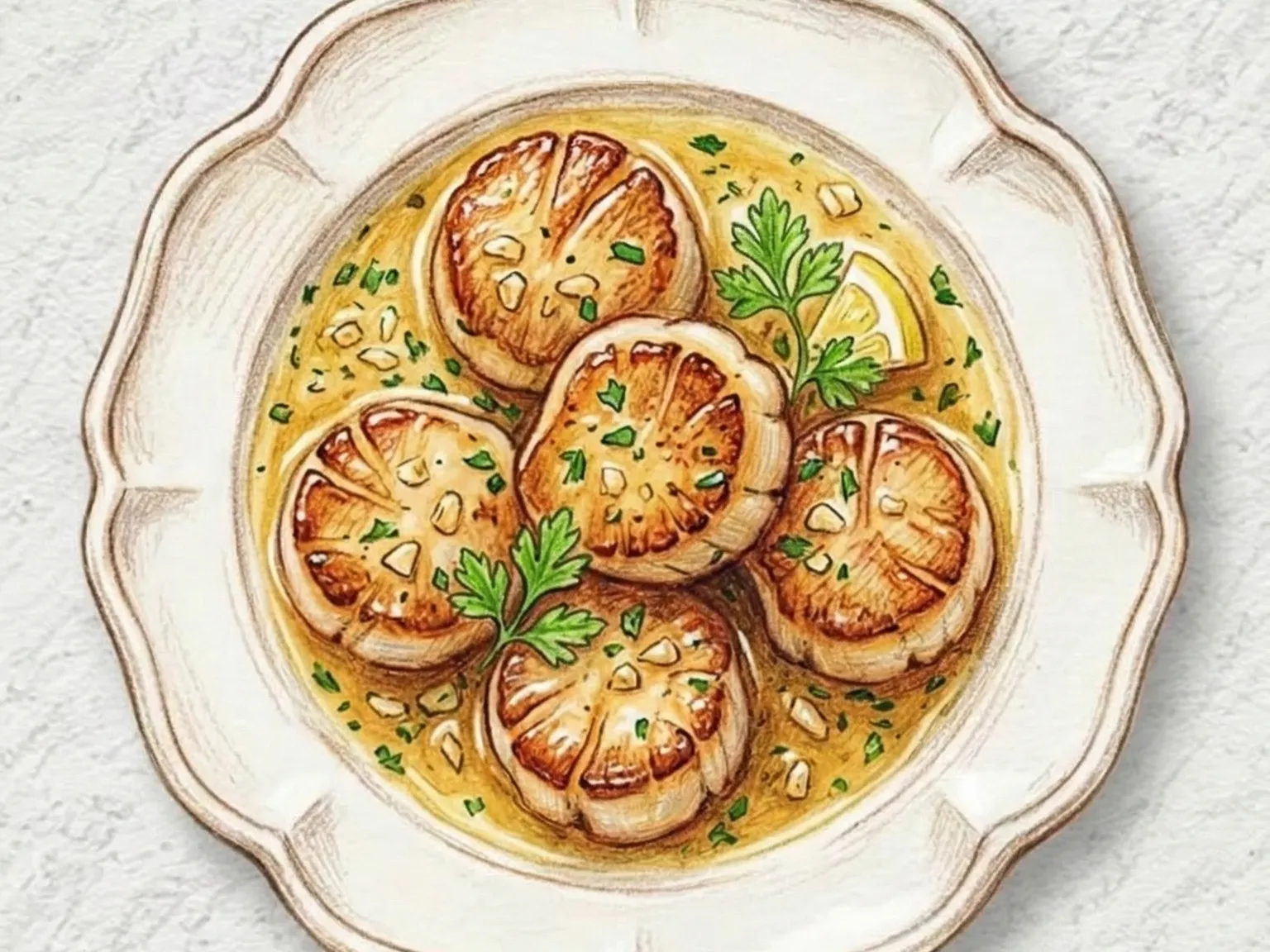
Garibi butter-gui sears fresh scallops in garlic butter until each side develops a deep golden-brown crust, then finishes with lemon juice and parsley to balance the richness.

What makes this special

  • Patting fresh scallops dry ensures a deep golden-brown caramelized sear in this buttered dish.
  • Thoroughly patting scallops dry is the only way to get caramelized sear marks
  • 1-2 min per side on high heat keeps the center translucent and tender
Total time
20 min
Level
Medium
Servings
2 servings
Ingredients
7
Calories
225 kcal
Protein
26 g

Key ingredients

scallop meatbutterminced garlicsaltblack pepper

Core cooking flow

  1. 1 Pat 320 g of scallop meat several times with paper towels until the surface feels dry.
  2. 2 Sprinkle 0.5 tsp salt and 0.25 tsp black pepper evenly over both sides.
  3. 3 Heat the pan well over high heat, then melt about 12 g of the butter.

Garibi butter-gui sears fresh scallops in garlic butter until each side develops a deep golden-brown crust, then finishes with lemon juice and parsley to balance the richness. Removing every trace of surface moisture with paper towels before seasoning is the single most important step -- water on the surface of the scallop causes it to steam rather than sear, and no caramelized crust will form until that moisture has evaporated. Each side cooks for only one to two minutes at the highest heat the pan can sustain, leaving the center just barely opaque and the texture tender rather than rubbery. After flipping, butter and minced garlic are added directly to the hot pan and spooned continuously over the scallops so the aroma infuses the surface. A squeeze of lemon and a scatter of chopped parsley added just before removing from heat layers acidity and freshness over the butter richness. Simple to prepare and fast to cook, this dish appears regularly at home gatherings in Korea as a crowd-pleasing appetizer.

Prep 12min Cook 8min 2 servings

Instructions

Read the steps as a cooking flow: prep, heat, seasoning, doneness control, and finish.

6 steps
  1. 1
    Season

    Pat 320 g of scallop meat several times with paper towels until the surface feels dry.

    If any moisture still beads on the scallops, press them again before seasoning so they sear instead of steam.

  2. 2
    Season

    Sprinkle 0.5 tsp salt and 0.25 tsp black pepper evenly over both sides.

    Season just before cooking so the scallops do not sit long enough to draw out more liquid.

  3. 3
    Control

    Heat the pan well over high heat, then melt about 12 g of the butter.

    When the butter foams, place the scallops in one layer with space between them so the pan stays hot.

  4. 4
    Step

    Sear the first side without moving the scallops for 1 to 2 minutes.

    They are ready to flip when the edges turn opaque and the underside has a deep brown crust.

  5. 5
    Control

    Flip the scallops and sear the second side over high heat for only 1 to 2 minutes.

    Stop while the centers are still slightly translucent, because extra cooking quickly makes the texture rubbery.

  6. 6
    Finish

    Add the remaining butter and 1 tbsp minced garlic to an open spot in the pan.

    Once fragrant, spoon the garlic butter over the scallops, finish with 1 tsp lemon juice and 1 tbsp parsley, and serve immediately.

After the steps

Pick a recipe that fits this dish.

Continue with shared ingredients, meal pairings, or a similar method.

Recipes That Go Well With This

More Drinks →

Based on shared ingredients and meal pairing

Korean Gapojingeo Beoteo Maneul Gui (Butter Garlic Cuttlefish Grill)
Shared ingredient: butter Grilled

Korean Gapojingeo Beoteo Maneul Gui (Butter Garlic Cuttlefish Grill)

Gapojingeo beoteo-maneul-gui is butter-garlic grilled cuttlefish in which the thick body of the cuttlefish is scored in a crosshatch pattern and cooked in a pan with foaming butter and minced garlic. Cuttlefish flesh is substantially thicker and denser than regular squid, which means scoring is not optional for even cooking. Without it, the outside would overcook before heat reaches the center. The cuts also create channels that the melted butter and garlic flow into as the cuttlefish sears, infusing each section with concentrated fat and aromatics rather than just coating the surface. The timing of when to add the cuttlefish matters. The butter should be on medium heat and just beginning to foam at the edges when the cuttlefish goes in. At that temperature, the garlic releases its fragrance into the oil without burning, and the cuttlefish develops a golden crust before it has time to toughen. Two minutes per side is typically enough. The crosshatch pattern spreads open as the flesh cooks, and the surface takes on a lightly charred color that signals the Maillard reaction has done its work. Leaving it longer makes the flesh rubbery. A squeeze of lemon juice at the end cuts the richness of the butter and lifts the whole dish with a clean, acidic finish.

Kijogae Gwanja Butter-Grilled Scallops
Shared ingredient: butter Grilled

Kijogae Gwanja Butter-Grilled Scallops

Kijogae gwanja-beoteo-gui is a Korean dish of pen shell scallops seared quickly on a hot skillet and glazed with a garlic-lemon butter sauce. The scallops are patted dry, and thick pieces are halved. A sauce is prepared by melting unsalted butter with minced garlic, lemon juice, salt, and pepper. The scallops are coated in olive oil and seared on a preheated pan over medium-high heat. A hot pan is critical, as insufficient heat causes them to lose moisture and turn soggy. They are seared for ninety seconds on the first side, flipped for another minute, and brushed with the butter sauce. The total cooking time must stay under four minutes to preserve a springy, tender texture. Chopped parsley is added at the finish, and the scallops are served immediately.

Gotgam Cream Cheese Roll (Dried Persimmon Rolls)
Serve together Desserts

Gotgam Cream Cheese Roll (Dried Persimmon Rolls)

Gotgam cream cheese roll is a no-cook Korean dessert that requires nothing more than a knife, a bowl, and a refrigerator. Dried persimmons are slit open and flattened into thin sheets, each one acting as the outer wrapper. The filling is cream cheese mixed with honey and fresh lemon juice to balance its natural richness with acidity, and finely chopped walnuts are folded in throughout to add a crunchy, nutty element to every bite. The filling is spread across the opened persimmon, which is then rolled tightly and wrapped in plastic wrap. Twenty minutes in the refrigerator firms the roll enough to slice cleanly. Dipping the knife in warm water and wiping it dry before each cut produces the smoothest cross-sections. The finished slices reveal clearly defined layers: the chewy, caramel-sweet dried persimmon on the outside, the tangy cream cheese in the middle, and flecks of walnut distributed throughout. The combination makes it a natural pairing with wine or a polished addition to a traditional holiday table.

Korean Butter-Grilled Abalone
Similar recipe Grilled

Korean Butter-Grilled Abalone

Scored abalone is seared quickly in garlic butter, with the cooking time kept to two or three minutes so the flesh stays springy and firm rather than contracting into a tough, rubbery state. Minced garlic is added to the melted butter first, allowing its fragrance to bloom before the abalone goes in, so the shellfish absorbs the full depth of the butter. A small addition of soy sauce to the pan deepens the umami without masking the delicate sweetness of the abalone itself. For an extra layer of oceanic richness, the abalone liver can be minced and stirred directly into the butter sauce as it finishes; the liver melts in, contributing a briny, mineral depth that amplifies the sea flavor of the dish. The finished abalone is best served in the cleaned shells, which both keep the butter sauce pooled around the meat and make for an appealing natural presentation. A light squeeze of lemon juice just before serving cuts through the richness of the butter and brings out the natural sweetness of the shellfish.

Serve with this

Korean Curry Flavored Tempura
Street food Easy

Korean Curry Flavored Tempura

Curry twigim mixes curry powder directly into the frying batter, giving it a vivid golden color and distributing spice throughout the coating before any frying begins. Sweet potato, carrot, and onion slices are dipped in this batter and deep-fried at 170 degrees Celsius. The key technical requirement is ice-cold water in the batter: cold temperature inhibits gluten development, which keeps the coating thin and produces a shattering, light crunch when bitten. Using warm or room-temperature water causes the gluten strands to develop fully, resulting in a thick, chewy crust that absorbs oil rather than repelling it. Because the curry powder is built into the batter itself, every piece carries turmeric, cumin, and coriander flavor in each bite without needing a dipping sauce. Compared to standard Korean vegetable tempura, the curry spices add an aromatic warmth and complexity to the sweet vegetables that distinguishes it clearly. The texture is best immediately out of the oil while the coating is still rigid.

🍺 Bar Snacks 🧒 Kid-Friendly
Prep 15min Cook 15min 4 servings
Korean Spicy Stir-Fried Anchovies
Side dishes Easy

Korean Spicy Stir-Fried Anchovies

Spicy stir-fried anchovies (maeun myeolchi-bokkeum) toss medium-sized dried anchovies in a gochujang-gochugaru glaze, occupying the opposite end of the flavor spectrum from the sweet jiri-myeolchi version and targeting adult palates. Medium anchovies are larger and thicker than the tiny variety, requiring individual head-and-gut removal to eliminate bitterness - a tedious prep step that nonetheless determines the dish's clean finish. After dry-toasting to drive off moisture, the anchovies simmer in a sauce of gochujang, gochugaru, soy sauce, oligosaccharide, and minced garlic until each piece is coated in a rust-colored glaze. The gochujang's fermented heat combines with gochugaru's vivid red to create both flavor depth and visual appeal. The larger anchovy size delivers a satisfying crunch that lingers alongside a lasting savory umami. Heat intensity is adjustable via gochugaru quantity - adding chopped cheongyang chili ratchets it up another notch. This banchan doubles as a soju drinking snack, appearing as frequently on bar tables as on dinner tables.

🍺 Bar Snacks 🏠 Everyday
Prep 5min Cook 10min 4 servings
Injeolmi Scone (Soybean Powder & Rice Cake Scone)
Baking Easy

Injeolmi Scone (Soybean Powder & Rice Cake Scone)

This scone folds roasted soybean powder and small pieces of glutinous rice cake into a classic British scone dough, capturing the flavor of Korean injeolmi in a handheld baked form. Soybean powder mixed into the dough lends the crumb a warm, toasted nuttiness that plain flour alone cannot produce, and the tteok pieces soften and melt in the oven, leaving behind chewy, stretchy pockets scattered throughout the crumb. Cold butter cut into small pieces and worked into the dry ingredients without fully melting is what allows the scone to develop distinct flaky layers that crack at the surface while the interior stays tender and moist. Minimal mixing is the central technique: working the dough only until the ingredients just come together prevents gluten development that would produce a tough, dense result instead of the desired crumbly tenderness. A drizzle of honey or a small bowl of sweetened condensed milk served alongside echoes the traditional way injeolmi is eaten and reinforces the sweet-nutty pairing that defines the dish. Warm green tea or pu-erh makes a natural companion for the afternoon. Cutting the tteok into pieces no larger than one centimeter ensures they melt evenly through the bake rather than leaving undercooked chunks in the center.

🧒 Kid-Friendly 🎉 Special Occasion
Prep 20min Cook 22min 4 servings

Similar recipes

Korean Garlic-Grilled Octopus
Drinks Medium

Korean Garlic-Grilled Octopus

Muneo-garlic-gui is a Korean seafood drinking snack made by slicing pre-boiled octopus into bite-size pieces, seasoning them with salt, pepper, and red chili flakes, then searing them hard in olive oil with minced garlic over high heat. The garlic goes in first at low heat to bloom slowly in the oil, then the flame is raised and the octopus is added so the exterior chars rapidly while the interior stays springy and resilient. The olive oil coats the surface at high temperature and locks in moisture, producing a scorched crust outside and a genuinely tender bite within. A squeeze of fresh lemon juice at the finish cuts through the oil and brings the natural brininess of the octopus into sharp relief. The octopus should go straight to the table after cooking, as the texture toughens quickly, and thorough pan preheating is essential to getting the sear right.

🍺 Bar Snacks 🥗 Light & Healthy
Prep 15min Cook 10min 2 servings
Korean Butter-Grilled Squid Beaks
Drinks Medium

Korean Butter-Grilled Squid Beaks

Ojingeo-ip-butter-gui is a Korean bar snack made by searing squid beaks in melted butter with minced garlic over high heat. Thoroughly patting the squid beaks dry with paper towels before they hit the pan is a non-negotiable step: any residual moisture causes violent splattering and prevents the butter from forming a direct, fragrant crust on the surface. Three minutes of rapid stir-frying over high heat keeps the texture springy and chewy rather than tough and rubbery, which is the line squid crosses the moment heat is applied too long. Adding soy sauce and cooking wine creates a savory glaze as the liquid rapidly evaporates and concentrates against the hot surface. A finish of red chili flakes and cracked black pepper introduces a clean, warm heat that lingers behind the buttery garlic aroma, rounding out every bite. The dish comes together in under five minutes, which makes it one of the most practical snacks to serve alongside drinks.

🍺 Bar Snacks
Prep 12min Cook 10min 2 servings
Korean Grilled Filefish Jerky
Drinks Easy

Korean Grilled Filefish Jerky

Jjipo-gui is a Korean bar snack made by pan-grilling dried filefish jerky in melted butter until golden on both sides. Jjipo - dried and pressed filefish - has a dense, chewy texture and a concentrated umami that intensifies the longer you chew, which is what makes it so effective as drinking food alongside beer or soju. Grilling it in butter rather than oil adds a rich, nutty fat quality that complements the inherent savoriness of the dried fish in a way that neutral oil cannot. A thin glaze of soy sauce and oligosaccharide syrup applied near the end of cooking transforms the surface into a glossy, sweet-savory crust that caramelizes without burning, and a pinch of red chili flakes dusted over the top adds a mild heat that persists through the finish. The key to getting the glaze right is temperature control - medium-low heat allows the sugars to caramelize gradually and evenly without scorching, while too high a flame will burn the coating and turn it bitter before the fish has fully grilled through. Too low, and the moisture simply steams off without the glaze setting properly. Cutting the grilled jjipo into long strips with kitchen scissors before serving preserves the chewy pull of the jerky and makes it easier to share and eat in pieces without tearing.

🍺 Bar Snacks ⚡ Quick
Prep 5min Cook 8min 2 servings

Tips

Moisture causes steaming instead of searing, reducing texture.
Avoid overcooking; short searing keeps scallops tender.

Nutrition (per serving)

Calories
225
kcal
Protein
26
g
Carbs
4
g
Fat
12
g