Korean Grilled Scallops (Butter Garlic Shell-On Scallop Grill)

Korean Grilled Scallops (Butter Garlic Shell-On Scallop Grill)

Quick answer

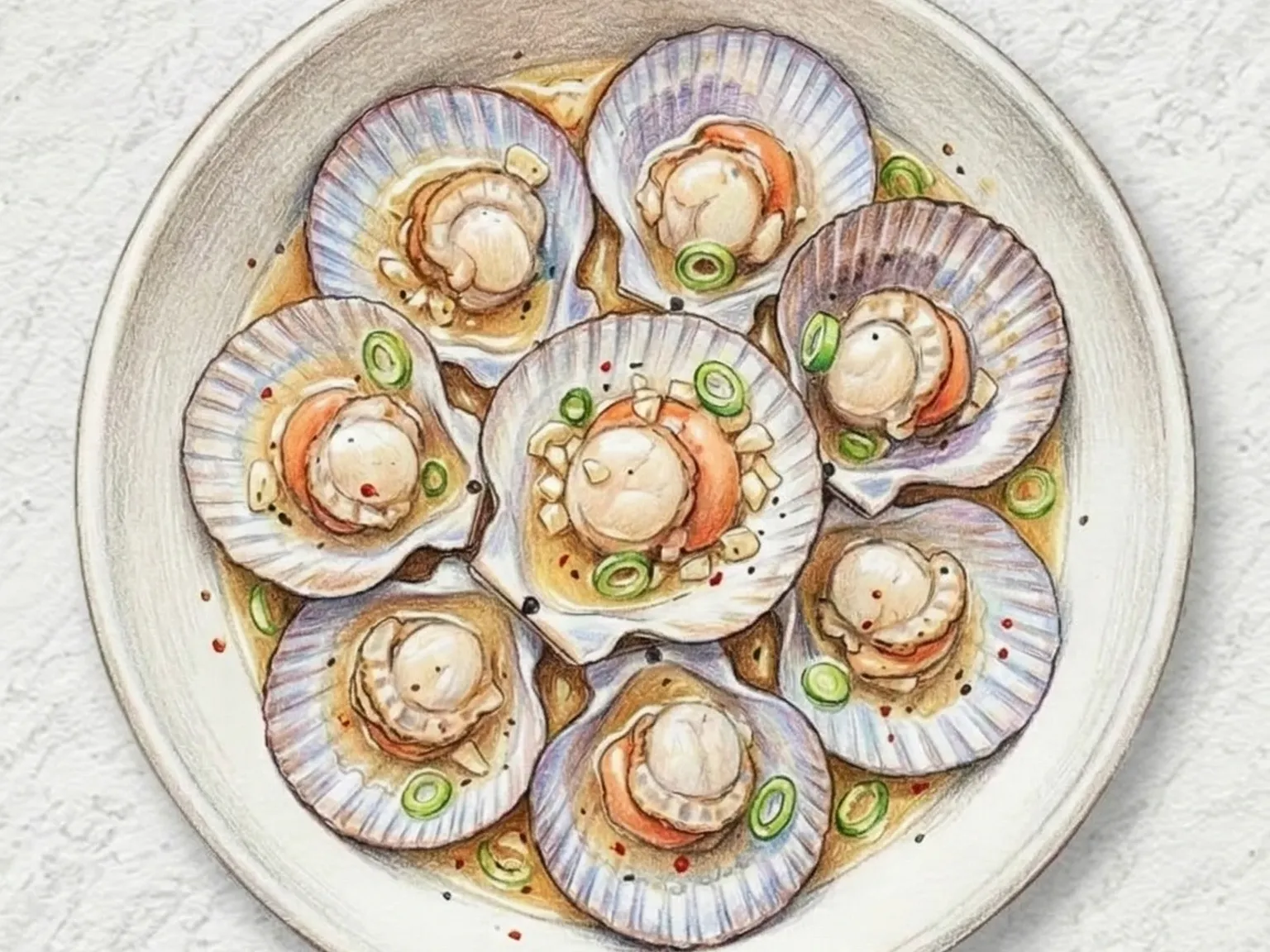
Garibi-gui is a Korean grilled scallop dish where shell-on scallops are placed directly on the grill until they pop open, then topped with butter and minced garlic that s...

What makes this special

  • Garibi-gui highlights shell-on scallops grilled with sizzling minced garlic and melted butter.
  • Shell-on grill; butter and garlic added the moment shells open
  • Cheese covering only half the scallop preserves its natural sweetness
Total time
25 min
Level
Easy
Servings
2 servings
Ingredients
6
Calories
300 kcal
Protein
24 g

Key ingredients

scallops in shellbutterminced garlicmozzarella cheesesalt

Core cooking flow

  1. 1 Scrub 10 shell-on scallops under running water, working the brush into the grooves and hinge areas.
  2. 2 Heat a grill or heavy pan over medium-high heat, then set the scallops shell-side down.
  3. 3 When the scallops open, carefully remove only the top shells.

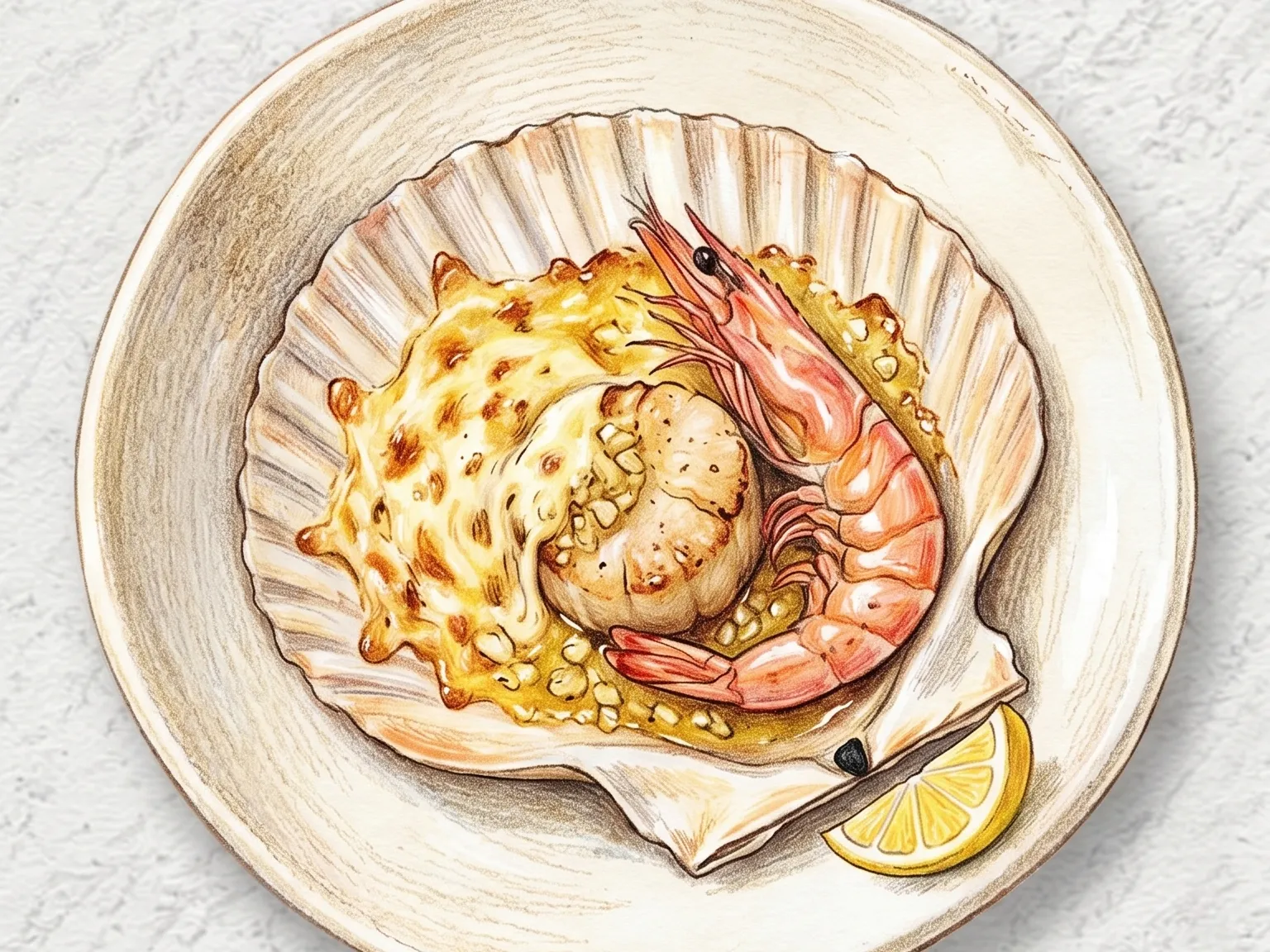
Garibi-gui is a Korean grilled scallop dish where shell-on scallops are placed directly on the grill until they pop open, then topped with butter and minced garlic that sizzle and melt into the adductor muscle. The scallop's deep natural sweetness melds with the richness of melted butter and the sharp warmth of garlic, a combination that produces a layered flavor far more compelling than the ingredient count suggests. A cap of mozzarella cheese added for the final two to three minutes creates a stretchy, golden layer over the plump flesh, but restraint is key: covering only about half the scallop prevents the cheese from overwhelming the clean marine sweetness beneath it. Over charcoal, the shell acts as a natural vessel that channels smoky heat directly into the meat, adding a dimension that a gas burner or stovetop simply cannot replicate. A squeeze of fresh lemon juice just before serving cuts through the butter's richness and lifts the brine. Placing a single prawn alongside the scallop for the final minutes of cooking doubles the seafood sweetness and makes the dish even more compelling as an anju, the Korean term for food eaten alongside alcohol.

Prep 15min Cook 10min 2 servings
Recipes by ingredient → butter garlic

Instructions

Read the steps as a cooking flow: prep, heat, seasoning, doneness control, and finish.

6 steps
  1. 1
    Step

    Scrub 10 shell-on scallops under running water, working the brush into the grooves and hinge areas.

    Rinse several times, because trapped sand will loosen into the shell juices and create a gritty bite.

  2. 2
    Control

    Heat a grill or heavy pan over medium-high heat, then set the scallops shell-side down.

    Do not move them for 3-4 minutes, and wait until the shells open and liquid gathers inside.

  3. 3
    Step

    When the scallops open, carefully remove only the top shells.

    Keep the juices around the adductor muscle in the bottom shells, and do not force open any scallop that stays tightly closed.

  4. 4
    Control

    Place about 2 g butter and about 0.1 tablespoon minced garlic on each adductor muscle.

    Continue cooking over medium heat for 1-2 minutes, until the butter sizzles and spreads through the shell juices.

  5. 5
    Control

    Divide 60 g mozzarella over the scallops, covering only about half of each adductor surface.

    Grill 2-3 more minutes until melted, then lower the heat if the shell juices reduce too quickly.

  6. 6
    Finish

    Sprinkle the scallops lightly with 0.3 teaspoon salt and 0.2 teaspoon black pepper.

    Serve as soon as the butter bubbles and the flesh feels plump, adding lemon juice just before eating if using it.

After the steps

Pick a recipe that fits this dish.

Continue with shared ingredients, meal pairings, or a similar method.

Recipes That Go Well With This

More Grilled →

Based on shared ingredients and meal pairing

Korean Steamed Scallops
Shared ingredient: scallops Steamed

Korean Steamed Scallops

Garibi-jjim is a Korean steamed scallop dish that depends as much on timing as on seasoning. The scallops are placed in their shells, covered, and steamed with rice wine, garlic, and butter. Rice wine vapor penetrates the flesh as it cooks, stripping away the oceanic sharpness while the shells trap the released juices underneath. Pulling the scallops off heat before they contract fully is the key move - left too long, they turn rubbery and lose their natural sweetness. Butter melts into the pooled juices inside each shell, forming a warm, savory sauce without any extra work. A small pour of soy sauce sharpens the umami, and thinly sliced green onion laid over the top cuts through the richness with a fresh note. The entire preparation takes under fifteen minutes, which makes this a practical choice for an impromptu drinking spread or as a starter when a more elaborate main follows.

Kijogae Gwanja Butter-Grilled Scallops
Shared ingredient: butter Grilled

Kijogae Gwanja Butter-Grilled Scallops

Kijogae gwanja-beoteo-gui is a Korean dish of pen shell scallops seared quickly on a hot skillet and glazed with a garlic-lemon butter sauce. The scallops are patted dry, and thick pieces are halved. A sauce is prepared by melting unsalted butter with minced garlic, lemon juice, salt, and pepper. The scallops are coated in olive oil and seared on a preheated pan over medium-high heat. A hot pan is critical, as insufficient heat causes them to lose moisture and turn soggy. They are seared for ninety seconds on the first side, flipped for another minute, and brushed with the butter sauce. The total cooking time must stay under four minutes to preserve a springy, tender texture. Chopped parsley is added at the finish, and the scallops are served immediately.

Korean Spicy Stir-Fried Anchovies
Serve together Side dishes

Korean Spicy Stir-Fried Anchovies

Spicy stir-fried anchovies (maeun myeolchi-bokkeum) toss medium-sized dried anchovies in a gochujang-gochugaru glaze, occupying the opposite end of the flavor spectrum from the sweet jiri-myeolchi version and targeting adult palates. Medium anchovies are larger and thicker than the tiny variety, requiring individual head-and-gut removal to eliminate bitterness - a tedious prep step that nonetheless determines the dish's clean finish. After dry-toasting to drive off moisture, the anchovies simmer in a sauce of gochujang, gochugaru, soy sauce, oligosaccharide, and minced garlic until each piece is coated in a rust-colored glaze. The gochujang's fermented heat combines with gochugaru's vivid red to create both flavor depth and visual appeal. The larger anchovy size delivers a satisfying crunch that lingers alongside a lasting savory umami. Heat intensity is adjustable via gochugaru quantity - adding chopped cheongyang chili ratchets it up another notch. This banchan doubles as a soju drinking snack, appearing as frequently on bar tables as on dinner tables.

Korean Mixed Grilled Seafood
Similar recipe Grilled

Korean Mixed Grilled Seafood

Haemul-gui modeum is a Korean mixed grilled seafood platter where shrimp, squid, Manila clams, and scallops are lightly dressed in olive oil, salt, and black pepper, then grilled at different intervals to account for each ingredient's cook time. Shrimp and scallops need only two to three minutes, squid takes three to four, and clams stay on the grill just until their shells pop open-staggering the timing ensures everything finishes together at peak texture. Overcooking any element by even a minute turns it rubbery, so close attention is the most important ingredient in this dish. A squeeze of fresh lemon juice over the entire platter at the table brightens the natural sweetness of each shellfish and ties the assortment into a cohesive, clean-tasting spread.

Serve with this

Korean Scallion Shrimp Fried Rice
Rice Easy

Korean Scallion Shrimp Fried Rice

This scallion shrimp fried rice stir-fries plump shrimp and generous amounts of green onion over high heat for a clean, aromatic bowl. The shrimp go into the wok first, searing until the edges turn golden and leave behind a savory fond. Chopped scallions follow, releasing a sharp, oniony fragrance that cuts through the richness. Day-old rice is added and tossed rapidly with soy sauce and oyster sauce, breaking up clumps until every grain is individually coated. Beaten egg stirred in at the end wraps the rice in a soft, silky layer. Despite the short ingredient list, the combination of briny shrimp and pungent scallion delivers a depth of flavor that keeps this dish in regular weeknight rotation.

🏠 Everyday ⚡ Quick
Prep 12min Cook 10min 2 servings
Chicken Mu (Korean Fried Chicken Radish Pickle)
Kimchi Easy

Chicken Mu (Korean Fried Chicken Radish Pickle)

The crunchy, sweet-sour radish pickle served with every order of Korean fried chicken - now easy to make at home in under 15 minutes. Cubed radish is submerged in a cooled brine of vinegar, sugar, salt, and whole black peppercorns. Using fully cooled brine rather than hot is critical for maintaining the radish's firm, snapping crunch. Ready to eat after one day of refrigeration, its bright acidity cleanses the palate between bites of crispy chicken. Stored in a glass jar, this pickle keeps for over a week.

⚡ Quick 🏠 Everyday
Prep 10min Cook 5min 4 servings
Ojingeo-muguk (Korean Squid Radish Soup)
Soups Easy

Ojingeo-muguk (Korean Squid Radish Soup)

Ojingeo-muguk is a clear Korean soup that pairs squid and radish in a gently sweet, clean-tasting broth built without any chili or strong seasoning. Radish is added to cold water from the start and simmered for at least eight minutes, during which the vegetable slowly releases a natural sweetness that forms the flavor foundation of the soup. Squid is cleaned, sliced into rings, and added only after the radish has softened, and the timing here is critical: five minutes in the hot broth is enough for the flesh to turn fully opaque and pleasantly firm, but even a minute or two beyond that causes the proteins to tighten and the rings to turn rubbery and tough. Soup soy sauce seasons the broth without darkening it, and minced garlic provides depth without heat. Sliced green onion stirred in at the end neutralizes any residual seafood aroma and leaves the broth tasting bright and clean. The simplicity of the combination is the point: the radish's sweetness and the squid's umami reinforce each other in a broth that is light in body but surprisingly satisfying.

🏠 Everyday 🍺 Bar Snacks
Prep 15min Cook 20min 4 servings

Similar recipes

Korean Grilled Pork Belly
Grilled Easy

Korean Grilled Pork Belly

Samgyeopsal-gui is Korean grilled pork belly, the country's most iconic barbecue dish, where 400 grams of pork belly is cut into ten-centimeter lengths and grilled on a preheated pan or griddle over high heat without added oil-the alternating layers of fat and lean render enough grease to cook the meat in. Flipping only once, after four to five minutes per side, is critical because frequent turning lets juices escape before the fat has properly rendered and crisped. Once golden and cooked through, the meat is cut into bite-sized pieces with scissors, and thinly sliced garlic is toasted on the same surface until lightly browned. Each piece is eaten wrapped in lettuce with ssamjang, grilled garlic, and green onion, and an optional side of green onion oil dip-sesame oil mixed with salt and chopped scallion-adds nutty depth and a sharp allium kick on top of the pork fat's richness.

🍺 Bar Snacks ⚡ Quick
Prep 10min Cook 20min 2 servings
Korean Grilled Clams (Butter Garlic Mixed Shellfish Grill)
Grilled Medium

Korean Grilled Clams (Butter Garlic Mixed Shellfish Grill)

Mixed clams are submerged in salt water for at least one hour so they expel any sand and grit naturally, then placed shell-side down on a hot grill or pan. As the shells gradually crack open from the heat, a knob of butter, minced garlic, and a splash of rice wine are dropped into each opened shell for one to two more minutes of cooking. The briny liquid that the clams release mingles with the melting butter, building a concentrated natural sauce inside every shell without any additional stock or seasoning needed. Because clams vary in size, they open at different times, so pulling each one as soon as it opens rather than waiting for the whole batch prevents overcooking. Any clam that stays firmly shut after the others have opened should be discarded as unsafe. Chopped fresh parsley scattered over the finished clams cuts through any residual fishiness with a clean herbal note.

🍺 Bar Snacks 🏠 Everyday
Prep 25min Cook 12min 2 servings
Korean Butter-Grilled Scallops
Drinks Medium

Korean Butter-Grilled Scallops

Garibi butter-gui sears fresh scallops in garlic butter until each side develops a deep golden-brown crust, then finishes with lemon juice and parsley to balance the richness. Removing every trace of surface moisture with paper towels before seasoning is the single most important step -- water on the surface of the scallop causes it to steam rather than sear, and no caramelized crust will form until that moisture has evaporated. Each side cooks for only one to two minutes at the highest heat the pan can sustain, leaving the center just barely opaque and the texture tender rather than rubbery. After flipping, butter and minced garlic are added directly to the hot pan and spooned continuously over the scallops so the aroma infuses the surface. A squeeze of lemon and a scatter of chopped parsley added just before removing from heat layers acidity and freshness over the butter richness. Simple to prepare and fast to cook, this dish appears regularly at home gatherings in Korea as a crowd-pleasing appetizer.

🍺 Bar Snacks 🎉 Special Occasion
Prep 12min Cook 8min 2 servings

Tips

Too much cheese can mask the scallop flavor.

Nutrition (per serving)

Calories
300
kcal
Protein
24
g
Carbs
5
g
Fat
20
g