Korean Steamed Scallops

Korean Steamed Scallops

Quick answer

Garibi-jjim is a Korean steamed scallop dish that depends as much on timing as on seasoning.

What makes this special

  • Garibi-jjim uses rice wine steam to keep scallops plump while lifting delicate sea notes.
  • Rice wine steam penetrates the shell interior to lift fishy notes
  • Butter melts into accumulated shell juice creating a self-contained sauce
Total time
25 min
Level
Easy
Servings
2 servings
Ingredients
7
Calories
230 kcal
Protein
26 g

Key ingredients

scallopsminced garlicgreen onionrice winesoy sauce

Core cooking flow

  1. 1 Scrub 700 g scallops with a brush, working into the grooves and edges of the shells to remove sand.
  2. 2 Slice 1/2 green onion thinly on the diagonal and keep it ready for finishing.
  3. 3 Pour 500 ml water into the steamer and set it over medium-high heat.

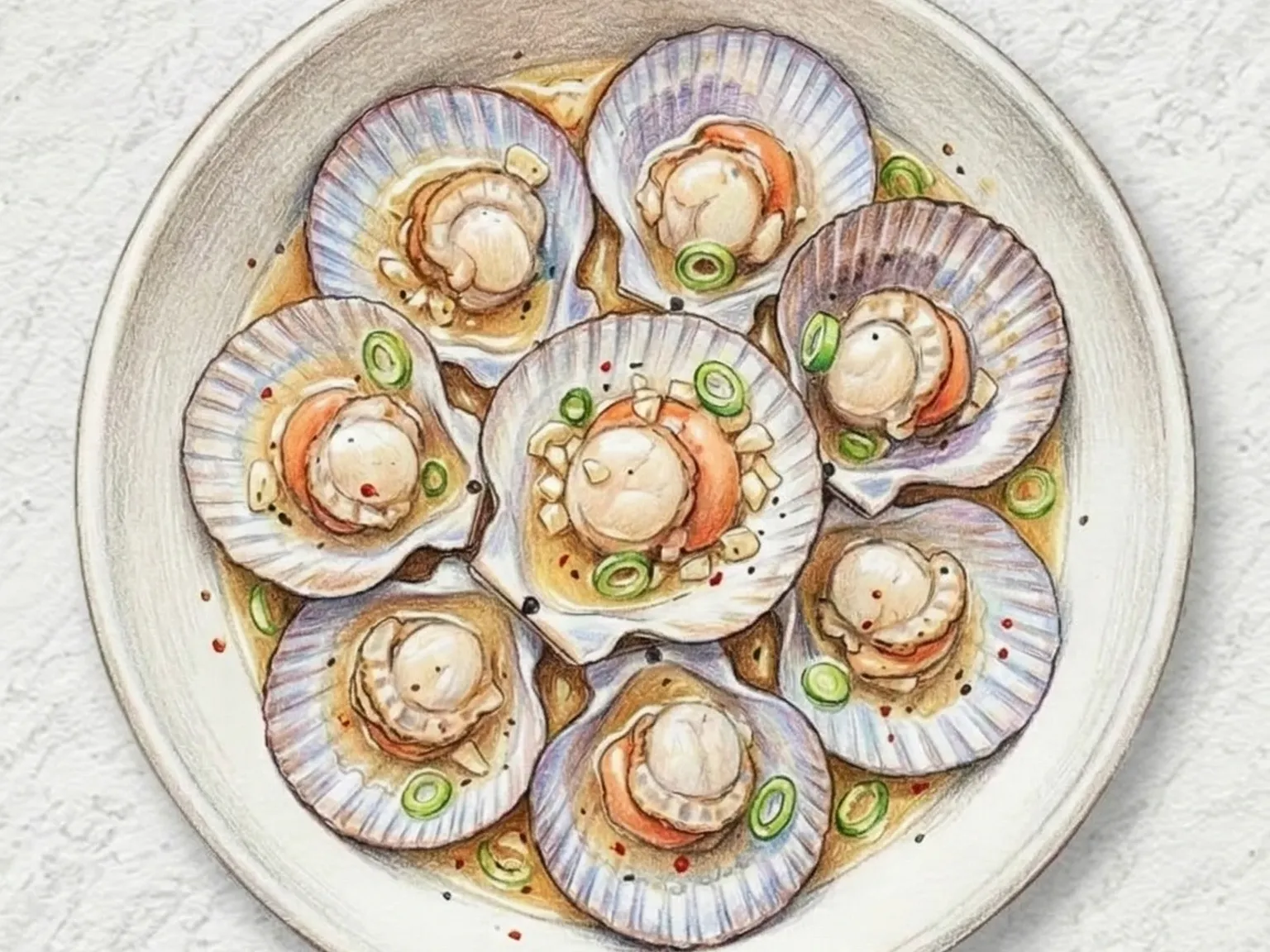
Garibi-jjim is a Korean steamed scallop dish that depends as much on timing as on seasoning. The scallops are placed in their shells, covered, and steamed with rice wine, garlic, and butter. Rice wine vapor penetrates the flesh as it cooks, stripping away the oceanic sharpness while the shells trap the released juices underneath. Pulling the scallops off heat before they contract fully is the key move - left too long, they turn rubbery and lose their natural sweetness. Butter melts into the pooled juices inside each shell, forming a warm, savory sauce without any extra work. A small pour of soy sauce sharpens the umami, and thinly sliced green onion laid over the top cuts through the richness with a fresh note. The entire preparation takes under fifteen minutes, which makes this a practical choice for an impromptu drinking spread or as a starter when a more elaborate main follows.

Prep 15min Cook 10min 2 servings

Instructions

Read the steps as a cooking flow: prep, heat, seasoning, doneness control, and finish.

6 steps
  1. 1
    Step

    Scrub 700 g scallops with a brush, working into the grooves and edges of the shells to remove sand.

    Rinse quickly under cold water, then drain well so extra water does not dilute the steaming juices.

  2. 2
    Finish

    Slice 1/2 green onion thinly on the diagonal and keep it ready for finishing.

    Cut 10 g butter into small pieces so it can be divided over the hot scallops and melt evenly.

  3. 3
    Control

    Pour 500 ml water into the steamer and set it over medium-high heat.

    When the water boils and steady, strong steam rises, the steamer is ready for the scallops.

  4. 4
    Step

    Arrange the scallops so the shells sit level and can hold their juices.

    Divide 1 tbsp minced garlic over them, then drizzle 1 tbsp rice wine evenly to soften the shellfish aroma as they steam.

  5. 5
    Control

    Cover and steam over high heat for 6-7 minutes.

    Start checking at about 5 minutes, and turn off the heat as soon as the flesh is opaque, plump, and the shells have opened.

  6. 6
    Finish

    Remove the scallops before the flesh shrinks and place small pieces of butter on top to melt in the hot shell juices.

    Finish with a light drizzle of 1 tbsp soy sauce and the sliced green onion.

After the steps

Pick a recipe that fits this dish.

Continue with shared ingredients, meal pairings, or a similar method.

Recipes That Go Well With This

More Steamed →

Based on shared ingredients and meal pairing

Korean Steamed Octopus (Whole Salted Radish Broth)
Shared ingredient: green onion Steamed

Korean Steamed Octopus (Whole Salted Radish Broth)

Muneo-jjim is a Korean steamed whole octopus dish prepared by scrubbing the octopus vigorously with coarse salt to remove slime and any off-odor, then cooking it in a pot layered with radish and green onion. Submerging the head end first and lifting it in and out of the boiling water two or three times causes the tentacles to curl inward naturally, resulting in an attractive presentation before the full cook begins. Simmering for about fifteen minutes and then resting off the heat with the lid on produces a texture that is springy and chewy without turning tough. The radish adds mild sweetness to the water while green onion draws out any fishiness, so the resulting broth carries a clean, subtle depth of its own. Once cooked, the octopus is sliced on the diagonal into manageable pieces and served with a simple dipping sauce of sesame oil mixed with salt. That combination lets the octopus's natural ocean flavor and nuttiness come through without interference. The dish works equally well as a drinking accompaniment or an everyday banchan, and the technique scales from a small arm to a full-sized octopus without adjustment.

Korean Steamed Clams with Rice Wine
Shared ingredient: butter Steamed

Korean Steamed Clams with Rice Wine

Manila and surf clams are steamed with garlic in rice wine to create this traditional Korean drinking snack. Purging the shellfish in salted water beforehand ensures the resulting broth remains clear and free of grit. Pouring cold rice wine over the shells and sealing the pot allows the alcohol to transform into steam, which strips away any ocean odors while the clams release their natural juices. As the shells open, their concentrated brine forms a natural stock at the bottom of the pot. Dropping a piece of butter into the liquid the moment the first shell cracks open adds a creamy, rounded quality to the salty clam base. Freshly scattered chives provide a grassy contrast to the buttery liquid, maintaining a sense of freshness throughout the dish. Since no additional water or stock is required, the success of the broth relies entirely on the quality of the clams and the thoroughness of the purging process. Lifting the lid at an angle prevents condensation from dripping back onto the clams, which keeps the concentrated seasoning from thinning out. A final squeeze of lemon juice heightens the sweetness of the clam meat and provides a crisp finish to the experience.

Korean Seafood Hot Pot Soup
Serve together Soups

Korean Seafood Hot Pot Soup

Haemul-tang is a Korean seafood hot pot that throws together crab, shrimp, clams, and squid in a fiery, brick-red broth. The liquid starts with gochugaru and plenty of garlic, building a spicy base that the seafood then amplifies with its own briny juices. Radish chunks soften as the pot bubbles, thickening the broth slightly and adding a cool sweetness behind the heat. Green onions and cheongyang peppers go in toward the end for a sharp, vegetal bite. The magic of haemul-tang lies in the convergence of flavors: crab shells release a sweet, crustacean stock; clams open to spill their liquor; shrimp and squid contribute distinct textures from snappy to chewy. The pot is brought to the table still at a rolling boil, and diners pick through the shells and tentacles while the broth continues to concentrate.

Korean Steamed Flounder (Whole Flatfish with Soy Garlic Sauce)
Similar recipe Steamed

Korean Steamed Flounder (Whole Flatfish with Soy Garlic Sauce)

Gajami-jjim is a Korean steamed flounder dish prepared with a light soy sauce seasoning, onion, and green onion. Rice wine is added during cooking to neutralize any fishiness while keeping the flesh moist. The seasoning is restrained-soy sauce and garlic provide just enough flavor without masking the flounder's naturally mild, clean taste. With its soft texture and few bones, this dish works well as an everyday banchan alongside rice and soup.

Serve with this

Korean Stir-fried Bottle Gourd Namul
Side dishes Medium

Korean Stir-fried Bottle Gourd Namul

Bottle gourd - bak - is a summer vegetable Koreans have stir-fried as namul for centuries. Peeled, seeded, and sliced thin, it is salted briefly to draw out excess moisture before cooking. Garlic and green onion go into the pan first to build a fragrant base, then the gourd is added and cooked with a small splash of water that steams the slices until they turn nearly translucent, releasing a clean, melon-like sweetness. Ground perilla seed stirred in at the end thickens the remaining liquid into a nutty glaze that clings to each piece. The result is a mild, lightly savory namul that makes plain rice disappear on the hottest summer days.

🏠 Everyday 🍱 Lunchbox
Prep 12min Cook 10min 4 servings
Diet Konjac Fried Rice
Rice Easy

Diet Konjac Fried Rice

A light and delicious konjac fried rice to enjoy without calorie worries.

🔥 Trending Now ⚡ Quick
Prep 10min Cook 15min 2 servings
Korean Spicy Fermented Squid Jeotgal
Kimchi Medium

Korean Spicy Fermented Squid Jeotgal

Ojingeo jeotgal is a Korean fermented squid preserve made by salting cleaned, finely chopped squid for one hour to firm the flesh and extract moisture, then dressing it in a paste of gochugaru, minced garlic, ginger, fish sauce, and corn syrup. The salt cure intensifies the squid's natural chewiness, and cutting the pieces small accelerates seasoning absorption during the two-to-three-day cold fermentation. Chili flakes coat every surface in a deep red layer that delivers steady heat, while corn syrup adds gloss and a mild sweetness that prevents the salt from dominating. Spooned over steamed rice, each piece offers a firm, springy chew followed by a wave of fermented umami. Mixing in a touch of sesame oil before serving softens the saltiness and adds a nutty fragrance that rounds out each mouthful.

🍱 Lunchbox 🏠 Everyday
Prep 30min 4 servings

Similar recipes

Korean Steamed Pomfret (Whole Fish with Soy Ginger Sauce)
Steamed Medium

Korean Steamed Pomfret (Whole Fish with Soy Ginger Sauce)

Whole pomfret is gently steamed with soy sauce, rice wine, ginger, and green onion into a clean, mild preparation. Pomfret has thin, delicate flesh that separates from the bone with little effort after steaming, making it easy to eat. Ginger and green onion together neutralize any fishiness while the soy sauce provides subtle salt and a light color. A thin drizzle of sesame oil at the end adds a toasted, nutty aroma without masking the fish. The result is a non-spicy, low-fat dish that works well for a wide range of diners.

🎉 Special Occasion 🍱 Lunchbox
Prep 15min Cook 18min 2 servings
Korean Butter-Grilled Scallops
Drinks Medium

Korean Butter-Grilled Scallops

Garibi butter-gui sears fresh scallops in garlic butter until each side develops a deep golden-brown crust, then finishes with lemon juice and parsley to balance the richness. Removing every trace of surface moisture with paper towels before seasoning is the single most important step -- water on the surface of the scallop causes it to steam rather than sear, and no caramelized crust will form until that moisture has evaporated. Each side cooks for only one to two minutes at the highest heat the pan can sustain, leaving the center just barely opaque and the texture tender rather than rubbery. After flipping, butter and minced garlic are added directly to the hot pan and spooned continuously over the scallops so the aroma infuses the surface. A squeeze of lemon and a scatter of chopped parsley added just before removing from heat layers acidity and freshness over the butter richness. Simple to prepare and fast to cook, this dish appears regularly at home gatherings in Korea as a crowd-pleasing appetizer.

🍺 Bar Snacks 🎉 Special Occasion
Prep 12min Cook 8min 2 servings
Korean Butter-Grilled Mussels
Grilled Easy

Korean Butter-Grilled Mussels

Mussels are steamed open with white wine, then tossed in melted garlic butter for a second round of cooking. The wine lifts the brininess while the butter adds a nutty depth that clings to each shell. A squeeze of lemon at the end cuts through the richness, keeping the finish clean. Scattered chives bring color and a mild onion note. Serving with crusty bread alongside to soak up the buttery broth rounds out the dish into a satisfying starter or bar snack.

🍺 Bar Snacks ⚡ Quick
Prep 15min Cook 10min 2 servings

Tips

Remove scallops as soon as shells open fully.

Nutrition (per serving)

Calories
230
kcal
Protein
26
g
Carbs
6
g
Fat
9
g