Garlic Butter Mussels

Garlic Butter Mussels

Quick answer

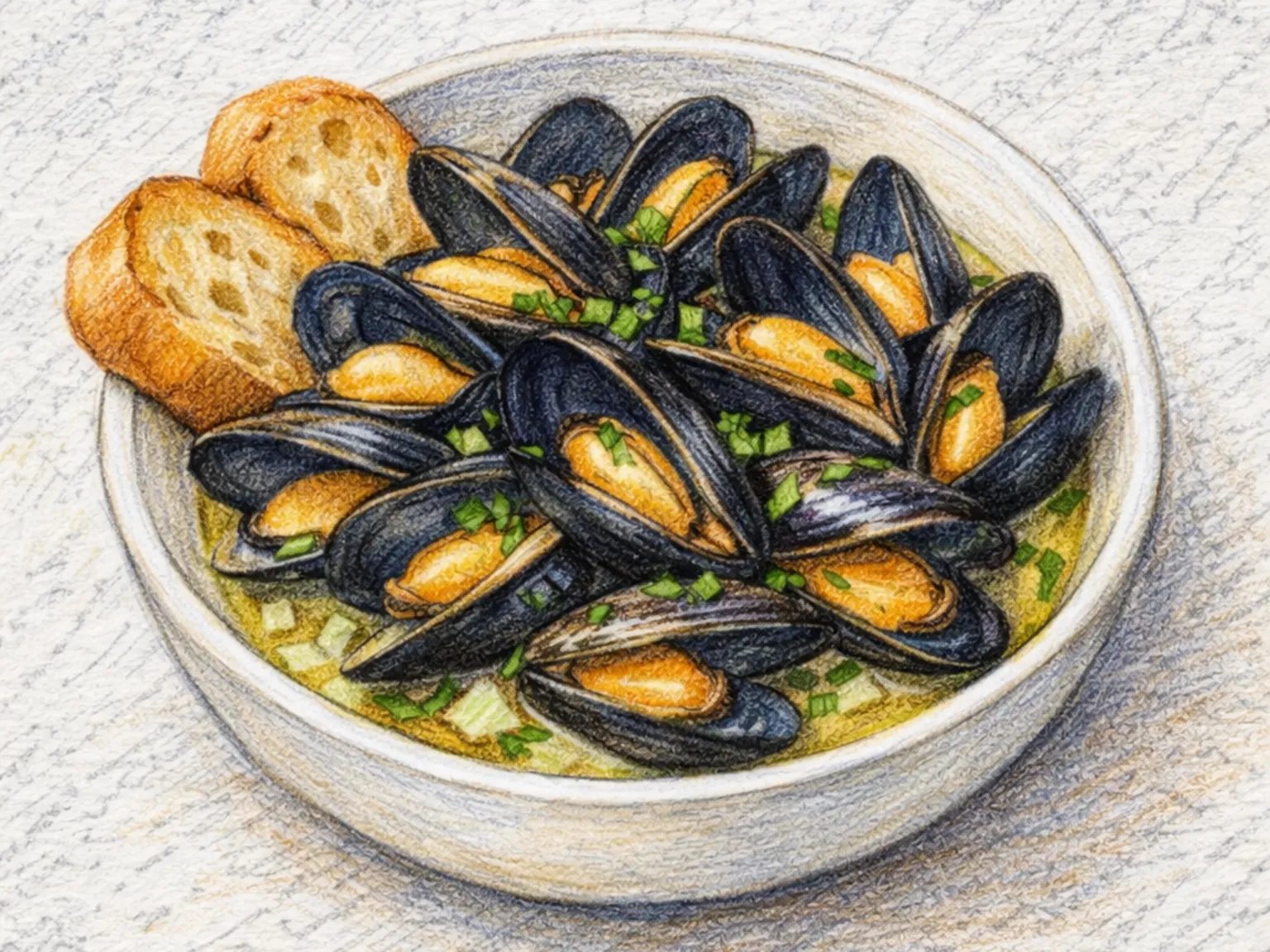
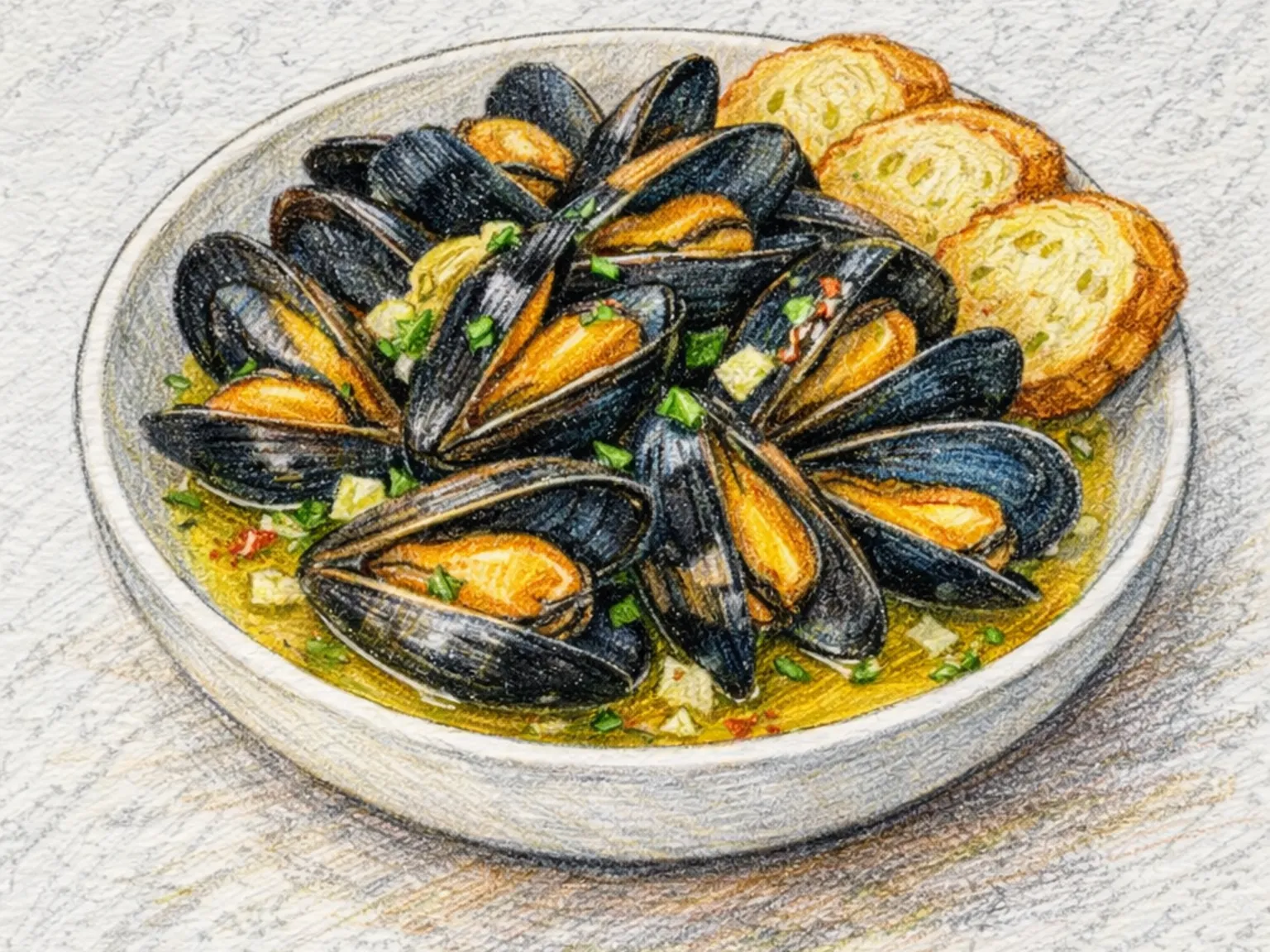
Garlic butter mussels are steamed in a fragrant broth of sauteed garlic, melted butter, and white wine.

What makes this special

  • White wine and garlic mussels steam in a fragrant broth of melted butter.
  • White wine simmers 1 minute to drive off alcohol and leave only fruit acidity
  • Briny mussel liquid released during steaming enriches the butter-wine broth
Total time
27 min
Level
Easy
Servings
2 servings
Ingredients
8
Calories
410 kcal
Protein
36 g

Key ingredients

musselsgarlicbutterwhite wineonion

Core cooking flow

  1. 1 Debeard the 800 g mussels by pulling away the fibrous strands, then scrub them under running water.
  2. 2 Finely chop the 70 g onion and mince the 4 garlic cloves so they soften quickly in the butter.
  3. 3 Warm a lidded pot over medium heat, then melt 1 tablespoon olive oil with 2 tablespoons butter.

Garlic butter mussels are steamed in a fragrant broth of sauteed garlic, melted butter, and white wine. Onion and garlic are cooked in butter and olive oil until softened, then white wine is added and boiled briefly to drive off the alcohol while keeping the acidity and fruit notes intact. Once the mussels go in and the lid is sealed, the shells open within four to five minutes, releasing briny juices that meld with the butter-wine base into a rich, savory broth. Mussels that remain closed after cooking must be discarded. Finishing with chopped parsley and black pepper adds color and a mild sharpness, and tearing crusty baguette into the bowl to soak up the broth is the traditional way to enjoy every drop.

Prep 15min Cook 12min 2 servings

Instructions

Read the steps as a cooking flow: prep, heat, seasoning, doneness control, and finish.

6 steps
  1. 1
    Heat

    Debeard the 800 g mussels by pulling away the fibrous strands, then scrub them under running water.

    Drain well before cooking and check for grit or off smells so the broth stays clean.

  2. 2
    Finish

    Finely chop the 70 g onion and mince the 4 garlic cloves so they soften quickly in the butter.

    Keep the 2 tablespoons parsley separate for the finish, where it will stay bright.

  3. 3
    Control

    Warm a lidded pot over medium heat, then melt 1 tablespoon olive oil with 2 tablespoons butter.

    When the foaming settles, add the onion and garlic so they perfume the fat without scorching.

  4. 4
    Heat

    Cook for about 2 minutes, stirring, until the onion turns translucent and the garlic smells sweet.

    If the garlic starts browning too fast, lower the heat to prevent bitterness in the broth.

  5. 5
    Heat

    Pour in 180 ml white wine, raise the heat to high, and boil for 1 minute.

    Stir the bottom to release the butter and aromatics, and let the sharp alcohol smell soften.

  6. 6
    Finish

    Add the mussels, cover tightly, and steam for 4-5 minutes until most shells open.

    Discard any mussels still closed, then sprinkle with parsley and 0.5 teaspoon black pepper and serve with baguette for the broth.

After the steps

Pick a recipe that fits this dish.

Continue with shared ingredients, meal pairings, or a similar method.

Recipes That Go Well With This

More Western →

Based on shared ingredients and meal pairing

Moules Marinières (French White Wine Steamed Mussels)
Shared ingredient: mussels Western

Moules Marinières (French White Wine Steamed Mussels)

Moules marinieres is a French seafood dish that steams scrubbed mussels over a base of shallots and garlic softened in butter, with white wine added and the pot covered for four to five minutes on high heat. Boiling the wine for a minute before adding the mussels burns off the alcohol and leaves behind only the bright acidity that pairs naturally with the briny shellfish. Once the shells open, a splash of heavy cream, chopped parsley, and black pepper turn the cooking liquid into a light, aromatic broth. The short cooking time keeps the mussel meat firm and springy rather than rubbery. Any mussels that stay closed after steaming should be discarded. Crusty bread served alongside is essential for soaking up the butter-wine broth to the last drop.

Steamed Mussels Mariniere
Shared ingredient: mussels Steamed

Steamed Mussels Mariniere

Moules mariniere is a classic dish from northern France in which mussels are steamed open in a base of white wine, butter, garlic, and shallot over high heat. As the mussels open, they release their briny cooking liquid into the wine-butter base, and within roughly five minutes that mixture becomes a deeply aromatic broth that is far more complex than the sum of its parts. The brevity of the cooking time is not incidental but essential. Mussels cooked just until they open remain plump and firm, while those left on the heat any longer shrink and turn chewy. The moment the last mussel opens, the heat comes off. Fresh flat-leaf parsley is scattered over the top before serving, adding a clean green note against the richness of the broth. A dry white wine is preferable to one with residual sweetness, because its acidity balances the butter and amplifies the oceanic flavor of the mussels. Finishing with a small knob of cold butter stirred in at the end gives the sauce a glossy sheen and a rounded, velvety finish. The broth that collects at the bottom of the pot is often considered the best part of the dish, traditionally mopped up with torn pieces of crusty baguette.

Apple Fennel Walnut Salad
Serve together Salads

Apple Fennel Walnut Salad

This salad pairs three ingredients whose textures and flavors run in different directions - crisp apple, anise-scented fennel, and bitter walnuts - and unifies them with a honey-lemon dressing. Thinly sliced fennel bulb contributes a licorice-like fragrance that is more aromatic than sweet, while its celery-crisp texture holds a firm contrast against the apple's softer flesh. Toasted walnuts add a crunchy, tannic bitterness that anchors the lighter elements and keeps the salad from reading as merely sweet. The dressing is deliberately minimal - fresh lemon juice, honey, a small amount of olive oil, and a pinch of salt - so the ingredients carry the flavor rather than the sauce. Assembling just before serving prevents the apple from browning. Salads of this type appear on autumn and winter tables in France and Italy when local apples and fennel come into season together, and can be served as a standalone starter or alongside roasted poultry, where the anise note in the fennel cuts through the meat's richness. Fennel has a long association with digestive support in Mediterranean cooking, which is partly why it has traditionally been served alongside fatty meats, and this salad draws on the same pairing logic.

Korean Butter-Grilled Mussels
Similar recipe Grilled

Korean Butter-Grilled Mussels

Mussels are steamed open with white wine, then tossed in melted garlic butter for a second round of cooking. The wine lifts the brininess while the butter adds a nutty depth that clings to each shell. A squeeze of lemon at the end cuts through the richness, keeping the finish clean. Scattered chives bring color and a mild onion note. Serving with crusty bread alongside to soak up the buttery broth rounds out the dish into a satisfying starter or bar snack. It can be served as a grilled side dish or drinking food, with simple accompaniments chosen to match the sauce, broth, or topping.

Serve with this

Kimchi Garlic Butter Shrimp Spaghetti
Pasta Easy

Kimchi Garlic Butter Shrimp Spaghetti

Kimchi garlic butter shrimp spaghetti is an oil-based pasta where garlic browned in butter and fermented kimchi together amplify the natural sweetness of shrimp. The shrimp are seared first in olive oil to build fond on the pan, then garlic and chopped kimchi go into the same pan to absorb those flavors. Butter and starchy pasta water are emulsified into a glossy, light coating rather than a heavy sauce. Gochugaru provides a gentle background heat, and a squeeze of lemon at the end lifts the richness. Sliced scallions finish the dish with color and a mild onion note.

🍺 Bar Snacks 🏠 Everyday
Prep 12min Cook 18min 2 servings
Korean Roasted Buckwheat Tea
Drinks Easy

Korean Roasted Buckwheat Tea

Memil-cha is a traditional Korean beverage prepared from roasted buckwheat groats. To make this tea, the groats are toasted and then simmered in water, followed by a ten-minute steeping period over a low flame. The initial roasting process is critical because it caramelizes the exterior of the buckwheat, which releases a profound and earthy grain fragrance. This aroma gradually transfers into the liquid during the steeping stage. Incorporating dried jujubes and a thin strip of lemon peel provides a subtle sweetness along with a light citrus undertone. These additions help to complete the flavor profile while ensuring that the distinct natural character of the buckwheat remains the primary focus. Because the infusion contains no caffeine, it serves as a suitable drink for the late evening or for times when a gentle option is preferred for the digestive system. The addition of a single spoonful of honey and a very small amount of salt functions to define the various tastes more clearly and brings the entire beverage into a stable balance. This tea is versatile enough to be enjoyed as a hot drink during the colder winter months or as a cold beverage served over ice when the weather is warm in the summer. Such flexibility allows it to remain a consistent staple on the dining table throughout the entire year.

🍺 Bar Snacks ⚡ Quick
Prep 5min Cook 15min 4 servings
Gotgam Cream Cheese Roll (Dried Persimmon Rolls)
Desserts Easy

Gotgam Cream Cheese Roll (Dried Persimmon Rolls)

Gotgam cream cheese roll is a no-cook Korean dessert that requires nothing more than a knife, a bowl, and a refrigerator. Dried persimmons are slit open and flattened into thin sheets, each one acting as the outer wrapper. The filling is cream cheese mixed with honey and fresh lemon juice to balance its natural richness with acidity, and finely chopped walnuts are folded in throughout to add a crunchy, nutty element to every bite. The filling is spread across the opened persimmon, which is then rolled tightly and wrapped in plastic wrap. Twenty minutes in the refrigerator firms the roll enough to slice cleanly. Dipping the knife in warm water and wiping it dry before each cut produces the smoothest cross-sections. The finished slices reveal clearly defined layers: the chewy, caramel-sweet dried persimmon on the outside, the tangy cream cheese in the middle, and flecks of walnut distributed throughout. The combination makes it a natural pairing with wine or a polished addition to a traditional holiday table.

🍺 Bar Snacks 🎉 Special Occasion
Prep 20min 2 servings

Similar recipes

Lobster Thermidor
Western Hard

Lobster Thermidor

Lobster thermidor is a French dish in which boiled lobster meat is cut into bite-size pieces, folded into a cream sauce made from shallots sauteed in butter, white wine reduced by half, Dijon mustard, and heavy cream, then packed back into the cleaned shell and topped with grated Parmesan for a brief gratin under high heat. Reducing the wine concentrates its acidity, and the mustard adds a sharp undercurrent that prevents the cream sauce from tasting flat. Baking at 220 degrees Celsius for only six to eight minutes gives the cheese a golden crust while keeping the lobster meat tender. Lemon juice stirred into the filling at the last moment lifts the richness. The dramatic presentation in the shell makes it a natural choice for entertaining.

🎉 Special Occasion 🍺 Bar Snacks
Prep 25min Cook 25min 2 servings
Coquilles Saint-Jacques (French Scallop Gratin with Gruyere)
Western Medium

Coquilles Saint-Jacques (French Scallop Gratin with Gruyere)

Coquilles Saint-Jacques is a French scallop gratin that begins with sea scallops seared in foaming butter, then arranged in ramekins or scallop shells under a sauce built from shallot, white wine reduced by half, heavy cream, and fresh lemon juice, topped with grated Gruyere cheese and fine breadcrumbs. Patting the scallops completely dry with paper towels before they hit the pan is the step that determines whether a proper caramelized crust forms or the surface simply steams. Reducing the white wine concentrates its acidity and adds structure to the sauce, and the cream and lemon juice together create something light and cohesive rather than heavy. Six to eight minutes under the broiler at 220 degrees Celsius turns the cheese-and-breadcrumb topping into a golden, crackling crust. The completed dish delivers three distinct textures in each bite -- a crunchy top layer, a rich and silky sauce underneath, and tender, springy scallop flesh at the center. Serving directly in individual ramekins or in scallop shells reproduces the classic restaurant presentation, and a slice of baguette alongside makes it easy to collect every last drop of the sauce.

🎉 Special Occasion 🍺 Bar Snacks
Prep 15min Cook 20min 2 servings
Blanquette de Veau (French Veal Stew in Creamy Egg-Lemon Sauce)
Western Medium

Blanquette de Veau (French Veal Stew in Creamy Egg-Lemon Sauce)

Blanquette de veau is a French white stew in which veal shoulder is first blanched in cold water to remove impurities and then gently simmered in fresh water with carrot, onion, and a bouquet garni for over an hour until the meat becomes completely tender. The name comes from blanc -- white -- and the defining rule of the dish is that the meat must never be browned at any stage; searing would change both the color and the delicate character of the final stew. The braising liquid is used to build the sauce: a butter-flour roux is whisked smooth, the warm broth is added gradually, and the finished veloute is enriched with a liaison of heavy cream and egg yolks to create a velvety coating. Once the yolks go in, the sauce must not boil -- even a brief simmer will cause the eggs to curdle, breaking the emulsion in a way that is difficult to repair. A small squeeze of lemon at the end brightens the richness of the cream, and button mushrooms sauteed separately in butter add an earthy note when folded in just before serving. The dish has been a staple of French bourgeois cooking since the 18th century, originally developed as a way to make the most of secondary cuts without the demanding technique required for braises like boeuf bourguignon.

🎉 Special Occasion
Prep 20min Cook 80min 4 servings

Tips

Discard mussels that stay closed after cooking.
Serve with crusty bread to soak up the broth.

Nutrition (per serving)

Calories
410
kcal
Protein
36
g
Carbs
11
g
Fat
19
g