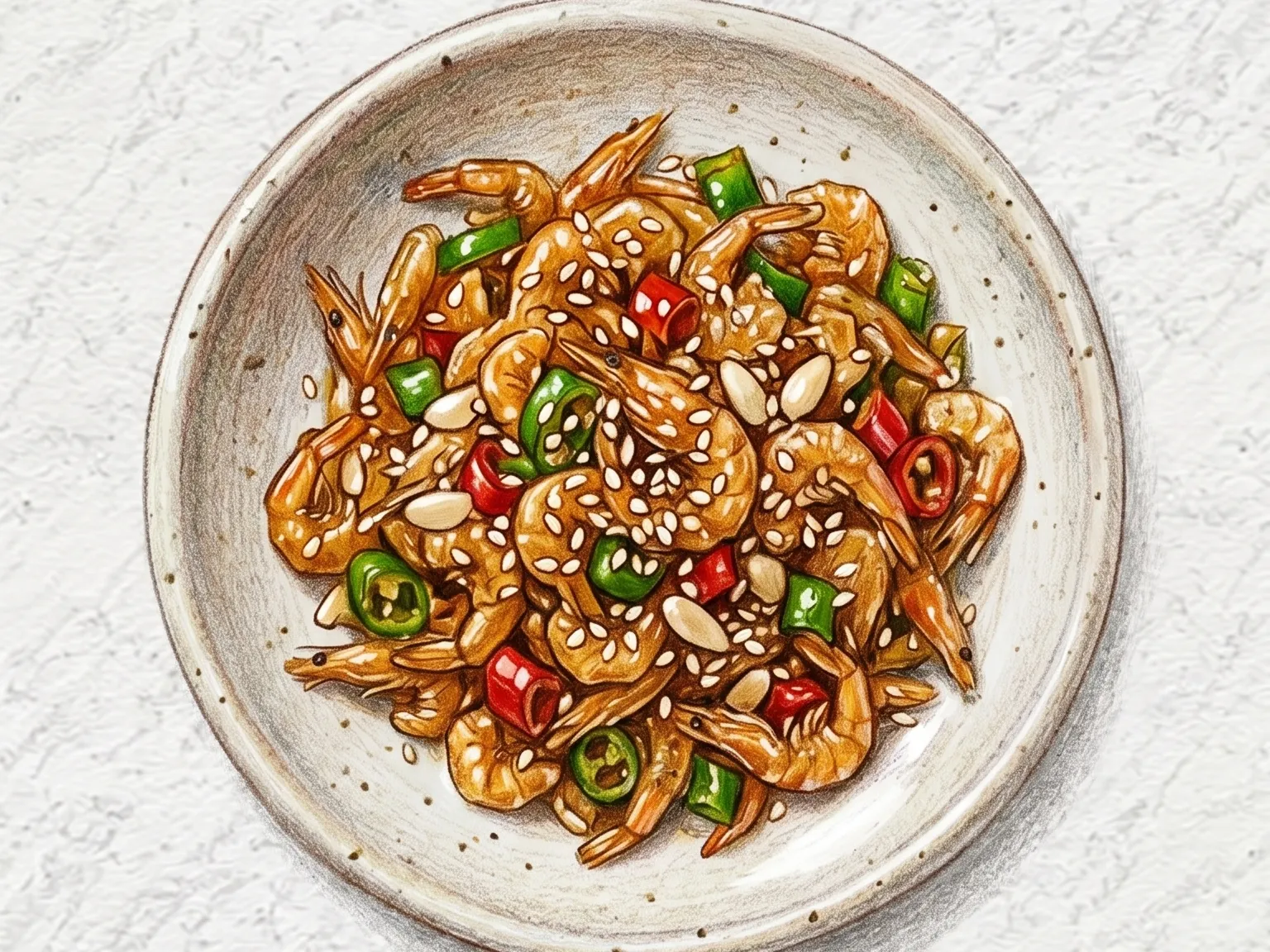
Korean Stir-fried Dried Shrimp
Geon-saeu-bokkeum transforms a handful of dried shrimp - a Korean pantry staple - into a quick, crunchy banchan. The shrimp are dry-toasted in a pan first to drive off residual moisture, intensifying their briny aroma and setting up the crisp texture. Soy sauce, rice syrup or oligosaccharide, and garlic are added and reduced over low heat until the shrimp are coated in a thin, glossy sweet-salty glaze. The timing is critical: the moment the syrup bubbles once, the heat must drop, or the coating hardens into a tooth-breaking shell. A finish of sesame oil and sesame seeds rounds out this compact side dish that works equally well in lunchboxes and as a drinking snack.
Adjust Servings
Instructions
- 1
Shake dried shrimp in a sieve to remove loose crumbs.
- 2
Dry-toast the shrimp for 1 minute to remove fishy notes.
- 3
Add oil and garlic and stir-fry on low heat for another minute.
- 4
Add soy sauce, syrup, and sugar, then stir quickly to coat.
- 5
Turn off heat and finish with sesame oil and sesame seeds.
As an Amazon Associate, we may earn from qualifying purchases.
Tips
Nutrition (per serving)
More Recipes

Korean Stir-Fried Bamboo Shoots
Juksun-bokkeum is a soy-seasoned stir-fry of bamboo shoots - a banchan closely tied to spring, when fresh juksun appears briefly in Korean markets from April through May, primarily from Damyang in Jeollanam-do. Fresh shoots must be boiled in rice-rinsing water for at least thirty minutes to neutralize their oxalic acid bitterness; canned shoots need a thorough rinse to remove the tinny taste. Julienned shoots are stir-fried with carrot and onion over high heat for a short burst - prolonged cooking draws out moisture and turns them rubbery. The seasoning is restrained: soy sauce, a pinch of sugar, garlic, and a finish of sesame oil, producing a subtly sweet, nutty dish. Bamboo shoots are rich in dietary fiber and low in calories, which gives this banchan high satiety per bite.

Korean Stir-fried Potato and Shrimp
Gamja-saeu-bokkeum pairs julienned potatoes with shell-on medium shrimp in a clean, garlic-forward stir-fry. The potatoes are soaked in cold water first to remove surface starch - skipping this step leads to clumping in the pan. Garlic sizzles in oil to build an aromatic base before the shrimp go in, cooking until half-done so their natural sweetness transfers to the potato strips when combined. Seasoned with nothing more than salt, pepper, and a finish of sesame oil, this banchan lets the contrast between the potato's floury bite and the shrimp's springy snap carry the dish.

Korean Stir-Fried Kimchi (Caramelized Aged Kimchi Banchan)
Kimchi-bokkeum is the default way Korean households use up kimchi that has fermented past its fresh prime. Stir-frying tempers the sharp lactic acidity that over-ripe kimchi develops - the heat transforms the sourness into something mellower, sweeter, and more rounded. Onion goes in first and cooks until translucent, laying a sweet foundation before the kimchi and garlic join. Medium heat is essential: it drives off moisture gradually, yielding a thick, concentrated sauce rather than a watery stew. A small addition of gochugaru brightens the color, and a pinch of sugar balances the fermented tang. One tablespoon of kimchi brine amplifies the umami from the lactobacillus culture itself. The finished banchan is versatile enough to eat straight over rice, fold into fried rice, or pile on top of ramyeon.

Korean Butter Soy Stir-fried Dried Squid
Butter-soy jinmichae-bokkeum stir-fries dried shredded squid (jinmichae) in melted butter with soy sauce and oligosaccharide syrup, producing a side dish that is rich, salty-sweet, and distinctly different from the gochujang-dressed version. The butter's milk fat coats each strand, giving a smoother mouthfeel than oil-based preparations. Garlic goes into the melted butter first - just twenty seconds - followed by the soy-syrup mixture to build the glaze base, then the squid strands are added and tossed for no more than two to three minutes. Overcooking on high heat causes the squid proteins to contract and toughen, so quick handling is essential. Half a tablespoon of gochugaru adds gentle warmth and color without masking the butter flavor. This banchan is popular in children's lunchboxes and doubles as a snack alongside beer.

Korean Stir-fried Chives and Shrimp
Deveined shrimp are dried thoroughly and seared over high heat until their shells turn pink, then tossed briefly with garlic chives for a stir-fry that takes under ten minutes from cutting board to plate. Removing every trace of surface moisture before the shrimp hit the pan is the single most important step; residual water generates steam and turns the sear into a braise, leaving the shrimp pale and soft instead of lightly caramelized. Sliced garlic goes into the oil first to build an aromatic base that clings to every ingredient. One tablespoon of soy sauce paired with a teaspoon of oyster sauce amplifies the natural seafood umami without tipping the dish into excessive saltiness, and black pepper sharpens the finish. The chives must go in last and cook for no more than sixty seconds; any longer and they lose their vivid color and turn stringy. At 220 calories with 26 grams of protein per serving, this dish fills the role of a satisfying yet light side that pairs well with steamed rice or slides neatly into a packed lunch.

Korean Napa Cabbage Shrimp Stir-fry
Baechu saeu bokkeum is a Korean stir-fry of napa cabbage and medium shrimp seasoned with soy sauce and fish sauce. The shrimp are deveined and scored along the back so they curl attractively and absorb seasoning more readily. They go into a hot oiled pan first for thirty seconds to sear the surface, then are removed while the cabbage stems are stir-fried until slightly wilted. Soy sauce, fish sauce, and minced garlic are added along with the cabbage leaves, and the shrimp return to the pan for a final thirty-second toss so everything seasons evenly. Sliced cheongyang chili and scallion go in last for a hit of heat and freshness. The entire stir-fry stays under three to four minutes of active cooking, which preserves the crunch of the cabbage stems and the firm bite of the shrimp. The combination of soy sauce and fish sauce provides a layered saltiness that brings out the natural sweetness of both the cabbage and the shrimp.