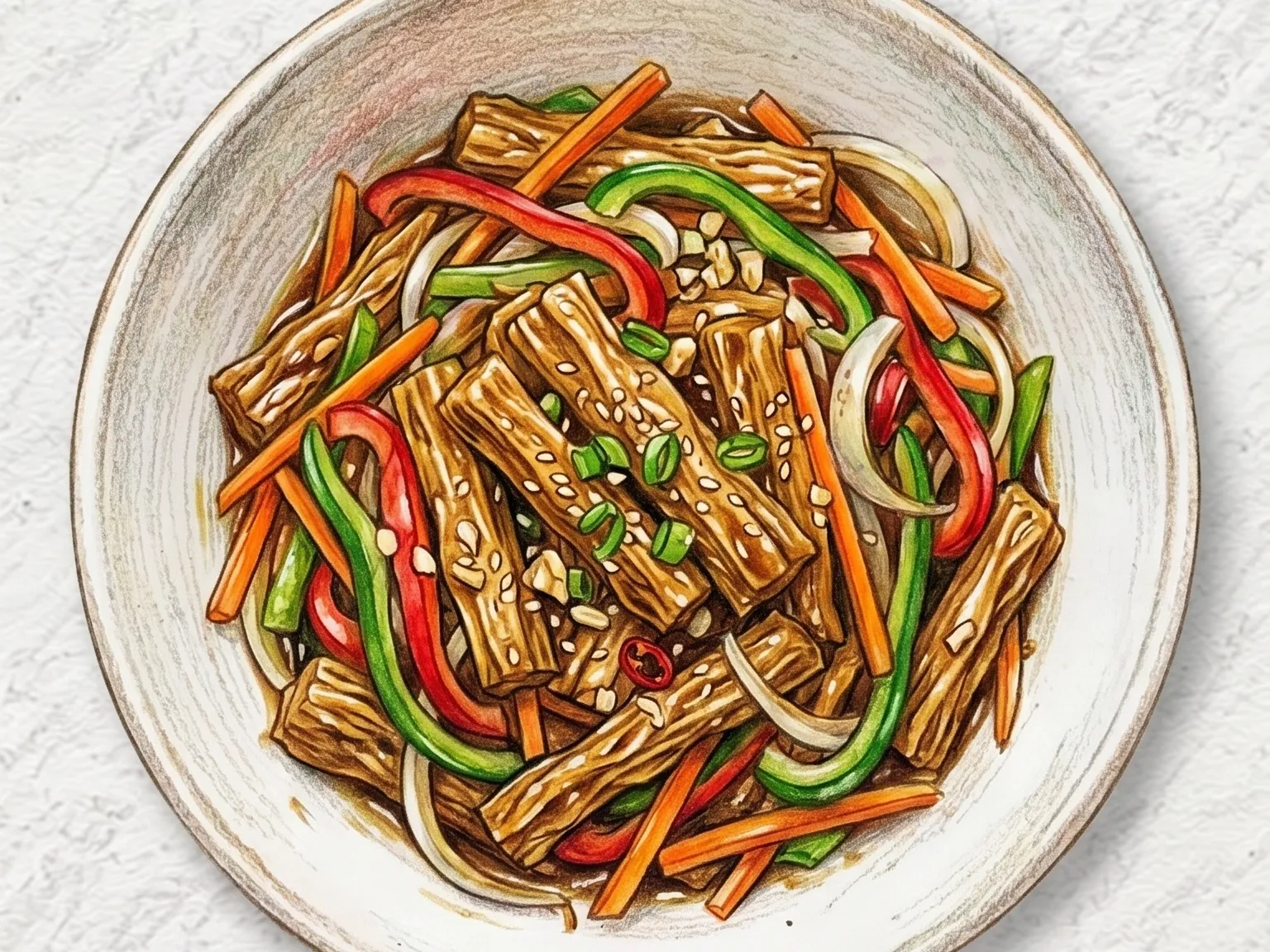
Stir-fried Dried Tofu Strips
Geondubu bokkeum is a protein-rich stir-fry of dried tofu strips with carrot, bell pepper, and onion in a soy-garlic sauce. Blanching the tofu briefly before cooking softens its bean aroma and helps it absorb seasonings more readily. The julienned vegetables add color and crunch, while the soy sauce and garlic provide a steady savory foundation that complements the tofu's natural nuttiness. A pinch of chili flakes can push the flavor toward a more traditional Korean banchan profile. It is a satisfying meatless side dish that holds up well in lunchboxes.
Adjust Servings
Instructions
- 1
Blanch dried tofu strips for 1 minute and drain.
- 2
Julienne all vegetables.
- 3
Heat oil with garlic until fragrant.
- 4
Stir-fry vegetables first, then add tofu strips.
- 5
Season with soy sauce and finish with sesame oil.
As an Amazon Associate, we may earn from qualifying purchases.
Tips
Nutrition (per serving)
More Recipes

Stir-fried Bok Choy (Bok Choy with Garlic and Oyster Sauce Glaze)
Halved bok choy is stir-fried with sliced garlic over high heat for two minutes, then finished with oyster sauce and soy sauce in a one-minute reduction that glazes every leaf and stem. The thick white stalks need more heat than the tender green leaves, so placing them cut-side down first or adding the leaves halfway through prevents the greens from turning to mush while the stems stay undercooked. Oyster sauce lends a concentrated umami depth to the otherwise mild vegetable, and a splash of 40 milliliters of water helps the sauce flow between the tightly packed stems so seasoning reaches every layer. Black pepper and sesame oil are added only after the pan leaves the flame so their volatile aromas stay intact on the plate. Bok choy continues to release moisture after plating, so serving immediately is critical to preserving the contrast between crisp stalks and just-wilted leaves. At 105 calories per serving, this is a light side dish that still delivers meaningful amounts of vitamin A and calcium.

Korean Stir-fried Potato Strips
Gamja-bokkeum is a staple Korean side dish made by stir-frying julienned potatoes until they reach a satisfying tender-crisp texture. Soaking the potatoes beforehand removes excess starch, preventing them from clumping in the pan. A light seasoning of garlic and salt draws out the potato's natural mild flavor, while a finishing touch of sesame oil and seeds adds a warm nuttiness. It is a humble yet addictive banchan that pairs effortlessly with steamed rice.

Korean Stir-fried Dried Pollock Strips
Hwangtae-chae-bokkeum is a Korean side dish of shredded dried pollock strips soaked until soft, then stir-fried in a gochujang, oligosaccharide syrup, and soy sauce glaze. The pollock absorbs the seasoning as it cooks, turning chewy and moist with a balanced spicy-sweet coating. Once prepared, it keeps well in the refrigerator for several days, making it a practical banchan to have on hand. It works equally well in lunchboxes and as a casual snack with drinks.

Korean Stir-fried Cabbage with Doenjang
Yangbaechu-doenjang-bokkeum stir-fries bite-size cabbage pieces with doenjang, gochugaru, and garlic over high heat. The doenjang is dissolved in a small amount of water to create an even sauce that coats the cabbage, and the heat is turned off before the cabbage fully wilts to preserve some crunch. The cabbage's natural sweetness intensifies with cooking and contrasts against the salty, fermented depth of the doenjang, while gochugaru adds a faint background heat. The entire dish comes together in under fifteen minutes, relying on doenjang alone to deliver concentrated flavor.

Korean Stir-Fried Kimchi (Caramelized Aged Kimchi Banchan)
Kimchi-bokkeum is the default way Korean households use up kimchi that has fermented past its fresh prime. Stir-frying tempers the sharp lactic acidity that over-ripe kimchi develops - the heat transforms the sourness into something mellower, sweeter, and more rounded. Onion goes in first and cooks until translucent, laying a sweet foundation before the kimchi and garlic join. Medium heat is essential: it drives off moisture gradually, yielding a thick, concentrated sauce rather than a watery stew. A small addition of gochugaru brightens the color, and a pinch of sugar balances the fermented tang. One tablespoon of kimchi brine amplifies the umami from the lactobacillus culture itself. The finished banchan is versatile enough to eat straight over rice, fold into fried rice, or pile on top of ramyeon.

Korean Stir-fried Dried Shrimp
Geon-saeu-bokkeum transforms a handful of dried shrimp - a Korean pantry staple - into a quick, crunchy banchan. The shrimp are dry-toasted in a pan first to drive off residual moisture, intensifying their briny aroma and setting up the crisp texture. Soy sauce, rice syrup or oligosaccharide, and garlic are added and reduced over low heat until the shrimp are coated in a thin, glossy sweet-salty glaze. The timing is critical: the moment the syrup bubbles once, the heat must drop, or the coating hardens into a tooth-breaking shell. A finish of sesame oil and sesame seeds rounds out this compact side dish that works equally well in lunchboxes and as a drinking snack.