Korean Seasoned Swiss Chard Namul
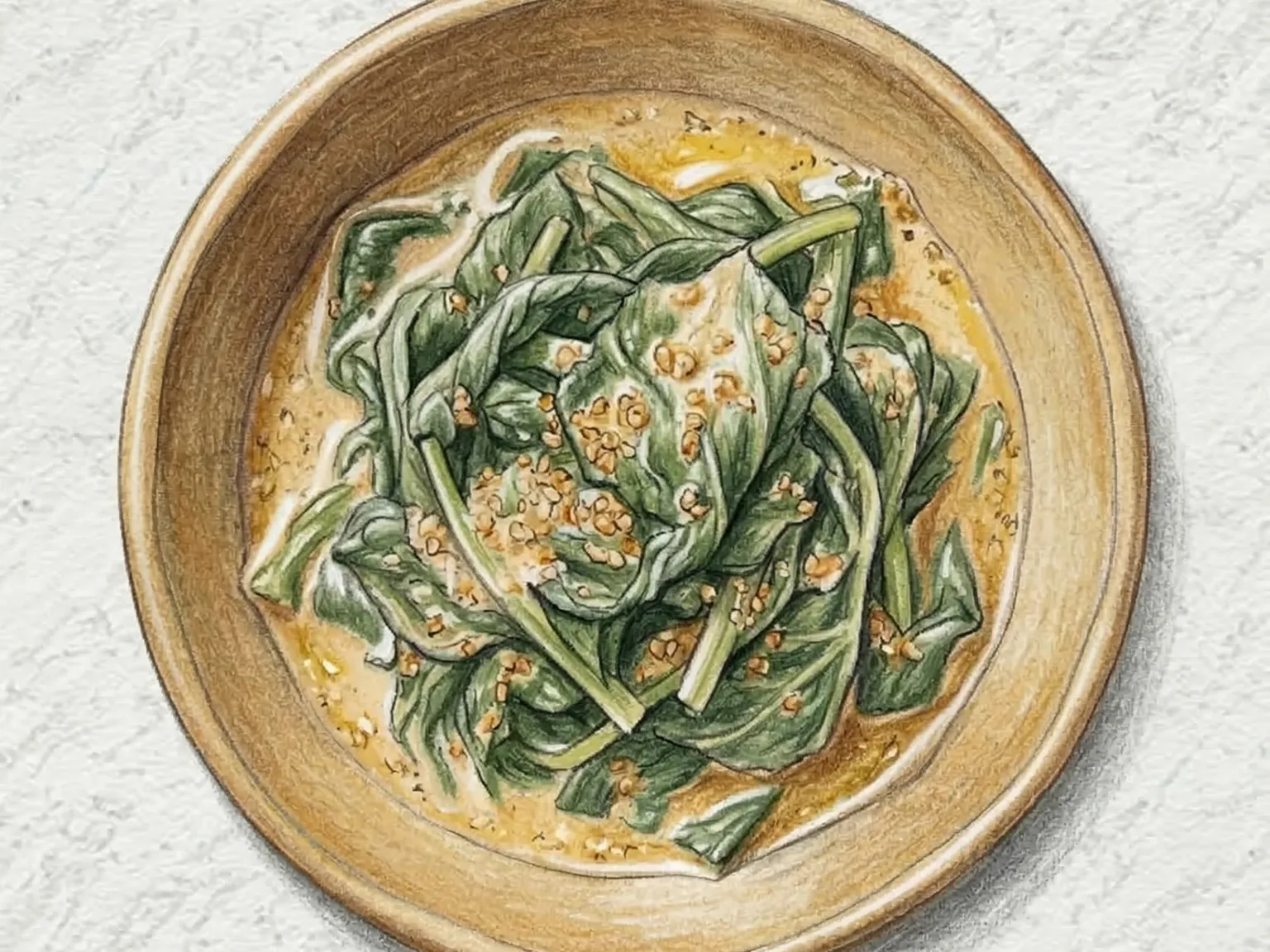
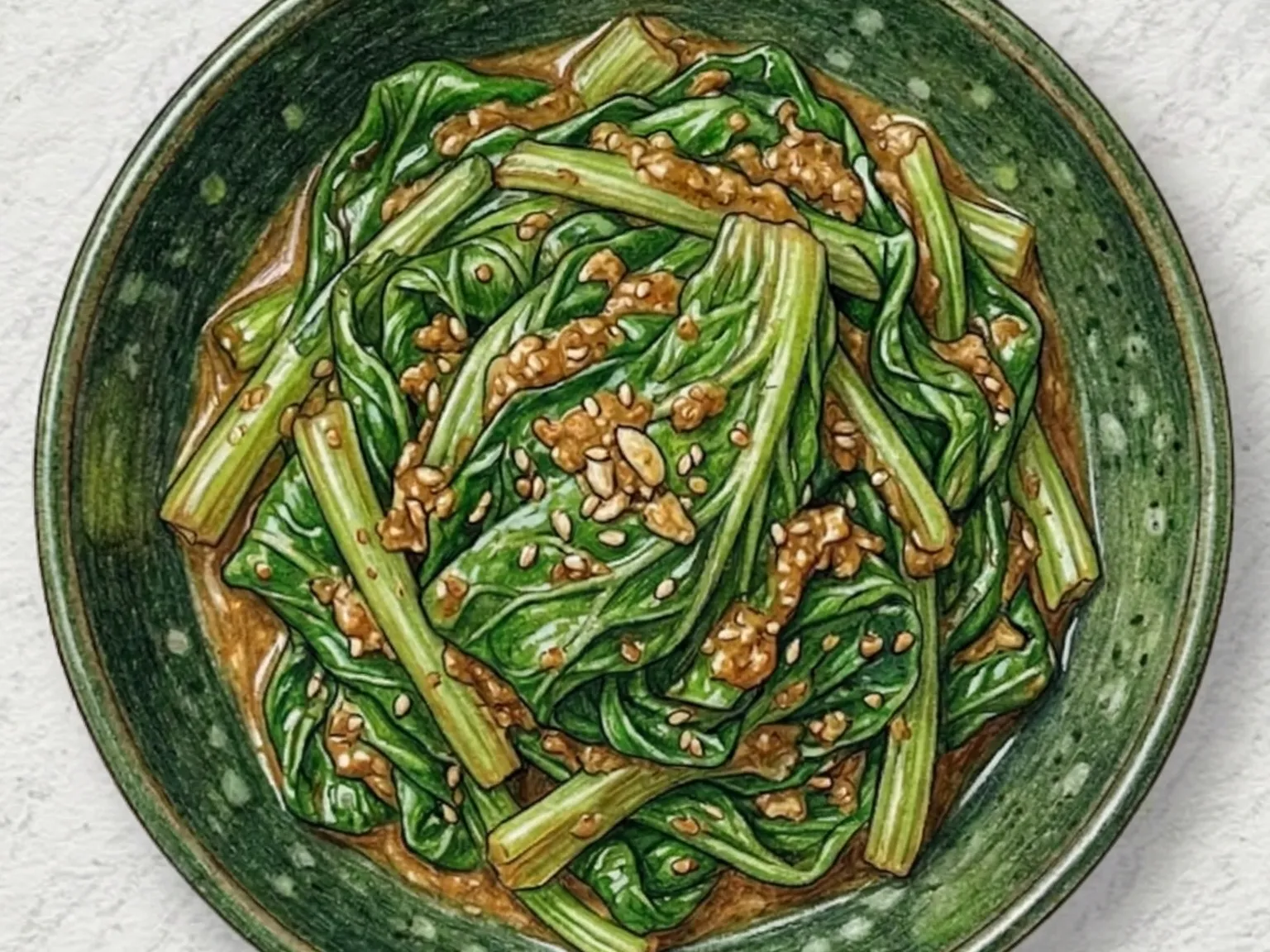
Geundae - Swiss chard in Korean kitchens - has been used in doenjang soup and namul for generations. Because the stems are substantially thicker than the leaves, they are blanched separately: stems go in first for thirty seconds, then leaves join for another thirty. After squeezing dry, the greens are hand-dressed with doenjang, soup soy sauce, garlic, and perilla oil, allowing the fermented paste's earthy depth to merge with chard's faintly bitter, mineral flavor. Perilla powder stirred in last thickens the dressing into a clinging coating without adding liquid. Chard leaves hold up better than spinach after dressing, making this namul a sturdy banchan that does not wilt quickly.
Adjust Servings
Instructions
- 1
Wash Swiss chard and split thick stems lengthwise.
- 2
Blanch for 1 minute, then rinse in cold water.
- 3
Squeeze dry and cut into bite-size lengths.
- 4
Combine doenjang, soup soy sauce, garlic, and scallion.
- 5
Toss in the chard, then add perilla powder and oil.
- 6
Adjust seasoning and serve.
As an Amazon Associate, we may earn from qualifying purchases.
Tips
Nutrition (per serving)
More Recipes

Korean Seasoned Perilla Sprout Namul
Kkaetsun-namul-muchim uses young perilla shoots rather than the mature leaves, blanched and dressed with doenjang and perilla oil. Kkaetsun has more tender stems and a more concentrated aroma than full-grown kkaennip, and it appears in traditional markets mainly from summer into early autumn. Trimming the thick lower stems and blanching for just forty seconds preserves the fragrance while softening the fibrous stalks. Hand-dressing with doenjang, soup soy sauce, garlic, and deulgirum (perilla oil) creates a double layer of herbal nuttiness - the fermented paste's earthy umami meeting the shoot's intense green perfume. Perilla oil is preferred over sesame oil here because it belongs to the same botanical family as the shoots, creating a more harmonious pairing. This seasonal namul is a strong alternative when you want something beyond the usual sigeumchi (spinach).

Korean Seasoned Amaranth Greens
Amaranth greens - biryeom - are a summer vegetable with deep green, purple-tinged leaves that bleed reddish into the blanching water. Blanched one minute, squeezed, and dressed with doenjang, soup soy sauce, garlic, and scallion. Perilla oil replaces sesame oil, lending a herbal note matching amaranth's mineral taste. The leaves hold firmer than mallow or spinach, gripping the dressing without collapsing. A countryside banchan tied to the short summer harvest.

Korean Seasoned Napa Cabbage Namul
Boiled napa cabbage dressed with doenjang and perilla, passed down through generations of Korean home cooks. The cabbage boils two minutes - leaves collapse while white stems stay slightly firm - then is rinsed, squeezed, and cut. Perilla oil gives a distinctly herbal quality, and perilla powder thickens the dressing into a paste clinging to each piece. This quiet, understated banchan pairs well with clear soups and plain rice.

Korean Seasoned Radish Greens Namul
Dried radish greens are soaked, boiled until pliable, and dressed in a seasoning anchored by doenjang and ground perilla seeds. The drying process concentrates the fiber in the greens, giving them a satisfying chew that persists even after boiling: the outer layer turns silky while the inner stem retains a springy resistance. Doenjang supplies the salty, fermented backbone, and ground perilla seeds melt into a creamy coating that softens the roughness of the greens on the palate. A generous pour of perilla oil ties the dressing together, adding a glossy sheen and a rich, nutty fragrance. Minced garlic and chopped green onion introduce a sharp aromatic layer that cuts through the heaviness. Each bite releases more of the siraegi's own deep, vegetal flavor, a taste that builds rather than fades. Paired with steamed rice, the doenjang's salinity and the perilla's richness draw out the natural sweetness of the grain.

Korean Pork & Swiss Chard Stir-fry
This hearty stir-fry combines pork shoulder and Swiss chard in a doenjang-based sauce that delivers deep, earthy umami. Separating the chard stems from the leaves and adding them at different times preserves contrasting textures: the stems remain snappy while the leaves wilt into tender ribbons. Doenjang neutralizes any gamey pork notes and builds a robust savory backbone, finished with sesame oil for a nutty warmth. A touch of Korean chili flakes introduces mild heat that rounds out the dish. It pairs naturally with a bowl of steamed rice for a complete, nourishing meal.

Korean Stir-fried Radish Greens with Perilla
Siraegi deulkkae-bokkeum is a Korean stir-fry of pre-boiled dried radish greens seasoned with soup soy sauce and garlic, then cooked in perilla oil and finished with generous perilla powder. The greens are first tossed in the seasoning to let the flavors penetrate, stir-fried for three minutes, then simmered briefly with water and perilla powder until a thick, nutty sauce coats every strand. Green onion added at the end provides a fresh aromatic lift. Compared to the doenjang-based siraegi jorim, this version leans lighter and more distinctly nutty from the perilla.