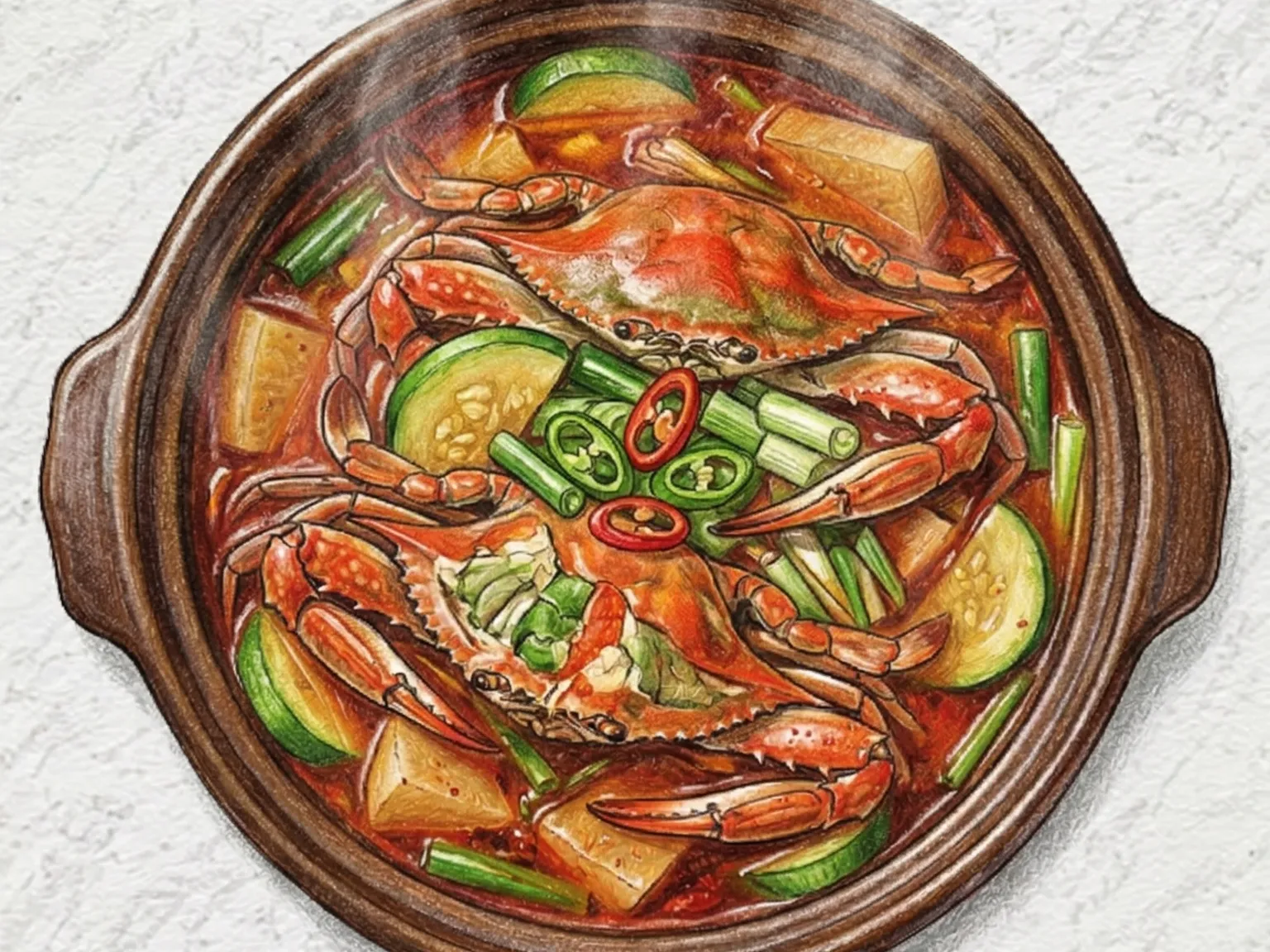
Korean Spicy Blue Crab Soup
Quick answer
Ggotge-tang is a spicy Korean crab soup built around whole blue crabs that infuse the broth with a concentrated, briny seafood depth.
What makes this special
- Ggotge-tang simmers whole blue crabs to infuse a spicy broth with concentrated shellfish richness.
- Blue crab shells release a deep shellfish umami that defines the broth
- Dissolved roe from female crabs intensifies the broth's flavor concentration
Key ingredients
Core cooking flow
- 1 Scrub 900 g blue crabs under cold water with a brush, then lift off the top...
- 2 Put 1400 ml water and 250 g Korean radish in a pot and simmer over medium heat for about 8 minutes.
- 3 Dissolve 1 tbsp doenjang through a strainer so it disperses without lumps, t...
Ggotge-tang is a spicy Korean crab soup built around whole blue crabs that infuse the broth with a concentrated, briny seafood depth. The shells release their marine richness as they crack apart during simmering, forming the structural foundation of the pot. Doenjang dissolved into the broth adds fermented complexity, while gochugaru delivers a persistent heat that compounds with each spoonful. Radish chunks sweeten and clarify the liquid, and zucchini with green onion fill the bowl with color and contrasting texture. Before cooking, the crabs should be scrubbed clean under cold water and cleaned of their sand pouches and gills, which eliminates any off-flavors. Scoring the claws lightly with the back of a knife before the pot goes on the heat makes extracting the claw meat easier at the table. Female crabs in season carry bright orange roe inside the top shell that dissolves into the broth and intensifies its richness. The real reward at the end of the meal is mixing leftover rice directly into the crab's top shell with the residual roe and braising juices, a practice Korean diners regard as the true finish of the meal. Blue crab season peaks in spring and autumn.
Instructions
Read the steps as a cooking flow: prep, heat, seasoning, doneness control, and finish.
- 1Prep
Scrub 900 g blue crabs under cold water with a brush, then lift off the top shells and remove the sand pouches and gills.
Cut the bodies in half and lightly crack the claws with the back of a knife for easier eating.
- 2Control
Put 1400 ml water and 250 g Korean radish in a pot and simmer over medium heat for about 8 minutes.
Continue until the radish edges look semi-translucent and the broth starts tasting lightly sweet.
- 3Control
Dissolve 1 tbsp doenjang through a strainer so it disperses without lumps, then add 2 tbsp Korean chili flakes and 1.5 tbsp minced garlic. Simmer over medium heat for 3 minutes until the broth turns red and smells savory.
- 4Control
Add the cleaned crabs right away and keep the pot at a steady medium simmer for about 10 minutes.
When the shells turn bright red, skim off the rising foam carefully to keep the broth clean and reduce fishy notes.
- 5Control
Add 120 g onion, 120 g zucchini, and 2 hot green chilies, then simmer for 6 more minutes.
Stop before the zucchini collapses. It should look slightly translucent but still hold its shape.
- 6Control
Season with 1 tbsp soup soy sauce, add 60 g green onion, and simmer only 2 more minutes.
If the broth tastes thin, add a little more radish and simmer 5 extra minutes before serving.
After the steps
Pick a recipe that fits this dish.
Continue with shared ingredients, meal pairings, or a similar method.
Recipes That Go Well With This
More Soups →Based on shared ingredients and meal pairing
Korean Spring Blue Crab Stew
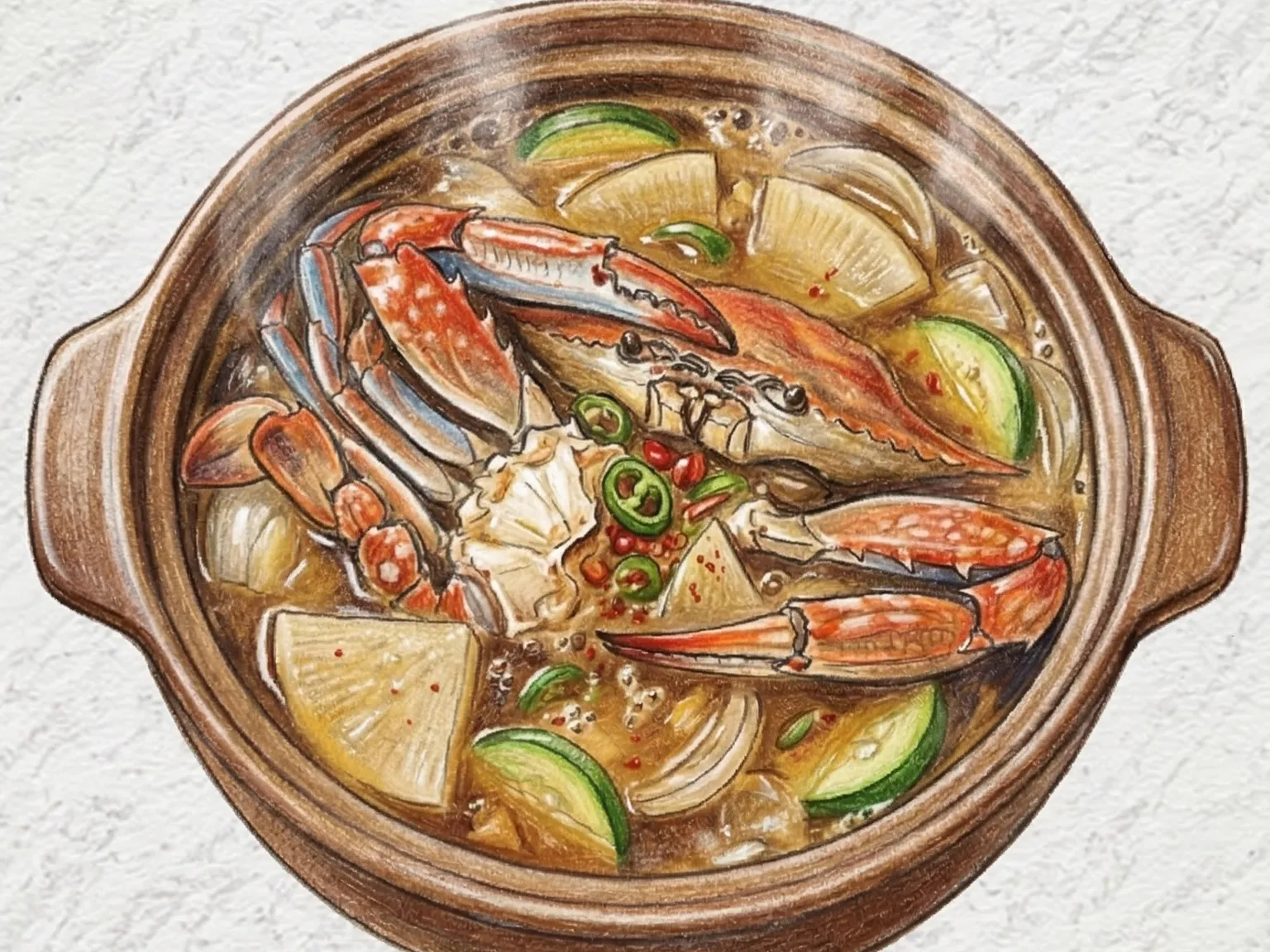
Kkotgetang is a classic Korean spicy crab stew made with 600g of whole blue crab simmered until the shells release their full flavor into the broth. Gochugaru and a touch of doenjang season the liquid with heat and fermented depth, while radish and zucchini turn sweet as they absorb the crab-infused stock. Two Cheongyang chilies push the spice level higher, and green onion adds a fresh finish. Picking the crab meat from the shell while sipping the hot, briny broth is half the enjoyment. Spring blue crabs are prized for their fuller flesh, making that the ideal season to prepare this dish.
Korean Spicy Blue Crab Seafood Stew
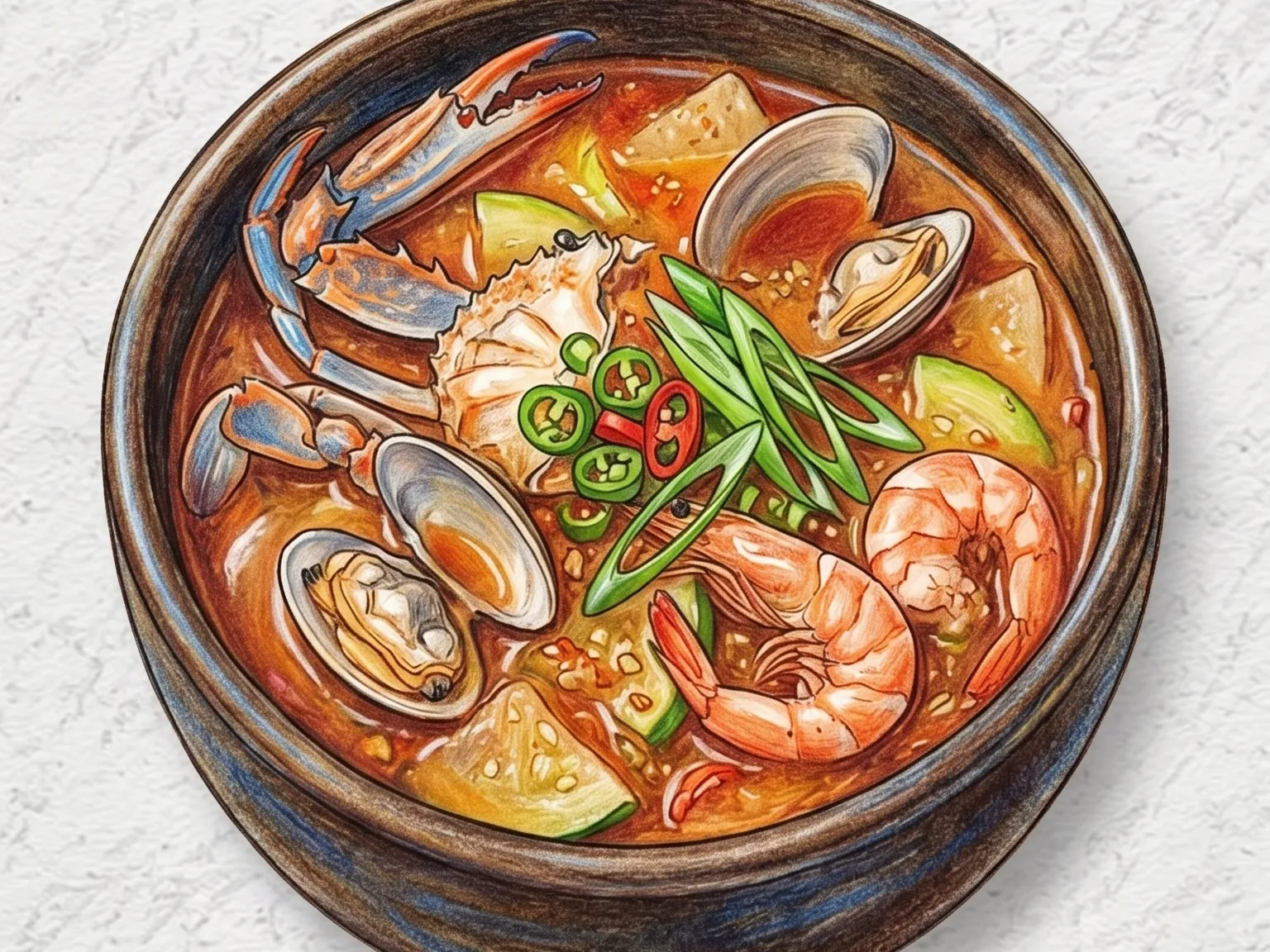
Kkotge haemul jjigae is a Korean seafood stew that combines blue crab, Manila clams, and shrimp in 1.2 liters of anchovy-kelp stock to build the most layered possible ocean flavor. Each shellfish contributes a distinct profile to the broth: blue crab adds a sweet, nutty richness from the body and roe, clams release a clean briny depth, and shrimp fold in their characteristic sweetness and concentrated umami. Together they create a broth with complexity that no single ingredient could produce on its own. Radish and zucchini absorb the seafood-infused liquid as they cook, becoming tender and carrying the flavor deep into their flesh. Doenjang and gochugaru form the seasoning backbone, layering fermented savoriness and spice into what would otherwise be a straightforward clear broth. Cheongyang chili and sliced green onion go on last, brightening the surface and extending the clean, cool finish that is the hallmark of well-made Korean seafood stew. Adding the crab first and letting it simmer before introducing the other shellfish is the key step -- it gives the stock time to take on the crab's full flavor before everything else goes in.
Korean Sea Squirt Mixed Rice
Fresh sea squirt is tossed with vinegared gochujang and sesame oil over warm rice for a bold seafood bibimbap. The sea squirt carries an intense, distinctive ocean flavor that fills the palate, tempered by the tangy sweetness of the sauce. Julienned cucumber and torn lettuce provide crisp contrast, while roasted seaweed flakes and sesame seeds add a nutty undertone. Mixing should happen right before eating to preserve the sea squirt's volatile aroma.
Korean Freshwater Crab Spicy Soup
Freshwater crabs are halved, thoroughly cleaned, and simmered in a stock built from radish and doenjang that draws out their intense, briny umami over forty minutes of steady cooking. Gochugaru and cheongyang chili build up layers of fiery heat, while zucchini and radish contribute natural sweetness that tempers the spice. Pressing the soybean paste through a strainer before adding it keeps the broth smooth and clear rather than grainy, and the result is a bold, aromatic stew deeply rooted in Korean regional tradition.
Serve with this
Korean Seasoned King Oyster Mushroom
Saesongi-beoseot-muchim steams 250 grams of king oyster mushrooms, torn into strips along the grain, for six minutes over high heat to preserve their chewy, fibrous texture better than boiling would. After cooling slightly and squeezing out excess moisture, the strips are tossed in a dressing of soy sauce, vinegar, chili flakes, garlic, and sugar. The vinegar provides a tangy lift, while the chili flakes introduce gentle warmth without overwhelming the mushroom's mild flavor. Sesame oil and sesame seeds finish the dish with a nutty aroma. It holds up well when chilled and served cold, making it a convenient banchan to prepare ahead of time.
Korean Wild Chive Pickle (Spring Chive Soy Brine)
Dallae jangajji is a seasonal Korean pickle made by submerging spring wild chives in a brine of soy sauce, vinegar, and sugar alongside sliced Cheongyang chili and sesame seeds. Cleaning the soil from the bulb-like roots and cutting the chives to five-centimeter lengths prepares the main ingredient; the brine must then be cooled fully before pouring, because residual heat drives off the chives' volatile, peppery aroma rapidly. Pouring while still hot can strip much of the sharp fragrance in seconds. After one day of refrigeration the pickle is ready to eat, but by day three the brine penetrates the stalks fully and the flavor deepens. Served alongside grilled meat, the sharp garlicky bite of the chives and the tangy acidity of the brine cut through the fat cleanly -- a pairing that makes this a prized springtime side dish.
Korean Chive Clam Jeon (Garlic Chive and Clam Seafood Pancake)
Buchu-bajirak-jeon is a seafood pancake of garlic chives and clam meat, pan-fried in a batter made with a mix of all-purpose pancake flour and rice flour. The rice flour addition increases the chew and gives the finished jeon a slightly more resilient texture than plain flour batters. Clam meat releases a briny, oceanic liquid as it cooks that seeps into the batter and flavors it throughout, while the chives add a sharp, grassy counterpoint. Minced garlic and diagonally sliced cheongyang chili worked into the batter suppress any fishiness and build a layered fragrance. A generous amount of oil in the pan over medium heat produces edges that crisp and brown like the outside of a fritter. Waiting until the bottom is fully set before flipping prevents the pancake from tearing. Served with soy dipping sauce or a seasoned soy mixture, the clean salinity of the clams comes through clearly.
Similar recipes
Korean Doenjang Kkotge Tang
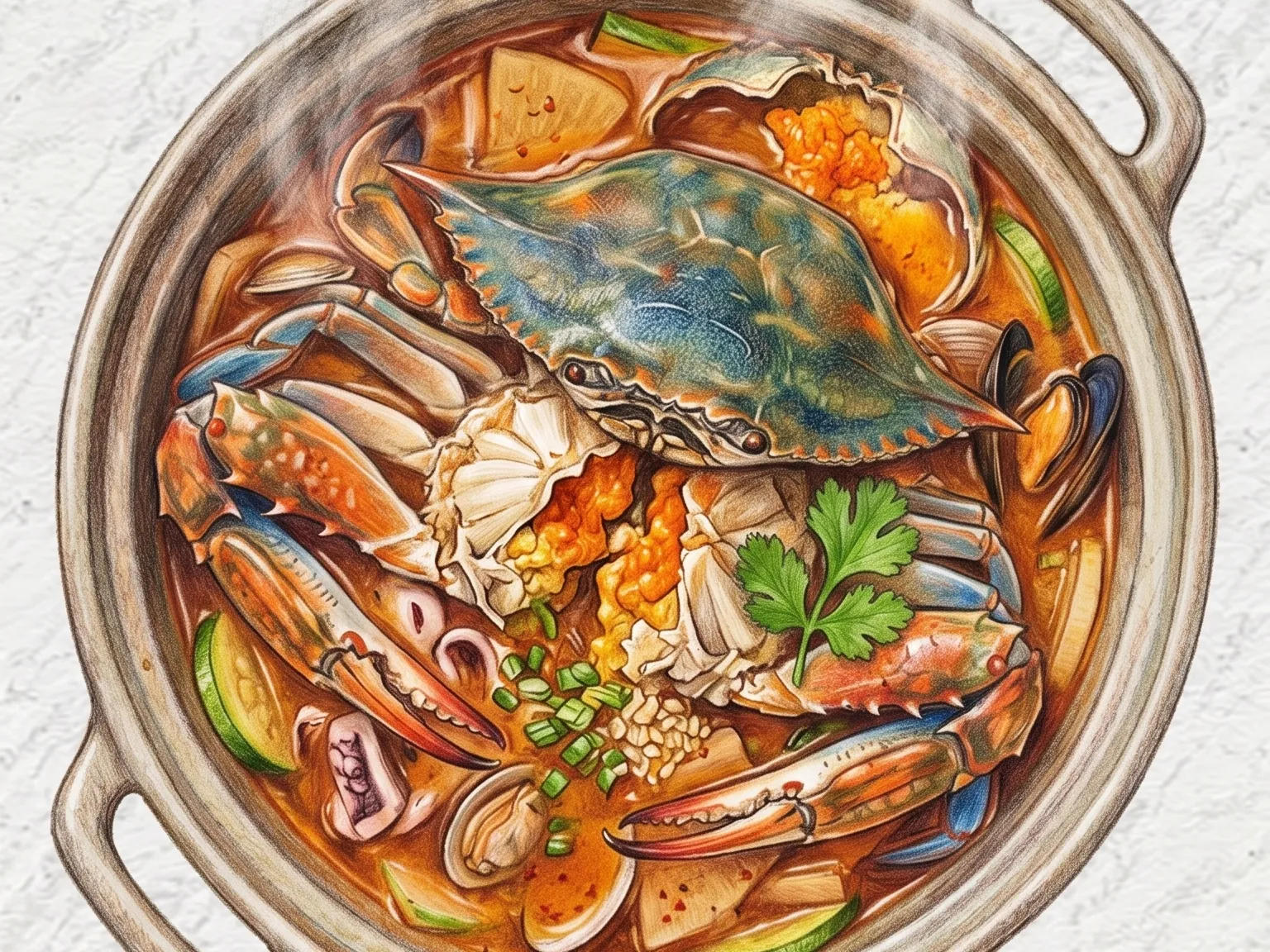
Kkotge tang doenjang is a Korean blue crab stew that uses a full 800g of crab simmered in a doenjang-forward broth, where fermented soybean paste and the crab's natural essence are the two dominant flavors. As the shells cook, they release a deeply savory stock, and radish, zucchini, and onion simmer in that liquid and add layers of sweetness and body. Unlike the more common spicy gochujang-based crab stews, this version leads with doenjang's earthy depth and fermented complexity. Gochugaru and Cheongyang chili provide a secondary heat that balances the richness without taking over. Adding tofu keeps the texture varied and lightens the heaviness of the broth slightly. The crabs turn a vivid orange as they cook, a reliable visual cue that the meat is ready to pull cleanly from the shell. The fermented character of the doenjang suppresses any fishy edge from the crab, making the stew approachable even for those who do not normally gravitate toward shellfish. Served with rice to soak up the broth, it makes a satisfying complete meal.
Korean Monkfish Soup (Spicy Southern Coastal Fish Broth)
Agwi-tang is the soup form of Korea's monkfish repertoire, originating along the fishing villages of the southern coast where the fish - known as agwi or agu depending on dialect - is caught and sold fresh daily. Where braised preparations like agwi-jjim build intensity through reduction and heavy sauce, the tang prioritizes the broth. Anchovy stock is the base; radish simmers in it for eight minutes to release its sweetness before the monkfish enters. As the fish cooks gently over medium heat, its collagen dissolves into the liquid and gives it body. The monkfish flesh itself is mild and gelatinous, a texture unlike most white fish. Bean sprouts go in at the end to contribute crunch against the soft fish. Sliced green onion and a hit of gochugaru cloud the broth red and add spice. In coastal towns this was morning food - hangover soup served steaming at predawn markets to fishermen and dock workers before the day started.
Yukgaejang (Fiery Shredded Beef and Vegetable Soup)
Yukgaejang is a fiery Korean beef soup that starts with brisket simmered until it can be pulled apart along the grain into long, thin shreds. The shredded meat is then hand-mixed with red pepper flakes, soup soy sauce, sesame oil, and minced garlic so the seasoning penetrates each strand before the final cook. Bracken fern, bean sprouts, and generous lengths of green onion join the pot, and everything boils together for thirty minutes in the brisket stock, which turns a deep red from the chili. The fern contributes an earthy chew, the sprouts add a clean crunch, and the green onion breaks down into the broth, lending natural sweetness that tempers the heat.