Korean Street Waffle (Crispy Folded Waffle with Jam and Cream)

Korean Street Waffle (Crispy Folded Waffle with Jam and Cream)

Quick answer

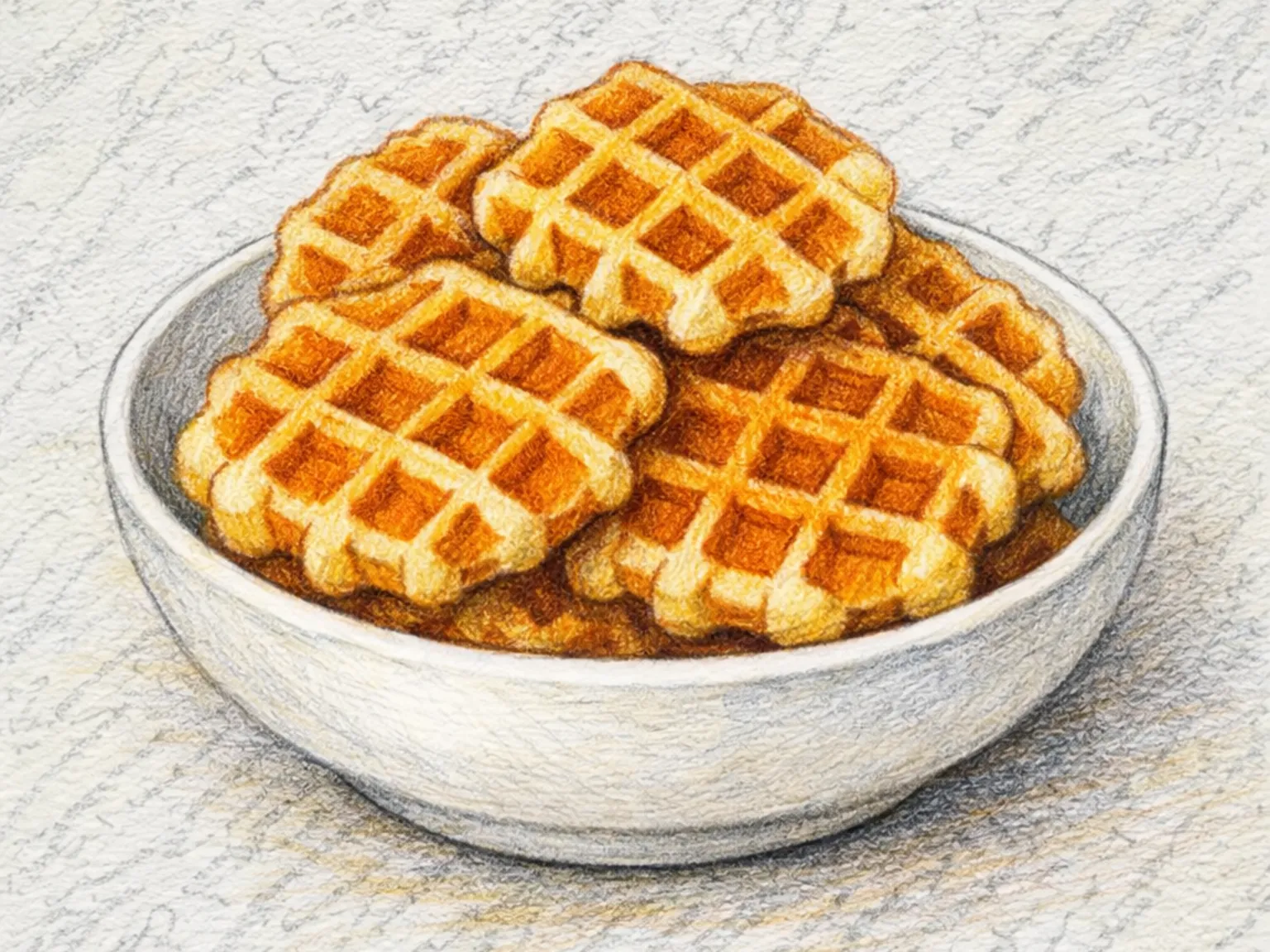
Gilgeori waffle is a Korean street stall dessert made from a thin batter of cake flour, egg, milk, and melted butter, cooked in a waffle iron and folded around a filling...

What makes this special

  • Folded street waffles feature a crisp outer shell and a soft filling of strawberry jam and cream.
  • Minimal mixing keeps gluten down for crisp outside and fluffy inside
  • Waffle iron must be fully preheated before pouring batter to get defined grid marks
Total time
22 min
Level
Easy
Servings
2 servings
Ingredients
9
Calories
421 kcal
Protein
8 g

Key ingredients

cake floursugarbaking powdersaltegg

Core cooking flow

  1. 1 Combine 130g cake flour, 28g sugar, 4g baking powder, and 1g salt in a bowl...
  2. 2 Whisk together 1 egg, 120ml milk, and 22g melted butter in a separate bowl.
  3. 3 Preheat the waffle maker fully for 3 to 4 minutes and brush lightly with oil.

Gilgeori waffle is a Korean street stall dessert made from a thin batter of cake flour, egg, milk, and melted butter, cooked in a waffle iron and folded around a filling of strawberry jam and whipped cream. Using cake flour and mixing the batter only until just combined keeps gluten development minimal, which is what produces the characteristic contrast between a crisply patterned exterior and a soft, airy interior. Overmixing develops gluten strands that result in a tough, chewy texture after baking. The waffle iron must be fully preheated before the batter is poured to ensure sharp grid definition and even browning, and a generous coating of oil or butter on the plates prevents sticking. Immediately after cooking, the waffle holds trapped steam inside its pockets, so a brief rest on a cooling rack is important -- skipping this step causes condensation to collect underneath, making the bottom layer soggy before the filling even goes in. Because the batter itself carries only a light butter fragrance rather than heavy richness, the gentle dairy sweetness of the cream and the tangy brightness of the strawberry jam come through with clarity. Folded in half and held in one hand, the waffle is designed for eating while walking -- a functional form that is central to its identity as street food.

Prep 12min Cook 10min 2 servings

Instructions

Read the steps as a cooking flow: prep, heat, seasoning, doneness control, and finish.

6 steps
  1. 1
    Season

    Combine 130g cake flour, 28g sugar, 4g baking powder, and 1g salt in a bowl and whisk together until uniform.

  2. 2
    Prep

    Whisk together 1 egg, 120ml milk, and 22g melted butter in a separate bowl.

    Pour gradually into the dry ingredients and whisk until most lumps are gone. Stop mixing at that point - over-mixing activates gluten and makes the waffles tough.

  3. 3
    Heat

    Preheat the waffle maker fully for 3 to 4 minutes and brush lightly with oil.

    Pour in the batter and close. Cook for 3 to 4 minutes; when steam stops coming out, the waffle is done.

  4. 4
    Finish

    Transfer the waffle to a cooling rack for 1 minute to let surface moisture escape.

    Putting it directly on a plate traps steam and makes the bottom soggy.

  5. 5
    Step

    Spread 40g strawberry jam evenly over one half of the waffle.

    Pile 120g whipped cream generously on top of the jam.

  6. 6
    Finish

    Fold in half or cut in half and serve immediately.

    The whipped cream melts quickly so serve as soon as it is assembled.

After the steps

Pick a recipe that fits this dish.

Continue with shared ingredients, meal pairings, or a similar method.

Recipes That Go Well With This

More Street food →

Based on shared ingredients and meal pairing

Korean Street Egg Bread (Sweet Batter Muffin with Whole Egg)
Shared ingredient: cake flour Desserts

Korean Street Egg Bread (Sweet Batter Muffin with Whole Egg)

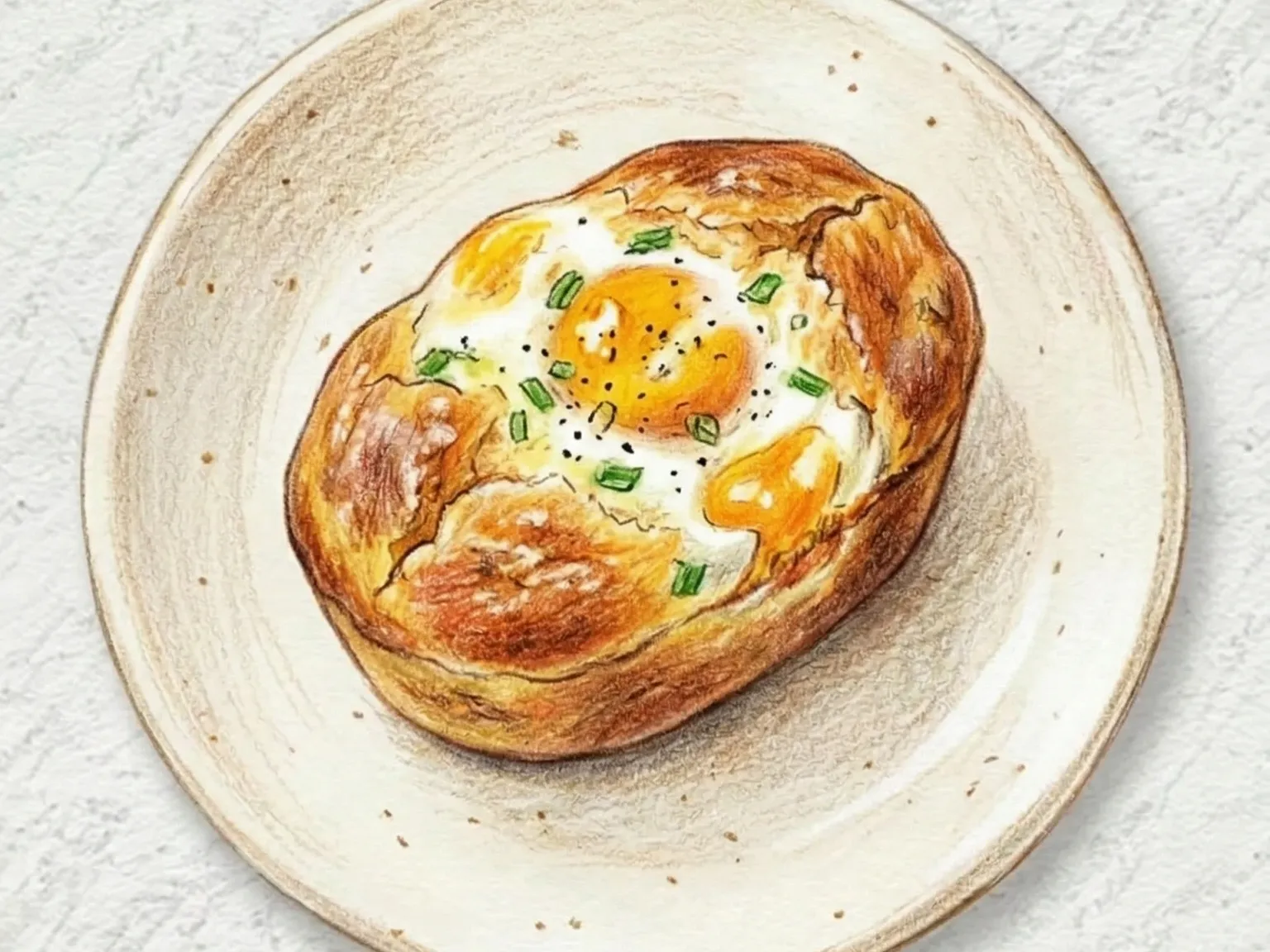
Winter streets in Seoul feature this warm handheld snack prepared by baking a whole egg atop a sweet batter. The base consists of cake flour, baking powder, milk, and melted butter poured into muffin molds. Adding a layer of finely diced ham beneath the egg creates a salty contrast against the sweetness of the dough. When baked at 180 degrees Celsius, sixteen minutes results in a soft and runny yolk, while eighteen minutes produces a firm center. Vanilla extract mixed into the batter helps neutralize the natural scent of the egg for a clean finish. A light dusting of dried parsley on the domed surface adds a subtle herbal scent as the bread turns golden in the oven. Small amounts of shredded cheese can be added to the batter to balance the sweetness. Serving the bread while it remains warm ensures the interior stays moist. This egg bread functions well as a quick breakfast option and can be made in paper muffin cups if metal molds are unavailable.

Korean Peanut Bread (Mold-Baked Peanut-Studded Street Snack)
Shared ingredient: baking powder Street food

Korean Peanut Bread (Mold-Baked Peanut-Studded Street Snack)

Ttangkong-ppang is Korean peanut bread baked in a shaped mold from a batter of flour, eggs, milk, and melted butter mixed with roughly chopped roasted peanuts. The natural oils in the peanuts infuse the batter with a toasted, nutty richness, and each peanut chunk provides a crunchy interruption in the soft crumb. Cooking on medium-low heat and flipping regularly develops a thin crust on both sides while butter keeps the interior moist. Sugar supplies sweetness and a pinch of salt balances against the nuttiness, resulting in a flavor profile that stays engaging bite after bite.

Korean Rolled Omelette (Layered Vegetable Egg Roll)
Serve together Side dishes

Korean Rolled Omelette (Layered Vegetable Egg Roll)

Gyeran-mari - Korean rolled omelette - is a staple of Korean lunchboxes and dinner tables, a dish every Korean home cook masters early. Finely diced carrot, onion, and scallion are mixed into beaten eggs and poured in a thin stream across a lightly oiled rectangular pan. When the egg layer is half-set, it is rolled from one side to the other, then more egg mixture is poured beside the roll and the process repeats three to four times, building concentric yellow layers visible when sliced. Air trapped between the thin sheets gives the omelette its characteristic pillowy softness. Temperature control is critical - too hot and the egg browns; too cool and the layers will not bond. After cooking, wrapping the roll in a bamboo mat or kitchen towel for two minutes sets its shape into a clean cylinder. Found in school cafeterias, picnic bento boxes, and family dinners across Korea.

Korean Sausage Skewers
Similar recipe Street food

Korean Sausage Skewers

Sosiji kkochi are Korean sausage skewers made by scoring Vienna sausages deeply along their length and threading two or three onto wooden sticks, then pan-frying them until golden brown all over. The score marks serve a functional purpose: as the sausages heat, the cuts open up, allowing heat to penetrate to the center more evenly and creating edges that caramelize slightly and turn crisp. A thin film of oil in a medium-heat pan and steady rotation ensures even color across the entire surface, producing a skin that snaps on the outside while the inside stays juicy and springy. Ketchup and mustard are the classic accompaniments, with the tomato sweetness and the sharp, pungent bite of the mustard complementing the salt and fat of the sausage. Threading rice cakes between the sausage pieces transforms the skewer into a sotteok-sotteok style, a widely popular Korean street food variation. The dish comes together in under fifteen minutes and requires no special equipment beyond a pan and wooden skewers, making it a practical choice for a quick snack, a children's side dish, or a lunchbox item that holds up well at room temperature.

Serve with this

Korean Sweet Corn Latte (Butter Sauteed Corn Milk Drink)
Drinks Easy

Korean Sweet Corn Latte (Butter Sauteed Corn Milk Drink)

Sweet corn latte begins by sauteing cooked corn kernels in butter until fragrant, then simmering them in milk to draw out the corn's natural sugars before blending everything smooth. The butter amplifies the starchy, roasted aroma during the initial saute, coating each kernel so that the fat-soluble flavor compounds dissolve fully into the milk during the five-minute simmer. Blending the mixture until completely smooth and then straining it through a fine sieve removes any remaining hull pieces, producing a texture as silky as a custard sauce. This straining step makes a noticeable difference in the final quality. Condensed milk adds a rounded sweetness, and a small amount of white pepper introduces a faint spiced warmth that gives the drink depth beneath the sweetness. It works equally well served hot in a ceramic mug or chilled and poured over ice; the corn aroma remains vivid in both versions.

🍺 Bar Snacks 🧒 Kid-Friendly
Prep 8min Cook 10min 2 servings
Gotgam Cream Cheese Roll (Dried Persimmon Rolls)
Desserts Easy

Gotgam Cream Cheese Roll (Dried Persimmon Rolls)

Gotgam cream cheese roll is a no-cook Korean dessert that requires nothing more than a knife, a bowl, and a refrigerator. Dried persimmons are slit open and flattened into thin sheets, each one acting as the outer wrapper. The filling is cream cheese mixed with honey and fresh lemon juice to balance its natural richness with acidity, and finely chopped walnuts are folded in throughout to add a crunchy, nutty element to every bite. The filling is spread across the opened persimmon, which is then rolled tightly and wrapped in plastic wrap. Twenty minutes in the refrigerator firms the roll enough to slice cleanly. Dipping the knife in warm water and wiping it dry before each cut produces the smoothest cross-sections. The finished slices reveal clearly defined layers: the chewy, caramel-sweet dried persimmon on the outside, the tangy cream cheese in the middle, and flecks of walnut distributed throughout. The combination makes it a natural pairing with wine or a polished addition to a traditional holiday table.

🍺 Bar Snacks 🎉 Special Occasion
Prep 20min 2 servings
Korean Anchovy Broth Thin Noodle Soup
Noodles Easy

Korean Anchovy Broth Thin Noodle Soup

Anchovy somyeon is the noodle soup Korean families fall back on when the kitchen offers little to work with - dried anchovies, a strip of dashima kelp, and a bundle of thin wheat noodles are enough. The broth starts with dried anchovies soaked briefly to cut any bitterness, then simmered with dashima for fifteen minutes before being strained to produce a clear liquid with a faint oceanic sweetness and deep umami. Somyeon - hair-thin wheat noodles - are cooked in a separate pot to keep their starch from clouding the broth, then rinsed repeatedly under cold water until every strand separates cleanly. The noodles go into a bowl of hot broth and are finished with sliced scallion, a small drop of sesame oil, and often a sheet of toasted gim. A few drops of soy sauce tune the salt level, and a soft-boiled egg or a few slices of tofu can round it into a full meal. The appeal of the dish is its restraint: no chili paste, no fermented base, just the clean savor of anchovy stock meeting springy noodles. Korean mothers have served this as a quick midday meal for generations, and it endures as comfort food in its most unadorned form.

🏠 Everyday ⚡ Quick
Prep 10min Cook 15min 2 servings

Similar recipes

Korean Jjajang Tteokbokki
Street food Easy

Korean Jjajang Tteokbokki

Jjajang tteokbokki simmers chewy rice cake sticks in a sauce of black bean paste (chunjang) stir-fried with ground pork, onion, and cabbage. The critical first step is pre-frying the chunjang in a generous amount of oil before adding any other ingredients: raw black bean paste carries a flat, slightly bitter taste, but several minutes of stirring in hot oil transforms it, removing the harsh edge and developing the characteristic deep, roasted sweetness that defines the dish. As the sauce reduces and thickens, it clings heavily to each rice cake, delivering an intense hit of savory black bean flavor with every bite. Unlike gochujang-based tteokbokki, there is no chili heat present at all, making this a version accessible to those who find standard tteokbokki too spicy. The ground pork renders fat into the sauce as it cooks, adding richness and making the sauce glossier and heavier in body. Julienned cucumber scattered on top at serving provides a fresh, crunchy contrast that cuts through the richness of the black bean sauce and brightens the overall flavor of the bowl.

🧒 Kid-Friendly 🌙 Late Night
Prep 10min Cook 15min 2 servings
Korean Cream Tteokbokki (Chewy Rice Cake in Cream Butter Sauce)
Street food Easy

Korean Cream Tteokbokki (Chewy Rice Cake in Cream Butter Sauce)

Cooking rice cakes in a mixture of heavy cream, milk, and butter offers a mild alternative to the spicy gochujang-based version. The process begins with sauteing onions in butter over low heat for at least ten minutes, which converts onion starches into sugar for a natural sweetness without added sugar. Once the cream and milk are added to the softened onions, the rice cakes simmer for seven to eight minutes over medium-low heat. This allows the cakes to absorb the liquid while maintaining their characteristic dense chewiness. A final addition of parmesan cheese provides a salty contrast to the heavy cream base. Because the flavor profile resembles a cream pasta, it serves as a common entry point for people avoiding chili heat. Maintaining a steady medium-low temperature prevents the sauce from separating during cooking. Adding bacon or shrimp introduces extra protein and savory elements to the pan. The sauce consistency thickens quickly as its temperature drops, making immediate service from the pan the best way to maintain the intended texture. Swapping the parmesan for cheddar or mozzarella changes the character of the finished sauce and provides a different eating experience.

🧒 Kid-Friendly ⚡ Quick
Prep 10min Cook 15min 2 servings
Korean Honeycomb Candy (Caramel Sugar Disc with Baking Soda Puff)
Desserts Medium

Korean Honeycomb Candy (Caramel Sugar Disc with Baking Soda Puff)

Ppopgi dalgona is a Korean street candy made by melting white sugar in a small ladle over low heat, then stirring in baking soda to trigger a rapid foaming expansion. When the sugar reaches a pale amber stage, the heat is cut and baking soda with a pinch of salt is mixed in quickly: carbon dioxide releases immediately, puffing the molten sugar to two or three times its original volume within seconds. The expanded mixture is poured onto parchment and pressed flat to roughly 5 mm with an oiled plate or press, then stamped with a shape cutter before it sets. Once fully cool and rigid, the candy snaps crisply when tapped - the hallmark texture. The caramel's color at the moment the heat is removed determines the final flavor: pull it too early and the candy stays flat-sweet; let it darken a shade too far and bitterness overtakes the sweetness. The narrow window of pale amber is where the sweet-bitter balance lands correctly.

🧒 Kid-Friendly ⚡ Quick
Prep 5min Cook 10min 2 servings

Tips

Less mixing keeps waffles tender; overmixing makes them chewy.
Cool waffles briefly before filling to prevent sogginess.

Nutrition (per serving)

Calories
421
kcal
Protein
8
g
Carbs
45
g
Fat
23
g