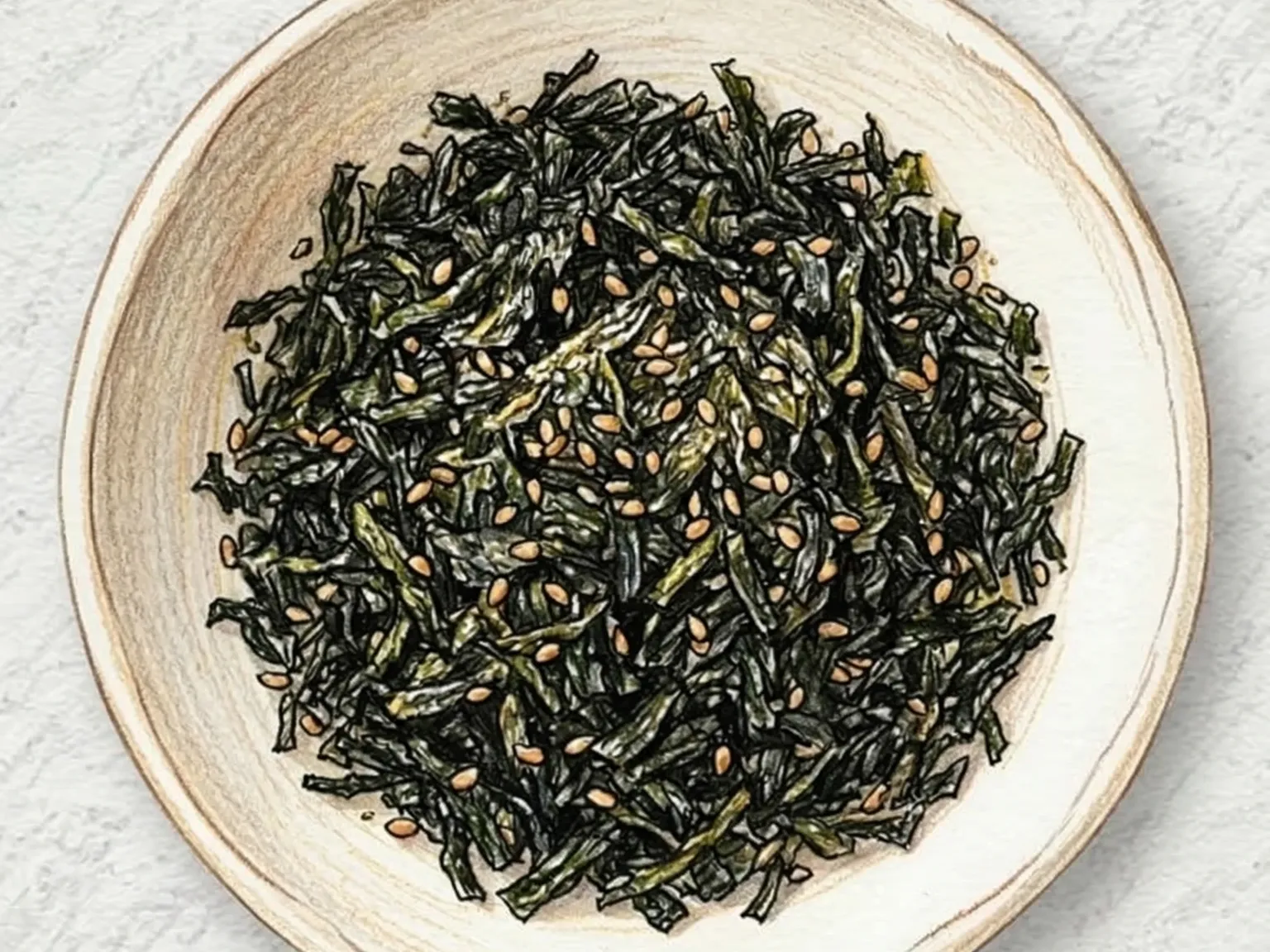
Korean Stir-Fried Dried Seaweed
Gim bokkeum - stir-fried dried seaweed - is the original Korean 'rice thief,' a banchan so compelling it makes a bowl of plain rice vanish. Dried seaweed sheets are crumbled by hand and toasted slowly over low heat in sesame oil until every trace of moisture is gone, concentrating the seaweed's nuttiness into an intensely savory crunch. A small amount of soy sauce and sugar adds a sweet-salty edge, finished with sesame seeds. The technique demands restraint: too much heat or oil and the seaweed turns soggy instead of crisp. It keeps refrigerated for over a week and doubles as a filling for jumeokbap (rice balls) or onigiri-style triangle kimbap.
Adjust Servings
Instructions
- 1
Heat sesame oil in a pan over low heat.
- 2
Add seaweed and season with salt; toss briefly.
- 3
Sprinkle with sesame seeds and serve.
As an Amazon Associate, we may earn from qualifying purchases.
Tips
Nutrition (per serving)
More Recipes

Korean Stir-Fried Kimchi (Caramelized Aged Kimchi Banchan)
Kimchi-bokkeum is the default way Korean households use up kimchi that has fermented past its fresh prime. Stir-frying tempers the sharp lactic acidity that over-ripe kimchi develops - the heat transforms the sourness into something mellower, sweeter, and more rounded. Onion goes in first and cooks until translucent, laying a sweet foundation before the kimchi and garlic join. Medium heat is essential: it drives off moisture gradually, yielding a thick, concentrated sauce rather than a watery stew. A small addition of gochugaru brightens the color, and a pinch of sugar balances the fermented tang. One tablespoon of kimchi brine amplifies the umami from the lactobacillus culture itself. The finished banchan is versatile enough to eat straight over rice, fold into fried rice, or pile on top of ramyeon.

Korean Butter Soy Stir-fried Dried Squid
Butter-soy jinmichae-bokkeum stir-fries dried shredded squid (jinmichae) in melted butter with soy sauce and oligosaccharide syrup, producing a side dish that is rich, salty-sweet, and distinctly different from the gochujang-dressed version. The butter's milk fat coats each strand, giving a smoother mouthfeel than oil-based preparations. Garlic goes into the melted butter first - just twenty seconds - followed by the soy-syrup mixture to build the glaze base, then the squid strands are added and tossed for no more than two to three minutes. Overcooking on high heat causes the squid proteins to contract and toughen, so quick handling is essential. Half a tablespoon of gochugaru adds gentle warmth and color without masking the butter flavor. This banchan is popular in children's lunchboxes and doubles as a snack alongside beer.

Korean Stir-fried Zucchini
Hobak-bokkeum is one of the quickest banchan in the Korean home-cooking repertoire. Thinly sliced Korean zucchini (aehobak) is salted for five minutes to draw out moisture - skipping this step floods the pan and produces a steamed rather than stir-fried result. Seasoning with saeujeot (salted fermented shrimp) instead of plain salt introduces a deeper marine umami that plain sodium cannot replicate; the paste is salty enough that additional salt is rarely needed. High heat and brief cooking time allow the surface of each slice to lightly caramelize, building a nutty aroma while the interior stays tender. Finished with sliced green onion, sesame oil, and toasted sesame seeds, the dish is clean and simple. All you need is one zucchini and a few pantry staples.

Korean Stir-fried Dried Whitebait Sheet
Dried whitebait sheets - paper-thin and lightly fishy - are a Korean pantry staple for quick banchan. The sheets are torn and dry-toasted to drive off moisture, giving the final dish a brittle, chip-like crunch. A glaze of gochujang, soy sauce, and oligosaccharide syrup coats both sides in the pan. The taste is salty-sweet with a fermented chili kick, and the texture stiffens as it cools - one of the rare banchan that improves at room temperature.

Korean Stir-fried Anchovies
Myeolchi-bokkeum is a foundational Korean banchan of small dried anchovies glazed in a sweet-salty coating of soy sauce and oligosaccharide syrup. The anchovies are first dry-roasted in a clean pan on low heat for three minutes to remove fishiness and build crunch. A sauce of garlic, soy sauce, and syrup is bubbled separately, and the anchovies are tossed back in for a quick, even coating. Sesame oil and toasted sesame seeds finish the dish; once fully cooled, the glaze sets firm, giving the anchovies a snappy texture that keeps well in an airtight container for over a week.

Korean Stir-fried Dried Pollock Strips
Hwangtae-chae-bokkeum is a Korean side dish of shredded dried pollock strips soaked until soft, then stir-fried in a gochujang, oligosaccharide syrup, and soy sauce glaze. The pollock absorbs the seasoning as it cooks, turning chewy and moist with a balanced spicy-sweet coating. Once prepared, it keeps well in the refrigerator for several days, making it a practical banchan to have on hand. It works equally well in lunchboxes and as a casual snack with drinks.