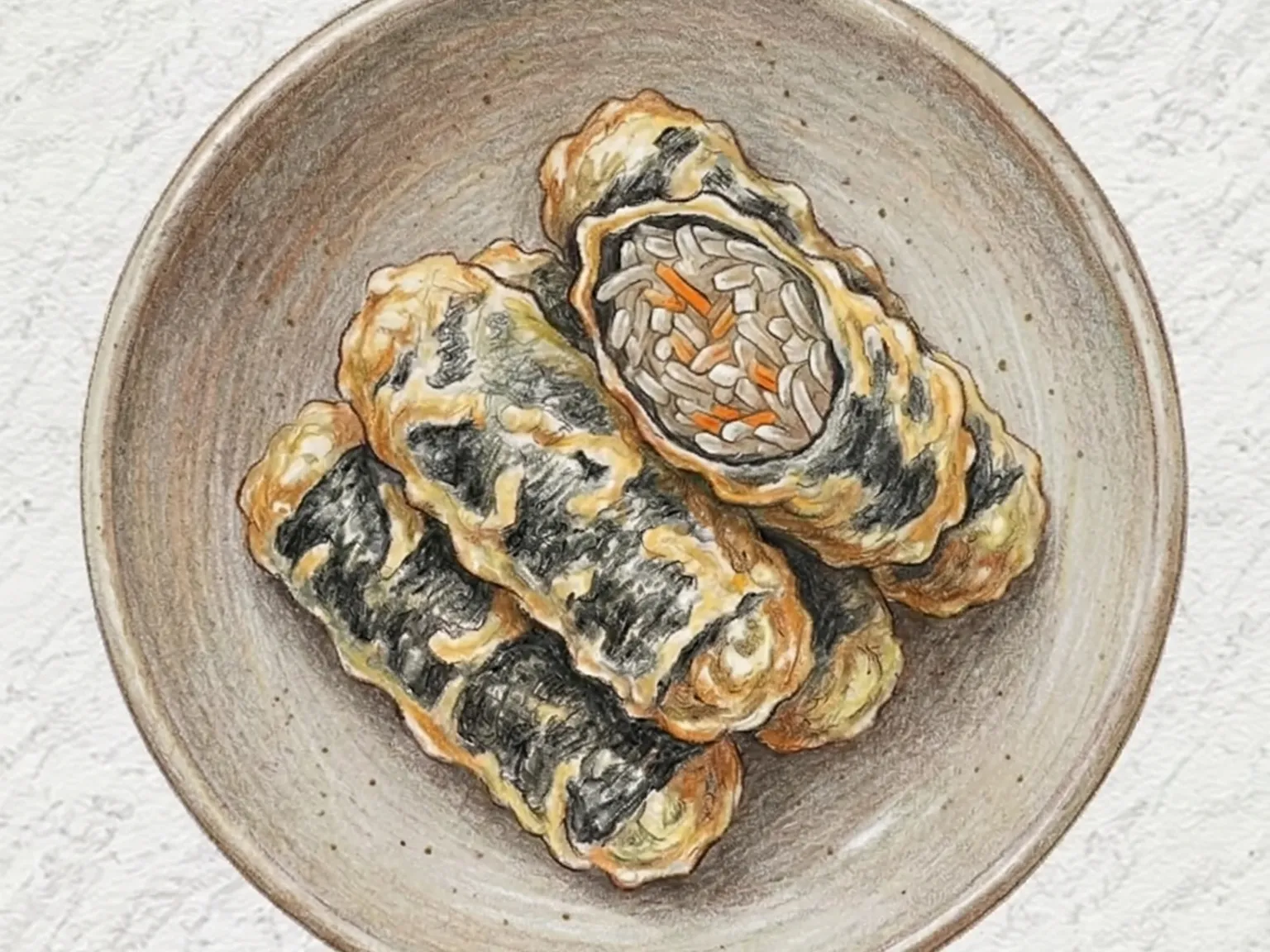
Korean Deep-Fried Seaweed Glass Noodle Roll
Boil 100 g glass noodles for 8 to 9 minutes until the centers are fully translucent, rinse and drain them, cut them to 5 to 6 cm, and season with 1 tsp each of soy sauce and sesame oil before mixing in the stir-fried carrot and onion. Spread the filling out to cool well, because hot or steamy filling can tear the seaweed. Roll firmly in half sheets, seal the seam with a little water, coat lightly in batter, and fry in 160°C oil for 4 to 5 minutes, turning often, until golden and crisp.
Quick answer
- Total time
- 30 min
- Level
- Medium
- Servings
- 2 servings
- Ingredients
- 10
About this dish
Glass noodles seasoned with soy sauce and sesame oil go into seaweed with stir-fried vegetables, rolled tight and fried.
Read more
Rolling while the filling is still hot wets the seaweed and tears it, so the filling is spread out to cool first. They also get dipped in tteokbokki sauce.
Ingredients
Instructions
- 1
Boil 100 g glass noodles for 8 to 9 minutes, until the centers turn fully translucent.
Rinse under cold water to remove excess starch, then shake off as much water as possible so the filling does not become wet.
- 2
Cut the drained noodles into 5 to 6 cm lengths with scissors.
Toss with 1 teaspoon soy sauce and 1 teaspoon sesame oil, separating any clumps with chopsticks so the seasoning coats the noodles evenly.
- 3
Julienne half a carrot and half an onion as thinly as possible.
Cook them in a lightly oiled pan over medium heat for about 2 minutes, just until they soften and their surface moisture cooks off.
- 4
Season the cooked vegetables with a small pinch of salt, then mix them with the seasoned noodles.
Spread the filling out and let it cool well, because hot or steamy filling can tear the seaweed while rolling.
- 5
Cut 5 seaweed sheets in half to make 10 pieces, then place a thin line of filling on each piece.
Roll firmly from the near edge, keeping pressure even, and seal the seam with a little water.
- 6
Mix 100 g frying powder with enough water to make a flowing batter, then coat each roll lightly.
Fry in 160 C oil for 4 to 5 minutes, turning often, until the coating is golden and crisp all over.
Use-up ingredient planner
Turn these ingredients into two more meals
The overlap excludes basic seasonings. Open the next recipe and your selected dishes will stay with you.
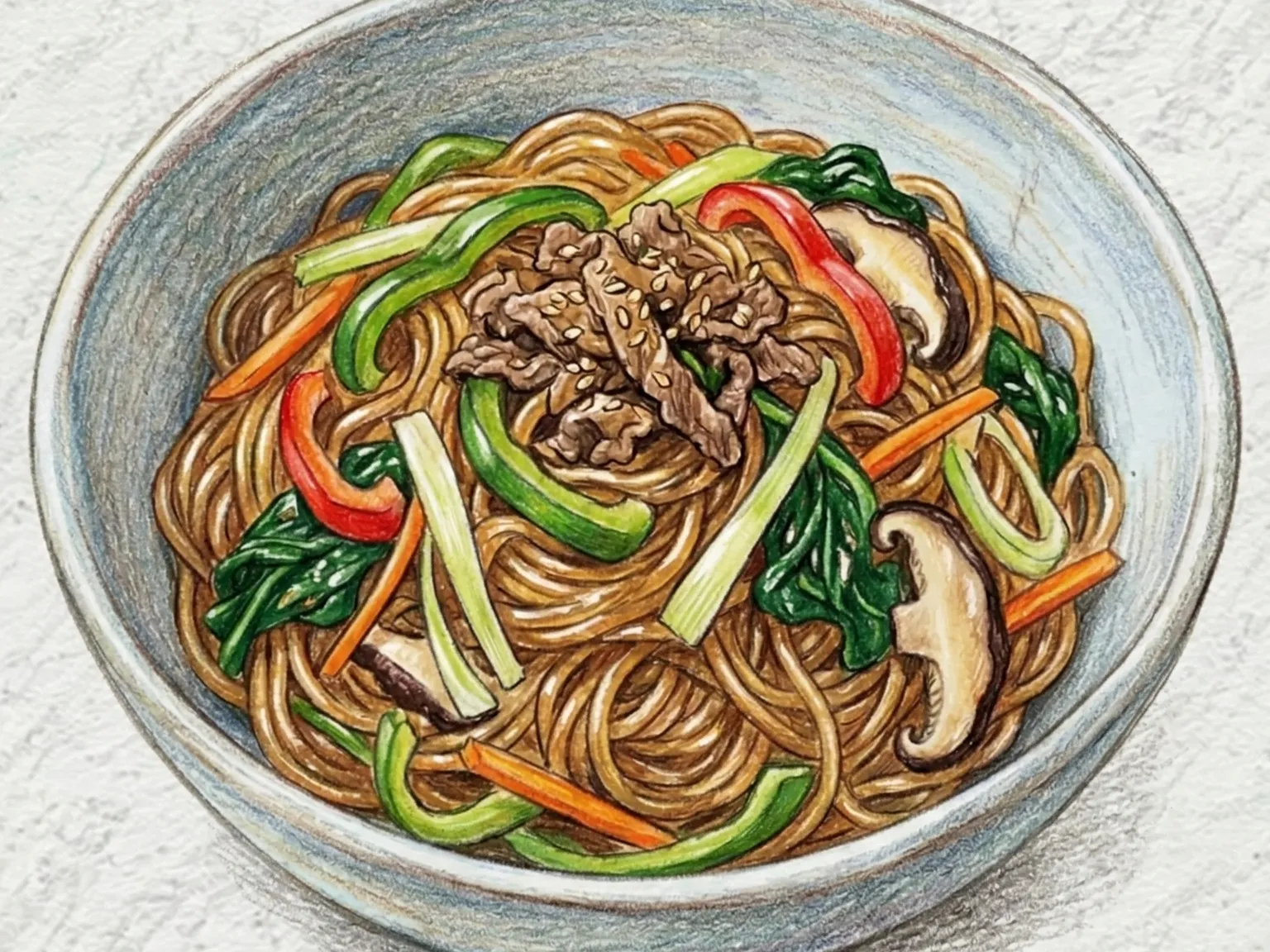
Korean Glass Noodle Stir-fry
glass noodles, carrot
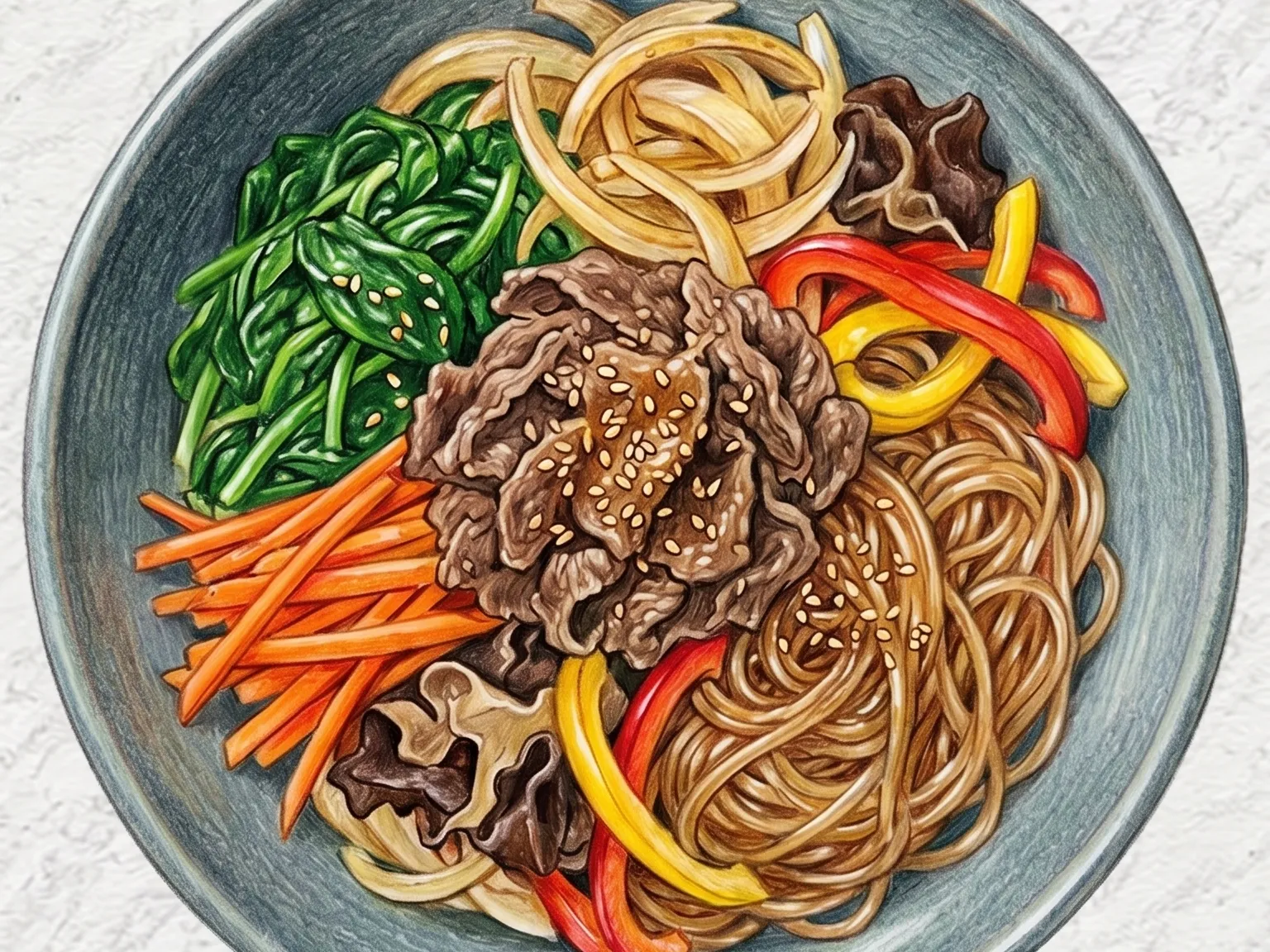
Korean Beef Japchae (Soy-Marinated Beef Glass Noodle Stir-Fry)
glass noodles, carrot
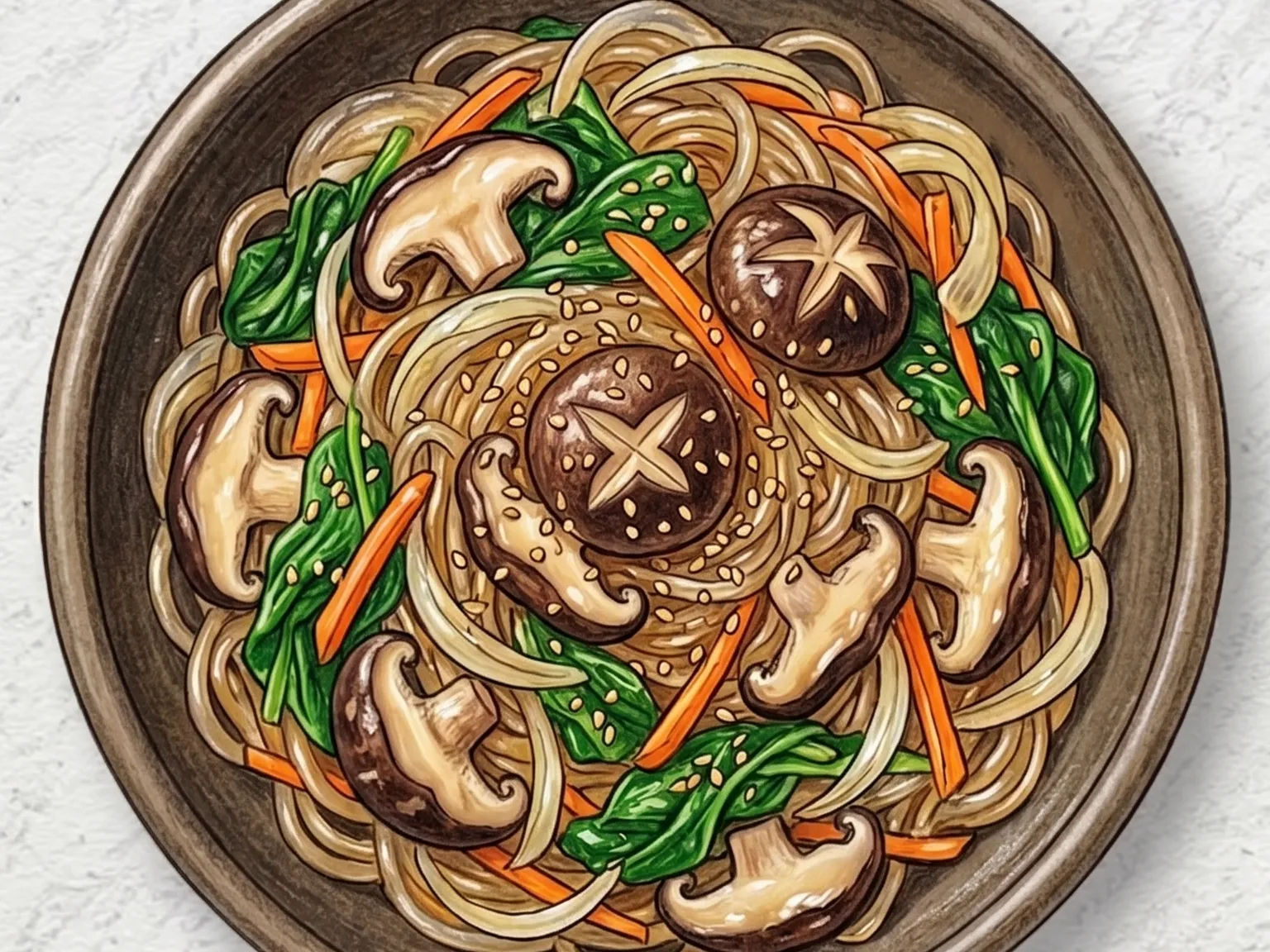
Korean Mushroom Japchae (Shiitake Glass Noodle Stir-Fry)
glass noodles, carrot