Korean Ginger Chicken Gomtang
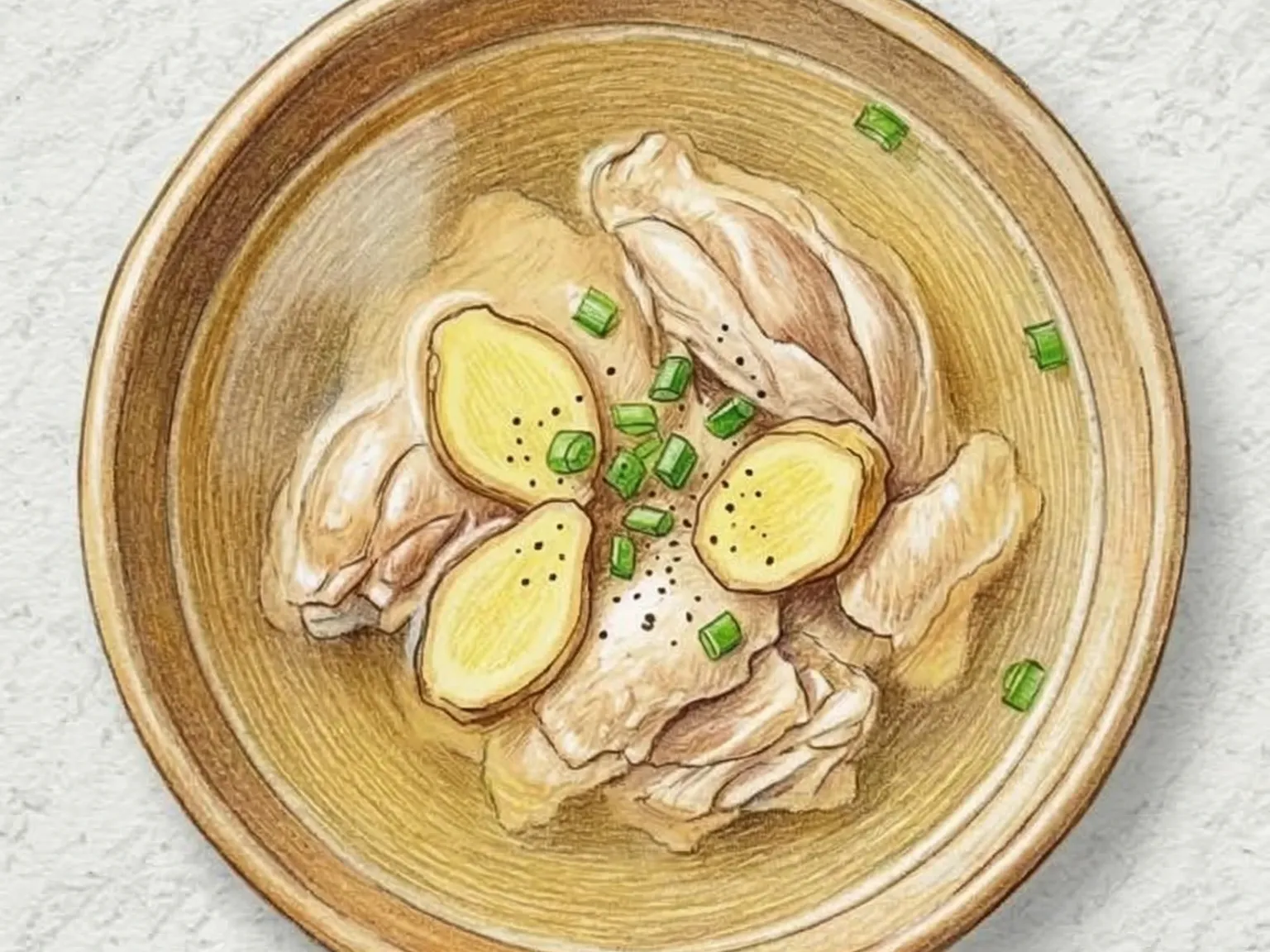
This ginger chicken gomtang is a clear, restorative soup made by simmering a whole chicken with fresh ginger, onion, garlic, and green onion until the broth turns golden and deeply flavorful. The ginger cuts through the richness of the chicken fat, lending a sharp, warming note that distinguishes this from heavier beef-bone soups. After straining, the broth is remarkably clean-tasting despite its depth, and the chicken is pulled into tender shreds and returned to the bowl. Seasoning is kept to soup soy sauce, salt, and a generous amount of black pepper, which amplifies the ginger's heat. This is the kind of soup that Korean households turn to when someone is feeling under the weather or recovering - light enough to sip without strain, yet nourishing enough to rebuild strength. It also works as an elegant first course when served in small portions before a larger meal.
Adjust Servings
Instructions
- 1
Trim excess fat, rinse the chicken, then parboil for 3 minutes.
- 2
Place chicken, water, onion, 1 green onion, garlic, and ginger in a pot and bring to a boil.
- 3
Reduce to medium-low and simmer 55 minutes, skimming foam regularly.
- 4
Remove chicken, shred meat, and strain the broth for a clean finish.
- 5
Return shredded chicken to broth and season with soy sauce, salt, and pepper.
- 6
Add chopped remaining green onion and simmer 5 more minutes.
As an Amazon Associate, we may earn from qualifying purchases.
Tips
Nutrition (per serving)
More Recipes

Korean Chicken Bone Broth Soup
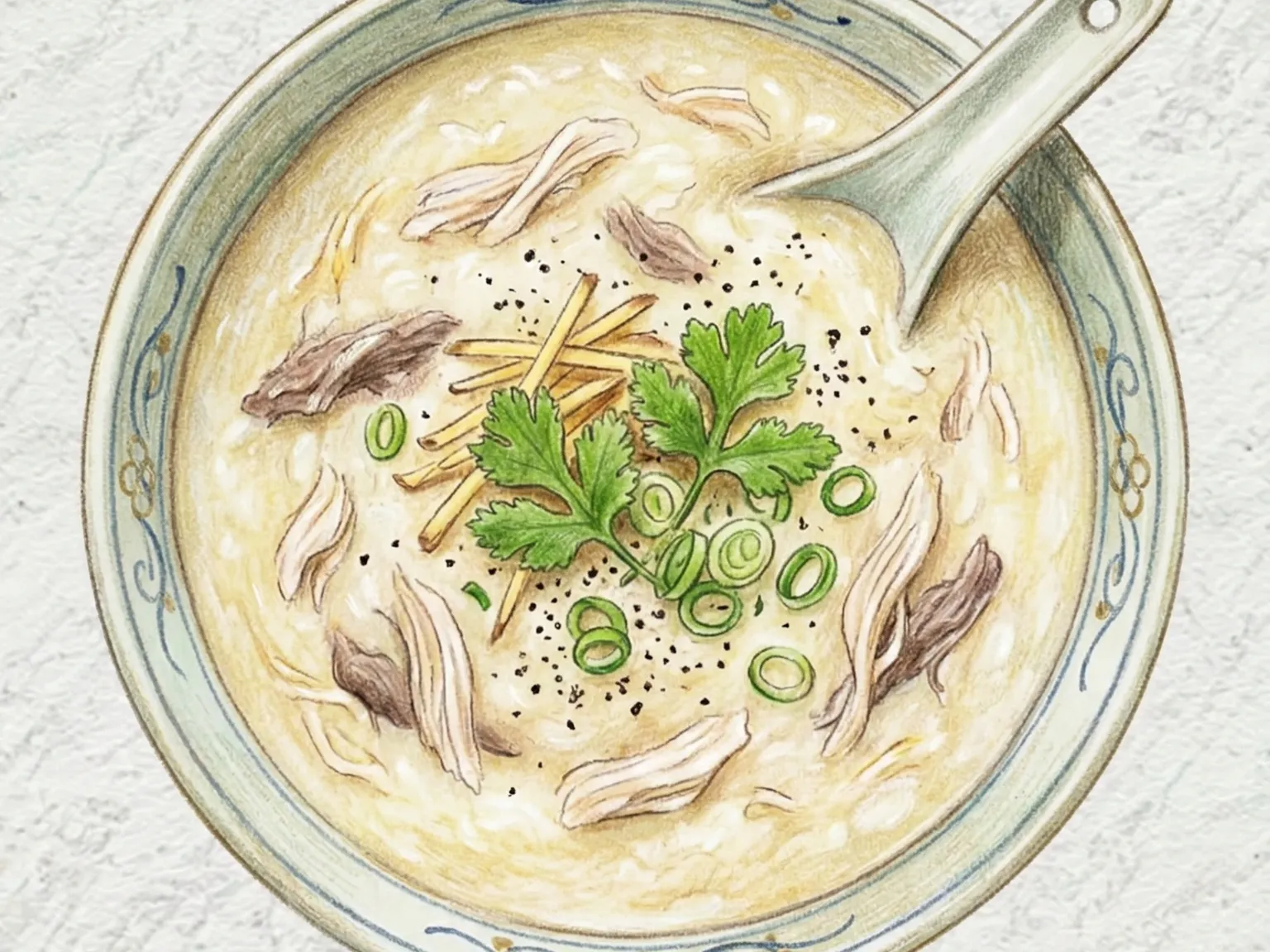
Dak-gomtang is a Korean chicken bone broth soup made by simmering a whole chicken with onion, garlic, and ginger over medium-low heat for at least fifty minutes. After the meat is removed and shredded, the bones go back into the pot for another fifteen minutes, releasing gelatin that gives the broth a silky body - when chilled, the liquid sets into a soft gel, a sign of its collagen richness. Skimming the fat layer after refrigeration produces a noticeably cleaner taste on reheating. The broth is seasoned simply with soup soy sauce and salt, and sliced green onion added at the end brings a fresh, sharp contrast to the mellow chicken flavor.

Korean Chicken and Neungi Mushroom Soup
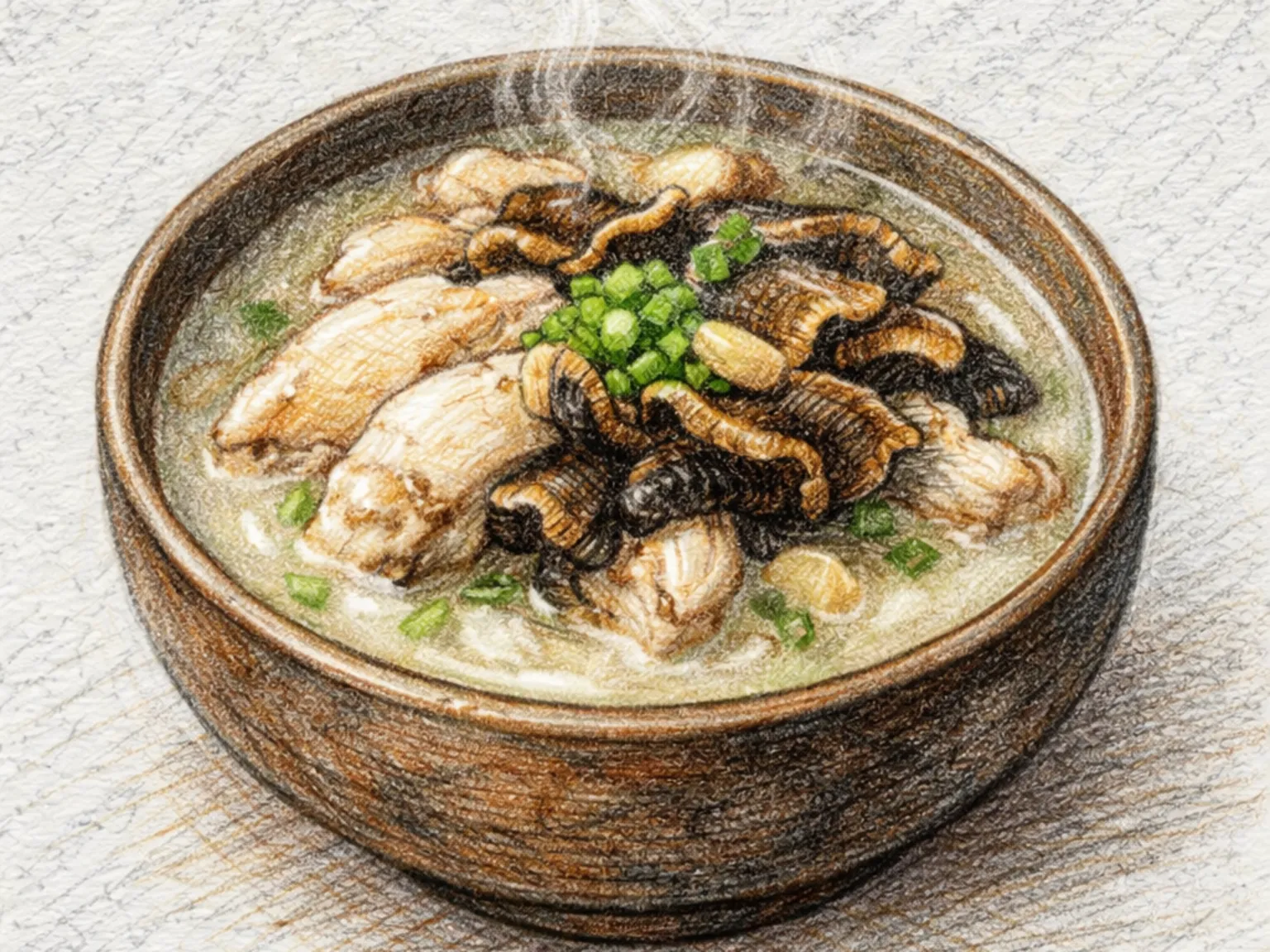
Neungi-dak-gomtang is a Korean chicken soup elevated by neungi mushrooms, a wild variety prized for their intense, almost truffle-like fragrance. The chicken is blanched first to remove impurities, then simmered for fifty minutes with onion, garlic, and ginger to build a clear, rich stock. After straining, the torn chicken meat is returned to the pot along with the neungi mushrooms, which steep in the hot broth for fifteen minutes - long enough to release their deep, earthy perfume without losing its complexity. The mushroom's aroma permeates the entire liquid, transforming an already satisfying chicken soup into something far more layered and aromatic. Seasoning is kept to soup soy sauce and salt, ensuring nothing competes with the interplay between poultry richness and mushroom fragrance. In Korea, this soup is considered both nourishing and luxurious, often served during autumn when neungi mushrooms are freshly foraged.

Korean Chicken Radish Soup
Dak mu-guk is a Korean chicken and radish soup where blanched chicken thigh meat and thinly sliced radish simmer together into a clear, deeply flavored broth. Blanching the chicken for one minute before the main simmer removes impurities and is the key to keeping the broth transparent. Onion and ginger build the aromatic foundation over twenty minutes of gentle cooking, and the radish - cut into thin, flat squares rather than thick chunks - turns translucent quickly, releasing its natural sweetness into the liquid in just ten minutes. Soup soy sauce and diagonally sliced green onion finish the bowl, balancing the chicken's richness with a clean, vegetal note.

Naju Gomtang (Naju Clear Brisket Beef Soup)
Naju-gomtang is a traditional beef soup from Naju in Korea's Jeolla Province, renowned for its clear yet profoundly savory broth. Beef brisket and shank are simmered together at a gentle, sustained heat for at least two hours - never a hard boil, which would cloud the liquid. The extended low simmer draws collagen and flavor from the connective tissue, producing a broth that appears light but coats the palate with rich, beefy depth. The meat is removed, shredded or thinly sliced, and returned to the strained broth. Seasoning is minimal - soup soy sauce and salt - because the entire point is the pure, unadorned taste of long-simmered beef. Sliced green onion and a crack of black pepper go on just before serving, adding brightness without complicating the broth.

Korean Spicy Chicken Soup Noodles
This spicy Korean noodle soup is built on dakgaejang, a chicken version of the classic beef yukgaejang. Poached chicken is shredded by hand, then simmered again in a broth seasoned with gochugaru, garlic, sesame oil, and sliced scallion. The resulting liquid is vivid red and assertively spicy, yet the underlying chicken stock keeps the heat clean rather than harsh. Bean sprouts tossed into the pot just before serving retain their crunch and provide a cool, crisp contrast to the fiery broth. Either thin somyeon or medium-thickness noodles pair well, soaking up the spicy liquid without losing their texture too quickly. Swirling in a beaten egg softens the broth and adds body. The soup is widely regarded as an effective remedy for hangovers or chills, thanks to its combination of heat, protein, and warming spice.

Korean Chicken Knife-Cut Noodle Soup
A whole chicken is simmered with scallion, garlic, and ginger until the broth turns cloudy and rich, then hand-cut wheat noodles are cooked directly in that liquid. As the noodles release their starch into the pot, the broth takes on a silky body that coats the palate, and the noodles themselves absorb the concentrated chicken flavor at every surface. Shredded chicken meat, pulled along the grain, is piled on top just before serving. Potato and zucchini chunks, added during the final minutes, contribute gentle sweetness and soft texture. A generous grind of black pepper over the steaming bowl sharpens the chicken aroma and adds a subtle warmth. On a cold day, this noodle soup delivers the kind of deep, lasting comfort that lighter broths cannot match.