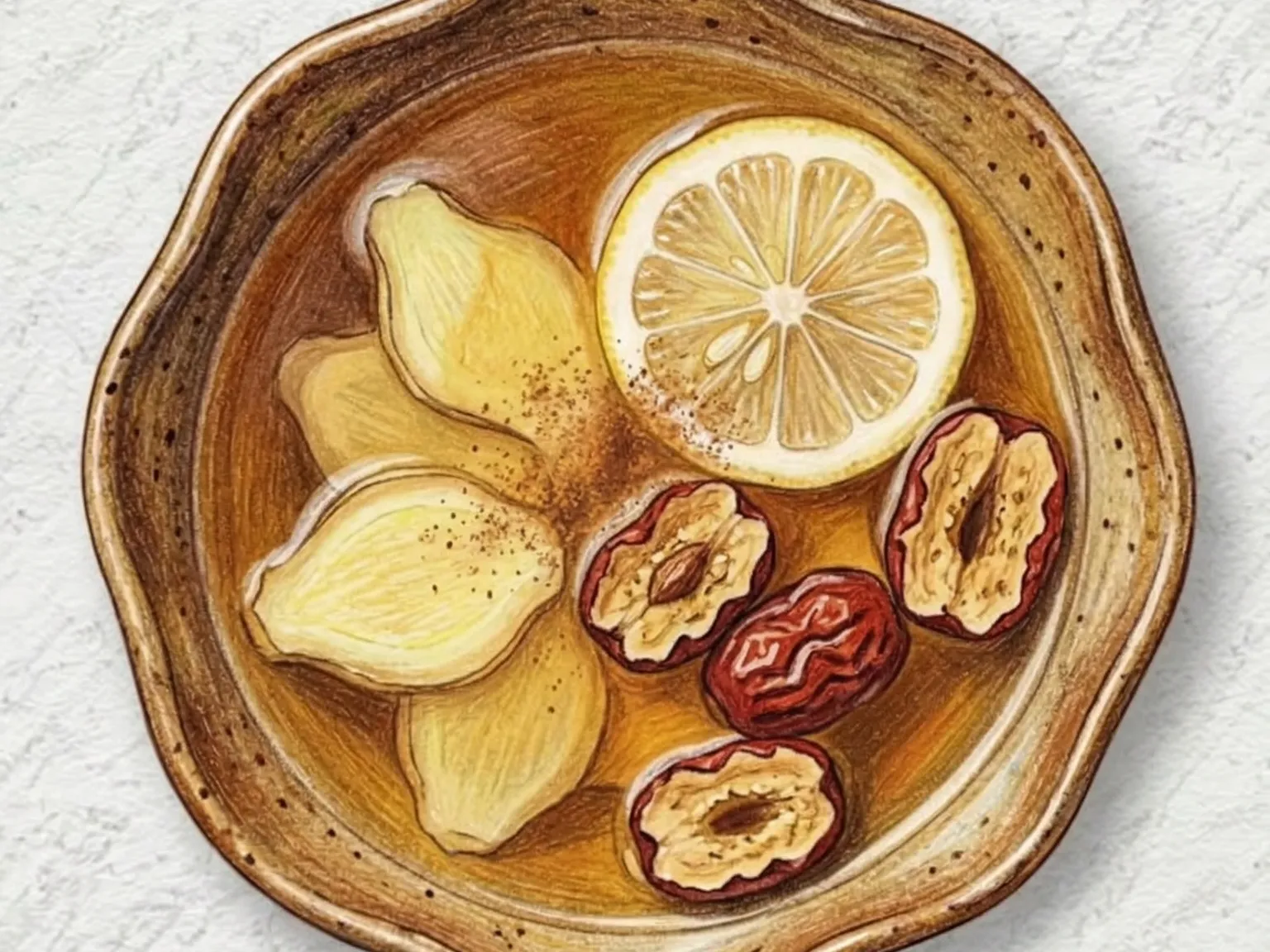
Korean Ginger Honey Latte

Korean Ginger Honey Latte

Quick answer

Ginger honey latte is a warm Korean latte built on a concentrated ginger infusion made by simmering thinly sliced fresh ginger in water over medium-low heat for ten minutes.

What makes this special

  • Thirty grams of ginger simmered for ten minutes and strained clean forms the sharp, fiber-free base of this honey latte.
  • 30g ginger simmered 10 min and strained creates a concentrated base without fiber
  • Honey added only off-heat preserves its volatile aromatic compounds
Total time
20 min
Level
Easy
Servings
2 servings
Ingredients
6
Calories
160 kcal
Protein
6 g

Key ingredients

fresh gingerwatermilkhoneycinnamon powder

Core cooking flow

  1. 1 Rinse 30g of fresh ginger under running water and trim only any muddy spots.
  2. 2 Set the pot over medium-low heat and bring it to a gentle simmer, not a hard boil.
  3. 3 Turn off the heat and strain the ginger infusion through a fine sieve.

Ginger honey latte is a warm Korean latte built on a concentrated ginger infusion made by simmering thinly sliced fresh ginger in water over medium-low heat for ten minutes. Straining out the fibrous solids leaves a clean, sharp liquid that is returned to the pot with milk and heated until it just begins to steam, allowing the ginger's spicy heat to diffuse gradually through the dairy without becoming harsh. Adding honey only after the heat is turned off is important because prolonged exposure to heat causes its aromatic compounds to evaporate, leaving behind only sweetness without fragrance. A pinch of salt acts as a bridge between the sharp ginger and the floral sweetness of honey, drawing both flavors into sharper focus. A small dusting of cinnamon powder at the end adds a woody, resinous layer on top of the ginger that creates a warm-spice finish that lingers well after the last sip. The gingerols present in fresh ginger make this drink a common choice during seasonal transitions and on days when the body feels cold or run-down.

Prep 8min Cook 12min 2 servings
Recipes by ingredient → ginger milk honey

Instructions

Read the steps as a cooking flow: prep, heat, seasoning, doneness control, and finish.

6 steps
  1. 1
    Prep

    Rinse 30g of fresh ginger under running water and trim only any muddy spots.

    Slice it thinly so it infuses quickly, then place the slices in a small pot with 300ml of water.

  2. 2
    Control

    Set the pot over medium-low heat and bring it to a gentle simmer, not a hard boil.

    Infuse for 10 minutes until the water turns deeper yellow and smells sharply of ginger, skimming any foam.

  3. 3
    Step

    Turn off the heat and strain the ginger infusion through a fine sieve.

    Let the liquid pass cleanly without pushing too much fiber through, then return only the clear infusion to a clean pot.

  4. 4
    Control

    Pour in 250ml of milk and warm it over slightly lower than medium heat, stirring for 3 to 4 minutes.

    Stop before boiling, when steam rises and small bubbles appear around the edge.

  5. 5
    Season

    After turning off the heat, add 2tbsp honey and 0.25tsp salt.

    Stir with the remaining warmth until fully dissolved, keeping the honey away from prolonged heat so its aroma stays clear.

  6. 6
    Season

    Pour the latte into a warm mug and dust 0.25tsp cinnamon powder over the top.

    Stir once lightly before serving so the ginger, honey, salt, and cinnamon taste evenly balanced.

After the steps

Pick a recipe that fits this dish.

Continue with shared ingredients, meal pairings, or a similar method.

Recipes That Go Well With This

More Drinks →

Based on shared ingredients and meal pairing

Korean Cinnamon Tea (Spiced Jujube Ginger Honey Brew)
Shared ingredient: ginger Drinks

Korean Cinnamon Tea (Spiced Jujube Ginger Honey Brew)

Gyepi-cha is a traditional Korean cinnamon tea made by simmering whole cinnamon sticks and fresh ginger in water over low heat for at least twenty-five minutes. The long, gentle simmer is what separates gyepi-cha from an infusion: the bold, sweet-spicy aroma of the cinnamon builds gradually, saturating the liquid rather than merely scenting it. Ginger contributes a sharp, deeply warming bite that stays present long after each sip, creating a slow, spreading heat in the chest. Six jujubes are cooked alongside the spices; their flesh softens and eventually breaks down, lending the broth a faint fruitiness and a slight natural body. Dark brown sugar and honey are both used to construct a sweetness that is layered rather than flat, with the molasses depth of the sugar underpinning the floral brightness of the honey. Before serving, a few pine nuts are floated on the surface, where their oily richness drifts down to complement the spice. This is a drink associated with cold weather and recovering health, often prepared during winter or whenever warmth is needed from the inside out.

Baesuk (Korean Poached Pear Punch)
Shared ingredient: ginger Desserts

Baesuk (Korean Poached Pear Punch)

Baesuk is a traditional Korean punch made by slowly simmering whole or large-cut Korean pear with ginger, whole black peppercorns, and dried jujubes. As the pear cooks over low heat, its juice gradually dissolves into the liquid, building a natural sweetness that forms the drink's backbone. Ginger contributes a warm, peppery sharpness that interlocks with the pear's sweetness, producing a flavor that is comforting yet clean. Whole peppercorns are added sparingly and function as an aromatic element rather than a source of actual heat. Jujubes add a faint reddish tint and a mild fruity undertone to the liquid. Honey is stirred in after the heat is turned off and the temperature has dropped slightly to preserve its fragrance; because the pear already provides significant sweetness, the honey amount should start small and be adjusted by taste. Overnight refrigeration allows the ginger and pear flavors to penetrate more fully, rounding out the drink. Pine nuts floated on the surface before serving add a subtle oily richness to the finish of each sip. Historical records indicate that baesuk appeared on royal banquet tables during the Joseon dynasty and at aristocratic tea spreads, and Korean traditional medicine has long recommended it as a remedy for cold prevention and digestive support. Even today it remains a seasonal drink associated with holidays and ancestral rite preparations.

Gotgam Cream Cheese Roll (Dried Persimmon Rolls)
Serve together Desserts

Gotgam Cream Cheese Roll (Dried Persimmon Rolls)

Gotgam cream cheese roll is a no-cook Korean dessert that requires nothing more than a knife, a bowl, and a refrigerator. Dried persimmons are slit open and flattened into thin sheets, each one acting as the outer wrapper. The filling is cream cheese mixed with honey and fresh lemon juice to balance its natural richness with acidity, and finely chopped walnuts are folded in throughout to add a crunchy, nutty element to every bite. The filling is spread across the opened persimmon, which is then rolled tightly and wrapped in plastic wrap. Twenty minutes in the refrigerator firms the roll enough to slice cleanly. Dipping the knife in warm water and wiping it dry before each cut produces the smoothest cross-sections. The finished slices reveal clearly defined layers: the chewy, caramel-sweet dried persimmon on the outside, the tangy cream cheese in the middle, and flecks of walnut distributed throughout. The combination makes it a natural pairing with wine or a polished addition to a traditional holiday table.

Korean Chestnut Latte
Similar recipe Drinks

Korean Chestnut Latte

Bam latte is a Korean autumn drink made by blending boiled chestnuts into a smooth paste and warming it with milk. The chestnuts are pureed with water until the mixture is completely smooth, then combined with milk and heated gently on the stovetop over low heat. Maple syrup introduces a caramel sweetness over the mild, starchy flavor of the chestnuts. Ground cinnamon adds warmth, and a small amount of vanilla extract gives the overall aroma more depth. Blending the chestnuts longer yields a silkier drink; leaving some texture produces a thicker, more porridge-like consistency. The full preparation takes about twenty minutes, making it a practical homemade version of the seasonal chestnut lattes that appear in Korean cafes each autumn.

Serve with this

Korean Spicy Octopus Skewers
Street food Easy

Korean Spicy Octopus Skewers

Blanched octopus is cut into bite-sized pieces, threaded onto skewers, and grilled on a pan or open flame while being basted repeatedly with a spicy sauce of gochujang, soy sauce, sugar, minced garlic, and sesame oil. Octopus toughens dramatically with prolonged heat, so high-temperature, quick grilling is essential. Adding a slice of ginger to the blanching water removes any fishiness before the octopus hits the grill. The layered sauce builds up with each basting: gochujang contributes heat, sugar balances it with sweetness, soy sauce deepens the umami, and sesame oil finishes with a nutty fragrance. Keeping the heat at medium-high and turning the skewers frequently prevents the sugar in the glaze from burning while still achieving light char marks. The result has a caramelized, sticky crust over a chewy, springy center. Equally at home as street food or as bar snacks alongside cold beer or soju, these skewers are a reliable crowd-pleaser.

🍺 Bar Snacks ⚡ Quick
Prep 15min Cook 10min 2 servings
Korean Seasoned Kelp Strips
Side dishes Easy

Korean Seasoned Kelp Strips

Kelp strips are soaked in cold water for ten minutes to draw out excess salt, then blanched for twenty seconds, just long enough to turn them pliable without losing their snap. The strips are dressed with gochugaru, vinegar, soy sauce, sugar, and garlic while julienned cucumber adds a cool, refreshing contrast. The seasoning sits over the mineral-dense ocean flavor of the kelp, layering a bright, acidic kick onto each bite. Sesame oil and whole sesame seeds finish the dish. The strips keep a satisfying resistance between the teeth that sets them apart from softer Korean seaweed preparations. Best served cold; the texture and flavor hold up well in packed lunches. Blanching beyond twenty seconds causes the kelp to soften and lose the chew that defines this banchan.

🥗 Light & Healthy 🏠 Everyday
Prep 12min Cook 3min 2 servings
Dasik (Korean Honey-Pressed Roasted Grain Confection)
Baking Easy

Dasik (Korean Honey-Pressed Roasted Grain Confection)

Dasik is a traditional Korean pressed confection made by kneading roasted grain or nut powders with honey and pressing the mixture into carved wooden molds. Unlike baked goods, dasik holds its shape entirely through the binding power of honey, with no heat applied during preparation. This technique produces a texture that is slightly resistant at first contact, then dissolves gently at body temperature in a way that releases the full aroma of the main ingredient. Roasted soybean powder yields a nutty version, black sesame produces a deeply aromatic one, and additions of pine nut powder or cinnamon develop the flavor in different directions. The wooden molds carve decorative patterns into the surface of each piece, giving dasik a visual refinement that matches its restrained sweetness. For centuries, dasik has been a standard offering at Korean tea gatherings, and its subtle flavor remains a natural match for the gentle bitterness of green tea.

🧒 Kid-Friendly ⚡ Quick
Prep 20min 4 servings

Similar recipes

Korean Black Sesame Latte
Drinks Easy

Korean Black Sesame Latte

Heugimja latte is a Korean roasted black sesame drink made by finely grinding toasted sesame seeds and warming them slowly with milk over low heat. Toasting the sesame beforehand draws the oils to the surface, intensifying the deep, nutty character that defines the drink. The finer the grind, the more evenly the sesame disperses through the liquid, creating a smooth, uniform texture rather than a gritty one. Adding sweet rice flour dissolved in a small amount of water gives the latte a natural thickness that sets it apart from commercial nut milks or grain beverages. A tiny amount of salt sharpens the sesame flavor without adding any perceptible saltiness, and sugar should be added with restraint since too much sweetness masks the roasted depth that makes this drink distinctive. Served warm, the toasted aroma rises steadily from the cup. Chilled versions retain the same nuttiness, making the drink work in both seasons. The drink draws on a long Korean tradition of using ground sesame as a nutrient-dense base for beverages and porridges.

🍺 Bar Snacks ⚡ Quick
Prep 8min Cook 7min 2 servings
Korean Scorched Rice Latte
Drinks Easy

Korean Scorched Rice Latte

Nurungji-latte is a Korean grain latte built from scorched rice that is dry-toasted an extra minute in a pan to intensify its roasted aroma before being simmered in water to extract a deeply nutty infusion, which is then blended with milk. The toasting step caramelizes residual starch on the rice crust, generating a toasty depth that persists even after milk is added. Rice syrup provides sweetness with a rounder, more subdued quality than refined sugar, and a pinch of salt sharpens the overall flavor profile and brings the grain notes into focus. A small measure of vanilla extract weaves a subtle fragrance that complements rather than competes with the base. A brief pass with an immersion blender leaves fine rice particles suspended in the drink, giving it a slightly grainy texture that sets it apart from a conventional latte; blending longer produces a smoother, creamier result. A dusting of ground cinnamon over each cup adds a warm aromatic layer on top. The latte works equally well served warm in a mug or poured over ice for a chilled version.

🍺 Bar Snacks ⚡ Quick
Prep 8min Cook 12min 2 servings
Yuja Saenggang Scone (Yuja Ginger Scone)
Baking Easy

Yuja Saenggang Scone (Yuja Ginger Scone)

Cold butter is rubbed into flour to form coarse crumbs, then yuja marmalade and ginger juice are mixed in to create a dough that bakes into scones with a crumbly, flaky exterior and a moist, tender center. The yuja contributes a bright citrus fragrance that is more aromatic and floral than lemon, pairing naturally with the buttery richness of the scone. Ginger adds a subtle warmth that tempers the sweetness and leaves a clean finish. Minimal handling of the dough preserves the cold butter pockets that generate flaky layers during baking - if the dough warms, it should be returned to the refrigerator immediately. Shaping into rounds and brushing the tops with egg wash produces a golden, glossy crust. These scones are at their best served warm with clotted cream or yuja curd, where the citrus notes in the spread echo those baked into the scone itself. The combination of Korean citrus and British baking tradition makes this a distinctive cross-cultural pastry.

🧒 Kid-Friendly
Prep 20min Cook 18min 4 servings

Tips

Avoid prolonged boiling after adding honey.

Nutrition (per serving)

Calories
160
kcal
Protein
6
g
Carbs
24
g
Fat
5
g