Korean Oil Tteokbokki (Dry-Stir-Fried Rice Cakes in Chili Soy Glaze)

Korean Oil Tteokbokki (Dry-Stir-Fried Rice Cakes in Chili Soy Glaze)

Quick answer

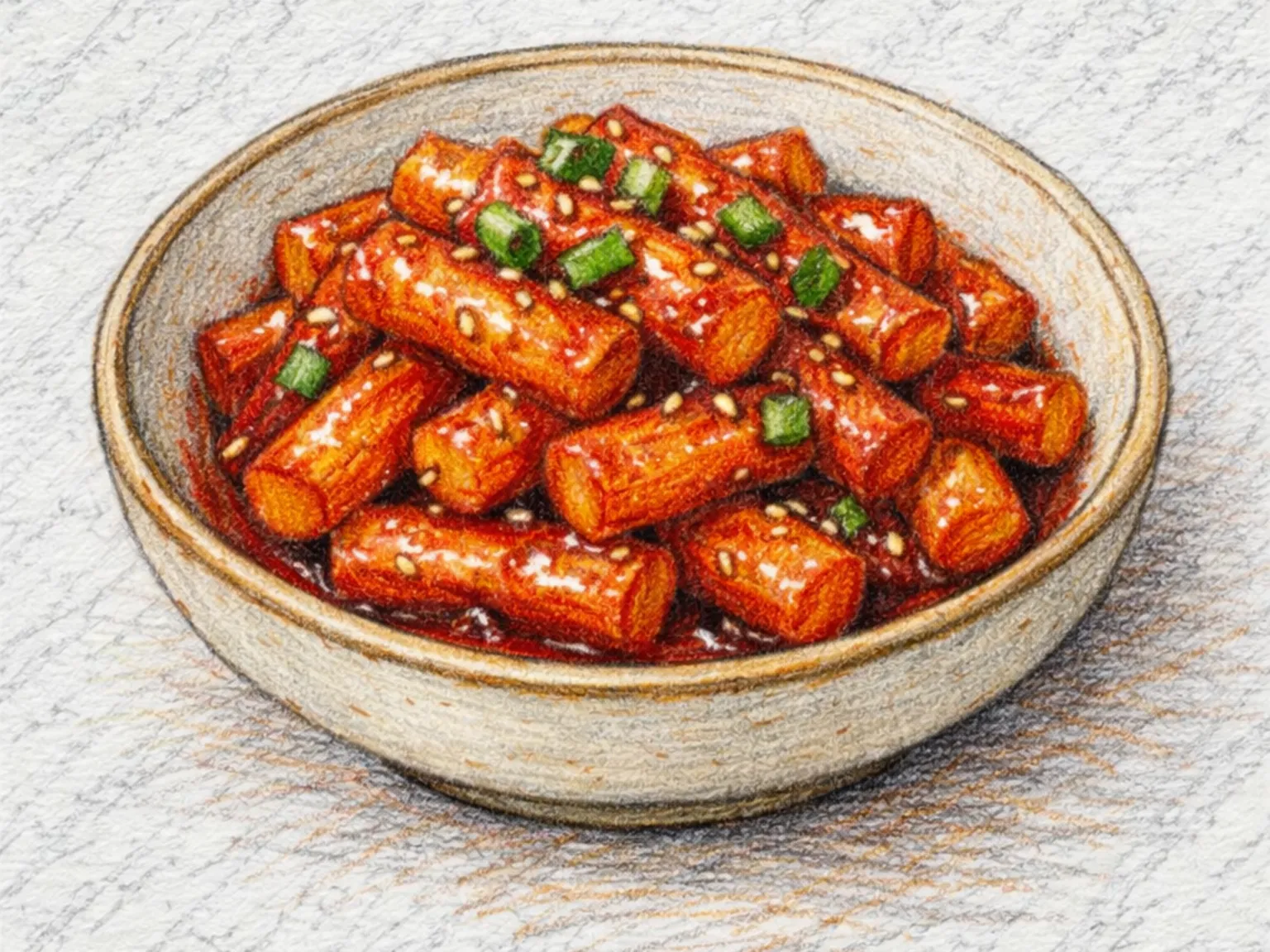
Gireum-tteokbokki is a dry-style tteokbokki where rice cakes are stir-fried in oil and coated with a concentrated paste of gochugaru, soy sauce, sugar, and garlic - no br...

What makes this special

  • Rice cakes are dry-stir-fried in oil with a concentrated chili soy glaze for a firm, chewy texture.
  • Dry style without broth; sauce coats the tteok surface firmly
  • Gochugaru bloomed in oil first extracts aroma before heat
Total time
22 min
Level
Easy
Servings
2 servings
Ingredients
8
Calories
430 kcal
Protein
6 g

Key ingredients

Cylinder rice cakesGreen onionKorean chili flakesSoy sauceSugar

Core cooking flow

  1. 1 If the 300 g cylinder rice cakes feel firm, soak them in lukewarm water for 5 minutes.
  2. 2 Slice the 50 g green onion on the diagonal and keep 1 tsp sesame seeds nearby for finishing.
  3. 3 In a bowl, mix 1.5 tbsp gochugaru, 1 tbsp soy sauce, 1.5 tsp sugar, 1 tsp minced garlic, and 1 tbsp oil.

Gireum-tteokbokki is a dry-style tteokbokki where rice cakes are stir-fried in oil and coated with a concentrated paste of gochugaru, soy sauce, sugar, and garlic - no broth involved. Blooming the chili flakes briefly in oil draws out their nutty, toasted aroma rather than raw heat, and the soy sauce and sugar build layered sweetness and umami on top of that base. Without liquid, the seasoning clings tightly to each rice cake's surface. The key technique is restraint with stirring: letting each rice cake sit undisturbed long enough to develop a lightly crisped exterior while the inside stays chewy creates a dual texture that broth-based versions cannot replicate. Green onion and sesame seeds added at the end provide fresh fragrance and textural contrast against the rich coating. The seasoning should be applied generously so the flavors penetrate past the surface rather than sitting only on the outside. Believed to have originated in school-front snack shops in 1970s and 1980s Seoul, gireum-tteokbokki is milder than gochujang versions and accessible to those who find the spicier style too intense.

Prep 10min Cook 12min 2 servings

Instructions

Read the steps as a cooking flow: prep, heat, seasoning, doneness control, and finish.

6 steps
  1. 1
    Step

    If the 300 g cylinder rice cakes feel firm, soak them in lukewarm water for 5 minutes.

    Drain them thoroughly in a sieve so excess water does not splatter in the oil or dilute the chili glaze.

  2. 2
    Finish

    Slice the 50 g green onion on the diagonal and keep 1 tsp sesame seeds nearby for finishing.

    Having these ready before heating matters because the chili and soy glaze can darken quickly once it hits the pan.

  3. 3
    Season

    In a bowl, mix 1.5 tbsp gochugaru, 1 tbsp soy sauce, 1.5 tsp sugar, 1 tsp minced garlic, and 1 tbsp oil.

    Stir until the sugar looks mostly dissolved and the paste is loose enough to coat.

  4. 4
    Control

    Heat the remaining 1.5 tbsp oil in a pan over medium heat.

    Add the drained rice cakes and cook about 3 minutes, turning only occasionally, until some sides look lightly golden and the centers feel chewy.

  5. 5
    Control

    Lower the heat and add the seasoning paste, stirring for about 30 seconds to bloom the chili flakes without burning them.

    When the aroma turns toasted instead of raw, add the green onion and return to medium heat.

  6. 6
    Finish

    Stir-fry 4 to 5 minutes more, scraping the pan so the glaze coats every rice cake in a thin, glossy layer.

    Turn off the heat, sprinkle with sesame seeds, and serve hot before the oil separates.

After the steps

Pick a recipe that fits this dish.

Continue with shared ingredients, meal pairings, or a similar method.

Recipes That Go Well With This

More Street food →

Based on shared ingredients and meal pairing

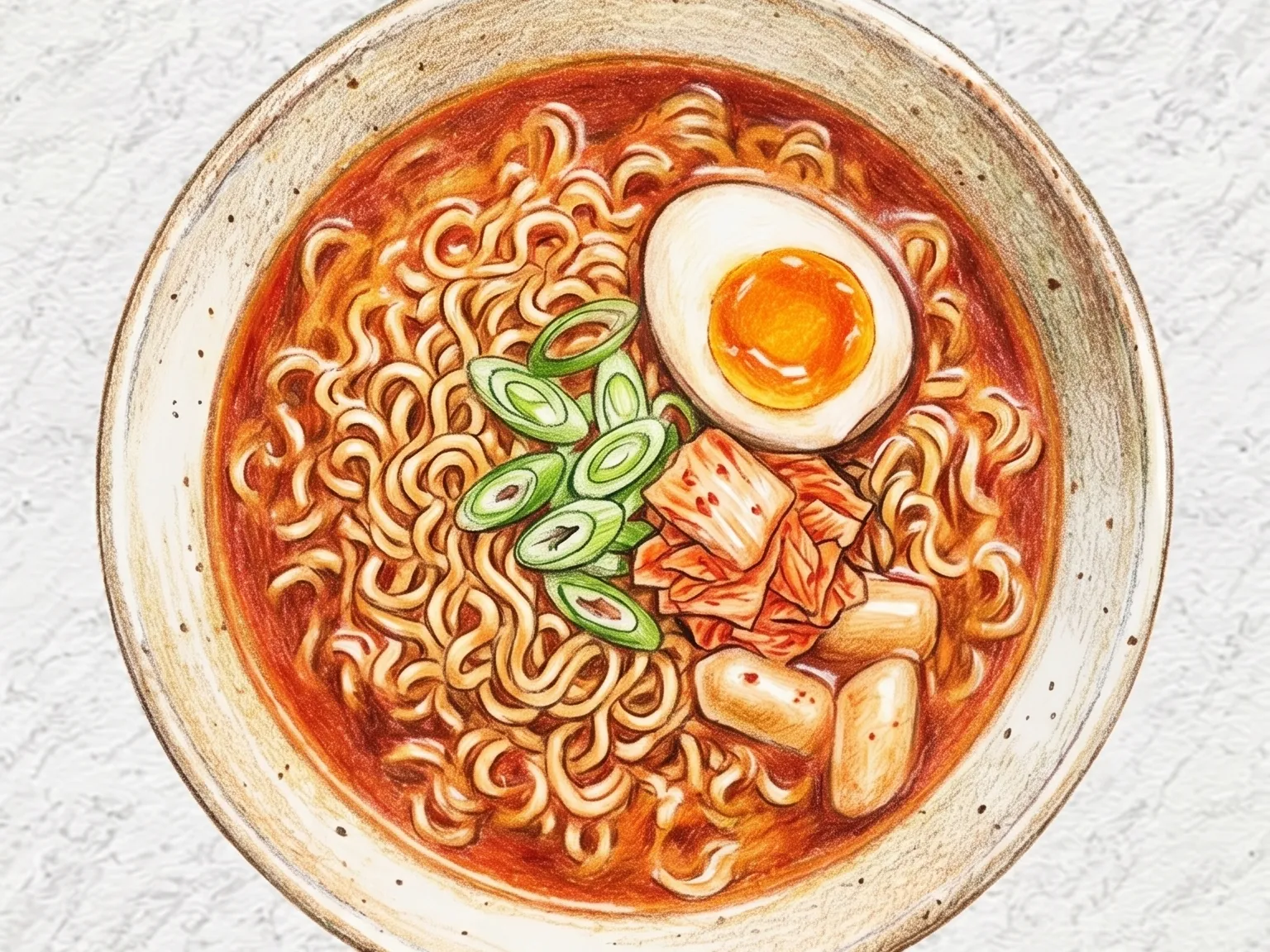
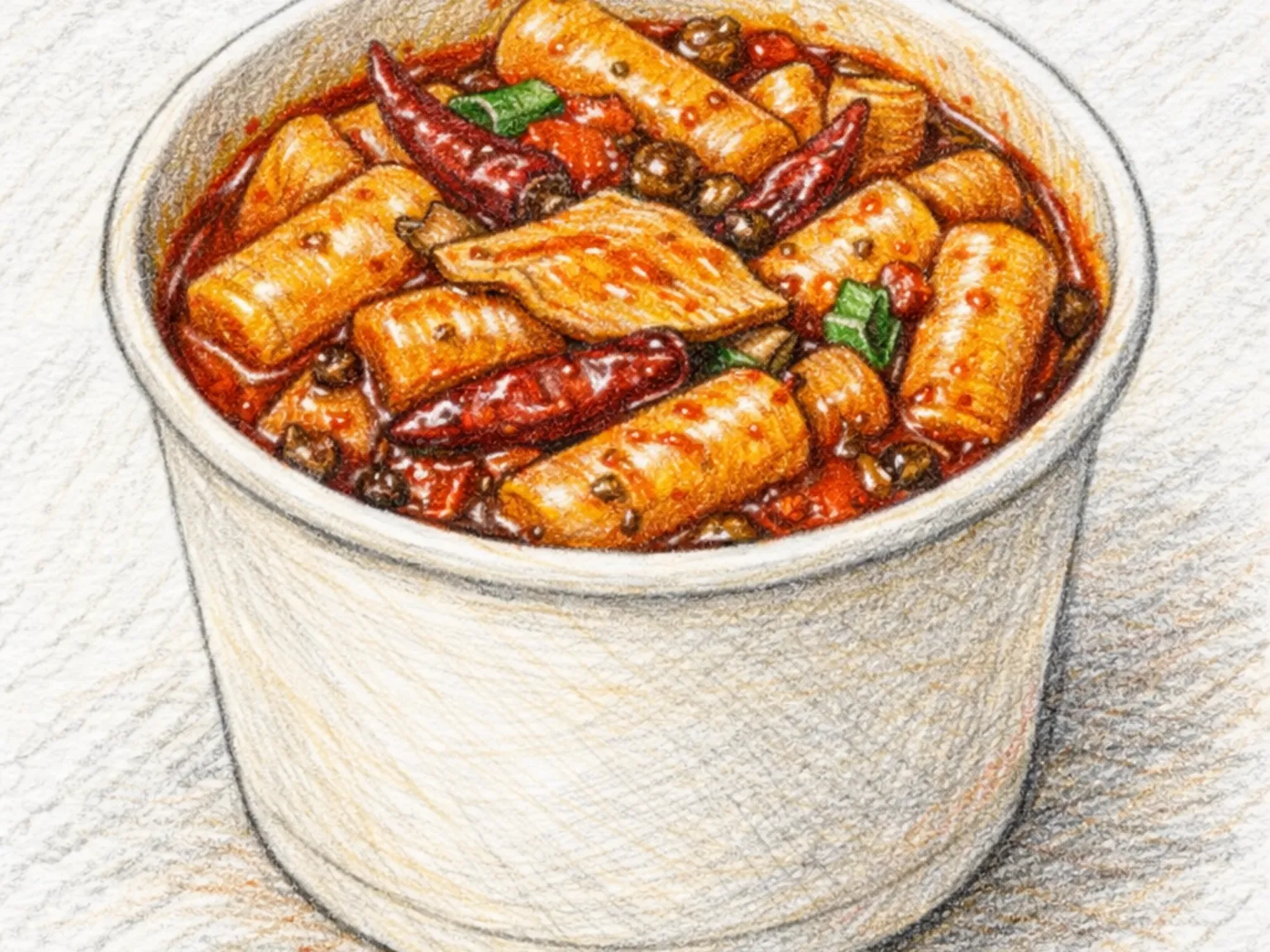
Korean Mala Cup Tteokbokki
Shared ingredient: rice cakes Street food

Korean Mala Cup Tteokbokki

This cup-style tteokbokki blends gochujang with mala sauce to combine Korean chili heat and the numbing tingle of Sichuan peppercorn in a single dish. Rice cakes and fish cake go into the pot with the sauce, then cook over medium heat for six to seven minutes with constant stirring as the liquid reduces into a thick, clinging glaze that coats each piece heavily. Stopping to stir is not optional: the rice cakes stick and scorch on the bottom without continuous movement. Sliced green onion goes in at the end for fragrance. Because mala sauce saltiness varies considerably between brands, beginning with one tablespoon and tasting as you add more prevents overseasoning. Additional gochugaru raises the chili heat independently of the numbing sensation, while increasing the mala sauce proportion amplifies the tingle. The format mirrors the convenience-store cup tteokbokki experience and requires minimal equipment, making it a fast option when few tools are available.

Korean Soupy Tteokbokki (Rice Cakes in Spicy Gochujang Broth)
Shared ingredient: green onion Street food

Korean Soupy Tteokbokki (Rice Cakes in Spicy Gochujang Broth)

Gukmul-tteokbokki is a soup-forward version of tteokbokki in which cylindrical rice cakes and fish cakes are simmered in a kelp-anchovy broth seasoned with gochujang, gochugaru, soy sauce, and sugar. Unlike dry or stir-fried versions, the generous broth saturates each rice cake from the outside in, while the fish cakes release their own savory juices into the liquid as they cook, building the stock to a richer baseline. Eight to ten minutes of medium-heat simmering leaves the exterior of each rice cake soft and yielding while the core stays chewy. Scallions go in at the end to cut through the heat with a bright, grassy note. The broth left over after the rice cakes and fish cakes are gone is widely regarded as the most prized part of the dish: regulars stir in a bowl of rice or drop in ramyeon noodles to make sure none of it goes to waste.

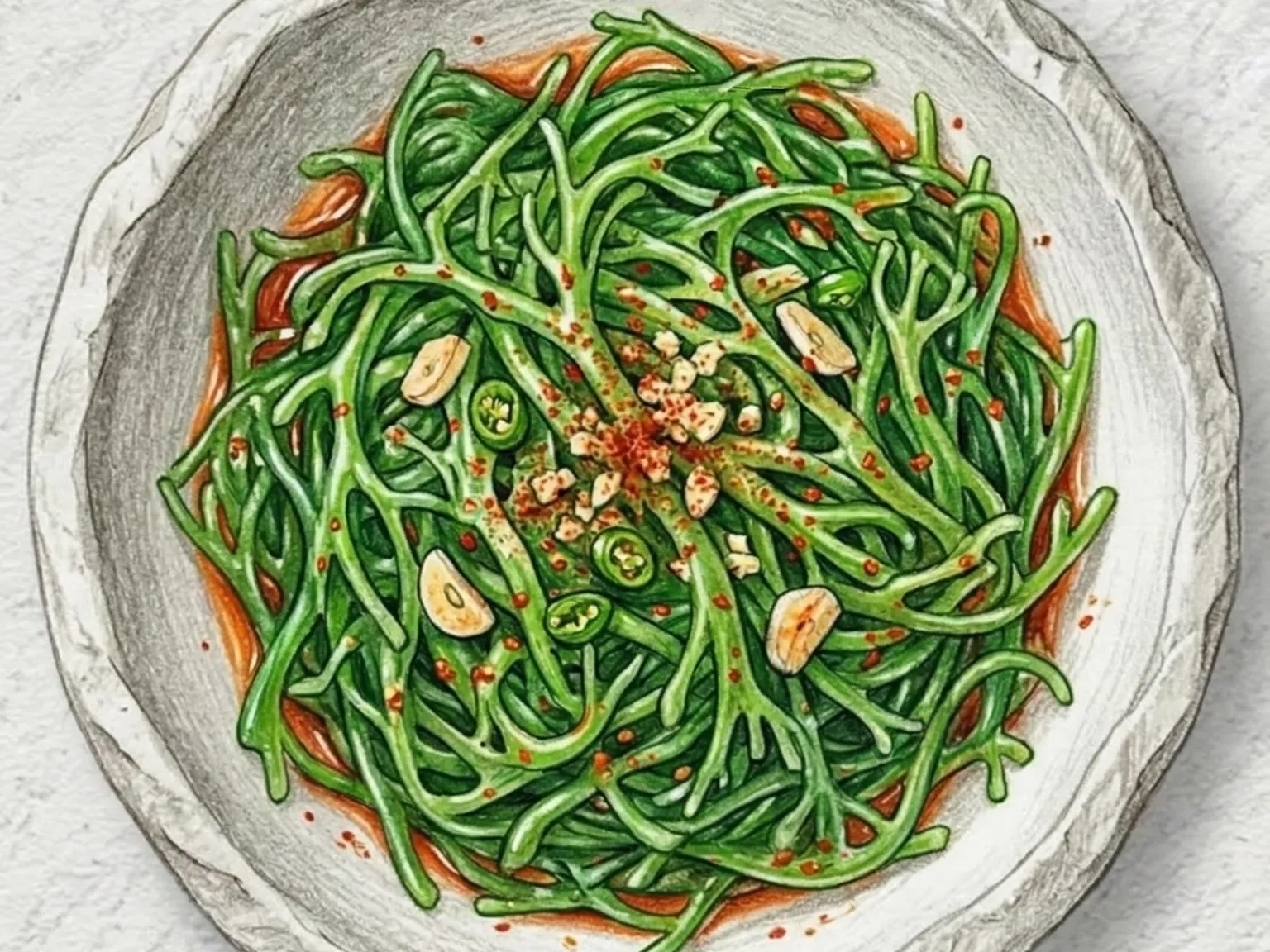
Korean Sweet Spicy Pollock Floss Stir-fry
Serve together Side dishes

Korean Sweet Spicy Pollock Floss Stir-fry

Myeongyeopchae-bokkeum stir-fries finely shredded dried pollock floss in gochujang and oligosaccharide syrup until each fiber strand is evenly coated and moist. Myeongyeopchae is thinner and softer-fibered than hwangtaechae, the wider dried pollock strips, arriving in a dense cotton-like bundle that must be loosened strand by strand before cooking. Running your fingers along the grain separates the fibers cleanly, allowing the seasoning to penetrate evenly and preventing the finished banchan from clumping together in the mouth. A dry toast of thirty seconds in an oil-free pan drives off residual moisture and coaxes out a toasted fish aroma before gochujang, gochugaru, oligosaccharide syrup, soy sauce, and minced garlic go in over the lowest heat for a rapid coating. The fine fibers absorb the sauce almost immediately and turn pliant and glistening, but heat held too long draws the moisture back out, leaving them tough and stiff, so the entire stir-fry must be completed within two minutes. A finishing drizzle of sesame oil and a scatter of sesame seeds deepen the nutty aroma. The resulting banchan occupies a middle ground between the chewier, more aggressively seasoned hwangtaechae-muchim and the bolder jinmichae-bokkeum, its mild sweet-spicy profile approachable enough for children. The relatively dry finish means the seasoning does not bleed into adjacent items in a lunchbox, and stored in an airtight container in the refrigerator the flavor holds well for up to five days.

Korean Cream Tteokbokki (Chewy Rice Cake in Cream Butter Sauce)
Similar recipe Street food

Korean Cream Tteokbokki (Chewy Rice Cake in Cream Butter Sauce)

Cooking rice cakes in a mixture of heavy cream, milk, and butter offers a mild alternative to the spicy gochujang-based version. The process begins with sauteing onions in butter over low heat for at least ten minutes, which converts onion starches into sugar for a natural sweetness without added sugar. Once the cream and milk are added to the softened onions, the rice cakes simmer for seven to eight minutes over medium-low heat. This allows the cakes to absorb the liquid while maintaining their characteristic dense chewiness. A final addition of parmesan cheese provides a salty contrast to the heavy cream base. Because the flavor profile resembles a cream pasta, it serves as a common entry point for people avoiding chili heat. Maintaining a steady medium-low temperature prevents the sauce from separating during cooking. Adding bacon or shrimp introduces extra protein and savory elements to the pan. The sauce consistency thickens quickly as its temperature drops, making immediate service from the pan the best way to maintain the intended texture. Swapping the parmesan for cheddar or mozzarella changes the character of the finished sauce and provides a different eating experience.

Serve with this

Korean Sweet Corn Latte (Butter Sauteed Corn Milk Drink)
Drinks Easy

Korean Sweet Corn Latte (Butter Sauteed Corn Milk Drink)

Sweet corn latte begins by sauteing cooked corn kernels in butter until fragrant, then simmering them in milk to draw out the corn's natural sugars before blending everything smooth. The butter amplifies the starchy, roasted aroma during the initial saute, coating each kernel so that the fat-soluble flavor compounds dissolve fully into the milk during the five-minute simmer. Blending the mixture until completely smooth and then straining it through a fine sieve removes any remaining hull pieces, producing a texture as silky as a custard sauce. This straining step makes a noticeable difference in the final quality. Condensed milk adds a rounded sweetness, and a small amount of white pepper introduces a faint spiced warmth that gives the drink depth beneath the sweetness. It works equally well served hot in a ceramic mug or chilled and poured over ice; the corn aroma remains vivid in both versions.

🍺 Bar Snacks 🧒 Kid-Friendly
Prep 8min Cook 10min 2 servings
Gotgam Cream Cheese Roll (Dried Persimmon Rolls)
Desserts Easy

Gotgam Cream Cheese Roll (Dried Persimmon Rolls)

Gotgam cream cheese roll is a no-cook Korean dessert that requires nothing more than a knife, a bowl, and a refrigerator. Dried persimmons are slit open and flattened into thin sheets, each one acting as the outer wrapper. The filling is cream cheese mixed with honey and fresh lemon juice to balance its natural richness with acidity, and finely chopped walnuts are folded in throughout to add a crunchy, nutty element to every bite. The filling is spread across the opened persimmon, which is then rolled tightly and wrapped in plastic wrap. Twenty minutes in the refrigerator firms the roll enough to slice cleanly. Dipping the knife in warm water and wiping it dry before each cut produces the smoothest cross-sections. The finished slices reveal clearly defined layers: the chewy, caramel-sweet dried persimmon on the outside, the tangy cream cheese in the middle, and flecks of walnut distributed throughout. The combination makes it a natural pairing with wine or a polished addition to a traditional holiday table.

🍺 Bar Snacks 🎉 Special Occasion
Prep 20min 2 servings
Korean Spicy Mixed Wheat Noodles
Noodles Easy

Korean Spicy Mixed Wheat Noodles

Bibim guksu is a chilled Korean noodle dish in which boiled and cold-rinsed somyeon wheat noodles are tossed in a sauce of gochujang, chili flakes, plum syrup, vinegar, soy sauce, and sesame oil. The heat from the gochujang, the sweetness of plum syrup, and the brightness of vinegar stack into a multi-dimensional flavor in every bite. Rinsing the noodles thoroughly in cold water removes excess starch, giving them a bouncy texture and allowing the sauce to cling evenly. Torn lettuce and julienned cucumber folded in at the end add crunch and release moisture that loosens the thick sauce just enough. A tablespoon of noodle cooking water can thin the sauce if needed. For 100 g of somyeon, a starting ratio of 1 tablespoon gochujang, 1 tablespoon plum syrup, and 1 teaspoon vinegar provides a reliable base to adjust from.

🏠 Everyday 🌙 Late Night
Prep 15min Cook 7min 2 servings

Similar recipes

Korean Grilled Rice Cake Skewers
Street food Easy

Korean Grilled Rice Cake Skewers

Tteokkochi are pan-seared rice cake skewers glazed in a thick gochujang-based sauce that builds depth through a combination of ketchup, oligosaccharide syrup, soy sauce, and minced garlic simmered down until the sauce reduces and concentrates. The rice cakes are first seared in a thin layer of oil until a lightly crisp shell forms across the surface before any sauce is applied, creating a textural contrast between the outer crust and the soft, chewy interior that defines what a good tteokkochi should feel like. The ketchup introduces a mild tomato acidity that tempers and rounds the raw heat of the gochujang, while the syrup adds sweetness without the grainy texture of sugar. After the sauce is brushed on, rolling the skewers over low heat for another minute fuses the glaze to the rice cake surface so it adheres firmly and does not peel off as the skewers cool. Adjusting the ratio of ketchup to syrup shifts the balance between sweetness and acidity, making it straightforward to tailor the sauce to individual preference. Making the sauce in a larger batch and storing it separately saves time on repeat preparations.

🧒 Kid-Friendly 🌙 Late Night
Prep 10min Cook 10min 2 servings
Korean Sotteok-Sotteok Skewers
Grilled Easy

Korean Sotteok-Sotteok Skewers

Cylinder-shaped rice cakes and mini sausages are skewered in alternating order, then pan-grilled for six to seven minutes until the surfaces turn golden. A glaze made from gochujang, ketchup, soy sauce, oligosaccharide syrup, and minced garlic is brushed on and cooked for two to three more minutes until glossy and sticky. Each skewer delivers a contrast between the dense chew of rice cake and the snappy bite of sausage, unified by the sweet-spicy coating. Originally a Korean street-food staple, sotteok-sotteok is also popular for camping trips and can be made quickly in an air fryer.

🍺 Bar Snacks 🧒 Kid-Friendly
Prep 15min Cook 14min 4 servings
Korean Tteok Kkochi Yangnyeom Gui (Grilled Rice Cake Skewers)
Grilled Easy

Korean Tteok Kkochi Yangnyeom Gui (Grilled Rice Cake Skewers)

Cylinder rice cakes are threaded onto skewers, lightly brushed with oil, and rolled on a grill pan over medium heat for six to seven minutes until the exterior turns golden. A sauce of gochujang, ketchup, oligosaccharide syrup, soy sauce, and minced garlic is applied in two rounds, building a glossy red glaze that clings to the surface. The outer layer develops a slight crispness while the inside remains stretchy and dense - that textural duality is the hallmark of this dish. A light dusting of cheese powder turns it into a kid-friendly snack, and it stands as one of the most iconic items in Korean street-food culture.

🍺 Bar Snacks 🧒 Kid-Friendly
Prep 15min Cook 14min 4 servings

Tips

Briefly blooming chili flakes over low heat enhances aroma.
Keep medium heat to prevent the seasoning from burning.

Nutrition (per serving)

Calories
430
kcal
Protein
6
g
Carbs
72
g
Fat
12
g