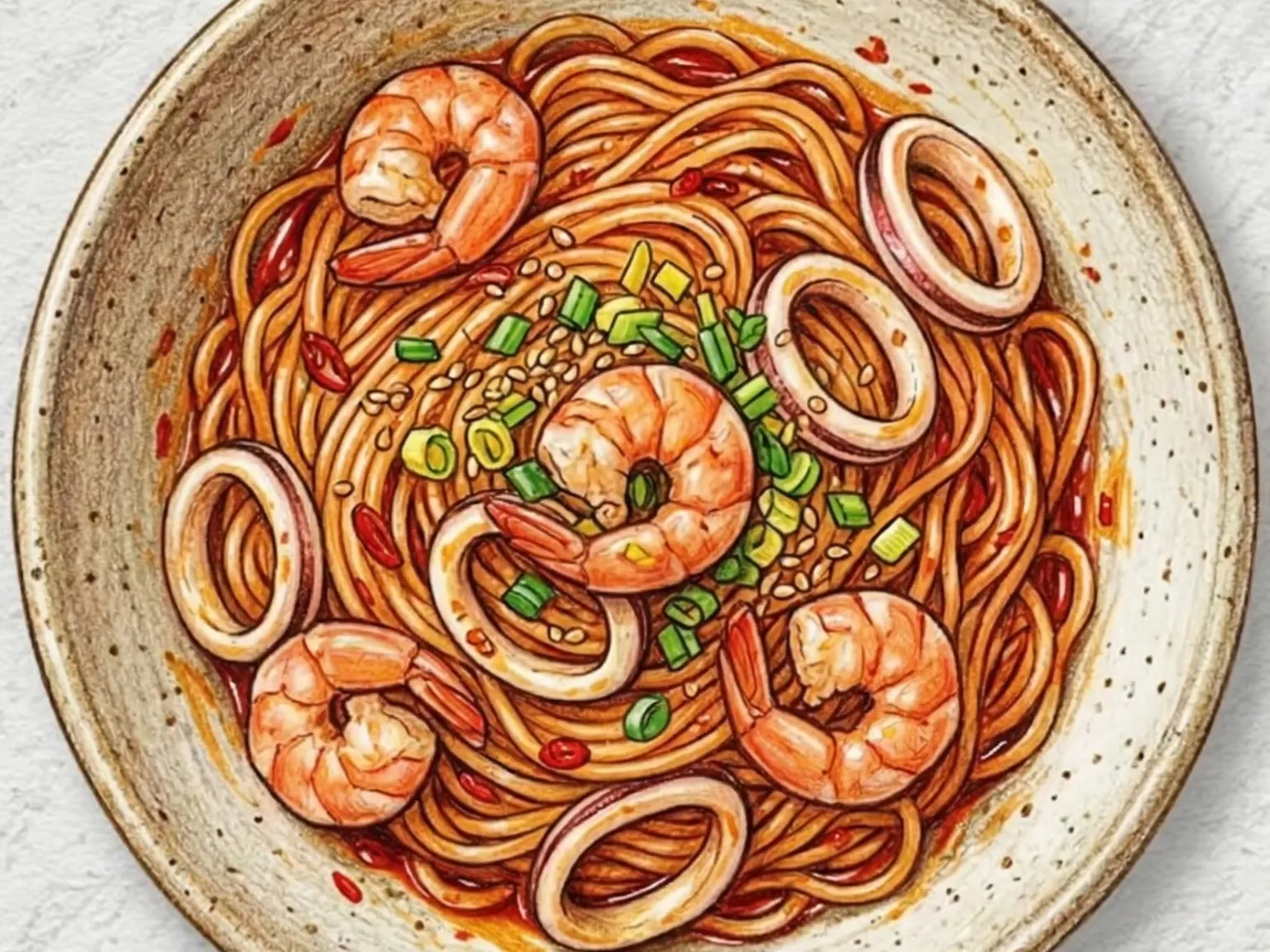
Korean Chili Oil Seafood Soy Bibim Noodles
Gochu gireum haemul ganjang bibim myeon is a Korean mixed noodle dish where boiled noodles are tossed with shrimp, squid, and a dressing of homemade chili oil, soy sauce, and oyster sauce. Making the chili oil from scratch with dried chili and hot oil extracts a fragrant, rounded heat that is more aromatic than raw gochugaru. The seafood is stir-fried fast over high flame to keep the shrimp bouncy and the squid tender rather than rubbery. Oyster sauce bridges the marine flavor of the shellfish with the soy base, creating a savory depth that leads with umami rather than salt. Sesame seeds and scallions finish the bowl with a toasted note and a pop of green. Everything must be tossed together aggressively in one motion to coat the noodles and seafood evenly.
Adjust Servings
Instructions
- 1
Peel the shrimp and cut squid into bite-size pieces.
- 2
Blanch seafood for 1 minute 30 seconds, then cool immediately.
- 3
Cook noodles 30 seconds less than package time, rinse cold, and drain.
- 4
Whisk soy sauce, oyster sauce, chili oil, vinegar, and sugar into a dressing.
- 5
Toss noodles with sauce first, then add blanched seafood and chopped chives.
- 6
Sprinkle sesame seeds, rest 2 minutes for flavor absorption, then serve.
As an Amazon Associate, we may earn from qualifying purchases.
Tips
Nutrition (per serving)
More Recipes

Korean Ojingeo Ssamjang Bibim Myeon (Squid Ssamjang Mixed Noodles)
Ojingeo ssamjang bibim myeon is a Korean mixed noodle dish combining blanched squid rings with medium wheat noodles in a ssamjang-based sauce spiked with chili flakes, vinegar, and syrup. The squid is blanched for only forty seconds to keep it springy rather than chewy, and the noodles are rinsed under cold water while gently rubbing to remove surface starch. The dressing merges the fermented depth of ssamjang with the heat of gochugaru and the brightness of vinegar, creating a layered flavor that is salty, spicy, and tangy at once. Resting the sauce for about ten minutes before tossing softens the heavy note of ssamjang. Julienned perilla leaves on top add an herbal fragrance, and sesame seeds finish the dish with nuttiness. The recipe yields four generous servings.

Korean Aged Kimchi Tuna Mixed Noodles
Mukeunji tuna bibim myeon is a quick Korean mixed noodle dish where aged kimchi and canned tuna are tossed with chewy wheat noodles in a gochujang-based sauce. Trimming the excess paste from the aged kimchi and chopping it finely keeps the sourness in check, while draining the tuna oil thoroughly prevents the dressing from becoming diluted. The sauce blends gochujang, vinegar, oligosaccharide syrup, and sesame oil for a balanced mix of spicy, sour, and sweet. Boiling the noodles for five to six minutes and rinsing them in cold water gives them a firm, springy texture, and draining well ensures the sauce clings to every strand. Scallion and ground sesame seeds finish the bowl with color and nuttiness, and a small addition of vinegar or syrup at the table lets each person fine-tune the flavor balance.

Korean Spicy Seafood Noodle Soup
Jjamppong is a fiery Korean-Chinese noodle soup where squid, mussels, and vegetables are stir-fried in chili-infused oil before being flooded with chicken stock and brought to a rolling boil. The high-heat frying step blooms the gochugaru in oil, embedding a smoky, roasted spice into the broth that raw chili powder alone cannot achieve. Cabbage, onion, and green onion soften into the liquid and release their natural sugars, while soy sauce ties the seasoning together. Springy fresh wheat noodles absorb the vivid red broth, delivering intense heat and deep seafood flavor in every mouthful.

Korean Spicy Mixed Wheat Noodles
Bibim guksu is a chilled Korean noodle dish in which boiled and cold-rinsed somyeon wheat noodles are tossed in a sauce of gochujang, chili flakes, plum syrup, vinegar, soy sauce, and sesame oil. The heat from the gochujang, the sweetness of plum syrup, and the brightness of vinegar layer together into a multi-dimensional flavor in every bite. Rinsing the noodles thoroughly in cold water removes excess starch, giving them a bouncy chew and allowing the sauce to cling evenly. Torn lettuce and julienned cucumber folded in at the end contribute crunch and moisture that loosen the thick sauce just enough. A tablespoon of noodle cooking water can thin the sauce if it feels too heavy.

Korean Spicy Braised Mixed Seafood
Haemul-jjim is a Korean mixed seafood braise combining squid, shrimp, and clams with bean sprouts and onion in a spicy gochugaru and soy sauce seasoning. The vegetables are layered on the bottom to steam first, with the seafood placed on top and cooked quickly over high heat to preserve its texture. A starch slurry is added at the end to create a glossy coating that clings to each piece. The dish comes together in under ten minutes of active cooking, making it a dramatic but efficient centerpiece for gatherings or as an accompaniment to drinks.

Korean Gochujang Bibim Udon Cup (Spicy Mixed Udon Cup)
Gochujang bibim udon cup is a cold-tossed udon dish served in a cup, dressed with a sauce of gochujang, soy sauce, oligosaccharide syrup, vinegar, and sesame oil. The fermented heat of gochujang meets the vinegar's acidity to create a tangy-spicy profile without harshness, while the syrup adds body that helps the sauce coat the thick udon strands evenly. Raw julienned cabbage and carrot are mixed in for textural crunch against the soft noodles. Cooling the noodles completely before tossing prevents the sauce from clumping, ensuring every strand is evenly seasoned.