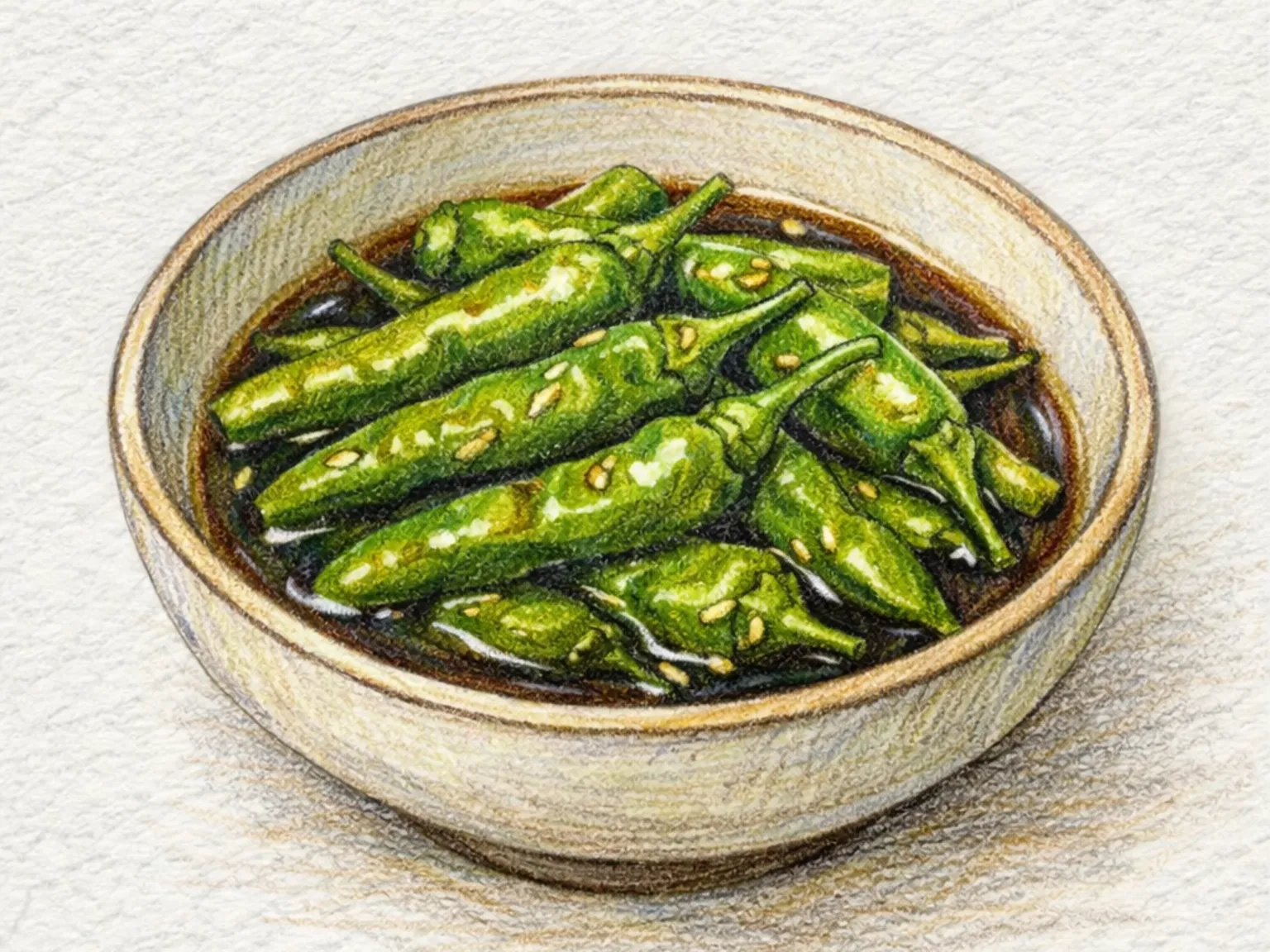
Korean Pickled Green Peppers
Dry 300 g green chili peppers thoroughly so the brine is not diluted, and pierce each one deeply in 4 to 5 places with a toothpick so the brine reaches the inside. Bring 150 ml soy sauce, 80 ml vinegar, 40 g sugar, and 150 ml water to a rolling boil, pour it over the peppers at once, cool uncovered, then seal and refrigerate for 1 day. The next day, drain the brine, boil it, cool it completely, and pour it back, repeating 3 to 4 times.
Quick answer
- Total time
- 25 min
- Level
- Easy
- Servings
- 4 servings
- Ingredients
- 5
About this dish
Pouring boiling soy brine straight over whole green peppers lightly blanches the skins to a brighter green while the flesh inside stays raw and crisp.
Read more
Toothpick holes in each pepper let the brine past the thick walls to the seeds. The finished pickle tastes salty, gently sour and still hot, since the capsaicin mellows in the brine but never disappears, and two or three peppers are enough to carry a bowl of plain rice. Cheongyang chilies make a sharper version, and kkwari peppers give a milder, more tender one.
Ingredients
Instructions
- 1
Rinse 300g green chili peppers under running water, then dry them thoroughly so the brine is not diluted.
Trim each stem to about 1cm and discard any bruised or split peppers before pickling.
- 2
Pierce each pepper deeply in 4 to 5 places with a toothpick, reaching through the thick skin without tearing it apart.
These holes let the soy brine reach the inside while the peppers stay crisp after pickling.
- 3
Add 150ml soy sauce, 80ml vinegar, 40g sugar, and 150ml water to a pot.
Heat over high heat, stirring only until the sugar dissolves, then let the brine reach a strong rolling boil.
- 4
Lay the prepared peppers in a heatproof container and pour the boiling brine over them immediately.
If the peppers float, press them lightly with a small plate so every surface stays submerged in the hot brine.
- 5
Leave the container uncovered at room temperature until the brine cools completely.
The pepper skins should look slightly blanched and brighter green, while the inside remains firm. Seal the container and refrigerate for one day.
- 6
The next day, drain only the brine into a pot and bring it back to a full boil.
Cool it completely before pouring it back. Repeat this 3 to 4 times, then store refrigerated and serve with rice.
Use-up ingredient planner
Turn these ingredients into two more meals
The overlap excludes basic seasonings. Open the next recipe and your selected dishes will stay with you.
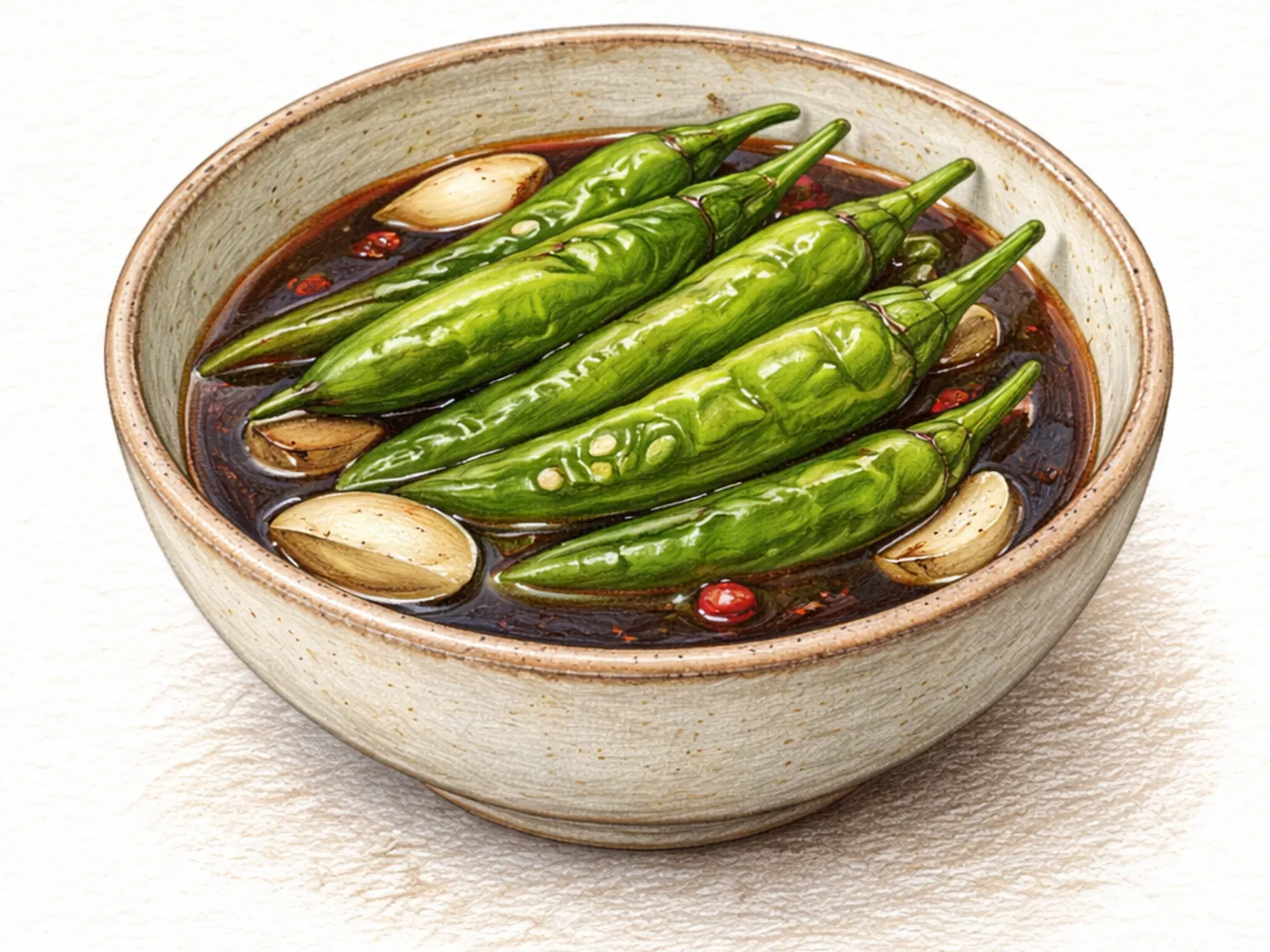
Korean Soy-Pickled Green Chili Peppers
Green chili pepper
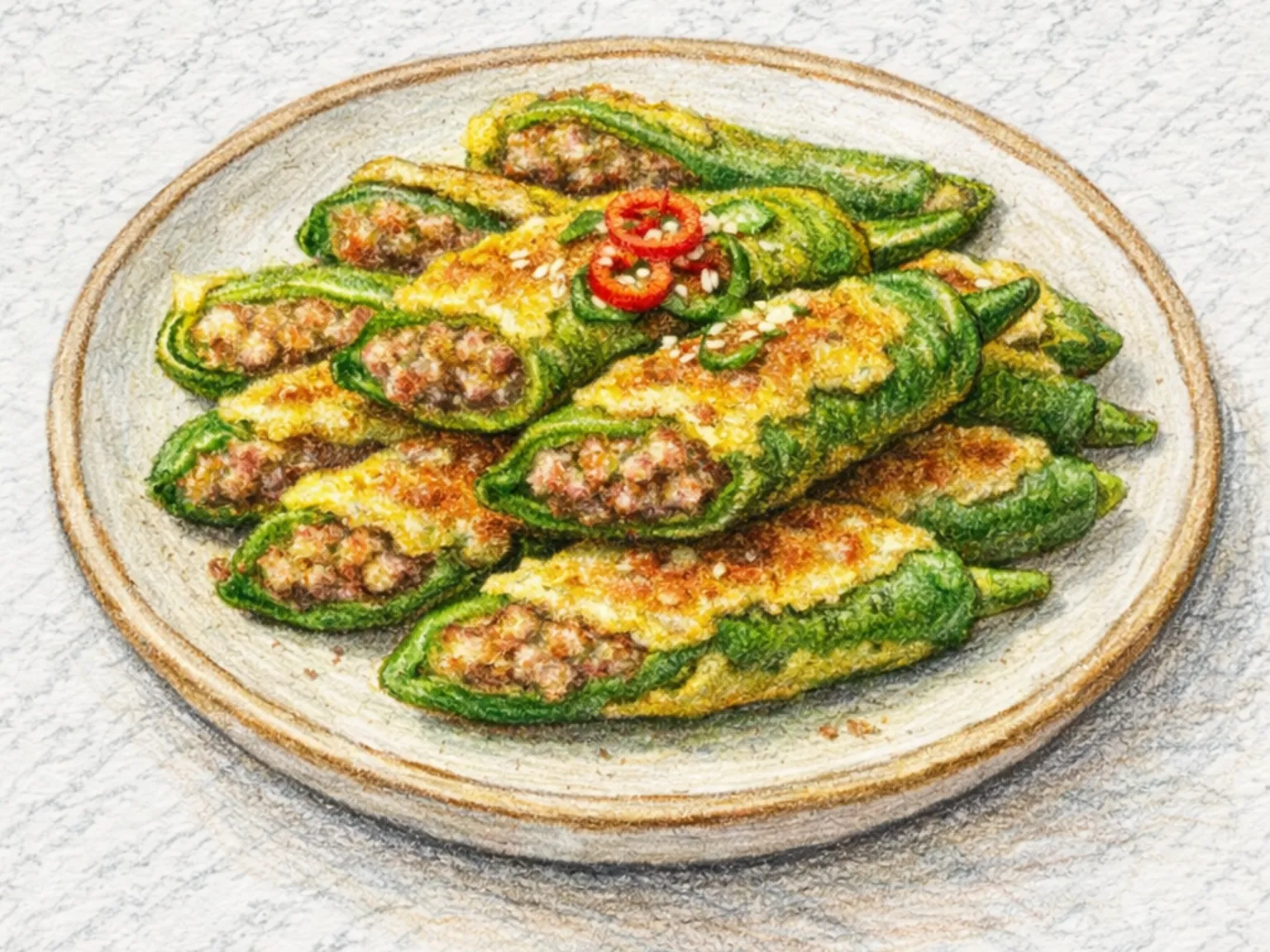
Korean Stuffed Chili Pepper Pancake
Green chili pepper
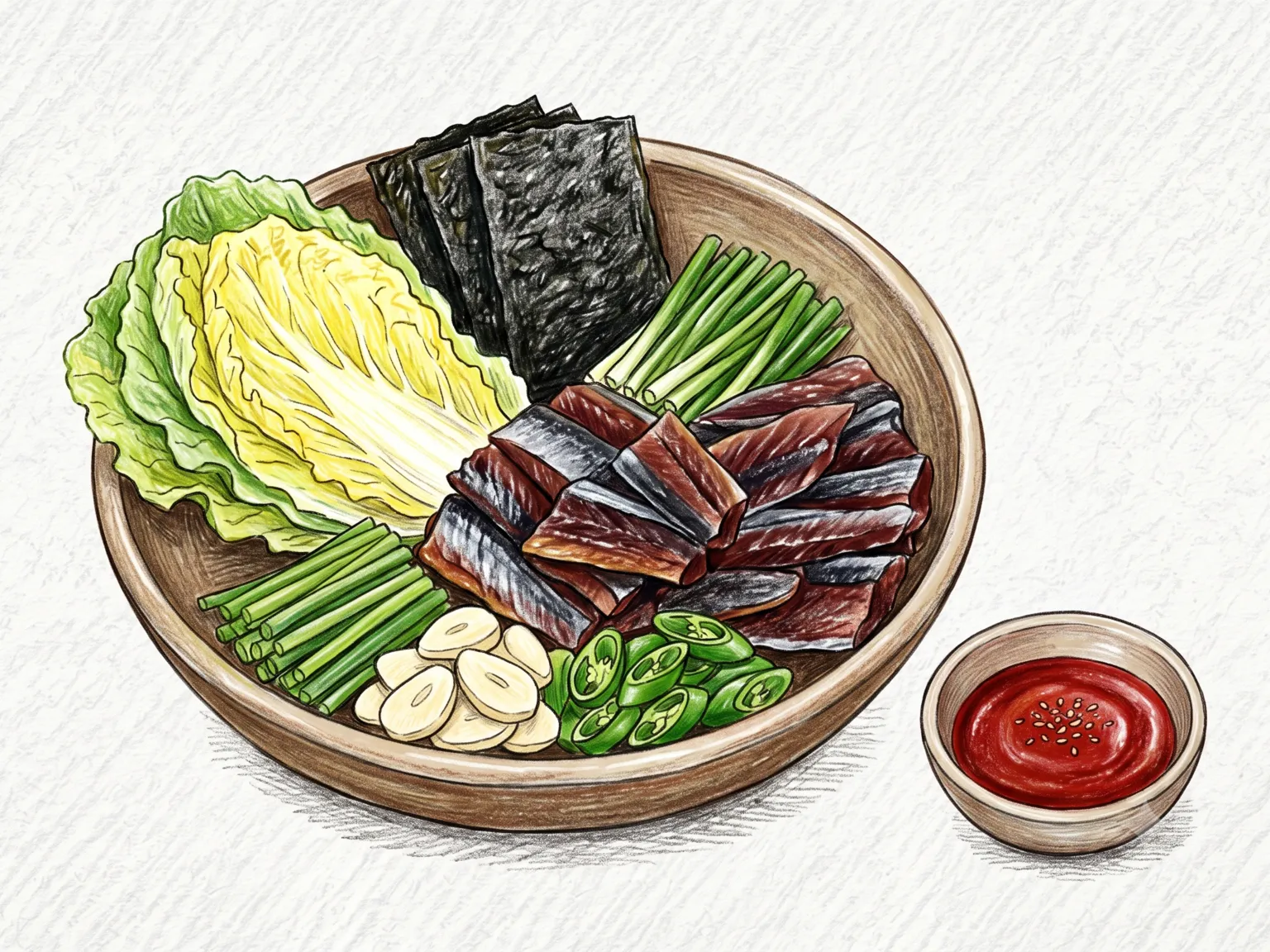
Gwamegi Wraps (Semi-Dried Pacific Saury Ssam)
Green chili pepper