Korean Stuffed Chili Pepper Pancake
Quick answer
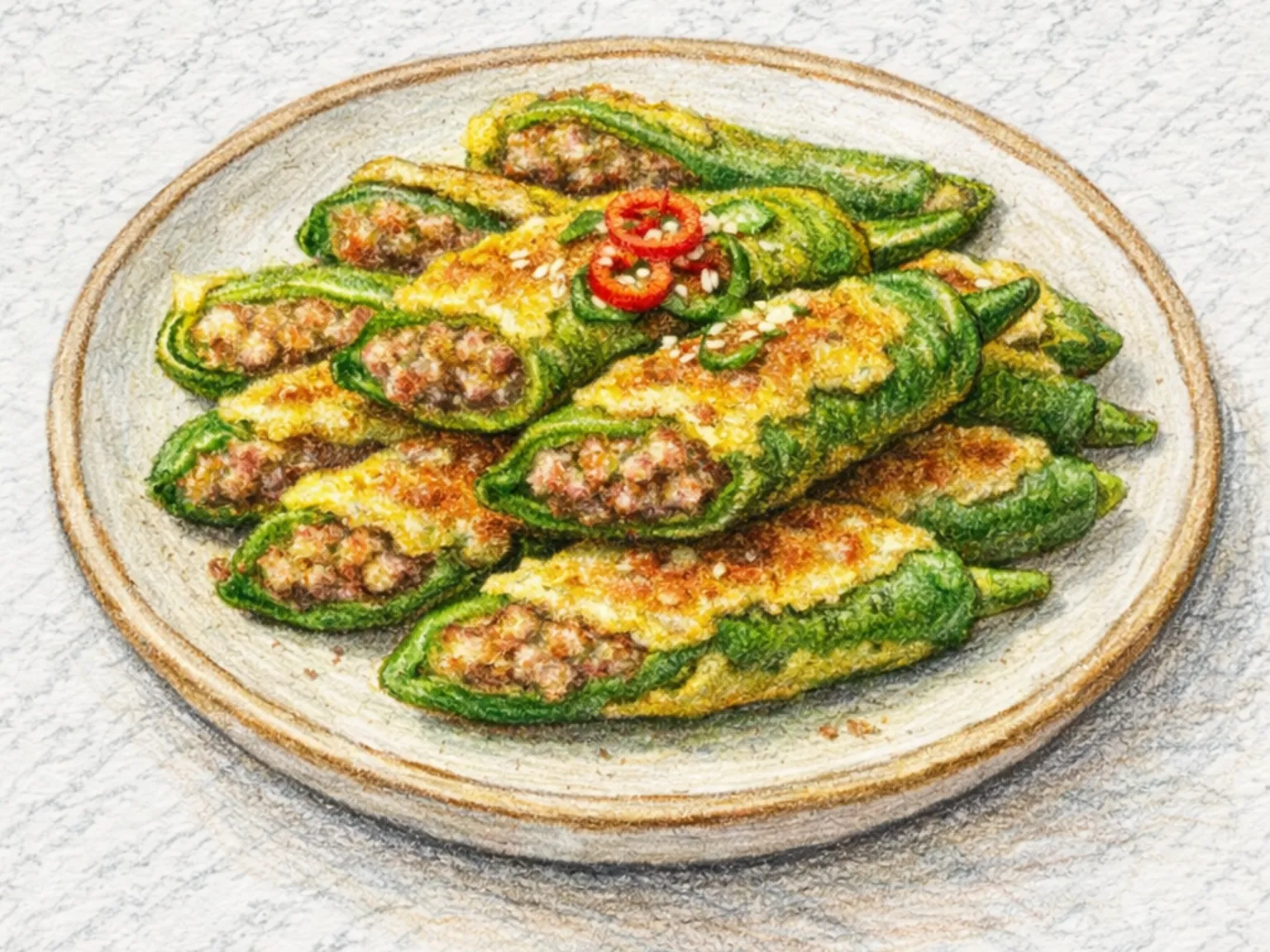
Gochu-jeon is a Korean holiday pancake made by splitting mild green chili peppers in half lengthwise, removing the seeds, and stuffing them with a filling of ground pork...
What makes this special
- Gochu-jeon are mild green chili peppers stuffed with a savory pork and pressed tofu filling.
- Halving and seeding the peppers reduces heat and makes filling easier
- Squeezing water from tofu before mixing with pork keeps the filling firm after cooking
Key ingredients
Core cooking flow
- 1 Split 10 mild green chili peppers lengthwise and scrape out the seeds and white membranes.
- 2 Wrap 100g tofu in cloth and squeeze out as much water as possible.
- 3 Press the filling into each pepper half, filling only about seventy percent of the cavity.
Gochu-jeon is a Korean holiday pancake made by splitting mild green chili peppers in half lengthwise, removing the seeds, and stuffing them with a filling of ground pork, pressed tofu, and minced garlic that is seasoned before being spooned in. The mixture is then coated in flour and egg before being pan-fried until golden on both sides. The pepper's gentle heat wraps around the pork's savory richness and the tofu's silky interior, creating a layered contrast of flavor and texture in every bite. Squeezing all moisture out of the tofu in a cloth is essential; any remaining water causes the oil to splatter and the filling to fall apart during frying. Using cucumber peppers or shishito peppers instead of regular green chilies eliminates nearly all spiciness for those with lower heat tolerance, and filling each pepper to about seventy percent capacity prevents the shell from bursting as the filling expands with heat. This jeon has a fixed place on Seollal and Chuseok ancestral tables and everyday holiday spreads alike, and it tastes best served immediately while still hot, alongside a soy-vinegar dipping sauce that sharpens the meat filling's umami and complements the pepper's fresh aroma.
Instructions
Read the steps as a cooking flow: prep, heat, seasoning, doneness control, and finish.
- 1Heat
Split 10 mild green chili peppers lengthwise and scrape out the seeds and white membranes.
Press the cut sides with paper towels until dry, because moisture makes the pork filling slide off during coating and frying.
- 2Season
Wrap 100g tofu in cloth and squeeze out as much water as possible.
Mix it with 200g ground pork, 1 tsp minced garlic, and 0.5 tsp salt until the filling feels sticky and holds together.
- 3Heat
Press the filling into each pepper half, filling only about seventy percent of the cavity.
Level the surface with your fingers or a spoon so the filling does not swell out and split the pepper as it cooks.
- 4Step
Dust the exposed filling side with 3 tbsp flour in a thin, even layer.
Shake off excess flour before dipping in egg, because thick patches turn pasty and keep the egg coating from browning evenly.
- 5Control
Beat 2 eggs and dip each pepper filling-side first so the coating covers the flour.
Heat 2 tbsp cooking oil over medium heat, then place the peppers filling-side down and cook for about 3 minutes.
- 6Finish
When the filling side is golden and firm, flip carefully and cook the skin side for about 2 minutes more.
Rest briefly so the juices settle, then slice diagonally and serve hot with soy-vinegar dipping sauce.
After the steps
Pick a recipe that fits this dish.
Continue with shared ingredients, meal pairings, or a similar method.
Recipes That Go Well With This
More Grilled →Based on shared ingredients and meal pairing
Korean Stuffed Perilla Leaf Pancakes
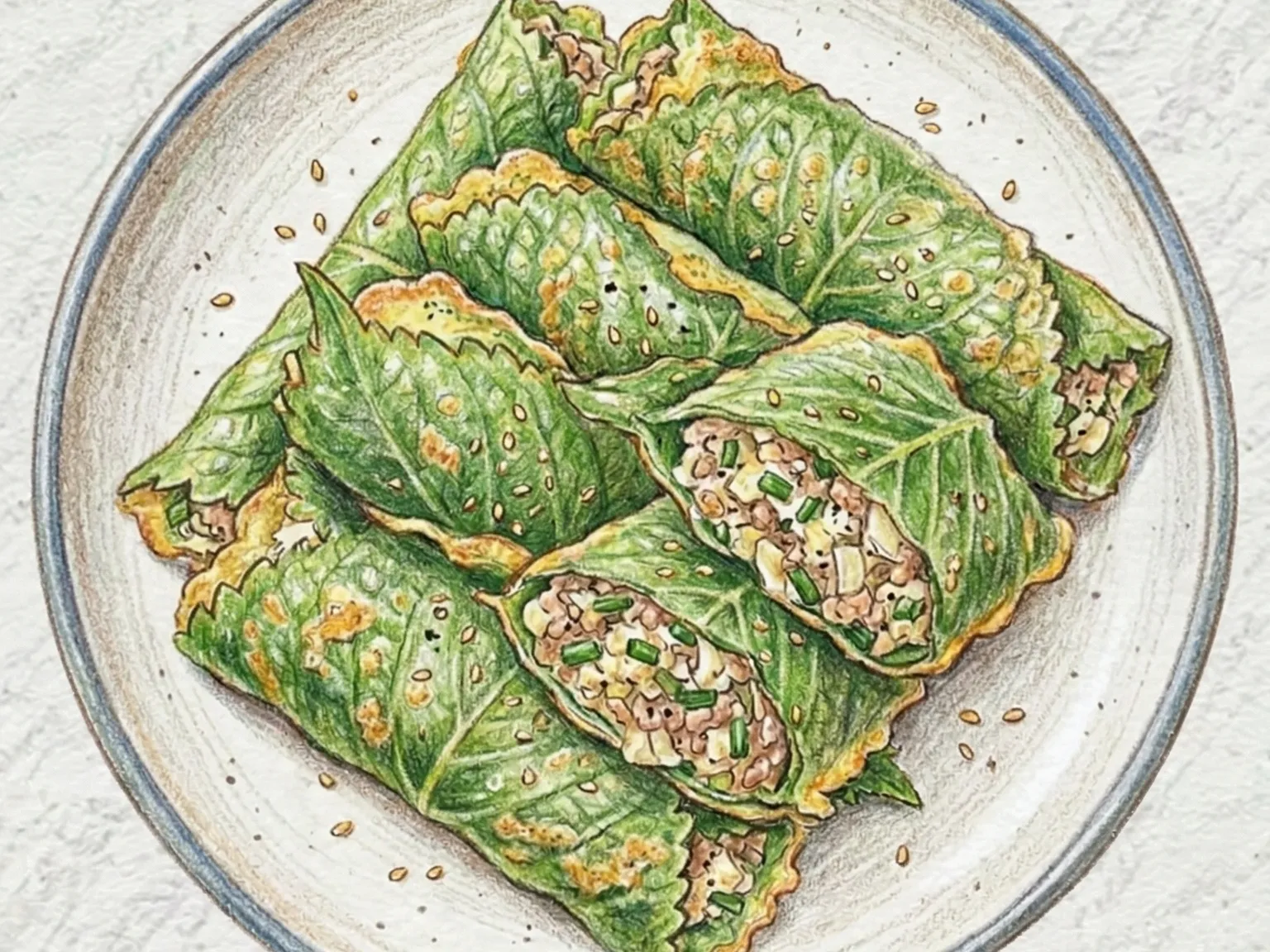
Kkae-ip-jeon are pan-fried perilla leaf parcels stuffed with a filling of ground pork and firm tofu, coated in flour and egg. The tofu must be squeezed dry in a cloth before mixing; excess moisture causes the filling to spread and stick to the pan. Garlic chives and onion add crunch and fragrance to the mix, and the filling seasoned with soy sauce and black pepper pairs cleanly with the perilla's strong herbal character. Dusting with flour first, then dipping in egg, produces an even coating, and frying covered over medium-low heat for two minutes per side ensures the filling is cooked through to the center. The bite-sized pieces work well as a packed lunch side or as bar food.
Korean Stuffed Shiitake Jeon
Pyogo-jeon is a Korean holiday dish of fresh shiitake mushroom caps stuffed with seasoned ground pork, coated in flour and egg batter, and pan-fried until golden. After removing the stems, the inner surface of each cap is dusted with flour-this thin starch layer acts as glue that prevents the meat filling from separating during cooking. Placing the meat side down first allows the filling to set from the heat before flipping, so the stuffed mushroom holds its shape throughout. Three to four minutes per side over medium heat is enough to turn the egg coating golden-brown while cooking the pork through completely. The shiitake's deep, earthy umami merges with the pork juices inside the sealed egg shell, delivering a concentrated savory bite.
Korean Seafood Hot Pot Soup
Haemul-tang is a Korean seafood hot pot that throws together crab, shrimp, clams, and squid in a fiery, brick-red broth. The liquid starts with gochugaru and plenty of garlic, building a spicy base that the seafood then amplifies with its own briny juices. Radish chunks soften as the pot bubbles, thickening the broth slightly and adding a cool sweetness behind the heat. Green onions and cheongyang peppers go in toward the end for a sharp, vegetal bite. The magic of haemul-tang lies in the convergence of flavors: crab shells release a sweet, crustacean stock; clams open to spill their liquor; shrimp and squid contribute distinct textures from snappy to chewy. The pot is brought to the table still at a rolling boil, and diners pick through the shells and tentacles while the broth continues to concentrate.
Korean Beef Jeon (Egg-Coated Pan-Fried Thin Beef Slice)
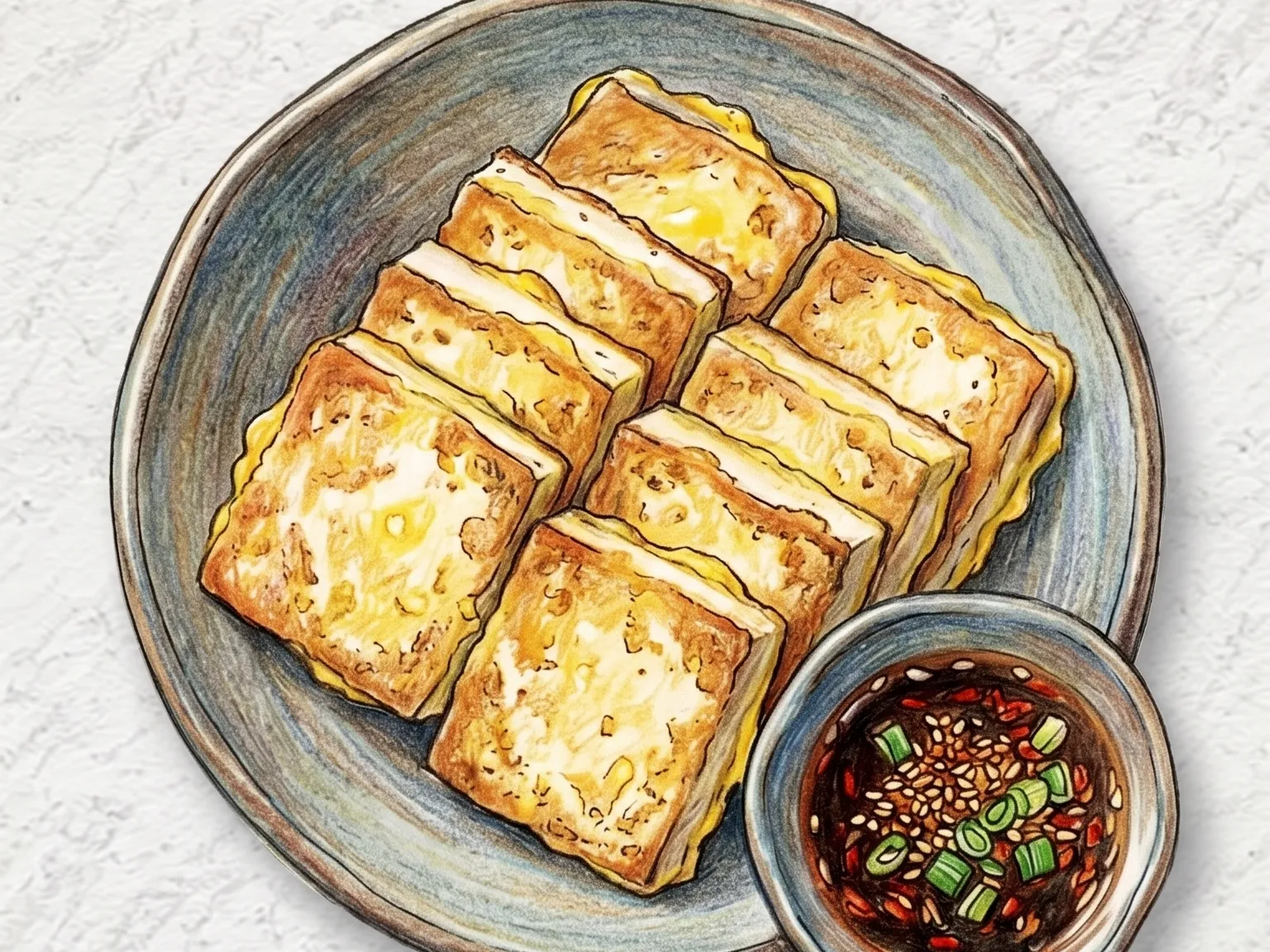
This classic Korean dish consists of thinly sliced lean beef round that is lightly seasoned, coated in flour and egg, and pan-fried. The process begins by seasoning the beef slices with salt, black pepper, and minced garlic. Each slice is dusted with a thin layer of flour, shaking off any excess to prevent clumping and to ensure the egg batter adheres securely during cooking. The floured beef is dipped in beaten egg and cooked in a preheated pan with oil over medium heat. It is crucial to avoid high heat, which can scorch the egg coating and toughen the meat. Pan-frying each side briefly until the egg sets preserves the natural tenderness of the beef. The cooked slices feature a delicate golden coating and are typically served warm. Yukjeon is a staple for holiday feasts, ancestral rites, and housewarming gatherings.
Serve with this
Korean Grilled Eel Rice Bowl
Jangeeo deopbap is a bowl of grilled freshwater eel over steamed rice, where the key technique is building up a thick, lacquered glaze through multiple applications of a sweet-salty sauce reduced from soy sauce, mirin, sugar, and ginger juice. The eel starts skin-side down on the grill over medium heat for around five minutes to crisp the skin, then is flipped and basted repeatedly with the sauce as it finishes cooking. A single coat of sauce produces a pale, thin color, so at least two applications and ideally three or more are needed to build the characteristic glossy surface. With each additional coat, the sugars in the sauce react with heat through both Maillard browning and caramelization, layering flavor with every pass. Because freshwater eel is naturally fatty, fat drips during grilling can cause flare-ups, so heat control is important throughout the process. Sansho pepper dusted on at the end cuts through the eel's inherent richness with a sharp, numbing fragrance that balances the sweet glaze and keeps the dish from feeling heavy.
Korean Stir-fried Butterbur Stems
Meowi-namul-bokkeum stir-fries boiled butterbur stems in perilla oil, adding a cooking step that distinguishes it from the cold-dressed muchim version. While the muchim blanches and seasons immediately without further heat, the bokkeum takes the boiled stems into a pan with soup soy sauce and water for five minutes or more, driving the seasoning deep into the plant fibers. This additional cooking time also volatilizes more of the butterbur's bitter compounds, producing a milder flavor compared to the cold preparation. Perilla oil, though more prone to oxidation than sesame oil, is the traditional choice because its earthy, grassy aroma harmonizes with the herb's character in a way sesame oil cannot. Adding perilla seed powder in the last minute causes its starch to partially gelatinize, giving the sauce a thicker consistency, but leaving it on the heat too long makes the dish chalky and heavy. Timing this final step precisely is what separates a well-made version from an overcooked one. This banchan appears on spring mountain-village tables alongside gondeure-namul and chwinamul as part of the seasonal wild greens spread that marks the transition out of winter.
Chicken Mu (Korean Fried Chicken Radish Pickle)
The crunchy, sweet-sour radish pickle served with every order of Korean fried chicken - now easy to make at home in under 15 minutes. Cubed radish is submerged in a cooled brine of vinegar, sugar, salt, and whole black peppercorns. Using fully cooled brine rather than hot is critical for maintaining the radish's firm, snapping crunch. Ready to eat after one day of refrigeration, its bright acidity cleanses the palate between bites of crispy chicken. Stored in a glass jar, this pickle keeps for over a week.
Similar recipes
Korean Pan-fried Oyster Jeon
Gul-jeon is a Korean dish featuring oysters that are pan-fried in a delicate coating of flour and egg. The preparation starts with fresh seasonal oysters that are rinsed carefully in a mild salt water solution to ensure they are clean. Once the rinsing is complete, it is necessary to pat each oyster until it is thoroughly dry. This particular step is crucial because residual water leads to oil splattering during the frying process and prevents the flour from adhering to the surface in a uniform manner. The intended result is a very thin layer of flour, as a thick coating will muffle the natural oceanic brine of the oyster. After the light dusting of flour, the oysters are submerged in beaten egg. This egg batter serves as an insulating layer that conducts heat slowly into the center of the seafood. This specific cooking method keeps the interior of the oyster plump and moist while the exterior reaches a soft golden color. As the oysters cook, they release a distinct mineral aroma associated with fresh seafood. Adding finely chopped garlic chives shortly before the cooking is finished provides a sharp, garlicky contrast that emphasizes the natural mineral profile of the dish. It is important to cook the oysters over a steady medium flame for approximately two minutes on each side. If the heat is set too high, the egg exterior will scorch before the inside is sufficiently warmed through. When flipping the oysters, you should do so carefully and avoid pressing down on them with a spatula. In instances where the oysters are exceptionally large, pressing them into a flatter shape prior to the start of the cooking process will facilitate more even heat distribution throughout the piece.
Korean Mung Bean Pancake (Traditional Bindaetteok with Pork and Kimchi)
Nokdu-jeon is a traditional Korean mung bean pancake made by soaking dried mung beans for at least six hours, grinding them into a thick, starchy batter, and mixing in ground pork, mung bean sprouts, squeezed kimchi, and scallions before pan-frying in oil. The extended soaking is critical because undersoaked beans leave gritty particles that no amount of blending will smooth out, and the natural starch in the batter holds the pancake together without flour or egg. Kimchi must be thoroughly squeezed of its liquid before chopping fine, or the excess moisture thins the batter and prevents a proper crust from forming. Cooking over medium heat for three to four minutes per side caramelizes the mung bean starch into a crackly golden crust, while the pork juices and kimchi's tang settle into the earthy, slightly sweet flavor of the bean itself. Using enough oil and sliding a spatula fully under the pancake in one motion prevents tearing during the flip, and keeping the heat steady ensures even browning across the surface.
Korean Steamed Stuffed Chili Peppers
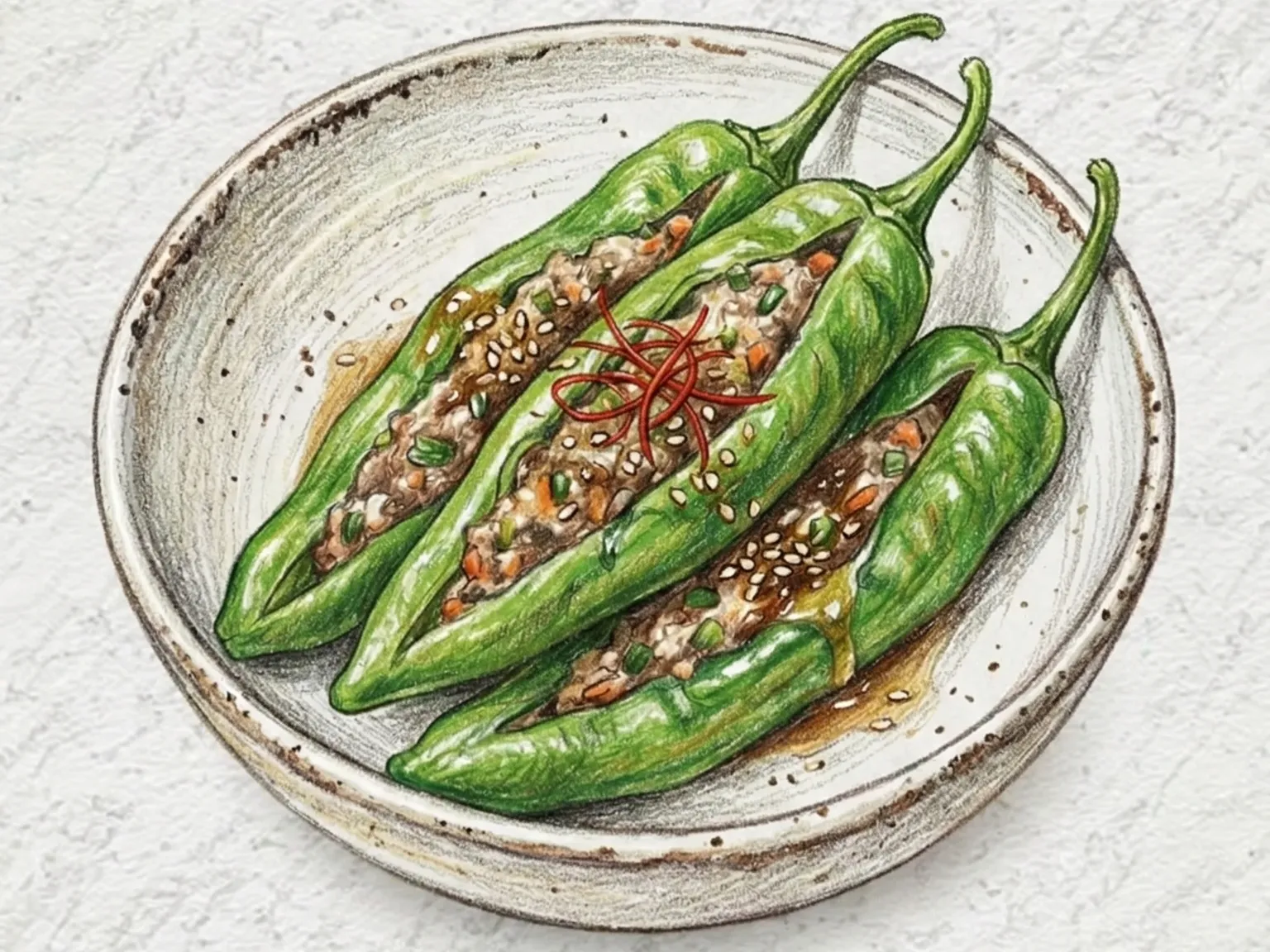
Gochu-jjim is a traditional Korean banchan in which mild green chili peppers are hollowed out, dusted inside with a light coating of flour, then packed with a filling of ground pork, crumbled firm tofu, garlic, and scallion before being steamed until cooked through. The flour coating is not decoration; it creates a thin binding layer that keeps the filling anchored inside the pepper during the entire steaming process, so each piece arrives at the table intact and firmly stuffed. Soy sauce and sesame oil work through the filling as it cooks, producing a savory, slightly nutty flavor that contrasts with the clean bitterness of the pepper skin. The steamed pepper itself stays slightly firm at the bite while the stuffing is soft and moist, and the interplay of those two textures is what makes a simple list of ingredients into a dish worth returning to. Gochu-jjim appears as a regular everyday banchan alongside rice and also earns a place on Korean holiday tables for its restrained elegance.