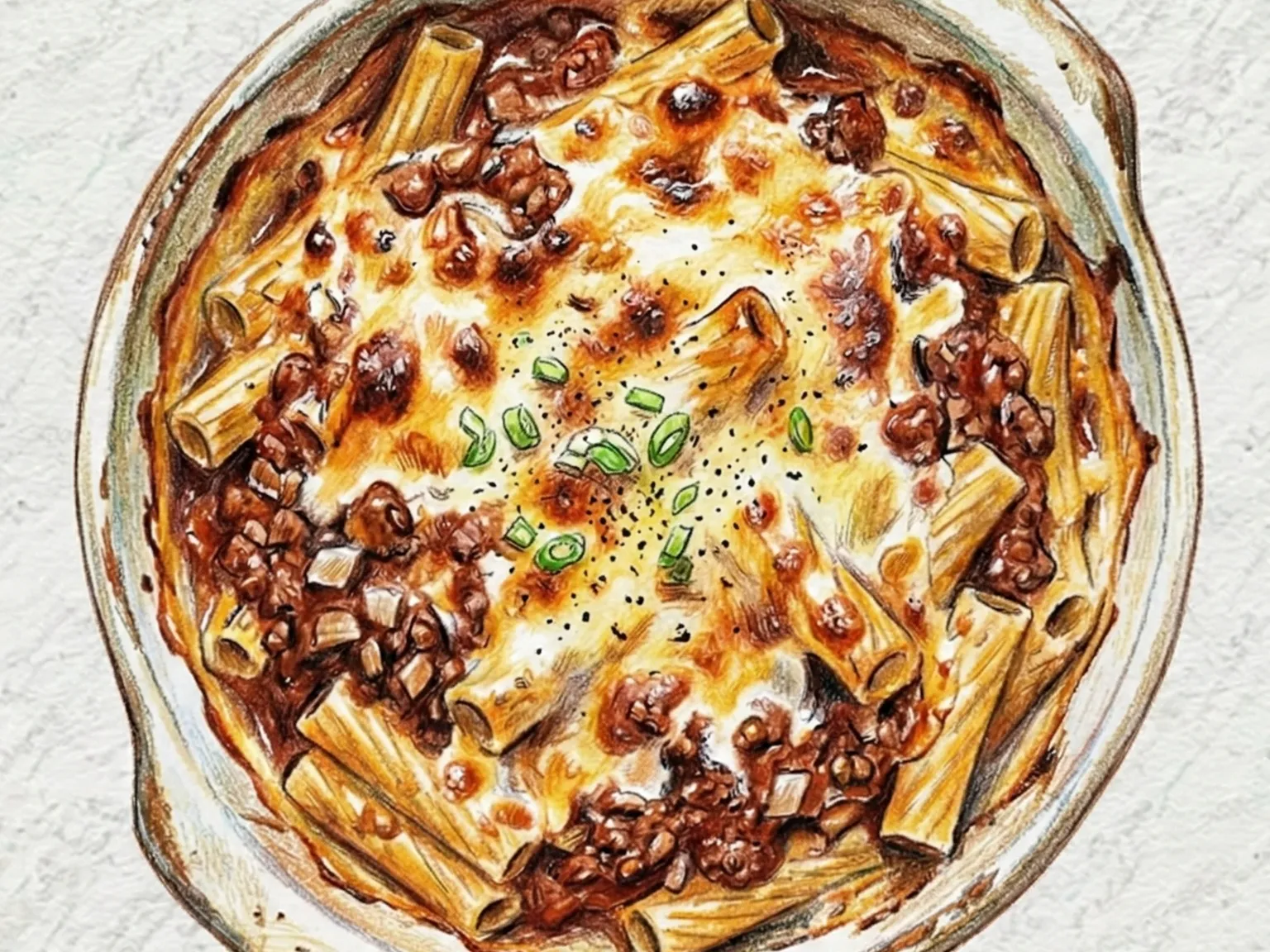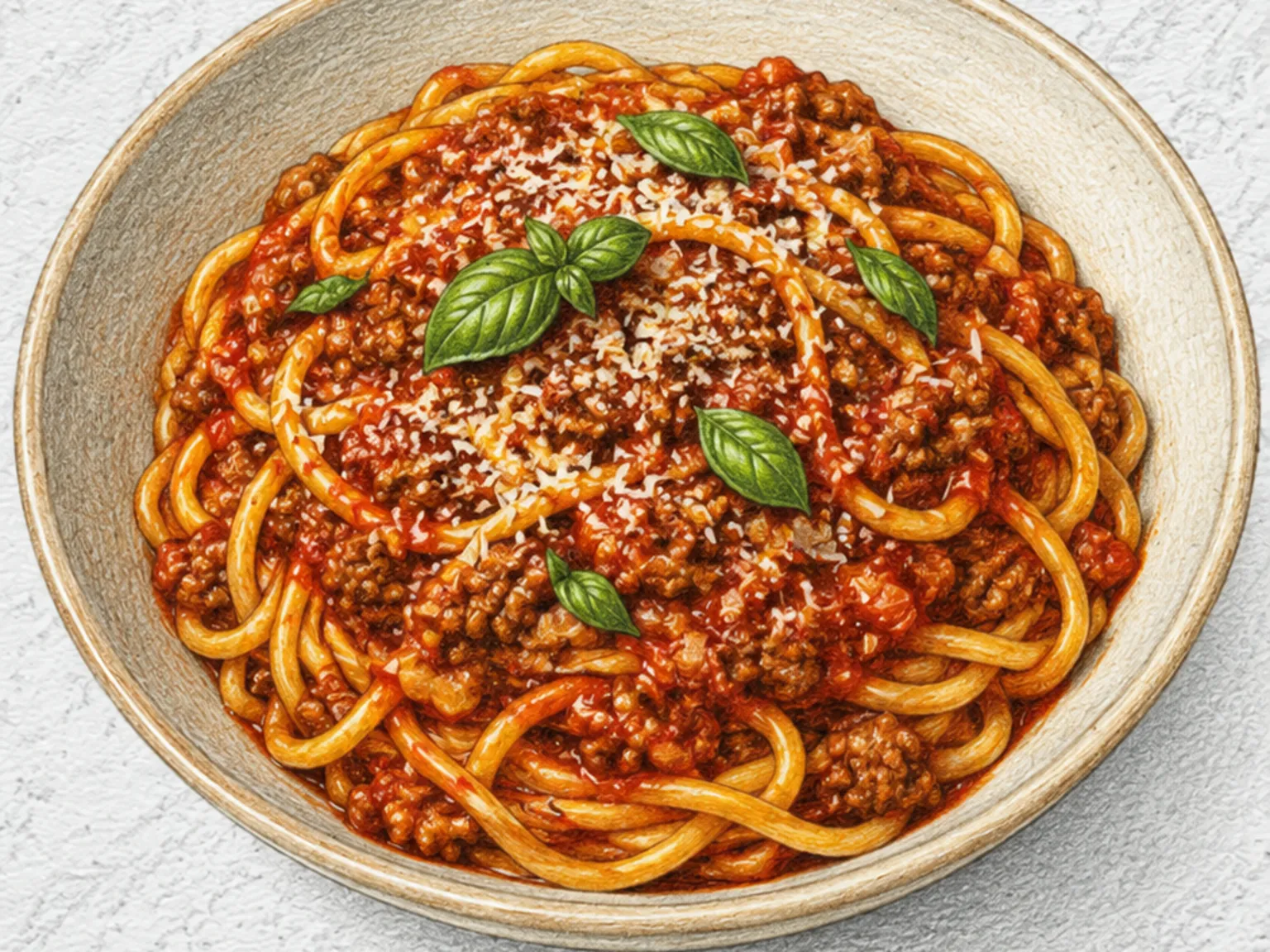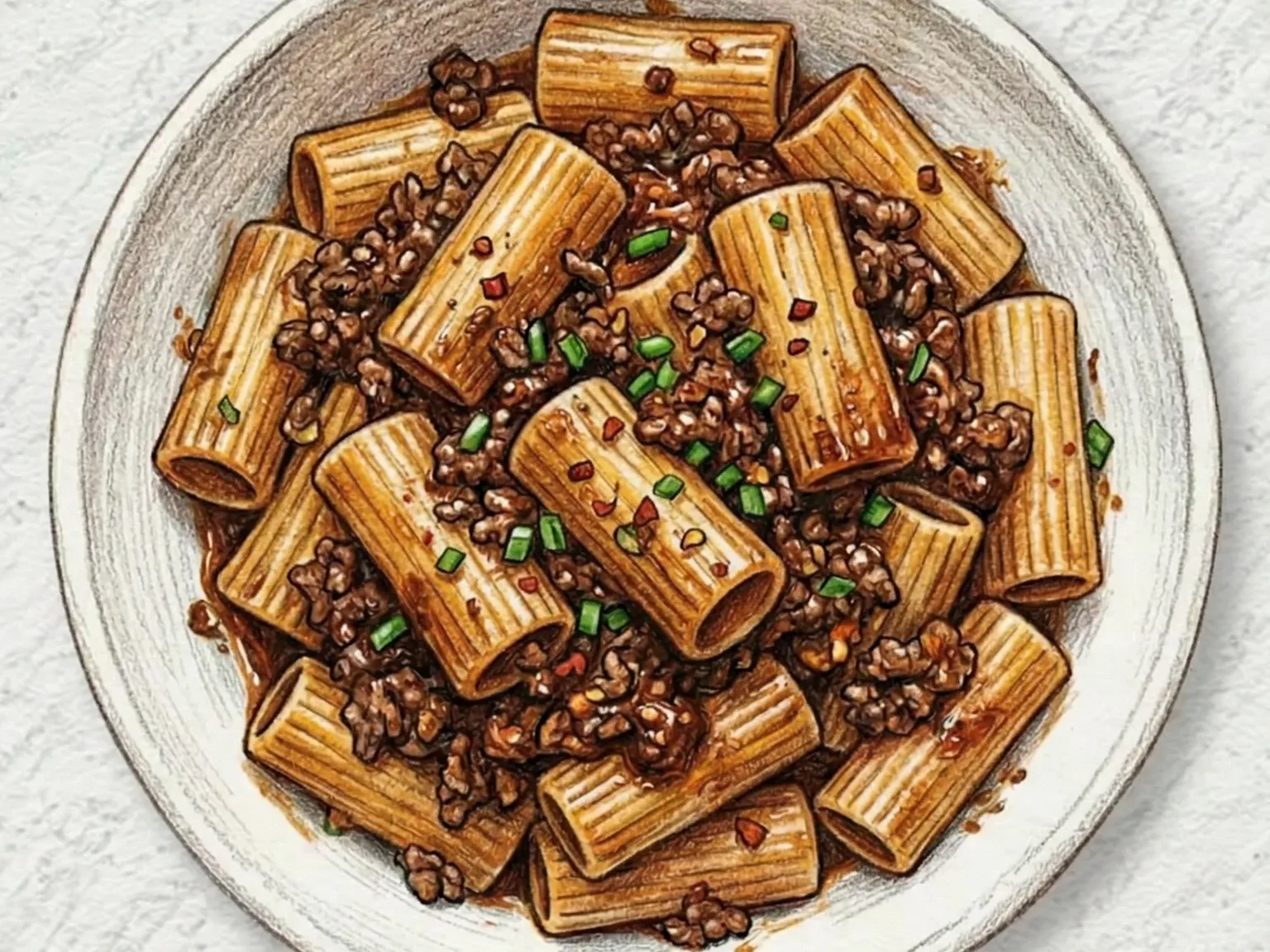
Gochujang Beef Ragu Rigatoni
Gochujang beef ragu rigatoni sears ground beef hard over high heat to develop a deep browned crust, then adds gochujang and tomato puree with red wine for a twenty-minute simmer on medium-low heat. Leaving the beef undisturbed in the pan until a crust forms is essential - stirring too early releases moisture and prevents browning. Frying the gochujang in oil for one minute draws out its sweet fermented umami, which pairs naturally with the tomato's acidity. The red wine reduces and leaves behind a fruity complexity that layers into the ragu's depth. Rigatoni is boiled one minute short of al dente, then finished in the sauce pan with pasta water so the starch integrates into the sauce and coats the tubes both inside and out with a glossy, clinging finish.
Adjust Servings
Instructions
- 1
Finely chop onion and garlic, then boil rigatoni in salted water until 1 minute shy of al dente.
- 2
Heat olive oil in a pan and brown the ground beef over high heat.
- 3
Add onion and garlic, cook 3 minutes, then stir in gochujang and cook 1 more minute to bloom.
- 4
Add red wine and reduce by half, then add tomato puree and simmer 20 minutes on medium-low.
- 5
Add cooked rigatoni with 60 ml pasta water and toss for 2 minutes until glossy.
- 6
Plate and finish with grated parmesan.
As an Amazon Associate, we may earn from qualifying purchases.
Tips
Nutrition (per serving)
More Recipes

Dakgalbi Cream Rigatoni (Korean Spicy Chicken Gochujang Cream Pasta)
Dakgalbi cream rigatoni marinates boneless chicken thigh in a gochujang-based sauce with soy sauce, gochugaru, and sugar, then stir-fries it with cabbage and sweet potato before finishing with heavy cream. Pre-marinating lets the spicy-sweet seasoning penetrate the meat rather than just coating the surface. High-heat stir-frying drives moisture out of the cabbage, concentrating its natural sweetness, which balances the chili paste's intensity. Adding cream and reducing it on low heat emulsifies the spicy marinade into a pink, thick sauce. Rigatoni's large hollow tubes fill with this dense cream sauce, delivering both the dakgalbi's bold heat and the cream's smoothness in every bite.

Soy Galbi Ragu Pappardelle
Soy galbi ragu pappardelle braises seared short rib with aromatics, red wine, and soy sauce for 90 minutes until the meat falls apart into a rich, gelatinous ragu. The long braise dissolves the collagen in the short rib, giving the sauce a silky body that clings to the wide pappardelle ribbons. A soffritto of onion, carrot, and celery provides the sweet base, while canned whole tomatoes and tomato paste add acidity and thickness. Soy sauce - rather than just salt - introduces fermented depth that distinguishes this from a standard Bolognese, and red wine contributes tannin and fruit complexity. Parmigiano-Reggiano grated on top ties the Italian and Korean elements together. This is a weekend dish, with most of the 90-minute cook time being passive braising.

Chunjang Beef Ragu Tagliatelle
Chunjang beef ragu tagliatelle combines a slow-cooked ground beef ragu with Korean black bean paste and tomato passata, tossed through wide tagliatelle ribbons. Chunjang is a fermented black soybean paste that, when fried, releases a deep roasted umami that adds a flavor dimension absent from standard Italian ragus. Browning the ground beef hard over high heat before adding liquids develops a strong Maillard crust that intensifies the overall meatiness. The sauce then simmers on low heat until it reduces into a thick, glossy coating. Wide tagliatelle catches the dense ragu across its broad surface, ensuring each forkful carries both the tomato-chunjang depth and bits of seasoned beef.

Gochujang Shrimp Cream Pasta
Gochujang shrimp cream pasta merges fermented Korean chili paste with heavy cream into a single cohesive sauce. Shrimp are seared at high heat first to build a caramelized crust, then folded into the gochujang-cream mixture along with milk and garlic. The fermented depth of gochujang works differently from standard chili heat - it carries malty sweetness and umami that round out the dairy richness rather than clashing with it. Parmesan grated into the sauce adds salt and nuttiness, while reserved pasta water controls the consistency. The entire dish comes together in about 20 minutes, keeping the shrimp firm and the sauce glossy.

Korean Spicy Beef Stir-Fry
Sogogi gochujang-bokkeum marinates thin-sliced beef in a paste of gochujang, soy sauce, sugar, and minced garlic, then stir-fries it over high heat. The chili paste's spiciness and the sugar caramelize together on the meat's surface, building a dark, sticky glaze with layered heat. Onion cooked alongside the beef releases moisture that helps the seasoning distribute evenly across every slice. A finish of sesame oil adds a roasted nuttiness on top of the bold, spicy-sweet profile -- intensely flavored enough that a small portion carries a full bowl of rice.

Yukgaejang (Fiery Shredded Beef and Vegetable Soup)
Yukgaejang is a fiery Korean beef soup that starts with brisket simmered until it can be pulled apart along the grain into long, thin shreds. The shredded meat is then hand-mixed with red pepper flakes, soup soy sauce, sesame oil, and minced garlic so the seasoning penetrates each strand before the final cook. Bracken fern, bean sprouts, and generous lengths of green onion join the pot, and everything boils together for thirty minutes in the brisket stock, which turns a deep red from the chili. The fern contributes an earthy chew, the sprouts add a clean crunch, and the green onion breaks down into the broth, lending natural sweetness that tempers the heat.