Gochujang Chocolate Crinkle Cookies
Quick answer
Gochujang chocolate crinkle cookies merge the fermented heat of gochujang with deep chocolate flavor in a single bite.
What makes this special
- Umami-rich chocolate cookies infused with gochujang for a fermented depth and heat.
- 12g gochujang adds fermented umami and a slow heat behind the chocolate sweetness
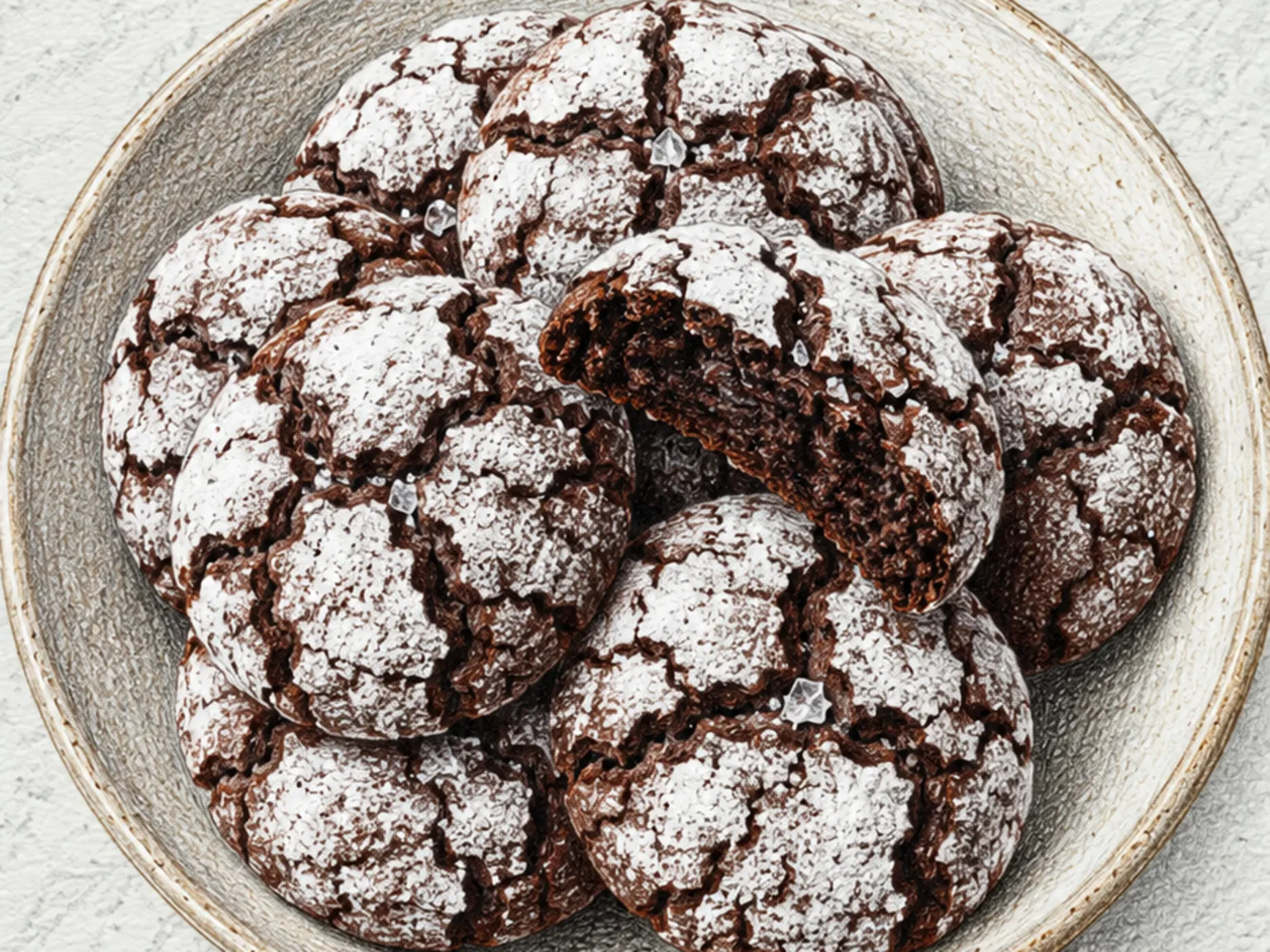
- Powdered sugar coating cracks as the cookie expands, revealing dark chocolate beneath
Key ingredients
Core cooking flow
- 1 Preheat the oven to 175C and line the tray with parchment.
- 2 Sift 150g flour, 25g cocoa powder, 4g baking powder, and 2g salt into a bowl.
- 3 In another bowl, beat 80g butter with 110g brown sugar for about 2 minutes...
Gochujang chocolate crinkle cookies merge the fermented heat of gochujang with deep chocolate flavor in a single bite. The signature cracked surface forms when balls of dough rolled in powdered sugar expand in the oven, splitting the white coating to reveal the dark interior beneath. Gochujang, added in a modest amount, threads a low, lingering warmth and an umami undertone through the chocolate without overtly announcing itself. Most tasters sense something unexpected at the finish but cannot immediately identify the source. The exterior sets into a thin, lightly crisp shell while the inside stays dense and fudgy, occupying the territory between a brownie and a cookie. Using both cocoa powder and melted chocolate increases the chocolate intensity beyond what either ingredient achieves alone. A pinch of flaky sea salt on top before baking sharpens the contrast between sweet and spicy, making the flavor more defined. Chilling the dough for at least 30 minutes before rolling ensures the powdered sugar coating adheres evenly and produces the consistent cracking pattern that defines the cookie's appearance.
Instructions
Read the steps as a cooking flow: prep, heat, seasoning, doneness control, and finish.
- 1Heat
Preheat the oven to 175C and line the tray with parchment.
Plan the spacing before shaping because this dough spreads as it bakes, and crowded cookies will merge before the crinkle pattern sets.
- 2Season
Sift 150g flour, 25g cocoa powder, 4g baking powder, and 2g salt into a bowl.
Mix until the cocoa is evenly dispersed, with no dry lumps that could leave bitter streaks in the dough.
- 3Season
In another bowl, beat 80g butter with 110g brown sugar for about 2 minutes, until softer and slightly lighter.
Add the egg and 12g gochujang, then mix until the color looks even and no red streaks remain.
- 4Prep
Add 60g melted dark chocolate only when it is no longer hot, so it does not loosen the butter too much.
Fold in the dry mixture just until no dry flour shows and the dough stays thick and sticky.
- 5Season
Chill the dough for at least 30 minutes, until it firms enough to portion cleanly.
Roll into 20g balls, then coat heavily in 50g powdered sugar so no dark patches show through before baking.
- 6Finish
Arrange the balls with generous space and bake for 10-12 minutes.
Pull them when the edges look set but the centers are still slightly soft, then cool completely on a rack so the fudgy texture finishes setting.
After the steps
Pick a recipe that fits this dish.
Continue with shared ingredients, meal pairings, or a similar method.
Recipes That Go Well With This
More Baking →Based on shared ingredients and meal pairing
Brown Butter Chocolate Chip Cookies
Brown butter chocolate chip cookies build on the familiar template by introducing browned butter, which is cooked over medium heat until the milk solids caramelize and turn golden, releasing an aroma of toasted hazelnuts and toffee that standard melted or creamed butter cannot produce. The browned butter is combined directly with brown sugar while still warm, which helps it dissolve completely and speeds up the mixing process. A high ratio of brown sugar relative to white sugar produces cookies with thin, crisp edges and a dense, chewy center that sinks slightly when pressed. Dark chocolate cut into rough chunks melts unevenly during baking, leaving some pockets fully liquid and others still partially solid, creating texture variation in each bite. Flaky sea salt pressed lightly onto the tops of the cookies before baking sharpens the sweetness and amplifies the chocolate flavor in a way that fine salt mixed into the dough cannot replicate. Fresh from the oven the cookies look underdone and collapse slightly when touched, but ten minutes of resting on the pan allows the structure to set: the edges firm up to a gentle snap while the center stays yielding and fudgy.
Chocolate Chip Cookies
Chocolate chip cookies are the most commonly baked cookie in American home kitchens, and despite a seemingly simple ingredient list the recipe conceals a precise set of variables that separate a good cookie from a great one. The ratio of brown sugar to granulated white sugar is the single most important decision: more brown sugar introduces molasses, which is hygroscopic and holds moisture in the finished cookie, producing a chewy, dense texture; more white sugar encourages the dough to spread in the oven and crisps the edges. Creaming softened butter with the sugars until the mixture turns pale and fluffy incorporates air into the dough, which gives the baked cookie lift and a slightly cakey interior. Chocolate chips, whether semi-sweet, dark, or a mixture, melt during baking and spread into the surrounding dough before re-solidifying as the cookie cools, forming pockets of concentrated chocolate distributed unevenly through each cookie. The moment to pull the tray from the oven is when the edges have set and turned golden while the center still appears underdone and almost raw-looking, because the residual heat of the pan continues to cook the interior as the cookies rest and cool. Pressing flaky sea salt into the surface of each cookie just before baking sharpens all the flavors, making the chocolate taste more chocolatey and the butter taste more buttery. Eaten warm, within minutes of coming out of the oven, a good chocolate chip cookie barely holds together and melts at the edges with the slightest pressure. That fragile, yielding moment is the whole point.
Kimchi Tofu Caesar Salad
Sautéing the kimchi drives off moisture and concentrates its umami into an intense, savory punch that replaces anchovies in a traditional Caesar. Pan-browned tofu cubes develop a crisp shell around their soft interior, standing in for crouton-like protein. The dressing mixes mayonnaise with plain yogurt for a lighter body than classic Caesar, sharpened with lemon juice and garlic. Grated parmesan adds the expected salty depth, and crisp romaine provides the essential crunch that holds the heavy flavors in check. Homemade bread croutons round out the textural contrast.
Yuja Cheesecake Bars (Citron Cheesecake)
Yuja cheesecake bars are a baked dessert that begins with a pressed crust of cracker crumbs and melted butter, pre-baked for eight minutes to set a firm base before the filling goes in. The filling combines softened cream cheese, eggs, sugar, and yuja citron marmalade, poured over the crust and baked at 170 degrees Celsius until just set. Pre-baking the crust is essential for keeping the layers distinct, and room-temperature cream cheese is non-negotiable for a batter free of lumps. Seventy grams of yuja marmalade introduces the fruit's sharp, floral citrus fragrance alongside clean acidity that cuts through the dense richness of the cheese layer, preventing the aftertaste from feeling heavy or cloying. Chilling for two full hours in the refrigerator before slicing produces straight, clean edges on each bar, and the texture sits between dense and silky, dissolving slowly once it hits the palate.
Serve with this
Korean Dalgona Milk (Caramel Puffed Sugar Candy Milk)
Dalgona milk starts with melting sugar in a small pan over low heat until it reaches a deep amber color, then adding baking soda, which causes the hot caramel to foam and aerate instantly into a honeycomb-like structure. Once cooled, the puffed candy is crushed and dissolved into cold milk. The baking soda reaction is what gives dalgona its distinctive lightness: instead of a dense, hard caramel, the aerated structure makes it brittle and easy to break while also helping it dissolve quickly in the milk. The caramelized sugar delivers a deep, toasty sweetness with a slight bitterness at the edges, similar to butterscotch, that spreads through the milk as the pieces melt. A small amount of vanilla extract sharpens the flavor and a pinch of salt rounds it out. Keeping some crushed dalgona pieces separate and dropping them on top of the finished drink as a garnish adds a crunchy contrast to the creamy liquid beneath.
Sweet Rice Punch (Traditional Korean Malted Barley Grain Drink)
Sikhye is a traditional Korean sweet rice punch made by steeping malted barley powder in lukewarm water, straining the liquid, adding cooked rice, and holding the mixture at around 60 degrees Celsius for one hour until the rice grains float to the surface. The amylase enzymes in the malt break down the rice starch, producing a distinctly malty, clear sweetness with grain depth that no sugar alone can replicate. Only the clear top liquid is used after settling -- discarding the sediment keeps the punch from turning cloudy. Simmering with sugar and sliced ginger for 20 minutes rounds the sweetness and adds a gentle, spiced warmth to the finish. Served well chilled with the reserved floating rice grains and pine nuts on top, the cold temperature sharpens the malty aroma and makes each sip crisp. Temperature control during the steeping stage is critical: if the mixture exceeds 70 degrees Celsius, the amylase denatures and the grains will not float, so keeping a steady 60-degree hold determines whether the preparation succeeds.
Classic Beef Burger
A classic beef burger shapes seasoned ground beef into a thick patty and sears it over high heat until a deep brown crust forms on the outside while the interior stays juicy. The Maillard reaction on the hot surface concentrates the beef flavor into that crust, and a slice of cheddar melted on top adds a salty, creamy layer. Crisp lettuce and a thick tomato slice bring moisture and freshness, while pickle slices cut through the richness with vinegar acidity. A brioche bun absorbs the rendered juices and condiments without falling apart, holding the stack together so every bite delivers all the components at once.
Similar recipes
Salted Doenjang Caramel Cookies
These unique cookies combine the rich umami of Korean fermented soybean paste, doenjang, with the sweetness of a brown sugar caramel dough. To prepare them, white sugar and heavy cream are heated to create a smooth caramel glaze. This mixture is cooled and combined with creamed butter, brown sugar, egg, and a small portion of strained doenjang, keeping the paste to about one or two percent of the total dough weight to ensure a subtle flavor. The dry ingredients are gently folded in before the dough is portioned into small balls and chilled for twenty minutes to control spreading during baking. Baking at 180 degrees Celsius results in cookies with crisp, toffee-like rims and soft, chewy centers. Pressing the centers slightly after baking enhances the texture. These treats offer a complex balance of sweet, salty, and savory notes that pair exceptionally well with espresso.
Fudgy Brownies
A fudgy brownie delivers dense, moist chocolate intensity in every bite, distinguishing itself from cake-style brownies through a higher ratio of butter and chocolate to flour. Melting chocolate and butter together before folding in sugar and eggs produces a glossy, pourable batter that bakes into a thin crust on top while the interior stays rich and slightly underdone. Pulling the pan from the oven just before the center fully sets is critical: as the brownie cools, that center sinks into a chewy, truffle-like layer. Using dark chocolate with a high cacao percentage shifts the flavor toward bittersweet depth rather than simple sweetness. A scattering of flaky sea salt on top before baking creates a sweet-salty contrast that amplifies the chocolate. Walnuts or pecans folded into the batter introduce crunch amid the dense crumb. Cutting clean squares requires patience, as the texture firms only after the brownie has cooled completely.
Gochujang Chickpea Crunch Salad
Gochujang chickpea crunch salad is a Korean-American fusion salad built around chickpeas roasted at 200 degrees Celsius for twenty minutes until the exterior becomes dry and crisp. The chickpeas must be patted completely dry before roasting and spread in a single layer on the pan so that steam can escape freely rather than trapping moisture against the surface. Allowing them to cool fully before they are dressed is equally important, because residual heat accelerates softening once the dressing makes contact. The base is hand-massaged kale from which the tough center ribs have been removed. Pressing and squeezing the leaves for at least one minute breaks down the fibrous cell walls, mellows the bitterness, and opens the surface so the dressing can penetrate rather than simply coat the outside. Shredded red cabbage and julienned carrot add color and additional crunch, while half-moon cucumber slices contribute a cooling note. The dressing combines gochujang with soy sauce, maple syrup, rice vinegar, and sesame oil, layering fermented heat against a sweet and tart backbone that amplifies both the bitterness and the natural sweetness present in the vegetables. The contrast between the crunchy, nutty chickpeas and the yielding greens is what gives this salad its textural character, making each forkful different from the last.