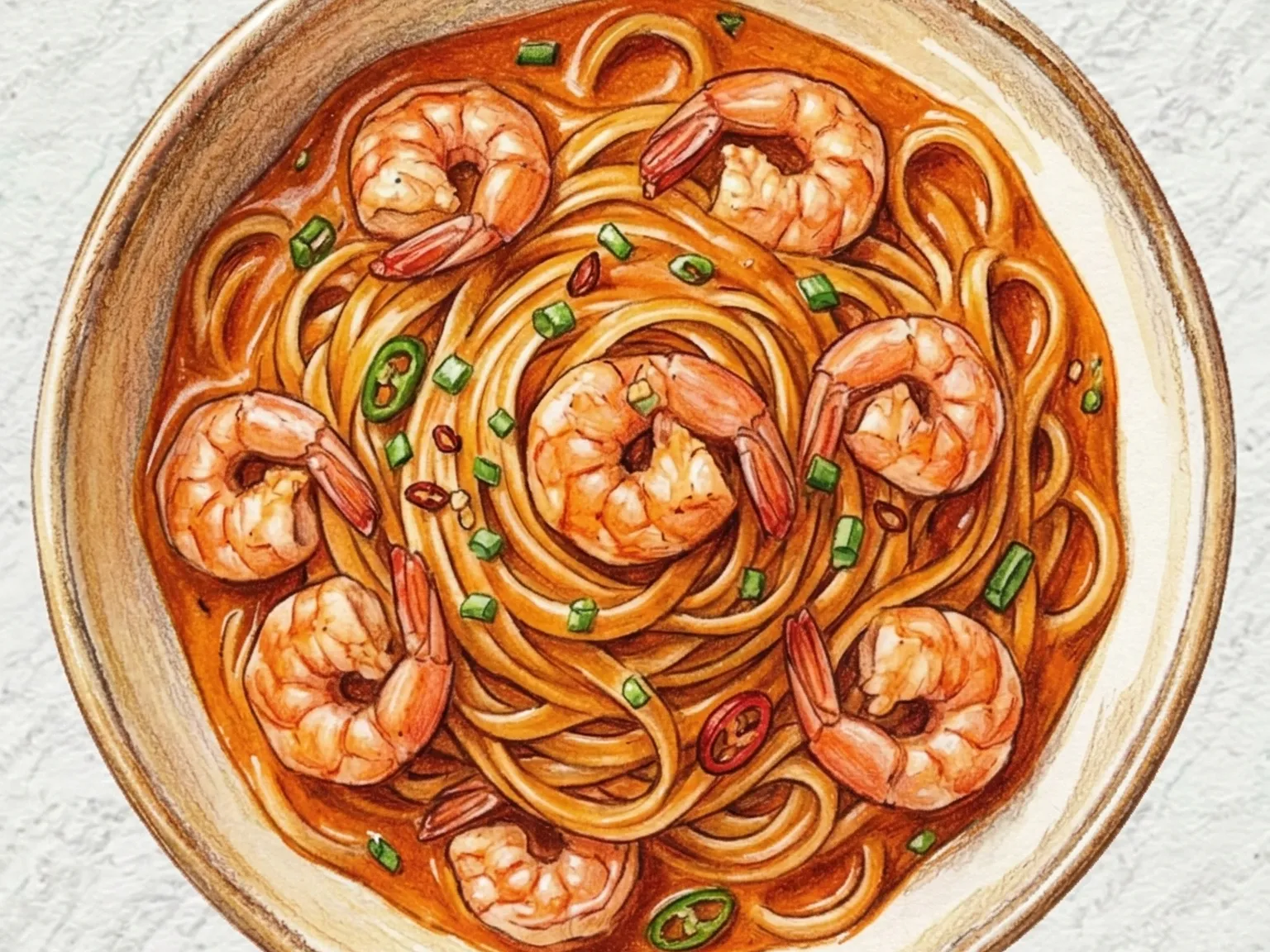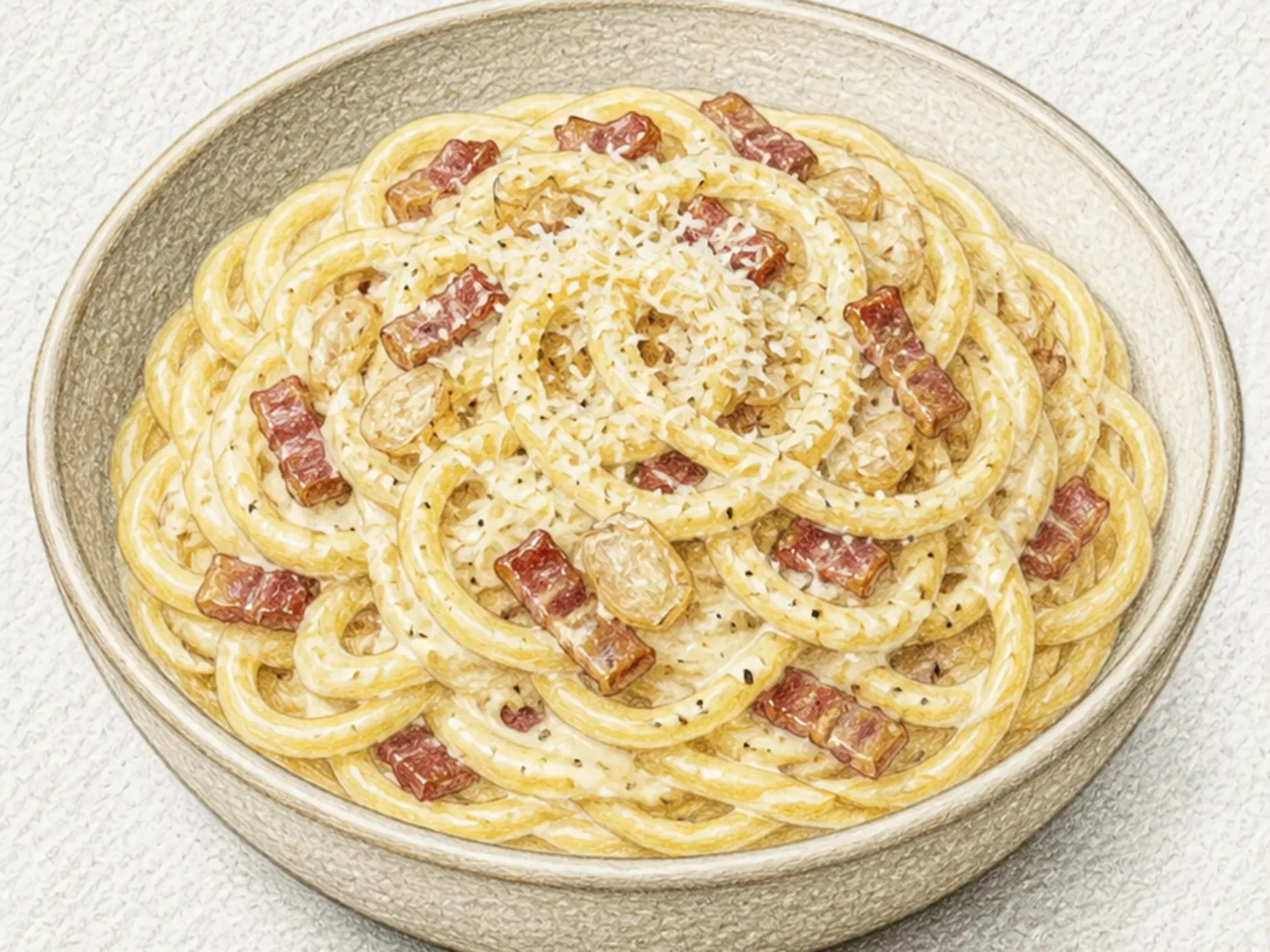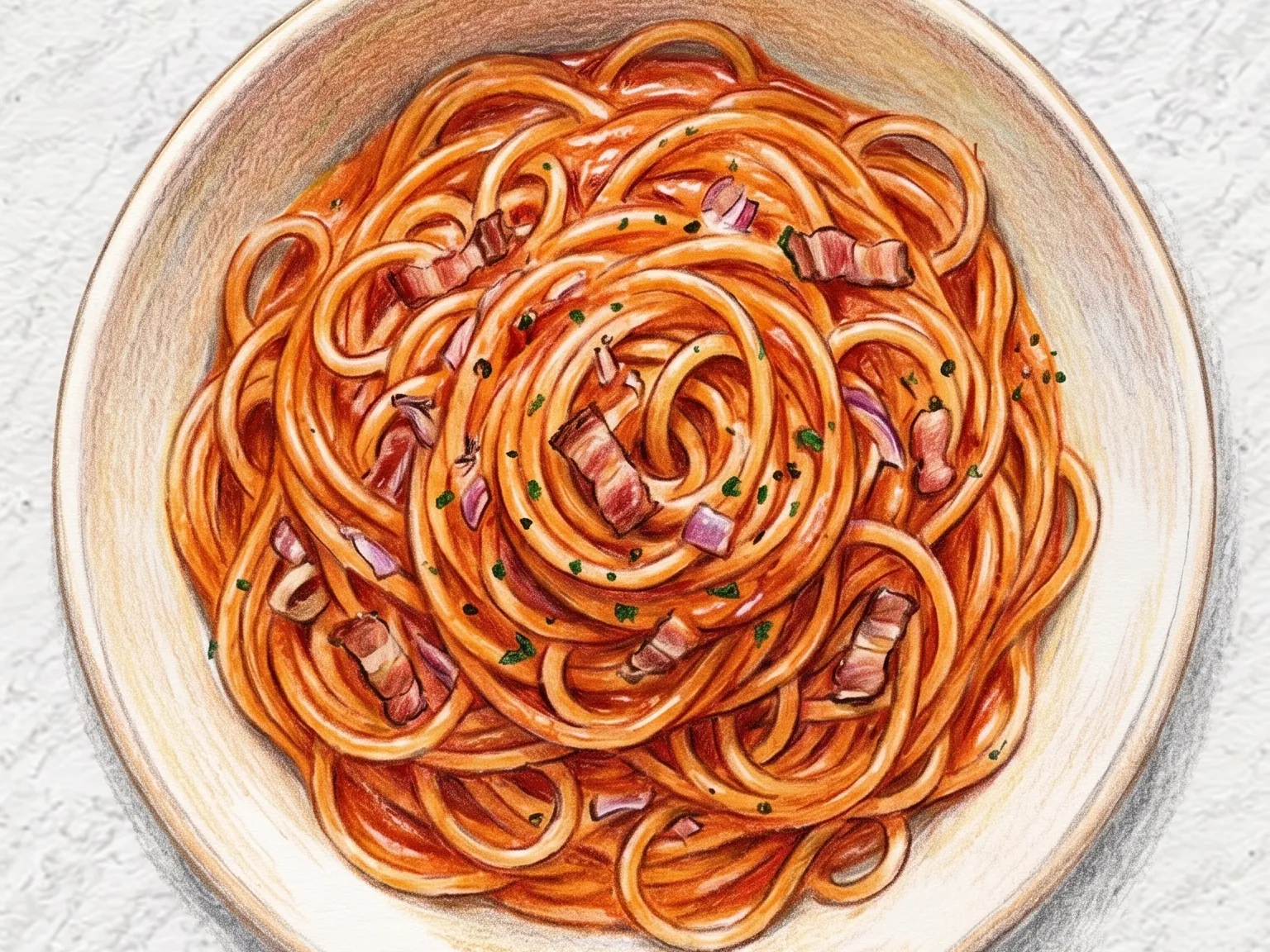
Gochujang Cream Pasta (Spicy Fermented Chili Cream Sauce)
Gochujang cream pasta merges Italian cream sauce with the fermented heat of Korean red chili paste. Heavy cream and parmesan form a velvety base, while gochujang layers in umami depth and a slow-building spice that lingers without overwhelming. Bacon renders its salt and fat into the sauce, and sauteed onion and garlic supply an aromatic sweetness underneath. Adjusting consistency with starchy pasta water brings the sauce to a glossy, clinging texture that coats each strand evenly.
Adjust Servings
Instructions
- 1
Cook spaghetti in salted water to al dente and reserve pasta water.
- 2
Heat olive oil and cook bacon until crisp.
- 3
Add onion and garlic, then saute until translucent.
- 4
Add cream and gochujang, whisking on low heat into a smooth sauce.
- 5
Add cooked pasta and reserved water, tossing 1 minute to emulsify.
- 6
Stir in parmesan until melted, season with pepper, and serve.
As an Amazon Associate, we may earn from qualifying purchases.
Tips
Nutrition (per serving)
More Recipes

Mentaiko Cream Pasta
Mentaiko cream pasta is a Japanese-style cream pasta where salted pollock roe melts into a butter, heavy cream, and milk sauce, creating a silky coating with tiny pops of roe texture throughout. Garlic is gently sauteed in butter before the cream and milk go in, and the mixture is heated just below boiling to prevent separation. Two-thirds of the roe is stirred in with the spaghetti while adjusting consistency with reserved pasta water, allowing the roe to cook gently through residual heat rather than direct flame, which can turn it fishy. Parmesan cheese and a squeeze of lemon juice cut through the richness with a bright, clean finish. The remaining raw roe and roasted seaweed flakes are placed on top for visual contrast and an extra layer of briny, nutty aroma.

Gochujang Vongole Linguine
Gochujang vongole linguine pairs briny Manila clams with the fermented kick of Korean red chili paste in a single pan sauce. White wine steams the clams open and creates a seafood liquor that becomes the foundation of the sauce, while gochujang dissolves into it, adding a layer of spicy complexity absent from traditional vongole. A knob of butter stirred in at the end gives the sauce a glossy sheen, and parsley plus black pepper sharpen the finish. Slicing garlic thin and toasting it slowly in olive oil is key to building the aromatic backbone.

Beef Brisket Perilla Cream Fettuccine
This fusion pasta brings together Italian cream sauce, Korean beef brisket, and the distinctive fragrance of perilla leaves. The brisket is seared until its edges crisp and its rendered fat is drained, then folded back into a sauce of heavy cream and milk so that its savory depth permeates every drop. Perilla leaves, when briefly heated, release a mellow herbal aroma that lifts the heaviness of the cream and introduces a flavor note absent from any European herb. Fettuccine's broad, flat surface catches the sauce generously, ensuring each bite is fully coated. A shower of grated Parmigiano adds salt and sharpness, while a crack of black pepper provides a spicy punctuation. The result is a cross-cultural plate where Korean aromatics and Italian technique meet without competing.

Gochujang Eggplant Ricotta Lasagna Rolls
Gochujang eggplant ricotta lasagna rolls roast diced eggplant at 200 degrees Celsius with olive oil and salt until the flesh turns creamy, then spread the roasted eggplant with ricotta onto boiled lasagna sheets, roll them up, and bake under a spicy gochujang-tomato sauce. Roasting the eggplant for fifteen minutes collapses its cellular structure, driving out water and concentrating its mild sweetness. The tomato sauce is built by sauteing onion and garlic, then simmering tomato puree with gochujang and dried oregano for ten minutes until the heat from the chili paste integrates with the tomato's acidity. Mozzarella melted over the assembled rolls forms a browned, crisp cap during the final bake, while the filling inside stays moist and soft. The contrast between the crunchy cheese top and the tender eggplant-ricotta interior defines the texture of each slice.

Fettuccine Alfredo
Fettuccine Alfredo is an exercise in simplicity where technique matters more than a long ingredient list. Wide fettuccine noodles are tossed with unsalted butter and finely grated Parmigiano-Reggiano cheese, using starchy pasta water to create a smooth emulsion that clings to every strand. The original Roman recipe contains no cream at all - the silky texture comes from the marriage of melted butter fat, cheese protein, and the starch released by the pasta during cooking. The pan must stay off direct heat while tossing, as excessive temperature breaks the emulsion and turns the sauce grainy. Speed is essential: the dish should move from pan to plate in under a minute. Generous freshly cracked black pepper provides a sharp counterpoint to the rich, concentrated cheese flavor.

Mala Chicken Alfredo Fusilli
Mala chicken Alfredo fusilli folds Sichuan mala sauce - built on Sichuan peppercorn's numbing tingle and dried chili heat - into a cream-and-Parmesan Alfredo base. Chicken thigh is cut into bite-sized pieces and pan-seared for a crisp exterior, then garlic and onion are sautéed in the same pan to build the aromatic foundation. The Alfredo sauce is assembled from heavy cream, milk, and Parmigiano, with mala sauce stirred in to layer the tingling numbness against the dairy's smoothness. Fusilli's spiral grooves trap the thick sauce inside their ridges, delivering concentrated flavor in each bite. Butter ties the contrasting elements into a cohesive, glossy coating.